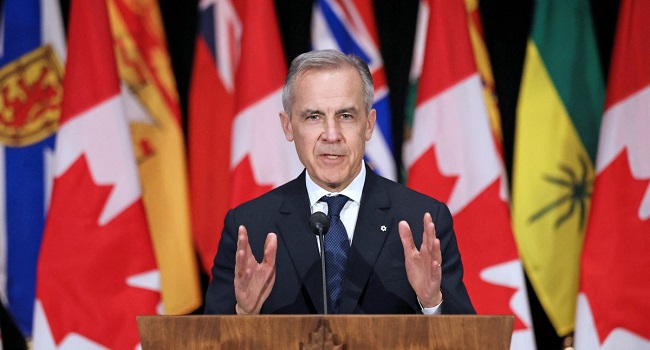
Canada’s Prime Minister Mark Carney speaks during a press conference after the First Ministers Meeting in Ottawa, Canada on March 21, 2025. (Photo by Dave Chan / AFP)
Canada’s new Prime Minister Mark Carney on Sunday called early elections for April 28, pledging to defeat Donald Trump’s drive to annex the United States’s huge northern neighbor.
Carney, a former central banker, was chosen by Canada’s centrist Liberal Party to replace Justin Trudeau as prime minister, but he has never faced the country’s broader electorate.
That will now change as Carney brought parliamentary elections forward several months from October, and he made it clear that the barrage of trade and sovereignty threats coming from the US president will be the focus of his campaign.
“I’ve just requested that the governor general dissolve parliament and call an election for April 28. She has agreed,” Carney said in a speech to the nation, referring to King Charles III’s representative in Canada, a member of the British Commonwealth.
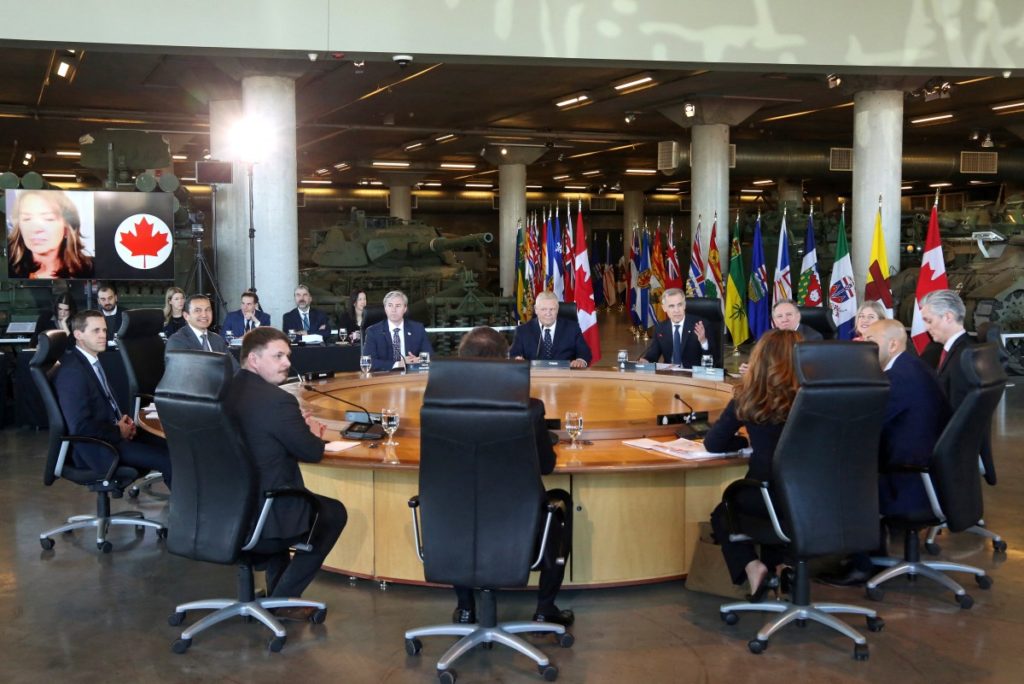
Canada’s Prime Minister Mark Carney (C) speaks during the First Ministers Meeting in Ottawa, Canada on March 21, 2025. (Photo by Dave Chan / AFP)
In power for a decade, the Liberal government had slid into deep unpopularity, but Carney will be hoping to ride a wave of Canadian patriotism to a new majority.
“I’m asking Canadians for a strong, positive mandate to deal with President Trump,” Carney said, adding that the Republican “wants to break us, so America can own us. We will not let that happen.”
“We are facing the most significant crisis of our lifetimes because of President Trump’s unjustified trade actions and his threats to our sovereignty,” Carney said.
“Our response must be to build a strong economy and a more secure Canada,” he added, pledging not to meet Trump until the US leader recognizes Canadian sovereignty.
Trump has riled his northern neighbor by repeatedly dismissing its borders as artificial, and urging it to join the United States as the 51st state.
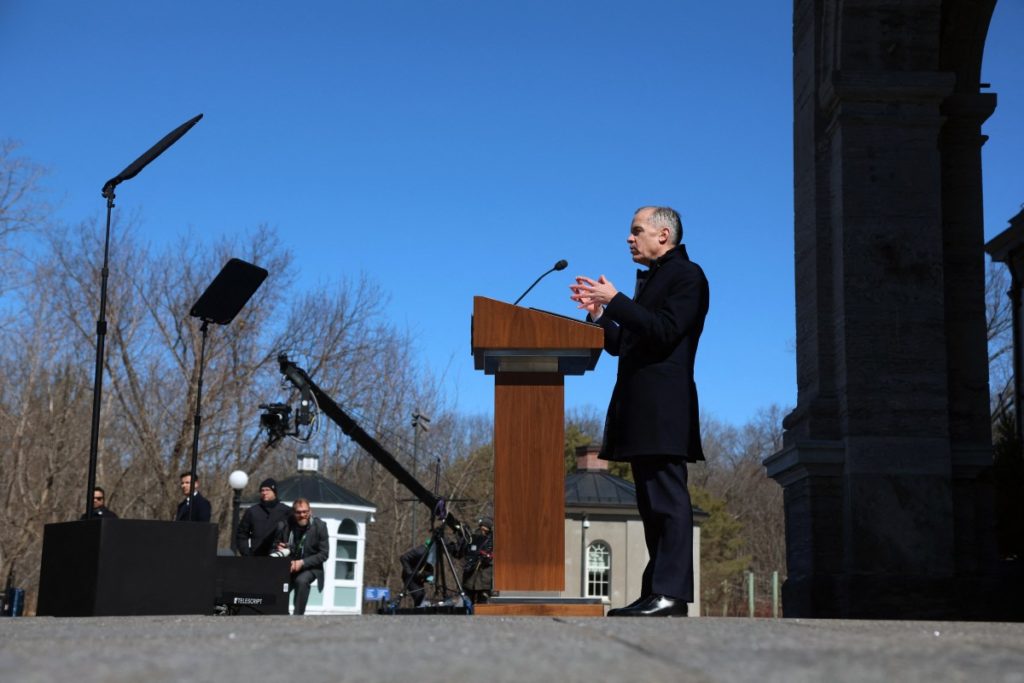
Canada’s Prime Minister Mark Carney speaks at a news conference at Rideau Hall in Ottawa on March 23, 2025 after asking the Governor General to dissolve Parliament thereby triggering snap elections on April 28. (Photo by Dave Chan / AFP)
The ominous remarks have been accompanied by Trump’s swirling trade war, with the imposition of tariffs on imports from Canada, which could severely damage its economy.
Poll favorites
Domestic issues such as the cost of living and immigration usually dominate Canadian elections, but this time around, one key topic tops the list in this country of 41 million people: who can best handle Trump.
The president’s open hostility toward his northern neighbor — a NATO ally and historically one of his country’s closest partners — has upended the Canadian political landscape.
Trudeau, who had been in power since 2015, was deeply unpopular when he announced he was stepping down, with Pierre Poilievre’s Conservatives seen as election favorites just weeks ago.
But the polls have narrowed spectacularly in Carney’s favor since he took over the Liberals, who only hold a minority in parliament, and analysts are now calling the race too close to call.
“Many consider this to be an existential election, unprecedented,” Felix Mathieu, a political scientist at the University of Winnipeg, told AFP.
“It is impossible at this stage to make predictions, but this will be a closely watched election with a voter turnout that should be on the rise.”
Poilievre, 45, is a career politician, first elected when he was only 25. A veteran tough-talking campaigner, he has sometimes been tagged as a libertarian and a populist.
On Sunday, Poilievre — seen by some as too similar to Trump in style and substance — set the tone.
“I want the opposite of what Donald Trump wants,” the Conservative leader said, promising to base his campaign on bread-and-butter economic issues and the worries of “regular people.”
Carney, 60, has spent his career outside of electoral politics. He spent more than a decade at Goldman Sachs and went on to lead Canada’s central bank, and then the Bank of England.
Smaller opposition parties could suffer if Canadians seek to give a large mandate to one of the big two, to strengthen their hand against Trump.
As for the US leader, he professes not to care, while pushing ahead with plans to further strengthen tariffs against Canada and other major trading partners on April 2.
“I don’t care who wins up there,” Trump said this week.
“But just a little while ago, before I got involved and totally changed the election, which I don’t care about […] the Conservative was leading by 35 points.”
A Nigerian man and registered sex offender, Babatunde Odutola, has been sentenced to prison in the UK after exposing himself and masturbating in front of a woman on a train heading to Manchester.
Odutola, 36, who has no fixed address, was sentenced to 44 weeks in prison at Manchester Magistrates’ Court on Monday, September 14, after pleading guilty to outraging public decency and violating a suspended sentence order.
The incident took place around 7 p.m. on Friday, September 11, on a train traveling through Cheshire towards Manchester Piccadilly railway station.
According to the British Transport Police, Odutola approached a woman on the train, looked her up and down, and became aggressive when she refused to engage with him.
He then exposed himself while sitting in a wheelchair and began masturbating while staring at the woman and telling her to “come over.”
A fellow passenger intervened and helped escort the distressed woman from the carriage. Police reports indicate that CCTV footage showed Odutola continuing to masturbate as other passengers walked through the carriage.
British Transport Police officers arrested him after the train arrived at Manchester Piccadilly. He was prosecuted and jailed within 72 hours of the incident.
Detective Constable Leonidas Christoforou of the British Transport Police stated that Odutola’s behavior was “terrifying” for the victim, whom he allegedly targeted while she was traveling alone.
The National Hajj Commission of Nigeria (NAHCON) has announced that the Kingdom of Saudi Arabia has declined Nigeria’s request for an upward review of its 2027 Hajj allocation, leaving the country’s quota unchanged despite growing demand from intending pilgrims nationwide.
The Commission disclosed that it had formally engaged the Saudi Ministry of Hajj and Umrah, seeking additional pilgrimage slots to accommodate the increasing number of Nigerian Muslims desirous of undertaking the sacred journey and to address appeals from several state pilgrims’ welfare boards for enhanced allocations.
However, Saudi authorities communicated their inability to grant additional slots, citing capacity limitations, structural constraints within the holy sites, and the Kingdom’s policy of strict adherence to approved country quotas under the current operational framework.
Consequently, Nigeria’s allocation for the 2027 Hajj exercise remains fixed at 35,000 slots for government pilgrims and 15,000 slots for licensed tour operators, bringing the country’s total approved allocation to 50,000 pilgrims.
Commenting on the development, the Chairman and Chief Executive Officer of NAHCON, Ambassador Ismail Abba Yusuf, said the Commission fully understands the disappointment the decision may cause many aspiring pilgrims and state pilgrim boards that had hoped for additional allocations.
According to him, the Commission explored all available diplomatic and operational channels in pursuit of an increased quota but respects the final decision of the Saudi authorities.
“We appreciate the deep spiritual desire of many Nigerian Muslims to perform Hajj and understand the expectations of states and stakeholders seeking additional slots. While every effort was made to secure an upward review, the Saudi authorities have communicated their final position based on operational realities and capacity considerations,” Ambassador Yusuf stated.
The NAHCON Chairman urged state pilgrims’ welfare boards, agencies and licensed tour operators to make judicious and transparent use of their approved allocations while ensuring strict compliance with all timelines established by the Commission and the Saudi Nusuk platform.
He emphasized that the deadline for uploading the data of all prospective pilgrims for the 2027 Hajj exercise remains September 26, 2026, warning that no extensions would be granted under any circumstance.
“Kindly note that the deadline for uploading prospective pilgrims’ data remains September 26, 2026. We urge all partners, state pilgrim boards, tour operators and representatives to ensure that all required information is submitted before this date, as no extensions will be granted,” he said.
Ambassador Yusuf further advised intending pilgrims who may be unable to secure a slot under the approved 2027 allocation not to lose hope, revealing that preparations for the subsequent pilgrimage season have already commenced.
“Individuals who were unable to secure a slot for the upcoming Hajj are encouraged to register for the 2028 Hajj. The Commission has officially opened the registration portal for this period, and applications are now being accepted,” he added.
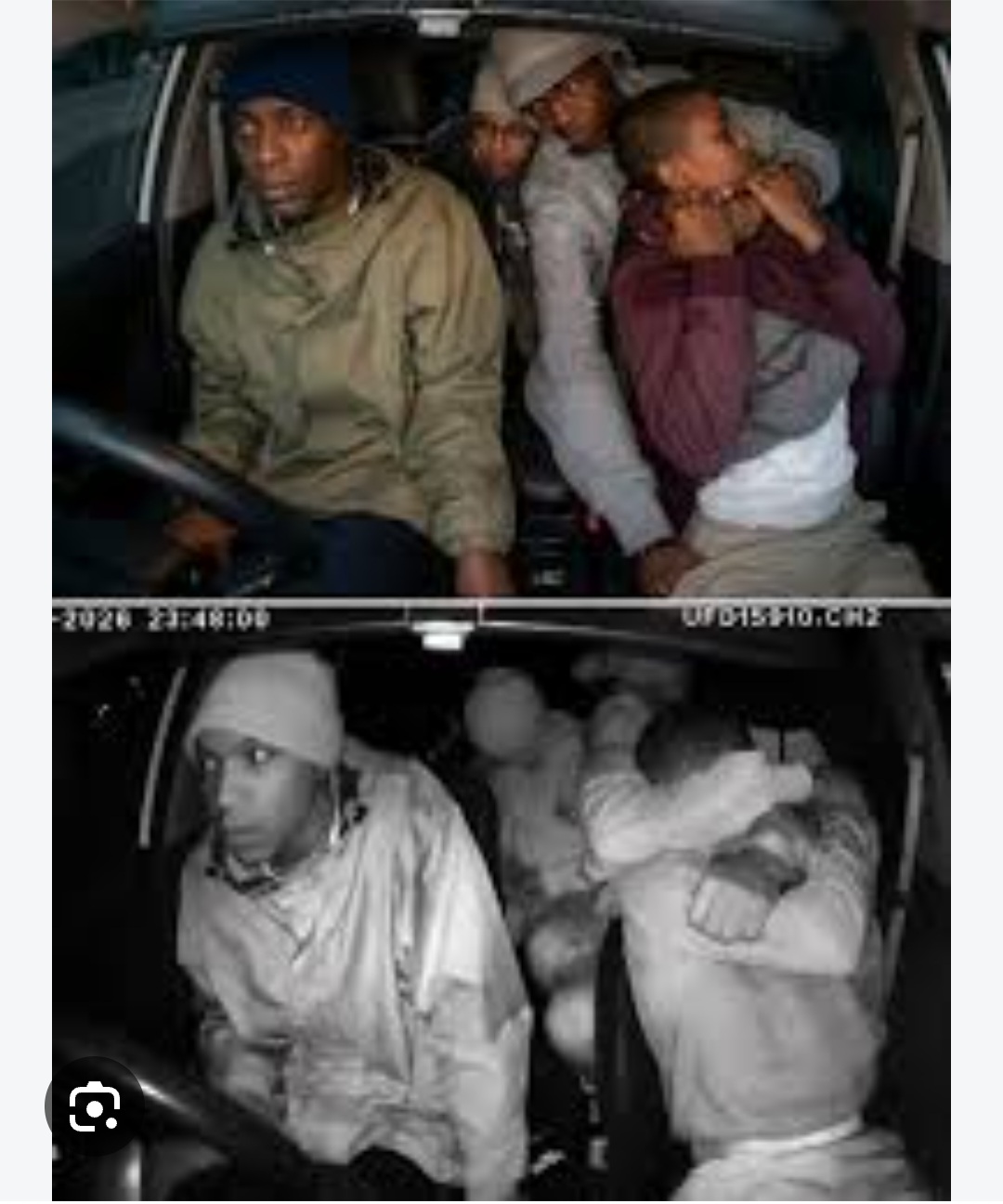
South African police have arrested five suspects after rescuing a 25-year-old e-hailing driver who was allegedly kidnapped, raped and held for ransom in Cape Town.
The South African Police Service (SAPS) said in a statement on Sunday that Steenberg police rescued the driver after he was allegedly raped by two female suspects and held at ransom by the group.
Police were alerted by the victim’s brother after the suspects contacted him and demanded R4,000 in cash for the driver’s release.
According to SAPS, the police used the victim’s vehicle tracker to locate him at Southampton Road in Heathfield, where he was rescued.
“Steenberg police rescued a 25-year-old e-hailing driver after he was raped and held at ransom by two female suspects and three males yesterday,” the police said.
The victim had reportedly met one of the female suspects the previous week through his e-hailing business.
According to police, the two exchanged telephone numbers and communicated throughout the week before arranging to meet.
“When he went to meet her, he was kidnapped by the suspects and the females raped him,” SAPS said.
Police subsequently arrested the two female suspects, aged 23 and 34, as well as three male suspects aged 16, 42 and 48.
The five suspects are expected to appear before the Wynberg Magistrate’s Court on Monday, September 14, 2026.
SAPS said they would face charges relating to the alleged kidnapping and rape.