Connect with us

Business

Akpabio: Tax Reform Bills Are Nigeria’s Future, We Must Get Them Right

Published

on

Spread the love
GODSWILL-AKPABIO

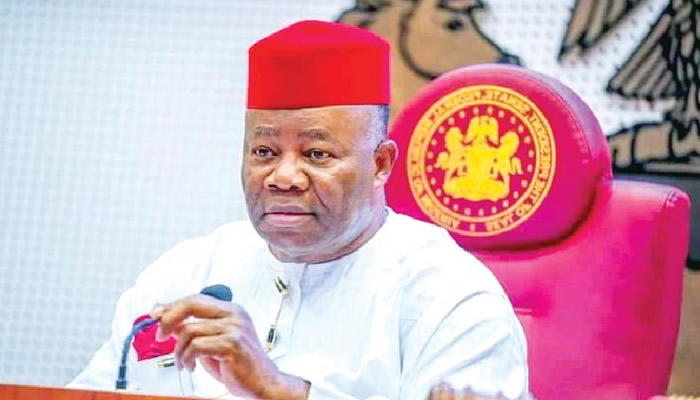
Senate President, Godswill Akpabio

The President of the Senate, Senator Godswill Akpabio, has emphasized the critical role of the tax reform bills currently under public hearing at the Senate, describing them as the future of Nigeria. He stressed the need to get the reforms right, assuring that the Senate would not rush the process but would conduct a thorough clause-by-clause review before passing the bills.

Speaking on Monday while declaring open the public hearing on the tax reform bills submitted to both chambers of the National Assembly by President Bola Tinubu on October 3, 2024, Akpabio highlighted a pressing issue: not more than 30% of Nigerians pay tax, yet citizens expect the government to provide world-class infrastructure, quality education, and national security.

He noted that Nigeria must begin to think outside the box, as continuing with outdated fiscal policies is unsustainable. According to him, once the tax reform bills are passed, the National Assembly will strengthen its oversight functions to ensure that government resources are spent efficiently and transparently.

Senator Akpabio urged Nigerians to engage with the bills constructively, rather than relying on misinformation from social media. He emphasized the need for informed discussions, pointing out that many critics had not even read the content of the bills before opposing them.

“I will be here for two days, actively participating in the process because I am tired of social media narratives. Many of our leaders have not even seen the content of these bills before attacking the process,” Akpabio stated.

He encouraged participants at the hearing to obtain copies of the bills, study them thoroughly, and provide meaningful input rather than depending on misleading online discussions, which he dismissed as “garbage in, garbage out.”

The public hearing, held at Room 022 of the Senate Wing, saw the presence of key government officials, including:

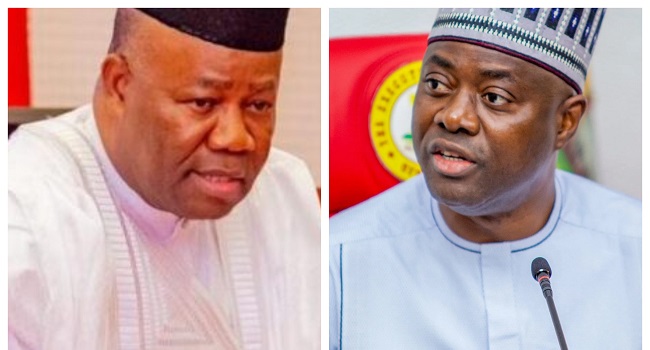
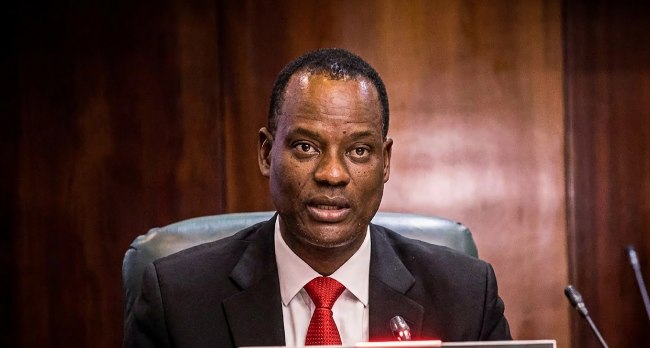
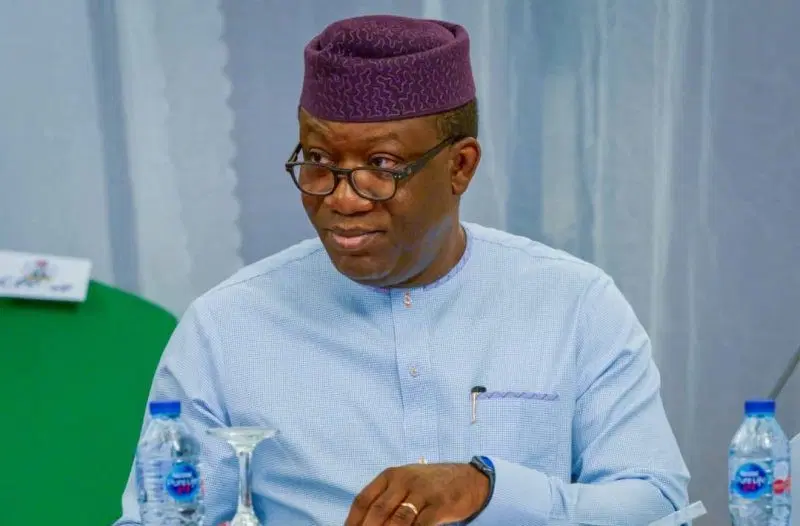
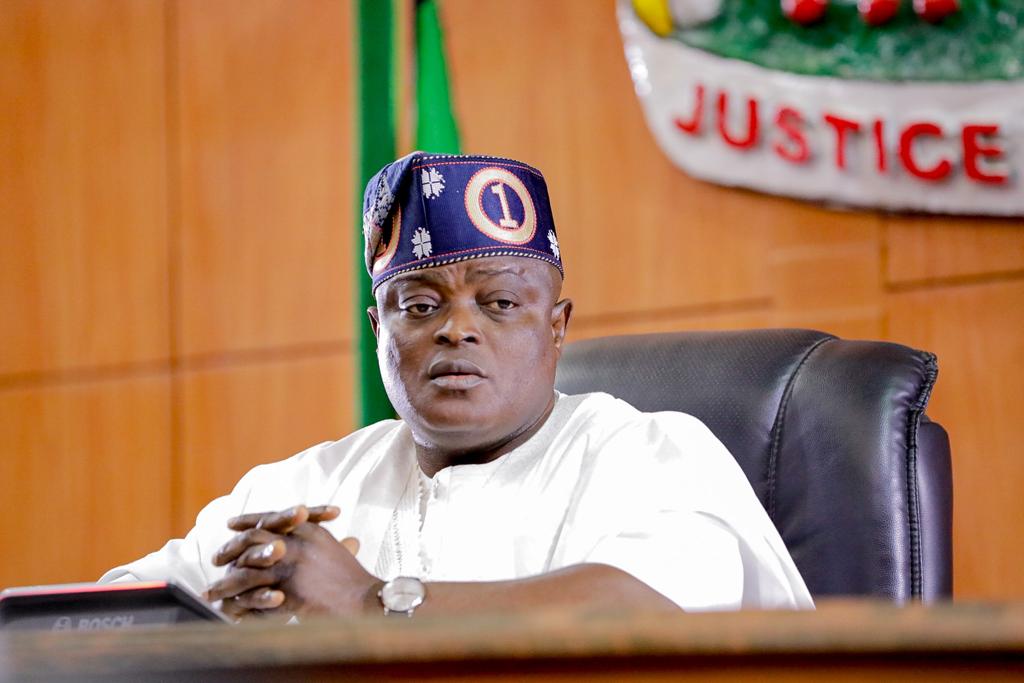
Wale Edun – Minister of Finance and Coordinating Minister of the Economy

Lateef Fagbemi (SAN) – Attorney General of the Federation

Zacch Adedeji – Chairman of the Federal Inland Revenue Service (FIRS)

Comptroller-General of the Nigeria Customs Service

Senate Finance Committee Spearheading the Reform Process

In his opening remarks, the Chairman of the Senate Committee on Finance, Senator Sani Musa (APC, Niger East), provided insight into the bills under consideration. He stated that deliberations would focus on the Joint Revenue Board Establishment Bill and the Nigerian Revenue Services Bill over the course of two days.

According to Senator Musa, 71 different stakeholder groups have been invited to contribute to the public hearing. He assured that both the Senate and the House of Representatives had completed the second reading of the bills and were ready to incorporate public input.

“The purpose of these reform bills is to boost government revenue generation, enabling Nigeria to move towards an advanced economy where infrastructure, education, and agriculture—key pillars of national development—are adequately funded,” he said.

The four tax reform bills under consideration include:

The Nigeria Tax Bill (NTB) 2024

The Nigeria Tax Administration Bill (NTAB) 2024

The Nigeria Revenue Service (Establishment) Bill (NRSEB) 2024

The Joint Revenue Board (Establishment) Bill (JRBEB) 2024

These bills were passed for second reading in the Senate on November 28, 2024, and referred to the Committee on Finance for further legislative scrutiny

With deliberations now underway, the Senate is determined to ensure that Nigeria’s tax system is reformed to enhance revenue collection, drive economic growth, and improve public services.

Business

Wema Bank Rewards 273 Customers in 5 for 5 Rewards Campaign

Published

on

Spread the love


One month after launching Season 5 of its flagship 5 for 5 Rewards campaign, Wema Bank has rewarded 273 customers with a total of ₦17.96 million, demonstrating the strong early impact of its refreshed customer rewards platform and reinforcing its commitment to rewarding everyday banking.


Launched on May 2, 2026, as part of the Bank’s 81st anniversary celebration, this season of the campaign introduced a more structured and inclusive rewards framework designed to encourage positive financial habits while recognising customer loyalty across the Youth, Women and Mass Market segments.

The season opened with a special anniversary activation at Ikeja City Mall, where 81 customers received ₦81,000 each, resulting in ₦6.56 million in rewards on launch day. Since then, the campaign has continued to reward customers through daily and monthly draws, with an additional 192 winners emerging within the first month.

Across the Youth segment, 37 students have received rewards worth ₦4.4 million, including 20 students who received ₦50,000 PocketMoni rewards and 17 university students who received ₦200,000 each in Tuition Support.

The Women segment also recorded strong participation, with 12 customers receiving ₦150,000 each through the #SelfCare category, while the Mass Market segment recorded the highest number of winners. Within the first month, 120 customers received daily cash rewards, and 23 customers won ₦200,000 each in the monthly draw, bringing total rewards in the category to ₦5.2 million.

Commenting on the campaign’s early impact, Wema Bank’s Managing Director and Chief Executive Officer, Moruf Oseni, said; “At Wema Bank, we believe loyalty should be rewarded in ways that are meaningful, transparent and accessible. The response to Season 5 of the 5 for 5 Rewards campaign has been encouraging, and seeing hundreds of customers benefit within just one month reinforces our belief that everyday banking should create everyday opportunities.

Beyond rewarding transactions, we are encouraging positive financial habits while delivering real value to our customers. He added; “This is only the beginning. With more reward categories, more winners and more opportunities still ahead, we remain committed to creating meaningful impact for our customers and ensuring more Nigerians experience the value of banking with Wema.”

Customers can participate by opening or reactivating a Wema Bank account, funding it with a minimum of ₦5,000, maintaining an average monthly balance of ₦5,000, and completing at least five transactions every month using the ALAT app, Wema or ALAT cards, or *945#.

With over ₦170 million earmarked for rewards between May and December 2026, thousands more customers are expected to benefit as the campaign continues, reaffirming Wema Bank’s commitment to rewarding loyalty, promoting positive financial behaviour and delivering value beyond banking.

Continue Reading

Business

MAN Raises SSB Tax Alarm Says 1.5m Jobs On The Line

Published

on

Spread the love


The Manufacturers Association of Nigeria (MAN) has warned that plans to significantly increase excise duties on sugar-sweetened beverages (SSBs) could threaten a sector responsible for about 33 per cent of the nation’s manufacturing output and over 1.5 million direct and indirect jobs.


In a statement on Tuesday, Director General of MAN, Segun Ajayi-Kadir, speaking on behalf of operators in the Non-Alcoholic Drinks (NAD) sector, urged the Federal Government to adopt a balanced, evidence-based and coordinated approach to excise taxation.
The warning follows proposals contained in the Customs and Excise Tariff etc. (Consolidation) Act Amendment (CETA) Bill 2025, which seeks to replace the current specific excise rate of N10 per litre on sugar-sweetened beverages with a percentage levy based on retail prices.

Ajayi-Kadir said the proposed measure, if implemented, could undermine industrial growth, job creation, investor confidence and broader macroeconomic stability.

According to him, the non-alcoholic drinks industry remains one of the most resilient segments of Nigeria’s manufacturing sector, supporting extensive value chains across production, logistics, agriculture, retail and micro, small and medium enterprises (MSMEs).

“The sector currently accounts for approximately 33 per cent of manufacturing output and sustains over 1.5 million direct and indirect jobs. Any fiscal policy that significantly increases the tax burden on the industry will have far-reaching consequences across the economy,” he said.
Ajayi-Kadir noted that manufacturers in the sector already remit between 40 and 45 per cent of their gross revenues in taxes, placing them close to the upper limit of sustainable taxation.

While acknowledging government efforts to address non-communicable diseases (NCDs), he argued that policy interventions should reflect Nigeria’s consumption realities and be guided by empirical evidence.

He stated that Nigeria’s annual per capita sugar consumption stands at about 7.1 kilogrammes, which is within levels recommended by the World Health Organisation (WHO), adding that beverages account for only a small proportion of overall sugar intake.
“There is no conclusive empirical evidence identifying sugar-sweetened beverages as the primary driver of non-communicable diseases in Nigeria, which are widely recognised as being influenced by multiple factors, including genetics, lifestyle, environment and broader dietary habits,” he said.

The MAN DG further expressed concern that the proposed amendment could conflict with the recently introduced Fiscal Policy Measures (FPM) 2026–2028 framework, creating uncertainty for investors and weakening medium-term industrial initiatives such as the Nigeria First Policy and the Nigeria Sugar Master Plan (NSMP II).

He also argued that introducing a retail price-based excise system alongside the existing per-litre charge would create legal, administrative and enforcement challenges, given that Nigeria’s current excise framework is based on ex-factory or ex-warehouse pricing.

Ajayi-Kadir urged the government to pursue a coherent and predictable excise regime that supports revenue generation and public health objectives without jeopardising industrial growth, employment and economic stability.

Continue Reading

Business

Bitcoin Drops Below $60,000, First Time Since October 2024

Published

on

Spread the love


Bitcoin dropped below $60,000 on Friday, its lowest level since October 2024, just before Donald Trump’s election which propelled it to a record high.


The currency fell by about 6 percent around 1615 GMT, to $59.7709, before paring its losses slightly.

The election of Trump, a staunch advocate of cryptocurrencies, to the White House in November 2024 for a second term sparked a wave of enthusiasm in the sector, sending the price of bitcoin soaring to nearly $110,000.


AFP

Continue Reading

Trending

Copyright © 2026 TheColumn NG