
News
Assault: ECOWAS Court Orders FG To Pay Journalist N10m

The ECOWAS Community Court of Justice has awarded N10 million in general damages against the Federal Republic of Nigeria over the physical assault, unlawful arrest, and seizure of property belonging to Jide Oyekunle, a journalist with Independent Newspaper.
The landmark ruling in Suit No. ECW/CCJ/APP/29/25 was secured by Avocats Sans Frontières France (Lawyers Without Borders France) on June 22, 2026, under its eRIGHTS project, supported by the European Union, which focuses on defending human rights in the digital space.
Oyekunle, the secretary of the Nigeria Union of Journalists, NUJ, Federal Capital Territory, was physically assaulted and unlawfully detained. His camera was damaged, and his mobile phone was seized by armed police officers on the order of the former FCT Commissioner of Police, Benneth Igweh, at Eagle Square, Abuja, on August 1, 2024, while he was covering the #EndBadGovernanceInNigeria protests.
The Court agreed with Counsel to the applicant, Collins I. Maidoh-Anene, Esq., that the Nigerian police’s detention of the journalist and seizure of his mobile phone were excessive, unjustified, and in violation of international law.
The ECOWAS Court subsequently found the Federal Republic of Nigeria liable for violating the applicant’s rights to freedom of expression, personal liberty, dignity, and property under the African Charter.
The Court therefore ordered the Nigerian government to pay Mr Oyekunle the sum of N10 million in general damages.
The court found that Nigeria’s actions suppressed his live coverage, thereby breaching his right to freedom of expression under Article 9 of the African Charter.
It also ruled that the assault and detention violated his rights to personal liberty, human dignity, and freedom from degrading treatment under Articles 6 and 5, while the temporary seizure of his phone violated his right to property under Article 14.
The Court further held that Nigeria’s justification failed the test of necessity under international law, making the conduct of the security forces excessive and unlawful.
In a statement signed by the country director of Avocats Sans Frontières France, Angela Uwandu Uzoma-Iwuchukwu, on Tuesday, said the judgment sends a clear message that a journalist’s digital tools are extensions of the modern press and newsroom and that their arbitrary confiscation by security forces constitutes a direct assault on the public’s right to know.
According to Angela, “The court’s pronouncement adds to the growing jurisprudence from the regional court protecting journalists and human rights defenders who document protests and public interest events.
“ASF France will continue to monitor compliance with the judgment and provide legal aid to journalists facing similar violations.
“For Avocats Sans Frontières France and the eRIGHTS project partners, this ruling strengthens legal protections for journalism in the digital age. It shields reporters from tech-based censorship and intimidation, puts security agencies on notice that targeting media practitioners during protests will attract accountability, and reaffirms the ECOWAS Court as a vital shield for civic space in the region.”
Jide Oyekunle, while reacting to the landmark judgment, described it as a significant affirmation that journalists have the right to carry out their constitutional duties without intimidation, harassment, or attack.
He stated that democracy cannot thrive where journalists are attacked for documenting events or where citizens are punished for exercising their lawful rights.
He said, “The decision of the ECOWAS Court is not only about me; it is about every journalist, media worker, and Nigerian citizen who believes in the right to freedom of expression, access to information, and peaceful civic participation.
“This judgment sends a clear message that security agencies and government institutions must be held accountable when they violate fundamental rights.
“Because if democracy is all about good governance, accountability, and transparency, then press freedom should not be curtailed, denied, or restricted.”
Oyekunle appreciated everyone who stood by him throughout the journey, including the Nigeria Union of Journalists FCT Council, Avocats Sans Frontières France, colleagues and rights advocates, and all Nigerians who continue to defend press freedom and democratic values.

AKURE — Fifty years after its establishment, Omoluorogbo Grammar School (OGSA) is set to celebrate its Golden Jubilee with a three-day programme that will bring together generations of old students, serving and former teachers, parents, friends and other stakeholders from Nigeria and the diaspora.
The anniversary, scheduled for October 29 to 31, 2026, is expected to combine celebration, reunion, thanksgiving and reflection with a renewed commitment to the development of the institution.
Chairman of the 50th Anniversary Implementation Committee, Hon. Kayode Akinmade, said the Golden Jubilee was an opportunity not only to celebrate OGSA’s achievements but also to draw attention to the need to preserve its legacy and invest in its future.
Akinmade said the school had remained resilient and continued to produce graduates who had distinguished themselves in various professions despite infrastructural challenges and limited investment in its physical development over the years.
He described the OGSA story as one of “people, values, resilience and enduring excellence,” noting that the achievements of its alumni across different fields demonstrated the strength of the foundation laid by the institution.
“Fifty years is a remarkable milestone. It is a time to celebrate where we are coming from, honour those who laid the foundation and, most importantly, recommit ourselves to building an even greater future for the generations coming behind us,” he said.
According to him, many of the structures currently serving the school date back to its formative years following its emergence from the former Messiah Modern School in 1976, making the Golden Jubilee an appropriate moment for stakeholders to envision a new phase of development.
He said the anniversary would provide an avenue for alumni and other stakeholders to give back to the institution and identify practical ways of strengthening its infrastructure, academic environment and overall capacity.
Three Days of Celebration and Renewal
The three-day programme has been structured around thanksgiving, history, reunion, professional engagement, mentorship, sports and a major legacy initiative.
The celebration will open on October 29 with an Interdenominational Thanksgiving Service, followed by activities celebrating the history, heritage and personalities that have shaped the OGSA story over the past five decades.
The second day will focus on reunion and engagement, with old students reconnecting and sharing experiences. Career development and mentorship sessions will provide opportunities for accomplished alumni to interact with current and younger students, offering guidance and inspiration drawn from their professional journeys.
Sporting activities will also feature as part of the reunion programme, providing an opportunity for former students to relive memories of their school days.
The Golden Jubilee will climax on October 31 with a grand finale and the official presentation and launch of the OGSA Legacy Project, conceived as a major contribution by the alumni community towards the continued development of the school.
Akinmade said the legacy initiative was intended to ensure that the anniversary translated into a lasting benefit for present and future students rather than ending as a purely ceremonial celebration.
He said the objective was to move beyond nostalgia and use the Golden Jubilee to build a stronger institutional foundation for the next generation.
For five decades, OGSA has produced graduates who have made their mark in diverse fields of human endeavour, while its alumni network has remained an important part of the institution’s enduring identity.
The October celebration is expected to bring many of these alumni together once again to celebrate shared memories, enduring friendships and a common heritage.
As the institution enters its sixth decade, the anniversary committee said the central message of the Golden Jubilee was that OGSA’s legacy must not only be celebrated but also preserved, strengthened and passed on to future generations.
“OGSA at 50 is not simply about looking back at five decades. It is about asking what we can collectively do to ensure that the next 50 years are even more impactful,” the committee said.
Comprehensive details of the programmes and activities lined up for the Golden Jubilee will be unveiled in subsequent statement.
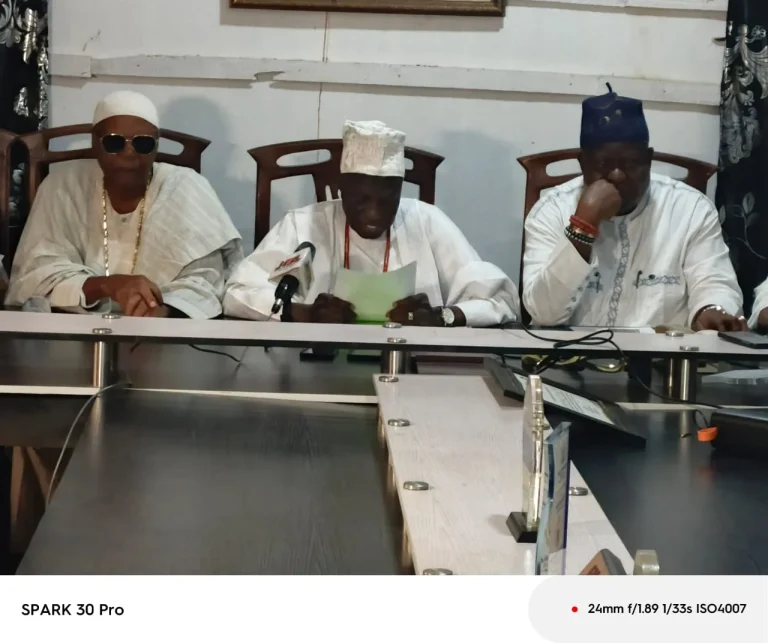
Religious leaders in Ijebuland have appealed to Ogun State Governor, Dapo Abiodun, to lift the embargo on the selection of a successor to the late Awujale of Ijebuland, Oba Sikiru Adetona, saying the prolonged delay in filling the stool has become a source of concern to the people.
The call was made on Sunday by the Lord Bishop of the Anglican Diocese of Ijebu, Rt. Rev. Dr. Peter Rotimi Oludipe; the Chief Imam of Ijebuland, Sheikh Muftaudeen Ayanbadejo; and the head of Osugbo in Ijebu-Ode, Chief Bolanle Bakare, at a community empowerment programme.
Oludipe, who spoke with journalists at the event, urged Abiodun to allow the process to continue to its conclusion, describing the kingmakers as people of integrity who should be permitted to perform their traditional duties.
“All of us are aware that the delay is caused by the state government. It’s the governor that has put a kind of a stop to the arrangement of those who are supposed to be in charge of selecting the Awujale.
“So we are looking forward to the governor lifting that ban very soon, so that the process can come to a conclusion that will be acceptable to all,” the bishop said.
The bishop said the absence of an Awujale was undesirable for the community.
“Our own appeal to the governor is that this ban should be lifted at the earliest possible time, and let’s allow the process to run to conclusion, by the grace of God,” he added.
Oludipe noted that religious leaders were also concerned about the delay because they were part of the community and were constantly confronted with questions about the vacant traditional stool.
He said, “We don’t want any delay. There should not really be a vacuum, particularly when you think of Ijebuland.
“Ijebu is so popular among several communities within the country, Nigeria. So many people are interested. So many people are asking us, ‘What is happening? Why is the Awujale not being installed?’”
The bishop, however, acknowledged that the government might have reasons for placing an embargo on the selection process, but urged it to allow the process to reach a conclusion in the interest of Ijebuland.
According to him, the people of Ijebuland deserved to have a monarch installed through a process that was allowed to run its course.
Also speaking, the Chief Imam of Ijebuland, Sheikh Ayanbadejo, said he remained hopeful that the next Awujale would eventually emerge, describing the matter as one that would be resolved at the appropriate time.
He recalled that he had previously appealed to Muslim clerics to join him in urging the governor to facilitate the installation of the monarch.
According to him, while the emergence of the next Awujale was ultimately in the hands of Allah, that should not be an excuse for failing to take concrete steps to resolve the matter.
“Time belongs to Allah. When the time comes, it will happen. But that does not mean that something concrete should not be done on time. We all believe that one day, one day, that prayer will come to pass. It will come to fruition,” Ayanbadejo said.
The Chief Imam urged the governor to listen to the wishes of the people and trust the kingmakers, whom he described as men of integrity with the pedigree to handle the selection process.
He said, “My advice to the government is that they should follow the voice of our people. Because by the opinion of the people, they are behind the kingmakers. These are men of integrity. All of them—Awujale chose them because they are kingmakers and persons with pedigree. Whatever they say in Ijebuland, nobody can go against them.”
Ayanbadejo urged Abiodun to ensure that the new monarch emerged during his tenure, saying the governor still had the opportunity to complete the process.
“We are still imploring our governor. The time is still there. We want our governor to be the governor that will sign the certificate. We want the governor to be the governor that will present the staff of office. This is his chance,” he said.
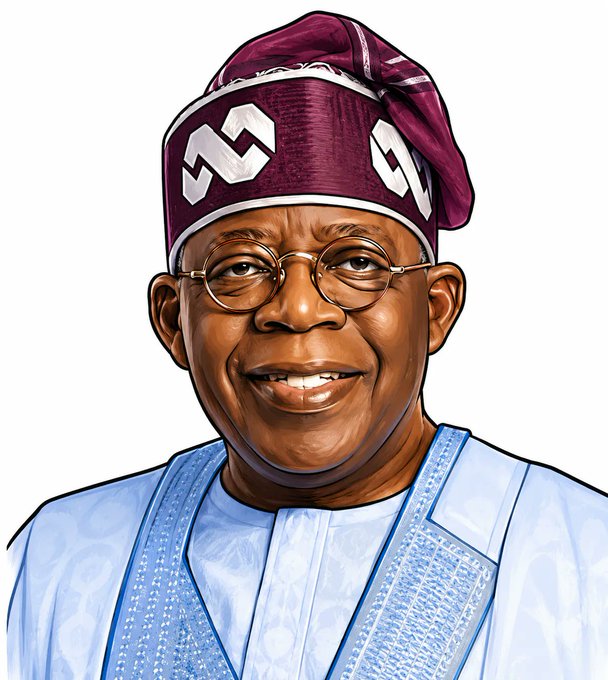
More than 600 senior academics drawn from all the public universities in Northern Nigeria have endorsed the second-term bid of President Bola Ahmed Tinubu.
The endorsement formed the key highlight of a meeting convened by the Special Adviser to the President on Political Matters, Ibrahim Masari, for the academics to deliberate on the political future of Nigeria.
The engagement was held behind closed doors, at the Umaru Musa Yar’Adua Centre, Kaduna.
Newsmen were not allowed into the hall at the commencement of the meeting but were later allowed to witness the reading of the communiqué issued at the end of the deliberations.
Those at the meeting include the convener, Alhaji Masari, Kaduna State Governor, Uba Sani; Governor of Zamfara State, Dauda Lawal; Yobe State Governor, Mai Mala Buni; Borno State Governor, Babagana Zulum and his Gombe counterpart, Inuwa Yahaya.
Others include the Minister of Defence, Bello Matawalle; Minister of Housing, Muttaqha Rabe Darma and former governor of Katsina State, Aminu Bello Masari.
Report says most of the public-owned universities in the 19 northern states were represented and opportunities were given from each of the zones to speak. While the Vice Chancellor of Kaduna State University, Prof Abdullahi Ibrahim Musa, spoke on behalf of his colleagues in the higher institutions from the North West, the chief librarian of the Federal University Lafia, Prof Abdulrazaq Baba Abdulrahman, spoke on behalf of the North Central and the chairman governing council of the Federal College of Agriculture, Gwoza, spoke of behalf of the North East. Professor Mohammed Umar Sanda of the Federal University Dutsinma was also at the meeting.
It was gathered that most of the VCs from federal universities in the North attended the meeting.
Vice Chancellor of Kaduna State University, Prof Musa, who read the communiqué, said the academics critically examined the performance of the Tinubu administration since May 2023, as well as the economic, political, security and social conditions in the country, particularly in Northern Nigeria.
He said the scholars acknowledged that Tinubu inherited an economy facing fiscal, monetary and structural challenges, alongside insecurity, infrastructure deficits and human capital gaps and that some of the administration’s reforms had increased hardship for Nigerians.
“While these reforms have imposed substantial short-term hardship through higher living and transportation costs and inflationary pressures, we also acknowledge that they have altered government revenues and public finance,” they said.
However, they said the administration had recorded progress in areas including education financing, agriculture, infrastructure, business support, compressed natural gas, investment and the digital economy.
After their deliberations, the academics stated that: “We resolved to express our support for the re-election of President Bola Ahmed Tinubu, GCFR, in the 2027 presidential election.”
They, however, said their support should not be interpreted as unconditional.
“Our support should not be interpreted as a blank check,” they said, urging the government to listen to citizens, respond to legitimate criticism and address high food and transportation costs, unemployment and insecurity.
The academics also called for an improved security strategy combining military operations, intelligence gathering, effective policing, community engagement and economic opportunities and urged the government to increase investment in agriculture, education, healthcare, roads, electricity, irrigation and other critical infrastructure in the North.
Tinubu’s adviser, Masari, in his address said in view of the achievements of the current administration in the education sector, it behoves on the academics to participate in determining the leadership of the country instead of staying aloof and complaining. He encouraged the academics to join in the political process and contribute.
-
 Health & Wellness1 year ago
President Tinubu Directs Cut in Dialysis Cost from ₦50,000 to ₦12,000
-
 News1 year ago
PICTURE: In Lagos Couple Sentenced to 22½ Years for Cannabis Trafficking
-

 Business6 months ago
Dangote Refinery Reduces Petrol Gantry Price To ₦1,200 Per Litre
-
 Business2 years ago
Heritage Bank Customers’ Path to Securing ₦5m Insured Funds: A Step-By-Step Guide by NDIC”
-
 Trending News1 year ago
NELFUND Disburses ₦86bn To 449,000 Beneficiaries
-
Business2 years ago
Dangote; We Did Not Fix ₦600/Litre Petrol Price
-

 International News6 months ago
Indian Police Arrest Nigerian Over ₦290m Drug Haul
-
 Business6 months ago
After Plea Bargain, Court Discharges Stella Oduah of ₦2.5bn Fraud