
International News
Benin Republic Orders Probe After Violence Kills 15 In North

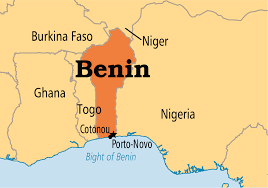
President Patrice Talon has ordered an investigation into military operations after deadly violence by “criminals” in northern Benin killed around 15 people, a government spokesman said.
Benin officials rarely give details about attacks in the north, where Benin like other Gulf of Guinea nations faces the growing threat of spillover from jihadist conflicts across the border in Burkina Faso.
Smuggling gangs and traffickers also operate along the border area.
Speaking to reporters on Wednesday, government spokesman Wilfried Houngbedji did not describe any attack or blame any group, but offered condolences to “bereaved families” in the “tragedy”.
In a text message to AFP, he later confirmed “around 15 deaths.”
“When these criminals try to establish themselves and do not succeed because there is a response (…) from the defense and security forces, they work to demoralize the local population, by carrying out reprisal operations of this nature,” he told reporters.
They want to “shock people and make them believe that the security response is not up to the task, and that they can only be saved by rallying to their cause”, he said.
He said the presidency had ordered an investigation, saying the “tragedy” was avoidable and that there had been a problem in the chain of military operations.
His comments were the first government reaction to what local residents said was an attack earlier this week in the Kerou area. Seven people had their throats slit while others were still missing, residents told AFP.
A police source said attackers had also killed three more people in the Banikoara area in northern Benin a day later, though officials have made no official comment about that incident.
Benin forces say they have faced around 20 incursions from across the border since 2021. Neighbouring Togo has also suffered attacks on its northern frontier area.
In a rare acknowledgement, Togolese President Faure Gnassingbe last month said 40 soldiers and 100 civilians have been killed in what he described as jihadist “war” in northern Togo.
Ghana last month also sent 1,000 more troops and police to the northern area of Bawku to reinforce security after gunmen killed an immigration officer and wounded two others near the border with Burkina Faso.
Bawku, in Ghana’s Upper East region, faces a simmering ethnic dispute that often flares into violence, as well as spillover risk from the neighbouring jihadist conflict.
With Islamist militants controlling large parts of Burkina Faso, the United States and other Western partners are looking to help Ghana, Togo, Benin and Ivory Coast strengthen their defences.
Ghana is also pushing the so-called Accra Initiative to bolster security cooperation and intelligence sharing among Gulf of Guinea neighbours and Sahel countries.
A French troop withdrawal from Mali in the face of hostility and disputes with the ruling junta has refocused Western partners to aid coastal West African nations battle the Sahel conflict’s southward shift.
AFP
International News
Portuguese Economy Minister: Ronaldo’s Value Is Greater Than Football, Many People Know Our Country Because Of Him
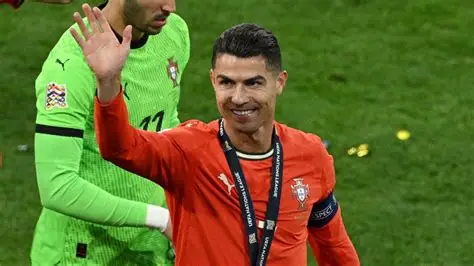
Portugal’s Economy Minister, Manuel Castro Almeida, says Cristiano Ronaldo matters to Portugal in ways that reach far beyond football. “Many people know Portugal only because of Cristiano Ronaldo,” he stressed.
His comments land as the fallout from Ronaldo’s sudden exit from the national team camp continues to dominate the headlines.
Speaking in remarks carried by the Portuguese website The Resident from the Now channel, the minister painted Ronaldo as a huge asset for Portugal’s image on the world stage. “Cristiano Ronaldo has an enormous impact in promoting and highlighting Portugal’s image,” he said. He went further still, likening the Portugal star to “the most famous company in Portugal”
On the row between Ronaldo and coach Jorge Jesus, Castro Almeida pleaded ignorance. He insisted he was “not an expert” and refused to judge who was in the right.
His focus stayed on Ronaldo’s wider worth to Portugal and its standing abroad.
That global recognition, the Economy Minister argues, makes Ronaldo “a value and an asset” to the country. “It would be good if Portugal could continue to rely on this asset,” he said.
He added: “From the angle of enhancing Portugal’s image and reputation, Cristiano holds extremely important value, and it would be very good for Portugal to continue to benefit from this potential.”
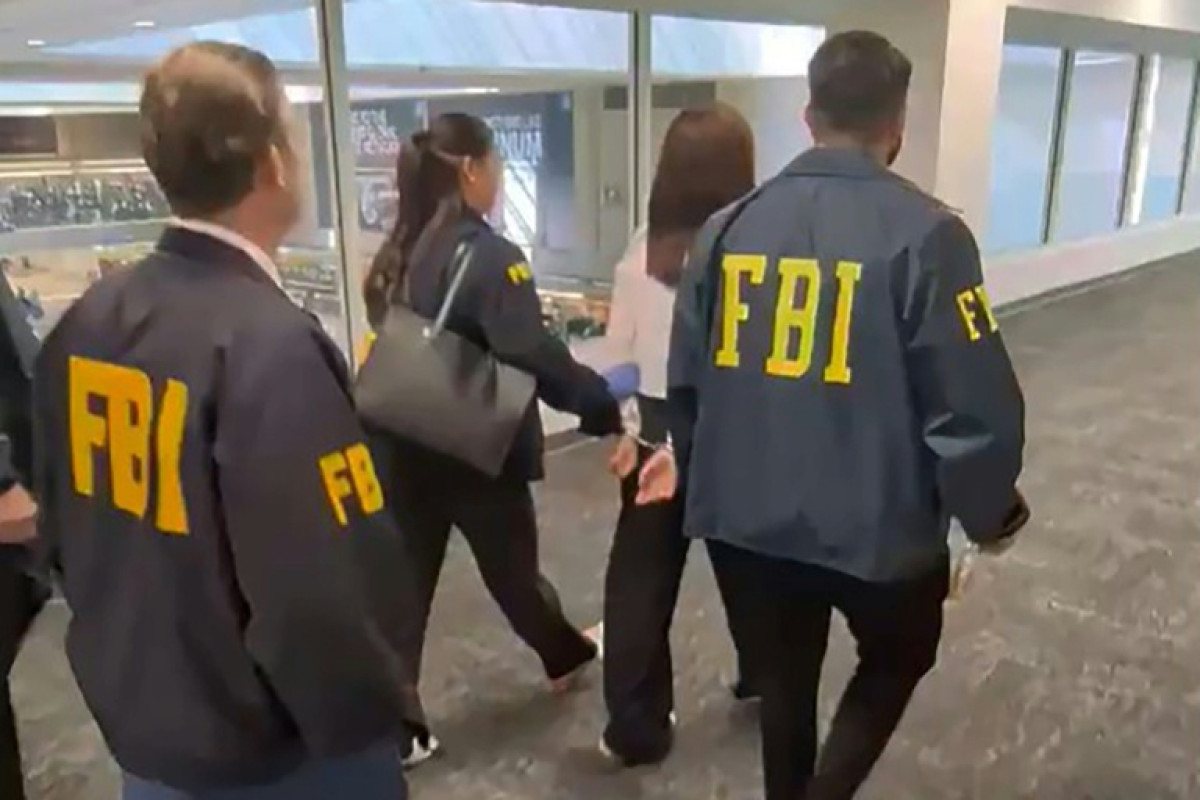
A woman accused of spying for China on Taiwanese President Lai Ching-te’s son and his family was arrested Sunday in the United States, US and Taiwanese officials said.
Wanying Zhang, 34, was detained by the FBI at Los Angeles airport “attempting to depart for China”, First Assistant United States Attorney Bill Essayli said in an X post.
Zhang is accused of acting as an unregistered agent of China and spying on a “close relative of a Taiwanese government official” in the United States, Essayli said.
The woman allegedly surveilled Lai’s “son and his family — filming their home, vehicles, and reporting information back to (People’s Republic of China) handlers”, the FBI said on its rapid response account on X.
China claims Taiwan is part of its territory and has threatened to use force to annex the island.
Zhang traveled to Seattle in 2025 and, acting at the direction of Chinese officials, sent “photos, videos, and license plate information to those officials”, Essayli said.
FBI Director Kash Patel cheered the arrest in an X post, warning foreign adversaries that “America is no longer a safe place to run your espionage operations.”
“Allegedly surveil a foreign leader’s family on US soil for the PRC — and try to catch a flight back to Shanghai? Not happening,” Patel said.
Lai, who was elected president in January 2024, has been an outspoken defender of Taiwan’s sovereignty and is detested by Chinese leaders.
Lai’s office condemned the “barbaric acts”, which it confirmed had targeted the president’s family, and said it was a case of “transnational repression.”
“Such behavior should not be tolerated in the civilized world,” Presidential Office spokeswoman Karen Kuo said in a statement, thanking US judicial authorities for “their assistance and protection of our citizens.”
Taiwan’s government has warned Taiwanese people of growing risks to their safety in China and elsewhere after Beijing’s ethnic unity law took effect in July.
The Law on Promoting Ethnic Unity and Progress aims to forge a “shared” national identity among ethnic groups.
But overseas campaigners have argued it will further degrade the rights of ethnic minorities, like Uyghurs and Tibetans, that Beijing is accused of persecuting.
They also point to a clause stating that people can be held liable for violating the law even when outside China, saying it gives the Chinese government more justification for targeting its opponents abroad.
Zhang, who resides in Irvine, California, “coordinated the trip with an associate and used tradecraft to avoid detection,” Essayli said.
Zhang is expected to make her initial appearance in federal court on Monday.
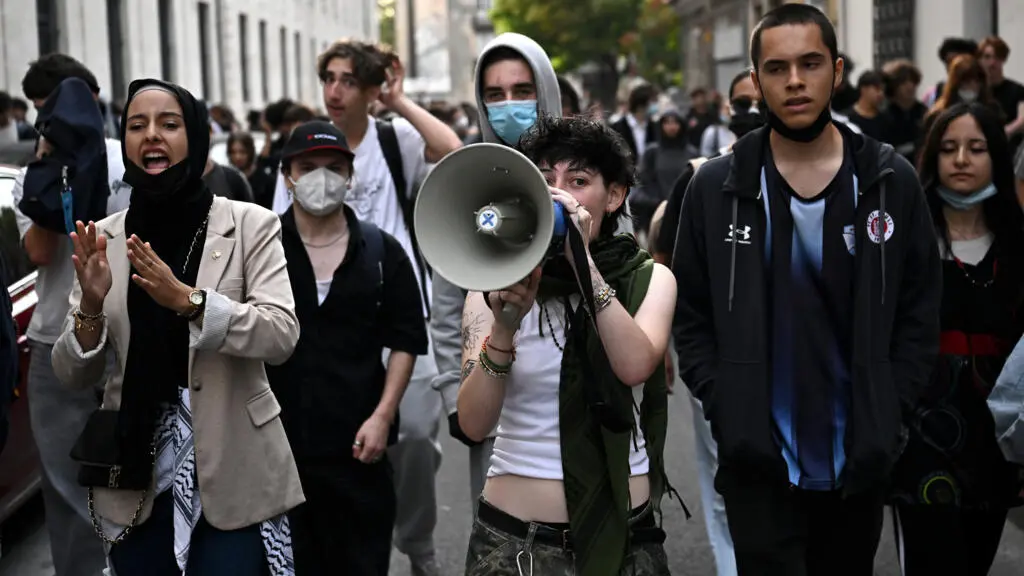
Lessons were suspended at hundreds of French high schools on Monday, as part of a wave of student protest over learning conditions that have rocked the European nation.
Students trickled into some schools despite ongoing protests outside their gates, ahead of a day of larger demonstrations expected on Tuesday.
Since late September, pupils have barred the entrances to their schools, complaining of teacher absences, overloaded timetables, dilapidated classrooms and buildings ill-adapted to rising temperatures, among other grievances.
The government has sought to address the grievances, while accusing hard-left activists of having hijacked the protest movement.
Up to 500 out of France’s 3,700 high schools, known as lycees, were expected to be partially or totally closed on Monday, Education Minister Edouard Geffray said late Sunday.
A third of the 468 lycees for teenagers aged 15 to 17 were to be closed in the Paris region, authorities said.
In the capital’s central third district on Monday morning, dozens of teenage students chanted in protest, as cars honked their horns in support while driving past, while others made their way into class.
“No means, no silence,” read one cardboard sign outside the Turgot high school.
“We’re missing our lessons to give you one,” read another.
In the western city of Rennes, more than 20 pupils gathered outside the Montaigne lycee, one clutching a sign that read “Not enough teachers”, but staff allowed other students into their classrooms.
In the northern city of Lille, masked protesters destroyed bus shelters or set fire to dustbins, as police fired teargas towards several hundred demonstrators.
The movement started on September 17 at a high school in the Paris suburb of Creteil, in support of teachers striking over a lack of staff and resources.
It gained momentum and spread across France, at times spiralling into vandalism, including the destruction of bus shelters, the burning of school entrances and clashes between protesters and security forces.
Since the start of the movement, 24 schools had been “burned or ransacked”, according to the education minister.
More than 5,000 people, 85 percent of them minors, have been arrested.
Protesters have also accused the police of using disproportionate force, and internal investigations have been opened into at least three instances of alleged police brutality.
Prime Minister Sebastien Lecornu set out a timetable on Sunday urging local authorities to prioritise filling gaps left by long-term teacher absences and unfilled posts.
He called a meeting for Tuesday with regional presidents to discuss overhauling the country’s often-dilapidated school buildings.
The government is also hoping to pass through parliament a bill to make those who are responsible for damaging public property pay for repairs themselves, instead of drawing from taxpayer money.
Government spokeswoman Maud Bregeon defended the bill.
“When you have 14-, 15-, 16-year-olds who, at 9 am, are burning bus shelters or — perhaps even more seriously — the high school where they study, that raises the question of parental responsibility,” she told Europe1/Cnews broadcaster.
Lecornu has said the draft law, first presented before the protests, would allow these sums to be “taken from family allowances and housing benefits, while ensuring a minimum income is preserved”.
The head of the main CGT labour union, Sophie Binet, slammed what she called a “populist announcement”, which she said would “end up targeting the most vulnerable families”.
-
 Health & Wellness1 year ago
President Tinubu Directs Cut in Dialysis Cost from ₦50,000 to ₦12,000
-
News2 years ago
CBN Debunks Fake Circular on New ₦5,000 and ₦10,000 Notes
-
 International News6 months ago
Indian Police Arrest Nigerian Over ₦290m Drug Haul
-
 Business7 months ago
Dangote Refinery Reduces Petrol Gantry Price To ₦1,200 Per Litre
-
 Business7 months ago
After Plea Bargain, Court Discharges Stella Oduah of ₦2.5bn Fraud
-
Business2 years ago
Dangote; We Did Not Fix ₦600/Litre Petrol Price
-
 Trending News1 year ago
NELFUND Disburses ₦86bn To 449,000 Beneficiaries
-
 Opinion2 years ago
Championing the People’s Voice: Obasa’s Dedication to Grassroots Representation By Dave Agboola⁰