
News
Court Adjourns Indefinitely EFCC’s Stay Of Execution Against Gov Bello


Kogi State Governor, Yahaya Bello
The Federal High Court in Lagos has adjourned indefinitely an application filed by the Economic and Financial Crimes Commission (EFCC), seeking a stay of execution of the ruling that lifted a forfeiture order on some assets linked to the Kogi State Governor, Yahaya Bello.
Justice Nicholas Oweibo adjourned the hearing of the application sine die because the matter is now before the Lagos Division of the Court of Appeal.
On April 26, Justice Oweibo struck out a suit by the EFCC seeking the final forfeiture of the assets based on the provisions of Section 308(1) of the 1999 Constitution.
The Judge had held that “given the provisions of Section 308 of the Constitution, which provides immunity to a sitting governor from any civil/ criminal prosecution, the court lacks jurisdiction to entertain the matter.”
When the matter was called on Monday, the EFCC counsel, Rotimi Oyedepo (SAN), informed the court that he had filed an application dated April 27 seeking a stay of execution of the ruling pending the outcome of the appeal on the case.
But in his response, counsel to the Kogi State governor, Akoh Ocheni, asked the court to strike out the application because the anti-graft agency failed to comply with the rules of the court, which mandates it to file a written address along with the application.
Ocheni also informed the court that the matter is now before the Court of Appeal as records of proceedings have been transmitted to the upper court.
He argued that the lower court lacked the jurisdiction to continue to hear the application.
After listening to the lawyers, Justice Oweibo adjourned the matter sine die to await the appellate court’s decision.
In Feb. 22, the judge granted a temporary forfeiture order following an exparte motion filed by the EFCC seeking to seize 14 properties located in Lagos, Abuja and the United Arab Emirates (UAE), as well as N400 million, allegedly recovered from one Aminu Falala.
The Court also directed EFCC to make publication in two national dailies for any interested parties to come up with 14 and to show cause why the order should not be made absolute.
After the publication of the preservative order by the EFCC, Governor Bello filed a Notice of Intention to oppose and an application seeking the vacation of the interim forfeiture order.
The Governor, through his lawyer, Abdulwahab Mohammed (SAN), also argued that the property listed were not proceeds of an unlawful act, as they were acquired long before he was elected as Kogi state governor and could not have been received from Kogi State funds.
He further submitted that the case was in flagrant disobedience to a state high court order which restrained the EFCC or any government agency from taking action that may lead to the forfeiture of the properties.
He stated that the interim forfeiture order was obtained by either suppression or misrepresentation of facts by the Commission.
The governor also said that the proceedings of the Crime Act could not take effect in retrospect as the property in dispute was acquired before he became Kogi state governor.
He said the validity of the crime act is being challenged at the Supreme Court.
On the issue of jurisdiction, the government stated that the properties listed were in Abuja, Kogi and UAE, and the personality involved is based in Lokoja, adding that the suit ought to have been instituted either in Abuja or in Kogi State. He, therefore, asked the court to vacate the case for lack of jurisdiction.
In his response, the counsel to the EFCC, Rotimi Oyedepo (SAN), maintained that the applicant had not placed sufficient materials before the court to convince the court to vacate the order.
Oyedepo also insisted that contrary to the Applicant’s submissions, the Kogi state high court or any other court in Nigeria has not stopped the EFCC from carrying out its constitutional duties.
He argued that while the governor enjoys immunity under Section 308 of the constitution, nothing stops the EFCC from investigating and preserving the proceeds of unlawful activities.
In his Ruling, Justice Oweibo agreed with the Commission that the Proceeds of Crime Act suit pending before the Supreme Court remains the law as the Apex court is yet to pronounce on the validity of the law.
The judge, however, held that given Section 308 of the Constitution, which provides immunity to a sitting governor from any civil/criminal prosecution, the court lacked jurisdiction to entertain the matter.
The court, therefore, struck out the suit for lack of jurisdiction.

Three construction workers were rescued alive while one person was recovered dead after a two-storey building under construction collapsed at Akinola Street, near Fadeyi Bus Stop, off Ikorodu Road, Lagos, in the early hours of Friday.
The Lagos State Emergency Management Agency (LASEMA) said search and rescue operations were ongoing to determine whether more workers remained trapped beneath the rubble.
The collapse occurred shortly after midnight, prompting an emergency response following a distress call received by the agency at 12:10am. LASEMA’s Cobra Response Team, deployed from its Onipanu Base, arrived at the scene two minutes later and discovered that the building had caved in, with construction workers suspected to be trapped beneath the debris.
Rescue efforts intensified after responders heard groaning sounds from beneath the collapsed structure, suggesting that some victims were still alive.
The agency deployed an excavator to assist the search and rescue operation, taking safety precautions to protect both the victims and emergency personnel.
As of 3:33am, three adult men had been pulled out alive, while the body of another adult male had been recovered from the debris.
The rescued men received immediate pre-hospital treatment from LASEMA’s paramedics and the Lagos State Ambulance Service (LASAMBUS) before being transferred to a hospital for further medical attention.
LASEMA said the cause of the collapse had yet to be established and would be investigated by the relevant regulatory authorities.
The operation was coordinated by the agency’s Director of Operations, Engr Akintunde Akinsanya and the Head of Cappa Base, Engr Olayinka Salami, who were at the scene to supervise the response.
Other agencies involved in the rescue included the LASEMA Response Team, Lagos State Fire and Rescue Service, LASAMBUS and officers of the Nigeria Police Force from Alagbon Division.
The Lagos State Government commiserated with the family of the deceased and wished the survivors a speedy recovery. It also reiterated its commitment to tackling substandard construction and strengthening building monitoring and enforcement in collaboration with the Lagos State Building Control Agency.
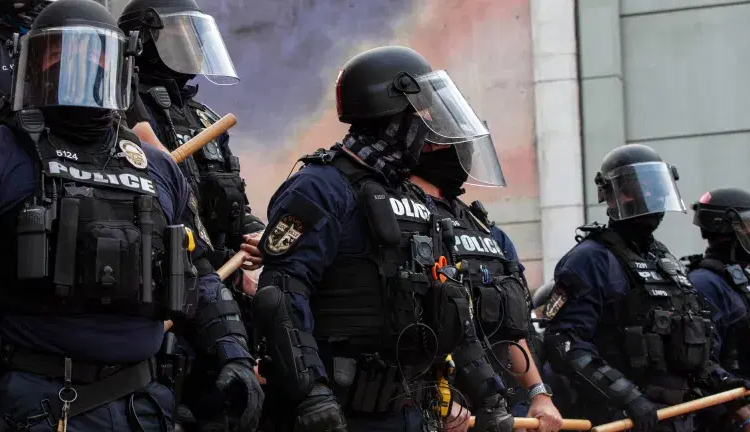
The Osun State Police Command has declared two men, Nurudeen Iyanda Wakeeli, also known as Alowonle, and Adeyemi Ojo, alias Sibi, wanted in connection with the alleged murder of Olalekan Oyeyemi Ajagungbade, popularly known as Emir.
The police announced the development in separate public notices issued on Friday by the command’s Police Public Relations Officer, DSP Abiodun Ojelabi, on behalf of the Commissioner of Police, Osun State Command, Osogbo.
The police urged residents to provide credible information that could lead to the suspects’ whereabouts.
According to the notices, “Nurudeen lyanda Wakeeli is an adult, dark in completion, white teeth, about 1.70m tall, pointed nose, oblong head, black hair and Yoruba by tribe. Suspect is being declared wanted for a case of murder of Olalekan Oyeyemi Ajagungbade ‘M’ a.k.a Emir.
“Anybody that harbor the suspect will be treated by the Police as an accomplice to the crime mentioned above.
“Anybody having useful information as to his whereabouts will be handsomely rewarded.”
Ojo was similarly described as an adult male, approximately 1.70 metres tall, with a dark complexion, white teeth, a pointed nose, an oblong head and black hair.
“One ADEYEMI OJO ‘M’ a.k.a Sibi, a Nigerian National from Ile-Ife in Osun State is wanted by the Nigeria Police, Osun State Command in connection with a Murder case.
“Adeyemi Ojo is an adult, dark in completion, white teeth, about 1.70m tall, pointed nose, oblong head, black hair and Yoruba by tribe. Suspect is being declared wanted for a case of murder of Olalekan Oyeyemi Ajagungbade ‘M’ a.k.a Emir.
“Anybody that harbor the suspect will be treated by the Police as an accomplice to the crime mentioned above.
“Anybody having useful information as to his whereabouts will be handsomely rewarded,” the notice added.
The notices provided two telephone numbers, 08039537995 and 09060052947, for members of the public to contact the command with information about the suspects’ whereabouts.
The police urged anyone with relevant information to assist the investigation by contacting the command through the listed numbers or reporting to the nearest police station.
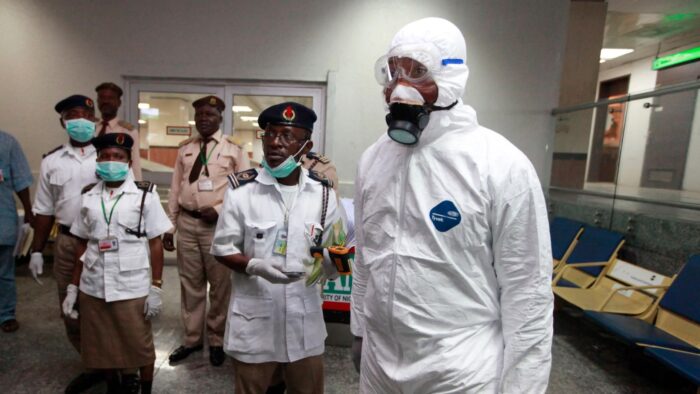
The Federal Government has ruled out an immediate ban on conferences and other large public gatherings following Nigeria’s confirmed Ebola case, saying there was no evidence of community transmission.
The patient, who arrived in Nigeria without symptoms and developed illness several days later, was improving, while health authorities monitored 44 contacts identified through investigations at hospitals, domestic settings and other locations she had visited.
The government also directed a reduction in visiting foreign delegations, particularly those arriving from or travelling through affected countries, while intensifying contact tracing, border surveillance and public sensitisation.
Coordinating Minister of Health and Social Welfare, Muhammad Ali Pate, said at a briefing in Abuja on Thursday that the patient’s improving condition did not lessen the need for vigilance. He warned that misinformation, public distrust and non-compliance could undermine containment efforts.
Addressing concerns about restrictions on public activities, Pate said decisions would be guided by scientific evidence and expert advice.
“At this moment, there is no indication that requires us to alter the course of large gatherings that have been planned,” he said.
He said that position could change if new evidence emerged, adding that the immediate task was to contain the confirmed case and prevent transmission beyond those already identified as potentially exposed.
Pate said clinicians had reported encouraging laboratory results, raising hopes of recovery.
“Today, I spoke to the clinicians and I understand that her lab results are showing great improvement and there’s a possibility that she would recover from this,” he said.
He stressed that the improvement did not diminish the need for close monitoring, enforcement of public health measures and sustained preparedness.
Against growing scepticism about the case, Pate said the patient had tested positive on three occasions and warned that dismissing the infection as fabricated could lead people to disregard quarantine or isolation directives.
“The alternative to trusting the experts is a tragedy,” he said, urging Nigerians to rely on credible sources and demand evidence from those circulating unverified claims.
He cited misinformation about polio vaccination as an example of how false narratives could frustrate life-saving interventions and appealed to political leaders not to turn the health emergency into a partisan dispute. “Health has no political party, has no citizenship, has no nationality, has no tribe, no religion. It is a great unifier.”
He urged journalists to report responsibly and avoid amplifying rumours, assuring Nigerians that the government would provide regular updates on established facts, uncertainties and measures being taken to protect the public.
-
 Health & Wellness1 year ago
President Tinubu Directs Cut in Dialysis Cost from ₦50,000 to ₦12,000
-
News2 years ago
CBN Debunks Fake Circular on New ₦5,000 and ₦10,000 Notes
-

 Business7 months ago
Dangote Refinery Reduces Petrol Gantry Price To ₦1,200 Per Litre
-
 International News7 months ago
Indian Police Arrest Nigerian Over ₦290m Drug Haul
-
 Business7 months ago
After Plea Bargain, Court Discharges Stella Oduah of ₦2.5bn Fraud
-
Business2 years ago
Dangote; We Did Not Fix ₦600/Litre Petrol Price
-
 Trending News1 year ago
NELFUND Disburses ₦86bn To 449,000 Beneficiaries
-
 Opinion2 years ago
Championing the People’s Voice: Obasa’s Dedication to Grassroots Representation By Dave Agboola⁰