
News
Disquiet In The Military Over Tinubu’s ADC’s Promotion

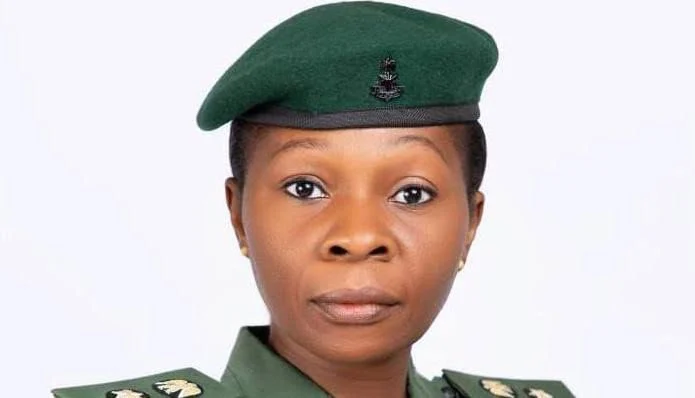
There are grumblings among military operatives following the recent promotion of Colonel Nurudeen Yusuf, the Aide-de-Camp (ADC) to President Bola Ahmed Tinubu, to the rank of Brigadier- General report says.
Unnamed sources in the report, were quoted as saying the promotion was an “unusual decision, especially under a democratic dispensation.”
One of the officers quoted said while young and middle cadre officers such as Lieutenants, Captains, Majors and Lieutenant Colonels could be promoted for exceptional performance, “promoting someone to the position of Brigadier General through executive fiat is not only abnormal but a terrible precedence.”
President Tinubu had, in a letter dated December 12, 2025, and addressed to the Chief of Army Staff, Lt.-Gen. Wahid Shaibu, approved the promotion of Colonel Yusuf to the rank of Brigadier-General.
The letter which is available on different platforms was signed by the National Security Adviser (NSA), Nuhu Ribadu, in which he conveyed the president’s approval for Col. Yusuf’s elevation.
Yusuf was appointed ADC to Tinubu on May 1, 2023, about four weeks before the president’s inauguration. He was a Lieutenant Colonel at the time but was promoted to the rank of Colonel.
The recent promotion has raised eyebrows within military circles because Yusuf was only decorated as a Colonel in January this year, making the latest advancement his second within a 12-month period.
Another source said, “This is an aberration…In the immediate past government, Brig.- Gen. ML Abubakar (N/10378), a member of 44 Regular Course of NDA, started with then President Muhammadu Buhari as Lt Col.
“When it was time for his promotion, he was promoted to Colonel along with his course mates. At the end of Buhari’s first term, he was released to attend the statutory course for promotion to Brigadier General. At the end of the course and passing through the normal process, he was posted out of the Villa to an appointment commensurate with his rank and replaced with then Lt Col YM Dodo (N/11624), a member of 50RC.”
The source added: “Similarly, during the President Olusegun Obasanjo era, Col Giwa Amu was replaced with Lt Col Chris Jemitola for the former to proceed to his Defence College and grow with his course mates
“The only time a Brig Gen was ADC, was during the time of General Abdussalami Abubakar, when Col Abide Aprezi, was promoted to Brigadier General and was retained for a few months to conclude the transition programme,” he said.
Meanwhile, a Premium Times report at the weekend said several officers, including some of Yusuf’s course mates, reportedly expressed frustration over what they described as an unprecedented fast-tracking of his career, with critics accusing the president of favouritism.
The Premium Times also quoted a Presidency source saying Tinubu approved the elevation to align Yusuf’s rank with those of other senior security officials attached to the Presidential Villa.
According to the source, the Nigeria Police Force in August promoted the president’s Chief Personal Security Officer, Usman Shugaba, from deputy commissioner of police to commissioner of police.
Similarly, the State Security Services (SSS) recently elevated the president’s Chief Security Officer, Adegboyega Fasasi, to the rank of director.
The source explained that the police and SSS ranks are considered equivalent to that of a brigadier-general in the Nigerian Army.
He added that without a corresponding promotion, Yusuf would have remained subordinate in rank to his counterparts within the Villa’s security architecture, a situation he said could undermine esprit de corps among the presidential security team.
But another anonymous source countered the claim saying, “The Nigerian Army is an institution sustained by tradition, memory, and an unwritten moral code that governs advancement, authority, and respect.”
According to him, “Promotion to the rank of Brigadier General has, over decades, been one of the clearest expressions of that code. It signifies that an officer has endured the full weight of professional scrutiny, satisfied exacting standards, and earned the confidence of both peers and subordinates through time, sacrifice, and intellectual preparation. This tradition is not ornamental. It is the backbone of discipline and the quiet assurance that the system is fair.
“Within this framework, the promotion of an officer who reportedly spent only one year in the rank of Colonel and who did not pass through the Army War College or the National Defence College represents a decision of extraordinary institutional risk. It is not merely a deviation from precedent, but a rupture with tradition. The immediate effect is not visible in public ceremonies but is felt deeply within messes, command offices, and informal professional spaces where officers measure decisions against the values they have lived by for decades.
“For generations, capable officers have been compulsorily retired or passed over at the Colonel level for failing to meet the stringent requirements for elevation to Brigadier General. Many accepted this outcome with dignity because they trusted the integrity of the system. To now elevate an officer who has not met those same benchmarks sends a devastating signal that sacrifice, patience, and professional education are no longer decisive. This is how quiet resentment begins. Not rebellion, but grumbling. Not protest, but erosion. Once officers begin to believe that the rules no longer apply equally, the moral fabric of the institution starts to fray.”
Another source also faulted the procedure of approving the promotion.
He said, “A letter from president conveying his request to the military was passed to the NSA. The NSA passed it directly to Chief of Army Staff, not to the CDS, not to the Minister of Defence…This is abnormal.”
Becoming a Brigadier-General
It was learnt that under long-standing Nigerian Army practice, and in line with the global best practice, an officer cannot legitimately move from Colonel to Brigadier General without meeting three key requirements:
Completion of War College / Senior Staff Course (approximately one year)
Completion of National Defence College or equivalent strategic course (approximately one year)
Minimum time-in-rank as Colonel: typically four to five years.
Entertainment
NIBAD 2026: Abike Dabiri To Take Centre Stage As Bunmi Ebony, DJ X-One Host Baltimore Event

The Chairman and Chief Executive Officer of the Nigerians in Diaspora Commission (NiDCOM), Hon. Dr Abike Dabiri-Erewa ( OON) has been scheduled for honour, among other awardees, at the 2026 and the 6th edition of the annual Nigerian Independence Ball, Awards, and Dinner (NIBAD),billed to hold in Baltimore, Maryland, on the 18th of October .
At the instance of Naija Times USA and Raindrop Group led by Olaniyi Thompson Tabi, activities marking the 6th edition of NIBAD commenced on the 3rd of October with Independence carnival in Maryland.
As part of the expanded 6th edition, the Annual Independence stage play titled ‘Your Excellency Sir!’ …The saga of a nation, written and directed by Olaniyi Thompson Tabi, was showcased at a very colorful event on the 9th of October.
Designed to be an unforgettable celebration of Nigeria’s 66th Independence celebration, the grand finale of the celebration is billed for Sunday, the 18th of October, 4.00pm, at Gabriel Community Centre, 6948, Dogwood Road, Windsor Mill, MD 21244.
The evening will not only commemorate Nigeria’s rich history and vibrant culture but will also spotlight the exceptional contributions of Nigerians at home and abroad in various fields such as business, healthcare, education, community service, and more.
The evening will feature a grand awards ceremony to honor those who have demonstrated leadership, innovation, and dedication in their respective industries. Among them, Dr Dabiri- Erewa
Hon. Dr. Abike Kafayat Oluwatoyin Dabiri-Erewa (OON) is a prominent Nigerian politician, public administrator, and former broadcast journalist who has been able to show leadership since her appointment as the Chairman and Chief Executive Officer of the Nigerians in Diaspora Commission (NiDCOM).
To add colour to the event also, is
Dj X-One, reputed as the best Disc Jockey in the DMV area. Bunmi Ebony, a fast rising Juju Artiste in Atlanta will also be on the bandstand to thrill guests at the event to celebrate Nigeria.
****About NIBAD: The Nigerian Independence Ball, Awards, and Dinner (NIBAD) is an annual event that celebrates Nigeria’s Independence while recognizing the achievements of Nigerians in the diaspora. NIBAD aims to highlight the cultural pride, resilience, and accomplishments of Nigerians globally, bringing together community leaders, professionals, and influencers for an evening of celebration, inspiration, and unity.
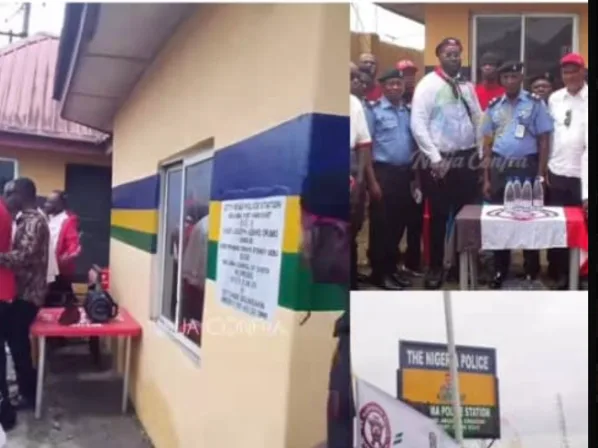
The Rivers State Police Command under CP Olugbenga A. Adepoju has condemned the purported renovation of the Abuloma Police Outpost by suspected cultists and ordered a full investigation into the incident.
Police Public Relations Officer (PPRO) of the command, ASP Blessing Agabe disclosed this in a Friday statement.
She said the command’s action follows a trending social media report and circulating video alleging that suspected cultists renovated the outpost and visited the facility on Thursday, October 15, to celebrate completion of the renovation.
The command said it “strongly condemns any action or association capable of compromising the integrity, discipline and professional standards of the Nigeria Police Force or conferring legitimacy, recognition or acceptance on suspected cult groups or other unlawful organisations.”
It added, “Police facilities are public institutions established for the protection of citizens and the enforcement of law and must not become platforms through which criminal groups seek public validation or influence.”
The command said CP Adepoju maintains zero tolerance for criminality and any conduct that undermines public confidence in the police.
Consequently, he has queried and relieved the Divisional Police Officer in charge of Abuloma Division and the Divisional Officer overseeing the affected outpost of their duties pending investigation.
The CP has also ordered a full investigation to establish the circumstances surrounding the incident and the veracity of the allegations, including the identities and backgrounds of the individuals or groups who financed or facilitated the renovation; the police officers who authorised or approved the project; whether due procedures were followed; whether any officer breached professional standards or compromised the integrity of the force; and the extent of any involvement by police personnel.
The command said while it welcomes legitimate community support for improving police facilities, consistent with Section 26(1)(d) of the Nigeria Police Act 2020, which provides for gifts and contributions to the Police General Fund, such support must not compromise police independence, professional standards or security.
“No donation or assistance confers immunity from investigation or prosecution,” the command stated, adding that the investigation will establish whether necessary approvals were obtained and appropriate checks conducted on those who financed the renovation.
It reiterated that it would not condone unprofessional conduct or any form of improper association with criminal elements and that appropriate disciplinary and legal action would be taken against anyone found culpable.
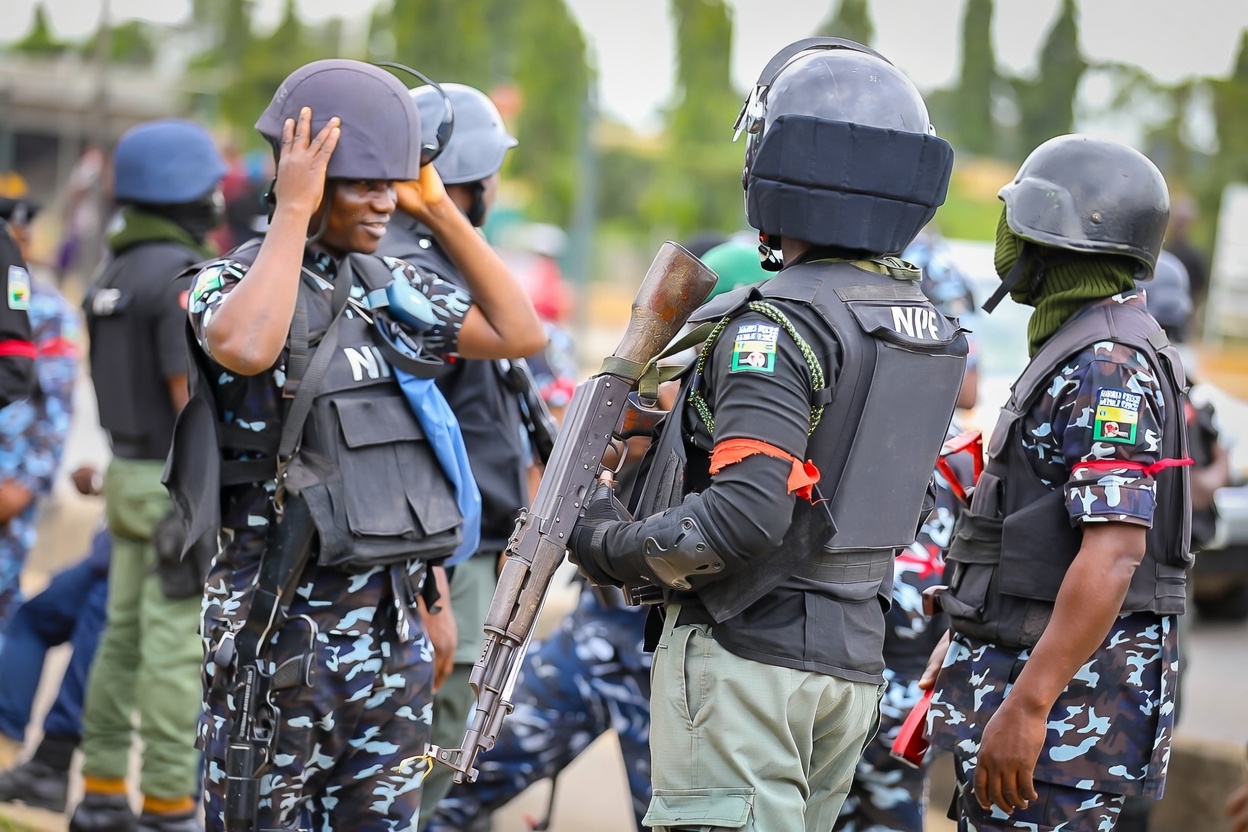
The Police Command in Benue State has confirmed the abduction of Rev. Fr. John Otache, Parish Priest of St. Margaret’s Parish, Ajegbe-Awume, in Ohimini Local Government Area of the state.
The Police Public Relations Officer, DSP Aondogu Orchia confirmed the incident on Friday in Makurdi.
Orchia said the command had commenced full investigation into the incident and efforts were ongoing to rescue the priest.
Meanwhile, the Catholic Diocese of Otukpo, in a statement signed by the Diocesan Chancellor, Rev. Fr. Joseph Itodo, said the priest was abducted on October 13.
According to Itodo, Otache was returning home from Otukpo when he encountered the abductors along the Otobi Amejo-Ajegbe Road in Ohimini Local Government Area.
He expressed sadness over the incident, saying the Bishop of Otukpo, Most Rev. Michael Apochi, was deeply pained by the development.
He called on priests, religious members, the laity and other well-meaning individuals to pray for the priest’s safe and speedy release.
He also urged prayers for other persons held by kidnappers across the country, expressing hope for their safe return.
-
 Health & Wellness1 year ago
President Tinubu Directs Cut in Dialysis Cost from ₦50,000 to ₦12,000
-
News2 years ago
CBN Debunks Fake Circular on New ₦5,000 and ₦10,000 Notes
-

 Business7 months ago
Dangote Refinery Reduces Petrol Gantry Price To ₦1,200 Per Litre
-
 International News7 months ago
Indian Police Arrest Nigerian Over ₦290m Drug Haul
-
 Business7 months ago
After Plea Bargain, Court Discharges Stella Oduah of ₦2.5bn Fraud
-
Business2 years ago
Dangote; We Did Not Fix ₦600/Litre Petrol Price
-
 Trending News1 year ago
NELFUND Disburses ₦86bn To 449,000 Beneficiaries
-
 Opinion2 years ago
Championing the People’s Voice: Obasa’s Dedication to Grassroots Representation By Dave Agboola⁰