The Nigeria Labour congress, Manufacturers and some civil society Organisations CSOs have kicked against the Federal Government’s 240 per cent hike in the tariff payable by electricity users enjoying a 20-hour power supply.
They insisted on the electricity subsidy, warning that its removal would send manufacturers out of business and worsen inflation.
The subsidy on electricity has been withdrawn completely from the tariff payable by power consumers in the Band A category, who constitute about 15 per cent of the total number of power users across the country.
The government announced the hike in the electricity bill at a press briefing in Abuja by NERC on Wednesday, adding that those affected would now pay a tariff of N225 per kilowatt-hour, up from the previous rate of N68/kWh, representing about 240 per cent increase. The government declared that the decision took effect from Wednesday (yesterday).
But the organised private sector, Nigeria Labour Congress, as well as the Trade Union Congress, kicked against the hiked tariff for power users, whether it was for those on Band A or not.
They argued that the hike in tariff would send manufacturers out of business, worsen inflation, and stifle small and medium enterprises, adding that no place in Nigeria enjoyed up to 20 hours of power supply daily.
Band A power users are those who get up to 20 hours supply of electricity daily and paid about N68/kWh before the implementation of this latest order by the Federal Government through NERC.
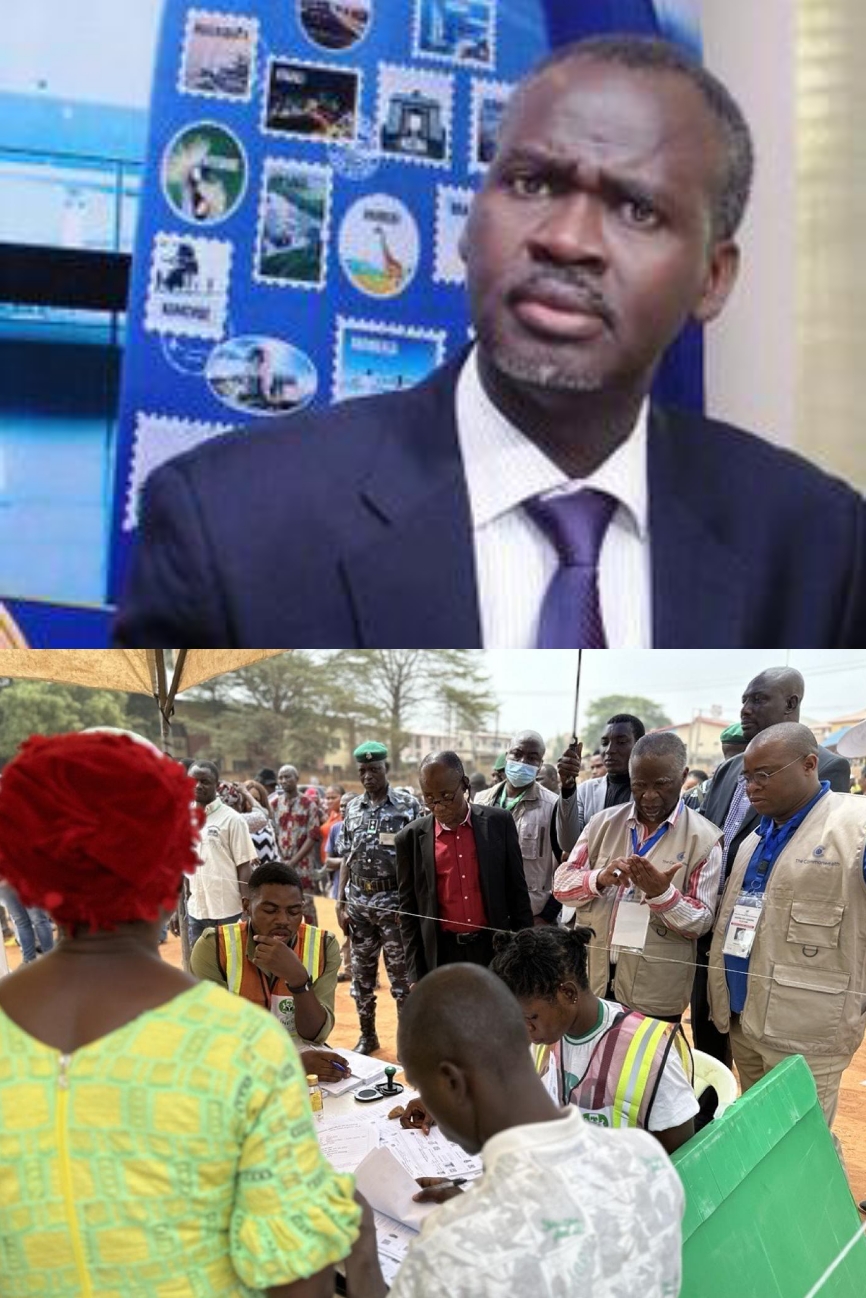
The Vice Chairman of NERC, Musiliu Oseni, told journalists in Abuja that the government could not sustain subsidy on electricity and had to devise ways to cut down the about N2.9tn that would be spent on power subsidy this year.
He explained that customers on Band A represented 15 per cent of the over 12.82 million registered electricity consumers across the country, adding that the commission had also downgraded some customers on this band.
Discos feeders downgraded
Oseni said the downgrading of some Band A customers to Bands B and C was because of the non-fulfillment of the required hours of electricity provided to them by power distribution companies in their respective franchise areas.
He said NERC was able to discover this after deploying technology to ascertain the rate of power supply from the feeders of the Discos meant for Band A power users.
“And on that basis, the commission has decided that many of the feeders that the Discos brandish as Band A feeders are not meeting the Band A service, and as such the feeders have been downgraded immediately as a way of protecting consumers.
“We have over 3,000 Discos feeders. There are over 875 Band A feeders, but upon reviewing the feeders’ performance, the commission has reduced it to under 500 feeders now, which qualify as feeders that currently meet the 20-hour average service.
“So when you look at that concerning the over 3,000 feeders that we have, it shows that we have just 17 per cent of the total feeders of the distribution companies now qualified as Band A feeders.
“And when you look at where those 17 per cent feeders critically, it is estimated that just under 15 per cent of customers are benefiting from them, or are currently connected to those feeders, meaning that we have 17 per cent of the total distribution feeders or less than 15 per cent of customers currently benefiting from the service,” Oseni stated.
He stressed that based on this, “the commission has decided that only the 17 per cent feeders and less than 15 per cent customers will be affected by any rate increase that the commission will approve for the distribution companies.
“Therefore the commission has issued an order, which is titled April 2024 Supplementary Order, which is supplementary to the order issued in December 2023 effective January 2024.
“So the April Supplementary Order takes effect from today and in that order, the commission has approved a rate review of N225/kWh for just under 15 per cent of the customer population in NESI. So that means that less than 15 per cent of the customers will be affected.”
He further noted that many customers previously classified as Band A power users would not be affected because they hardly get a daily average power supply of up to 20 hours.
Oseni said consumers affected by the latest tariff hike would henceforth pay their power bills completely by themselves, as the applicable subsidies on Bands B, C, D, and E would not be enjoyed by them.
He noted that these Band A customers had almost all the facilities required for the supply of electricity to their domains for 20 hours daily.
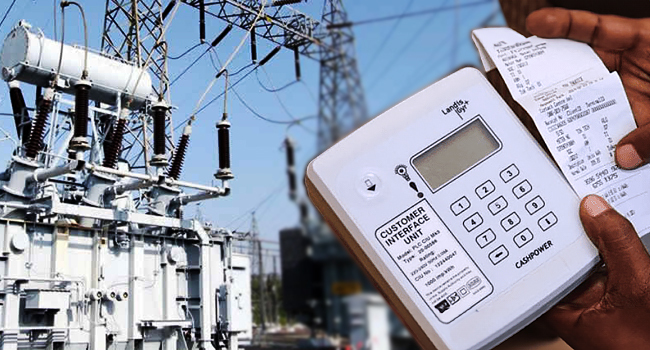
He, however, noted that about 20 per cent of these Band A customers were not metered, and explained that they would now receive a high concentration in terms of metering by the Discos.
“This, however, does not mean that customers in other bands have been neglected, no. Rather, the Discos will have to provide meters to this category of Band A customers fast, since their tariff is now N225/kWh,” the NERC vice chairman stated.
On the effect of subsidy in the sector, Oseni said it had been affecting the payments being made to power generation companies, adding that this “led to a situation whereby the Gencos were unable to make payments for gas.
“That also resulted in the reduction of gas supply for power generation because there is competitive demand for gas. You have so many other companies that require gas and can pay for it.
“So these issues have compounded the performance of the sector and that led to the dip in power generation that we experienced recently.”
He further noted that the recent increase in the price of gas for power generation from $2.28/mmbtu to $2.42/mmbu also warranted a hike in the cost of tariff, particularly for Band A customers.
Labour kicks
However, the NLC described the decision of the Federal Government to hike the electricity tariff as insensitive and callous.
The NLC’s spokesman, Benson Upah, made this known in an interview with one of our correspondents.
He said, “The government’s decision is not only insensitive, it is callous. It further pauperises consumers, especially workers whose wages are fixed and insufficient.
“It similarly makes the operating environment more hostile for manufacturers with the potential for an astronomical rise in the cost of goods and services or the worst case scenario, more closures and loss of jobs.
“The only people who stand to gain from this mindless social violence against the people are the World Bank and IMF (International Monetary Fund).”
On their part, the Trade Union Congress said the Federal Government was only concerned about revenue generation to the detriment and survival of the citizens.
The TUC’s Deputy President, Tommy Etim, s said, “The government is being insensitive to the plights of citizens. I think they believe so much in revenue generation to the detriment of the survival of the citizens. Let me state that the hike in the electricity tariff from N66/kWh to N225/kWh for those who enjoy electricity supply for 20 hours per day is unacceptable and a recipe for individual unrest.
“This shows clearly that Nigeria is not ready for 24-hour electricity supply. As we speak, you cannot point anywhere in Nigeria that people are enjoying 20 hours of electricity supply, not even at the airport where it is expected for economic reasons. I think that the government has goofed again, especially at this time of socioeconomic challenges where the cost of living is very exorbitant and the salary of the workers remained static.”
Also reacting to the development, members of the organised private sector said the hike would lead to job losses, higher cost of operations, and inflation, among other challenges.
The President of the Lagos Chamber of Commerce and Industry, Gabriel Idahosa, said companies would start laying off workers.
“Well, there would be losses for companies that can’t cope, but in terms of percentage, it is very early to make those projections. We are hoping that members would go back to the drawing board, look at their projected cost of operations, and look at the level of losses they can accommodate or the reduction of profit they can accommodate.
“And what then happens is that they would have to make some decisions about scaling down operations to cut their losses, which may involve firing people. They may also try to increase prices where their products have a very strong demand. But the bottom line is that we are going to see a lot of our members recording more losses or reduced profits. So that is the primary thing,” Idahosa said.
He added, “They may decide to fire people that are not critical to operations. They may start with the non-essential staff. A lot of companies are now going on to part-time, offsite, and temporary employment and outsourcing jobs instead of hiring full-time workers. So you are going to see the loss of full-time jobs, loss of part-time jobs, and even the halt in employment.’’
Idahosa said the move would rapidly increase the operational cost of LCCI members.
Also, the Head of Corporate Affairs, Small and Medium Enterprises Development Agency, Moshood Lawal, said the hike in tariff would warrant a high rate in the running of businesses.
“It is already happening now. Small businesses are already experiencing a high rate of running businesses. So it will lead to more higher cost of running a business and prices of commodities are going to go up.
“We are hopeful that our businesses will survive. We have over the years learned how to be resilient because what we normally teach them is that whatever it will cost to run your business, you build it into the final cost.’’
The President of the Manufacturers Association of Nigeria, Francis Meshioye, described the development as “unpleasant”, but said the body would issue a statement on it.
The National President of the Nigerian Association of Chambers of Commerce, Industry, Mines, and Agriculture, Dele Kelvin Oye, warned that the new electricity tariff hike would lead to higher costs of doing business.
In a statement, he said, “While the commission’s efforts to enhance metering and protect consumers from over-billing are commendable, the tariff hike, influenced by the rise in natural gas base prices, has implications for the cost of operations across businesses that already face a fragile economic recovery.
“We understand the necessity of aligning energy costs with market realities to foster sector investment and sustainability. Nevertheless, we stress the importance of considering the broader economic impact on industries and the timing of such adjustments.
“NACCIMA continues to advocate for a transparent and gradual approach in policy implementation, emphasizing the need for broad stakeholder engagement to mitigate adverse effects on business competitiveness and consumer prices.’’
On its part, the Centre for the Promotion of Private Enterprise, in a statement signed by its Chief Executive Officer, Muda Yusuf, said that the power sector issue had become a major conundrum in the economy.
It added that while tariff review was an inevitability, a 300 per cent increase in one fell swoop is difficult to justify.
The organisation said, “There is a major funding and liquidity crisis which is posing a significant risk to investments in the electricity value chain.
“Costs across the chain have been rising as a result of the multiple macroeconomic headwinds. Meanwhile, the system is not generating the desired liquidity to match the escalating costs.”
The centre also argued that beyond tariff hikes, some fundamental issues need to be addressed in the electricity value chain.
These issues, it said, are issues of technical and commercial losses which are yet to be addressed.
“These are inefficiencies costs that consumers are compelled or expected to pay for as part of the cost recovery argument. And these costs are in billions of naira.
“There is also the exploitative practice of estimated billing. Millions of electricity consumers are yet to be metered,” it added.