
International News
NERC: States Cutting Power Tariffs Required to Fund Subsidy


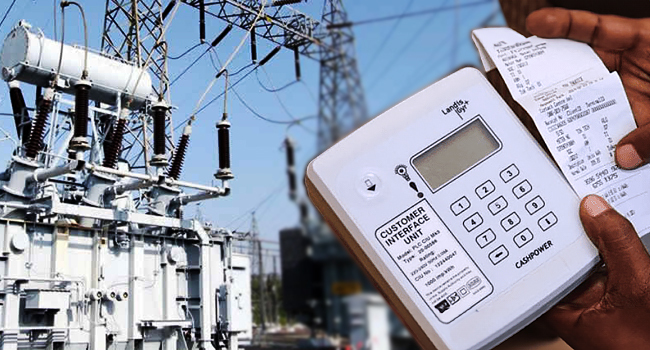
The Nigerian Electricity Regulatory Commission (NERC) has stated that state governments lack jurisdiction over the national grid and power stations established under federal laws or operating with licenses issued by the commission.
The commission stated this in its reaction to the controversies generated by the Enugu Electricity Regulatory Commission’s decision to slash the Band A tariff.
In a notice on Thursday, the national power regulator advised state governments to reflect the wholesale costs in tariffs or be ready to pay subsidies for any tariff shortfall.
The commission acknowledged that states that have assumed full regulatory oversight over their intrastate markets are now authorized to create and regulate transactions in their state electricity markets, saying this extends to the development of tariff methodologies that shall apply to end-use customers in their respective states.
This came as the power distribution and generation companies warned that states’ absolute power to determine tariffs begins when they start generating and transmitting electricity.
The NERC, in its notice on Thursday, cautioned, “As states do not have jurisdiction over the national grid and over electric power stations established under federal laws/operating under licences issued by the commission; they must holistically incorporate the wholesale costs of grid supply to their states without any qualification or deviation in their design of tariffs for end-use customers in order not to distort the dynamics of the market or be prepared to make a policy intervention by way a subsidy for any deviation in the tariff structure that distorts the wholesale generation, transmission and legacy financing costs in the Nigeria Electricity Supply Industry.”
NERC said no institution would take decisions that expose the national grid and wholesale electricity market to a financial crisis in contravention of express powers granted to them by the constitution.
“The commission’s attention has been drawn to the increasing stakeholders’ concerns on the Tariff Order (Order No. EERC/2025/003) issued by the Enugu State Electricity Regulatory Commission, to its Licensee Mainpower Electricity Distribution Limited that relies exclusively on electricity supply (generation and transmission) from the national grid.
“NESI stakeholders have expressed concern about the consequences of the reduction of tariffs for Band A customers in MEDL’s network area to N160.4 per kWh and the freezing of tariffs of customers in the other bands on the wholesale generation and transmission costs, along with the financing costs for legacy obligations in NESI. It is pertinent to state that the N160.4 per kWh was arrived at largely by reducing the current average Generation Tariff of N112.60 per kWh to NGN45.75, with an assumption of a subsidy component, a difference of N66.85 per kWh.
“Section 34(1) of the EA places a statutory obligation on the commission to create, promote and preserve efficient electricity industry and market structures, and ensure the optimal utilisation of resources for the provision of electricity and we are also aware that EERC as a sub-national electricity regulator also has a similar statutory obligation in their enabling law; and neither NERC nor EERC as responsible regulatory institutions would take decisions that expose the national grid and wholesale electricity market to a financial crisis in contravention of express powers granted to them by the constitution,” the Federal Government agency said.
It informed all stakeholders that the commission is currently engaging EERC on their tariff order as it relates to any perceived area of misinterpretation/misunderstanding on wholesale generation and transmission costs on their import of power from the national grid and grants further assurances of its unwavering statutory commitment that the electricity market will be made whole in terms of cost recovery in compliance with the laws of the Federal Republic of Nigeria.
Meanwhile, the Association of Nigerian Electricity Distributors and the Association of Power Generation Companies said the Enugu Electricity Distribution Company and other states contemplating tariff reductions should wait till they start generating and transmitting their electricity before slashing tariffs.
The Chief Executive Officer of ANED, Sunday Oduntan, told Band A customers in Enugu State not to rejoice yet, saying there can’t be a 20-hour power supply at N160 per kilowatt-hour.
On Sunday, the Enugu Electricity Regulatory Commission announced the reduction of the Band A electricity tariff from N209/kWh to N160/kWh, asking MainPower Electricity Distribution Company to implement this from August 1.
The decision has since sparked crises as generation and distribution companies accused the EERC of attempts to create more financial burden in the power sector, saying no state should impose more subsidy obligations on the Federal Government that is still owing N5.2tn of unpaid shortfalls.
While the ERRC said it did its calculations well before dropping the tariff to N160/kWh, Oduntan warned that no state has the power to determine the cost of electricity at the moment, stressing that the states can only align with the tariff order of the Nigerian Electricity Regulatory Commission, except if the value chain totally belongs to them.
Earlier in a statement, Oduntan raised the alarm over growing consumer resistance to electricity bill payments following the tariff cut by the Enugu State Electricity Regulatory Commission, warning that the move threatens to destabilise the country’s fragile power sector.
He disclosed that since EERC announced a reduction in Band A tariffs, customers in other states have begun to demand similar cuts, with some outrightly refusing to pay their electricity bills.
The Chief Executive Officer of the Association of Power Generation Companies, Joy Ogaji, also shared the same sentiment. According to her, states cannot unilaterally fix tariffs because they do not produce electricity.
“The fact speaks for itself. The fact that EERC still regulates a product it does not produce at the state level, but from the wholesale market, they cannot unilaterally regulate that price,” she said.
Ogaji added that the EERC made reference to NERC’s tariff regulations, which assume a subsidy that she deemed imaginary because there is no written policy from the Federal Government stating that there is a subsidy, nor is there a financing plan to backstop the ever-growing and accumulating debts, which have impaired GenCos’ books.
“Their claim based on an imaginary subsidy is baseless. You can’t build something on nothing. Tariff documents are not child’s play. They form the fulcrum for many decisions, including business decisions, potential investors, and so on.
“This regulatory rascality will not be sustainable for decentralisation. Do you even have a justification for claiming a subsidy? Let’s assume there is one in a federal market, you have applied to be independent of? Can you eat your cake and still have it? How do you even claim this subsidy as a state? Unfortunately, we lack leadership in this sector,” she said.
Meanwhile, the EERC clarified that its recent tariff cut did not tamper with the prevailing cost of power generation in the country in any way. The commission maintained that, based on MainPower’s costs, there was no justification to keep the price of electricity for Band A at N209/kWh in the state.
In a statement by EERC’s Commissioner for Electricity Market Operations, Reuben Okoye, the agency maintained that although it inherited the current tariff regime, “the commission is focused on developing a sub-national electricity market that is transparent, accountable, reliable and sustainable and therefore will review utility costs of service to achieve its mandate to the people of Enugu.”


A Finnish appeal court has reduced the prison sentence of Biafran separatist leader, Simon Ekpa, from six to four years.
Finnish newspaper Yle disclosed this in a report on Thursday.
However, the Court of Appeal upheld the decision of the Päijät-Häme District Court, which found Ekpa guilty of terrorism-related charges last year.
The charges were related to Ekpa’s alleged activities aimed at re-establishing an independent state of Biafra in southeastern Nigeria.
Ekpa subsequently appealed the ruling, seeking to have his conviction and sentence overturned.
In a ruling that offered some relief to Ekpa, the Court of Appeal found him guilty of the same offences but reduced his prison term after considering the circumstances surrounding his actions. The court noted that the situation in the Biafran region closely resembled, but did not meet the definition of, a civil war.
Ekpa had told the court that his involvement was not motivated by terrorist intent, citing the political turmoil in the Biafran region.
The prosecutor in the case had also appealed the district court’s decision, arguing that the prison sentence did not reflect the seriousness of Ekpa’s offences.
The Federal Government has called for stronger international responsibility sharing and innovative arrangement to address the growing humanitarian needs of over 142,000 refugees and asylum seekers from 42 countries.
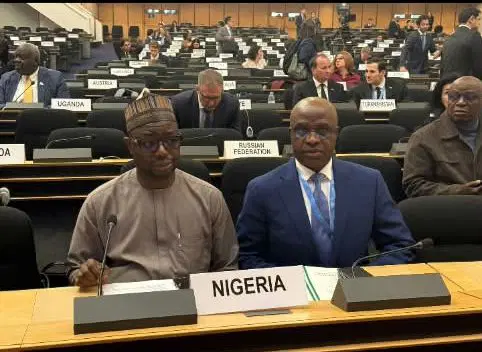
The Minister of Humanitarian Affairs and Poverty Reduction, Dr. Bernard Doro, made the call while delivering Nigeria’s national statement at the 77th Session of the Executive Committee of the United Nations High Commissioner for Refugees (UNHCR), currently holding at the Palais des Nations in Geneva.
In a statement by his Senior Technical Adviser on Information Systems and Data Analysis, Dr. Abimbola Fasanu, the Minister disclosed that as of September 2026, Nigeria had received over 24,000 returnees and was managing a population of more than 6.7 million internally displaced persons (IDPs).
Doro reaffirmed Nigeria’s commitment to international refugee protection obligations, noting that the country continues to maintain an asylum system under the National Commission for Refugees, Migrants and Internally Displaced Persons (NCFRMI) Act of 2022.
He stated that no case of refoulement had been recorded in Nigeria in 2026, reaffirming the country’s commitment to protecting people fleeing persecution from being returned to situations where their lives or freedom could be threatened.
Highlighting progress on durable solutions, the Minister disclosed that over 7,000 Nigerian refugees had voluntarily returned from neighbouring countries this year under Tripartite Agreements, while another 14,000 in Cameroon had registered their intention to return. An agreement covering the return of 2,000 Nigerians from Niger is also being finalised.
He acknowledged the continued hospitality of Cameroon, Chad and Niger in providing refuge to displaced Nigerians.
According to the Minister, improved security conditions in parts of the country are creating opportunities for voluntary return, while Resettlement Cities established in seven locations are supporting the phased closure of displacement camps in conditions of safety and dignity.
Beyond return and resettlement, Dr. Doro outlined measures aimed at promoting self-reliance and reducing prolonged dependence on humanitarian assistance.
He explained that refugees in five states are benefiting from access to land, agricultural inputs and skills training, while the newly established Public-Private Partnership Department of the NCFRMI is supporting efforts to expand livelihood opportunities.
The Minister also cited the successful local integration of former Liberian and Sierra Leonean refugees, some of whom have established businesses and become economically active members of their host communities.
On access to essential services, he disclosed that displaced persons and host communities are being enrolled in Nigeria’s national identity system to facilitate access to banking, education and social services.
He added that refugees are being incorporated into state action plans and social registers, while ten mobile documentation buses are expected to extend identity services to underserved and remote communities.
Doro further highlighted the development of a Digital Gateway in collaboration with UNHCR to provide refugees with secure online access to information.
Addressing the growing pressure on humanitarian financing, the Minister urged the international community to strengthen support for refugee-hosting countries through expanded resettlement opportunities, complementary pathways and greater responsibility-sharing.
He specifically called on UNHCR to explore partnerships with regional and subregional financial institutions, including the African Development Bank and the ECOWAS Bank for Investment and Development, as a means of mobilising additional resources for refugee protection and durable solutions.
The Minister emphasised that the responsibility for addressing displacement could not rest on host countries alone, particularly at a time of increasing humanitarian needs and declining international resources.
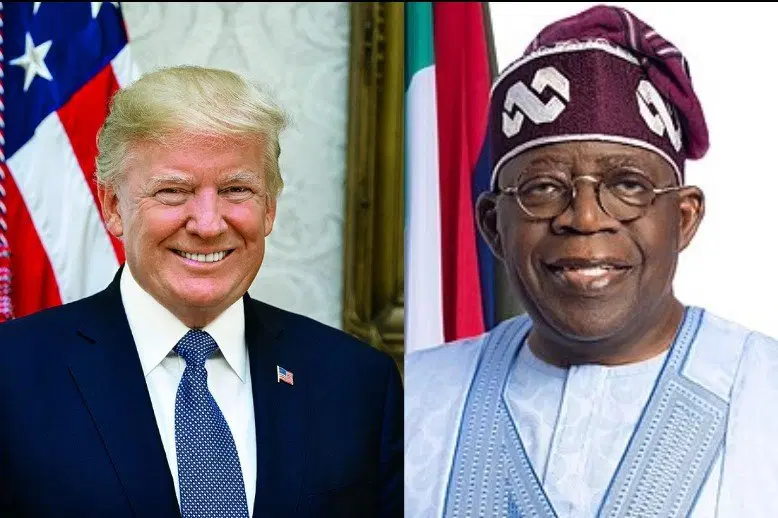
The United States has listed Nigeria among 14 countries identified for recruiting or using child soldiers, warning that the designation could trigger restrictions on certain forms of military assistance.
The listing is contained in the 2026 Trafficking in Persons (TIP) Report, which covers the period from April 1, 2025, to March 31, 2026.
According to the report, restrictions under the Child Soldiers Prevention Act (CSPA) could affect international military education and training, foreign military financing, excess defence articles, peacekeeping operations and licences for direct commercial sales of military equipment, unless a presidential waiver is granted.
Nigeria was listed alongside Afghanistan, Burma, the Central African Republic, the Democratic Republic of the Congo, Ethiopia, Iran, Russia, Rwanda, Somalia, South Sudan, Sudan, Venezuela and Yemen.
The report also retained Nigeria on Tier 2 for human trafficking, a category for countries whose governments do not fully meet the minimum standards for eliminating trafficking but are making significant efforts to comply.
However, the US raised concerns about corruption and alleged official complicity in human trafficking crimes.
“The government did not report any investigations, prosecutions, or convictions of government employees allegedly complicit in trafficking crimes or provide details or other actions taken against complicit officials from previous years,” the report stated.
The report also faulted Nigeria’s efforts to protect trafficking victims, stating that 675 victims received assistance in 2025, compared with 2,058 in the previous year.
It said support services, particularly for male victims, remained limited, with only one dedicated non-governmental organisation shelter for adult male victims operating during the reporting period.
The report further stated that shelters operated by the National Agency for the Prohibition of Trafficking in Persons (NAPTIP) restricted residents’ freedom of movement, while access to certain protection services depended on victims cooperating with law enforcement proceedings.
Despite these concerns, the report acknowledged increased government efforts in investigating, prosecuting and securing convictions in human trafficking cases compared with the previous reporting period.
-
 Health & Wellness1 year ago
President Tinubu Directs Cut in Dialysis Cost from ₦50,000 to ₦12,000
-
News2 years ago
CBN Debunks Fake Circular on New ₦5,000 and ₦10,000 Notes
-
 Business7 months ago
Dangote Refinery Reduces Petrol Gantry Price To ₦1,200 Per Litre
-

 International News7 months ago
Indian Police Arrest Nigerian Over ₦290m Drug Haul
-
 Business7 months ago
After Plea Bargain, Court Discharges Stella Oduah of ₦2.5bn Fraud
-
Business2 years ago
Dangote; We Did Not Fix ₦600/Litre Petrol Price
-
 Trending News1 year ago
NELFUND Disburses ₦86bn To 449,000 Beneficiaries
-
 Opinion2 years ago
Championing the People’s Voice: Obasa’s Dedication to Grassroots Representation By Dave Agboola⁰