
Business
EU Fines Temu 200m Euros Over Illegal Products


The EU slapped a 200-million-euro ($232 million) fine on Chinese-owned online retailer Temu on Thursday for allowing the sale of illegal products, including dangerous baby toys and defective chargers.
“The company failed to diligently identify, analyse, and assess the systemic risks of illegal products being offered on its platform and the resulting harm to consumers in the European Union,” the EU said.
According to EU regulators, European consumers are “very likely to encounter illegal items” on Temu, and the company “seriously underestimated how often EU consumers are likely to” see such products.
Temu is extremely popular in the European Union, with 130 million users after entering the bloc’s market in 2023.
But it has come under fierce scrutiny since October 2024 when the EU opened its investigation, which preliminarily found in July last year that Temu had breached landmark rules over the risks of illegal products.
“Temu is a very big player in the European market,” EU tech commissioner Henna Virkkunen told reporters, adding that its size meant that a “very big part” of EU consumers get their hands on such illegal products.
Thursday’s fine is only the second imposed under the EU’s powerful Digital Services Act (DSA) on content, after Elon Musk’s X platform received a 120-million-euro fine in December.
Under the DSA, the world’s most popular digital platforms including social media apps and online retailers must conduct a risk assessment to understand what dangers they pose and how to tackle the risks.
The EU slammed Temu for its 2024 risk assessment that it said “falls short of the standards”, citing the discovery of baby toys, such as rattles, containing chemicals that exceeded legal safety limits, and chargers that failed basic safety tests. It also pointed to jewellery.
The European Commission said Temu failed to properly assess the platform’s design and how it “could amplify dissemination risks of illegal products”.
– EU focus on China –
The DSA is part of the EU’s bolstered legal armoury to curb what the bloc considers excesses by Big Tech, and fines can go as high as six percent of a company’s total worldwide annual turnover.
While the EU could have hit Temu with a higher fine, a European Commission official said the amount was proportionate to the breach since it concerned a risk assessment for one year where the conclusions were “clear-cut”.
Temu must now pay the fine and present a plan to the EU by August 28 that includes what action it will take to address the breaches.
If Temu does not comply, it faces periodic penalty payments.
It can also appeal the fine, as Musk has already done in the EU courts.
The EU continues to investigate other suspected breaches in the same probe including the use of addictive design features that could hurt users’ physical and mental well-being, and how Temu’s systems recommend content and products.
The fine comes a day before the EU executive is set to debate how the 27-nation bloc should approach China to level the playing field, with top EU officials warning that Europe must get tougher on China to defend its economy.
Brussels has already stepped up its anti-subsidy investigations into Chinese companies investing in Europe, and on Thursday it opened an in-depth probe into Chinese e-commerce giant JD.com’s bid for Ceconomy, a major German electronics retail group, on suspicion it was boosted by state subsidies.
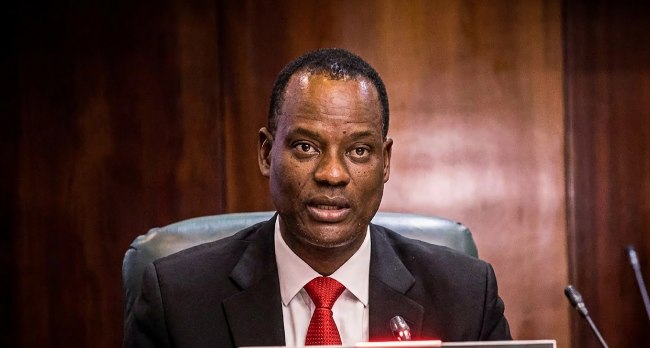
The federal government says late tax payments will attract new interest rates from October 1, 2026.
According to a statement by the ministry of finance, the new rates are linked to market interest rates and will be set for each calendar month.
Under the order, interest on tax payable in naira will be charged at the Central Bank of Nigeria (CBN’s) monetary policy rate (MPR) plus one percentage point, compared with the previous five-percentage-point spread.
However, the ministry said the rate would not fall below the yield on 364-day treasury bills.
This means that since the MPR is 23 percent, taxpayers who pay late would be charged 24 percent interest on the delayed tax, subject to the 364-day treasury bill yield floor.
For tax payable in foreign currency, the statement said the interest rate will be the secured overnight financing rate (SOFR) plus 6 percentage points. The SOFR stands at 22.12 percent for the 30-day average and 22.59 percent for the 90-day average as of September 24, 2026.
The ministry said the new rates would provide taxpayers with greater certainty over the cost of late payment, which it said has been linked more closely to prevailing market rates.
Speaking on the move, Taiwo Oyedele, minister of finance and coordinating minister of the economy, said the new framework would ensure that delaying tax payments does not become a cheaper source of credit than borrowing from the market.
“Tax that is due belongs to the public. When it is paid late, Government may have to borrow to fill the gap, and the cost falls on everyone,” Oyedele said.
“This Order ties the cost of late payment to real market rates, so that delaying tax does not become a cheaper form of credit than the market itself.”
The ministry said under the order, one interest rate would apply for each calendar month and would be determined on the last business day of the preceding month.
“The Nigeria Revenue Service (NRS) is required to publish the applicable rate on its website by the third business day of every month,” the statement added.
The ministry said interest would be calculated as simple interest on a daily basis, from the date the tax becomes due until payment is made.
For foreign-currency tax, the ministry said SOFR would apply as the international benchmark for US dollar rates, noting that if the SOFR is discontinued, its official successor rate would apply.
Oyedele said the arrangement would also provide a uniform basis for taxpayers dealing with federal, state and FCT tax authorities.
“Just as important is certainty. Every taxpayer, whether dealing with the Nigeria Revenue Service or a State revenue service, will know the rate in advance, see it published every month, and be charged in the same way,” he said.
“Clear rules make compliance easier and support a fair, predictable tax system.”
The ministry said the order does not change the 10 percent penalty for late payment provided under section 65 of the Nigeria Tax Administration Act (NTAA), 2025.
“The relevant tax authorities may also waive interest or penalties where good cause is shown, in line with section 66 of the Act,” it said.
The ministry said the new rates would apply to interest arising from October 1, including interest on tax that became due before that date.
“Interest that arose before October 1 will not be affected to the extent that it was specifically provided for under the rules in force at the time,” the statement said.
The finance ministry said the order supersedes the 2017 notice on interest on unpaid taxes and other earlier notices on the subject.
The ministry said the framework applies to self-assessment taxpayers, the NRS, and state and Federal Capital Territory (FCT) internal revenue services.
The ministry advised taxpayers to file their returns and pay applicable taxes on time.
It also advised taxpayers with outstanding liabilities to settle them promptly or engage the relevant tax authority.

Adron Homes and Properties is set to participate in the 11th Olojo Festival in Ile-Ife, Osun State, as the company deepens its engagement with the ancient city and unveils plans for a Premium Estate development within the Ile-Ife domain.
The 2026 edition of the renowned cultural festival, themed “Culture Preservation Through Sustainable Tourism,” is expected to bring together traditional rulers, government representatives, corporate organisations, cultural stakeholders, tourists and the media for a celebration of Yoruba heritage and the cultural significance of Ile-Ife.
Ahead of the festival, Adron Homes made a strong appearance at the press conference and unveiling of the 2026 edition with a delegation comprising key members of its Western operations.

The delegation included Ogundapo Odunola, Deputy Managing Director, Western Super-Cluster; Johnson Olugbenga, Assistant Managing Director, Western Galaxy 1; and Shobowale Taiwo, Deputy Sales Manager, Livingspring World.
Their presence reflected the company’s growing development interests in Ile-Ife and its commitment to initiatives that connect real estate development with cultural heritage and community growth.
Speaking at the event, Seyi Oyekunle, Director General, Media, Branding & Corporate Communication, Adron Group, who represented the Managing Director of Adron Homes and Properties, Mrs Adenike Ajobo, said the company’s participation in the Olojo Festival was driven by its belief that cultural preservation and sustainable development could work hand in hand.
Oyekunle described the theme of the festival as timely, noting that culture remains an important part of identity and history, while sustainable tourism can create opportunities for employment, investment, entrepreneurship and community development.
He described Olojo as more than an annual cultural celebration, saying it represents the enduring connection between the past, present and future of Ile-Ife and its place in Yoruba civilisation.
According to him, Adron Group’s vision extends beyond conventional real estate development.
“At Adron Group, we are in the business of real estate, but our purpose is much bigger than the development of properties. We build homes. We build cities. We build communities,” he said.
A major highlight of the company’s participation was the unveiling of plans for the Adron Homes Premium Estate within the Ile-Ife domain.
Oyekunle expressed appreciation to the Ooni of Ife, His Imperial Majesty, Oba Adeyeye Enitan Ogunwusi, Ojaja II, for the confidence and approval granted to Adron Homes and Properties for the development.
He said the approval comes with a strong responsibility for the company to contribute meaningfully to the development of Ile-Ife while respecting the city’s rich historical and cultural heritage.
According to him, Adron Homes is prepared to deploy its experience, resources and development capacity towards delivering a project capable of creating value for residents and contributing to the growth of the community.
He described the Premium Estate as more than a property development, saying it presents an opportunity to attract investment, provide quality housing, stimulate local businesses and strengthen the connection between Ile-Ife and sons and daughters of Ifeland and Yorubaland across the world.
The Adron Group representative said the development could provide an avenue for people in the diaspora to reconnect with the Source by creating opportunities to “come home, invest home, build home and preserve home.”
He also called for greater development of Ile-Ife as a year-round tourism destination, stressing that the city’s tourism potential should extend beyond the annual Olojo Festival.
Oyekunle said sustainable tourism should translate into tangible economic opportunities for residents, particularly artisans, young people, entrepreneurs and operators within the hospitality sector.
He further urged young people to view Yoruba culture and heritage as potential sources of economic opportunity, noting that the sector could inspire careers and businesses across film, technology, fashion, music, arts and tourism.

The Olojo Festival press conference brought together traditional rulers, government representatives, corporate organisations, members of the Olojo Festival Committee, cultural stakeholders and media practitioners ahead of the 11th edition of the festival.
As Adron Homes prepares for its participation in the festival, the company’s Premium Estate plan adds a major real estate dimension to its engagement with Ile-Ife, reinforcing its vision of “Building Homes, Cities and Communities Across the Globe.”

The Federal Government has commenced a six-week review of the new tax laws to identify implementation gaps, address consequences that have emerged since their implementation and consider concerns raised by the organised private sector and other stakeholders.
The review will examine areas including Value Added Tax thresholds, withholding tax, capital gains treatment and multiple taxation.
Recall that President Bola Ahmed Tinubu last year signed into law four new tax bills passed by the National Assembly, describing the laws as pivotal to the success of his administration’s reforms and the country’s prosperity.
The bills were the Nigeria Tax Bill (Ease of Doing Business), which seeks to consolidate Nigeria’s fragmented tax laws into a harmonised statute; the Nigeria Tax Administration Bill, which establishes a uniform legal and operational framework for tax administration across the federal, state and local governments.
Others are the Nigeria Revenue Service (Establishment) Bill, which repeals the Federal Inland Revenue Service Act and creates a more autonomous and performance-driven national revenue agency, the Nigeria Revenue Service (NRS); and the Joint Revenue Board (Establishment) Bill, which provides a formal governance structure to facilitate cooperation between revenue authorities at all levels of government.
While inaugurating the Technical Subcommittee on Fiscal Policy and Tax Reforms in Abuja yesterday, the Minister of Finance and Coordinating Minister of the Economy, Taiwo Oyedele, said implementation of the new laws had exposed areas requiring clarification and further reforms.
“The real test begins when the law meets the economy, as businesses interpret it, administrators implement it, investors respond to it, and citizens experience it. Implementation inevitably reveals areas requiring clarification, refinement or further reform,” the minister said.
Oyedele said the government was shifting from fundamental tax reforms to continuous improvement, stressing that the review was not intended to reverse the 2025 reforms.
He said, “The Finance Bill 2027 should not be seen as just another annual legislative exercise. Our task is not to rewrite the 2025 reforms, but to preserve their fundamental principles while learning from implementation and responding to new economic realities.
“We must ask where implementation has revealed ambiguity, where unintended consequences have emerged, where compliance can be simplified, and where we can improve investment and competitiveness.”
The review will also cover fiscal policy and management, public financial management, debt, transparency, capital markets and cross-border capital flows.
According to Oyedele, the government received 134 submissions from across Nigeria’s geopolitical zones after inviting public input, alongside additional submissions made in hard copy.
Preliminary concerns raised by stakeholders included calls to clarify and simplify VAT thresholds, withholding tax and capital gains provisions.
Stakeholders also proposed stronger measures against multiple taxation and improved coordination among revenue authorities.
They called for greater digitalisation and data sharing to prevent taxpayers from repeatedly submitting information already available to government agencies.
Other proposals included stronger taxpayer rights, faster refunds, safeguards for small businesses and measures to improve investment and competitiveness in mining, renewable energy, healthcare and capital markets.
Oyedele urged the subcommittee to assess the economic impact of proposed changes, particularly on low-income households, workers and businesses.
“Every tax reform produces winners and losers; the question is whether a policy is fair, efficient and competitive, not whether it is popular with everyone,” he said.
He added, “A provision that raises revenue may impose a far greater cost on the wider economy. The government must optimise the whole economy, not merely achieve a single objective.”
The minister warned that complicated tax rules could increase compliance costs for businesses.
Beyond preparing recommendations for the Finance Bill 2027, the subcommittee will review the Deduction of Tax at Source Regulations 2024 and prepare revised withholding tax regulations.
It will also review the Companies Income Tax (Significant Economic Presence) Order 2020 and develop an updated framework aligned with the new tax laws and international practices.
The Permanent Secretary of the Federal Ministry of Finance chairs the subcommittee, while Chairman of the Tax Advisory Committee Albert Folorunsho serves as co-chair.
Members include representatives of the Federal Ministry of Justice, Nigeria Revenue Service, Joint Revenue Board, Nigeria Customs Service, Central Bank of Nigeria, Debt Management Office, Budget Office of the Federation and Nigerian Investment Promotion Commission.
Other members are drawn from the Small and Medium Enterprises Development Agency of Nigeria, Manufacturers Association of Nigeria, Nigerian Economic Summit Group, Nigerian Bar Association, Association of National Accountants of Nigeria, Chartered Institute of Taxation of Nigeria and Institute of Chartered Accountants of Nigeria.
Representatives of the Nigerian Association of Chambers of Commerce, Industry, Mines and Agriculture and the Big Four accounting firms — Deloitte, EY, KPMG and PwC — are also members.
The Nigeria Tax Act 2025, Nigeria Tax Administration Act 2025, Nigeria Revenue Service (Establishment) Act 2025 and Joint Revenue Board (Establishment) Act 2025 took full effect on January 1, 2026.
-
 Health & Wellness1 year ago
President Tinubu Directs Cut in Dialysis Cost from ₦50,000 to ₦12,000
-

 Business6 months ago
Dangote Refinery Reduces Petrol Gantry Price To ₦1,200 Per Litre
-

 Business6 months ago
After Plea Bargain, Court Discharges Stella Oduah of ₦2.5bn Fraud
-

 International News6 months ago
Indian Police Arrest Nigerian Over ₦290m Drug Haul
-
News1 year ago
CBN Debunks Fake Circular on New ₦5,000 and ₦10,000 Notes
-
Business2 years ago
Dangote; We Did Not Fix ₦600/Litre Petrol Price
-
 Trending News1 year ago
NELFUND Disburses ₦86bn To 449,000 Beneficiaries
-
 News1 year ago
PICTURE: In Lagos Couple Sentenced to 22½ Years for Cannabis Trafficking