Connect with us

Business

FCMB and Others Sealed Over N100 Billion Tax Liabilities

Published

on

Spread the love

Activities came to an unusual end this morning,  at the First City Monument Bank located along Yakubu Gowon Way, Kaduna as the bank was sealed off over non payment of tax. 

According to report, the Kaduna revenue agency sealed off the Bank and other business concerns  in the vicinity  over N100bn tax liabilities

The Kaduna State Internal Revenue Service (KADIRS) enforcement team was led by the  Board Secretary and Executive Director Legal Services, Barrister Aisha Ahmad, who  insists  the agency embarked on the enforcement of non-payment of the Land Use Tax after exhausting all legal avenues of settlement.

Meanwhile, a new report by the Tax Justice Network has revealed the global community, including Nigeria, loses $492 billion annually in tax to multinational corporations and wealthy individuals using tax havens to underpay tax,

The report featured no fewer than 20 countries (jurisdictions) under the Corporate Tax Haven Index (CTHI), a ranking of countries most complicit in helping multinational corporations underpay corporate income tax.

British Virgin Islands sits on top of the list with a score of 3,061, followed by Cayman Islands (2,891), Bermuda (2,478), Switzerland (2,279), Singapore (2,059), Hong Hong (1,948), Netherlands (1,945), British Crown Dependency, Jersey (1,756), Ireland (1 622), and Luxembourg (1,480).


The Bahamas is ranked 11th with a score of 1,313, followed by the Isle of Man (1,144), Guernsey (1 122), Cyprus (1,046), while Mauritius (the only African country listed among the tax havens) is ranked 1,005.


China is ranked 974; United Arab Emirates (UAE), 964; United Kingdom (UK) is 894, France 883 and Malta 747.


The report further explained that the UK and its second empire is responsible for over a quarter of all countries’ tax losses (26 per cent), costing countries $129 billion a year.

Specifically, Nigeria incurs an annual loss of $383.9 million, arising from profit and tax losses to global corporate tax abuse, the report noted.

The just-released 2024 State of Tax Justice report, disclosed that of the $492 billion in global annual tax losses, $347.6 billion arise from cross-border corporate tax abuse by multinational corporations.

The total global loss comprises the combined costs of cross-border tax abuse by multinational companies and by individuals with undeclared assets offshore.

Nearly half the losses (43 percent) are enabled by eight countries that are opposed to the United Nations (UN) tax convention to check tax loopholes.

They include Australia, Canada, Israel, Japan, New Zealand, South Korea, United Kingdom and the United States of America.

Ironically, these eight which, by their action, are the biggest enablers of global tax abuse are also some of the biggest losers.

The eight, constituting a small group of higher-income countries, account for just about 8 per cent of the global population and are known to have blocked the whole world from agreeing tax rules at the United Nations which were designed to curb global tax abuse.

According to the report, the largest component of global tax losses continues to be cross-border corporate tax abuse, adding that multinational companies are responsible for around a third of global economic output, half of world exports and nearly a quarter of global employment.

It explained that their tax abuse is a first-order global economic issue, depriving governments of tax revenues, increasing inequalities between and within countries, and undermining smaller and domestic businesses that generate the majority of employment.

Global tax abuse, the report argued, harms everybody, stressing that higher-income countries lose bigger sums, but lower-income countries’ losses make up a bigger share of their budgets.

“Lower income countries lose five times as much as a share of their public health budgets, compared to higher income countries,” it added.

The Tax Justice Network’s annual State of Tax Justice report measures how much tax every country loses to global tax abuse a year.

It stated that the most recent data (October 2024) indicated that multinational corporations are shifting $1.42 trillion worth of profit into tax havens a year, causing governments around the world to lose $348 billion annually in direct tax revenue.

The report disclosed that the eight countries which recently voted against UN tax convention terms lost $177 billion; $189 billion lost by 44 abstainers, and $123 billion lost by 110 countries voting for.

According to the report, multinational corporations are shifting more profit into tax havens and underpaying more on tax, evidencing failure of the Organisation for Economic Cooperation and Development (OECD’s) tax reform attempts.

Offshore tax evasion by wealthy individuals dropped, but by far less than claimed, the report explained, adding that the majority of wealth offshore is still hidden from tax authorities.

With countries set to vote shortly at the UN on whether to finally enter formal negotiations on the meat of a UN tax convention, the Tax Justice Network urged all countries to vote in favour of the negotiations.

“Governments now have a chance to choose differently at the UN, to choose to use tax to protect people, economies and planet,” the report said.

The negotiation of a UN tax convention is widely seen as the biggest shakeup in history to the global tax system, and previously reported as the world’s best chance to avert losing nearly $5 trillion to tax havens over the next decade in last year’s edition of the State of Tax Justice.

The report disclosed that of the $492 billion lost to global tax abuse a year, two-thirds ($347.6 billion) is lost to multinational corporations shifting profit offshore to underpay tax.

The remaining third ($144.8 billion) is lost to wealthy individuals hiding their wealth offshore.

Business

Wema Bank Records ₦221.9bn PBT as Assets Hit ₦5trn

Published

on

Spread the love

Nigeria’s oldest indigenous bank, most innovative and pioneer of Africa’s first fully digital bank, ALAT Wema Bank, has released its FY 2025 Audited Financial Results, achieving record-breaking growth and unparalleled performance across several key metrics.


Key figures include the doubling of the Bank’s Profit Before Tax (PBT) from ₦102.5bn in FY 2024 to ₦221.9bn, an impressive 116.4% increase. Profit After Tax (PAT) also surged by 125.4% from FY 2024’s ₦86.2bn to ₦194.5bn. Total assets also reached the 5 trillion mark, with the attainment of ₦5.07tn, a 41.5% increase from FY 2024’s ₦3.59tn, reflecting a growingly resilient balance sheet. Gross earnings increased by 52.8% to ₦660.6 billion from ₦432.3 billion in FY 2024, a feat driven largely by a 62.7% growth in interest income, reflecting improved yields on earning assets and growth in the loan book.

Customer deposits grew by 30.3% to ₦3.29 trillion from ₦2.52 trillion in FY 2024, demonstrating sustained customer confidence. This growth in deposits provided stable funding for asset growth while supporting liquidity and balance sheet resilience. Net interest income more than doubled, rising by 103.9% to ₦361.0 billion, supported by improved asset pricing and balance sheet expansion. Non-interest income also grew modestly by 8.3% to ₦85.3 billion. Net loans and advances increased by 44.7% to ₦1.74 trillion, up from ₦1.20 trillion in FY 2024, thus reflecting Wema Bank’s continued support for key sectors of the economy while maintaining a disciplined risk management approach. Overall, Wema Bank is set to pay dividend per share of N1.25.

Commenting on the remarkable performance, Wema Bank’s Managing Director/Chief Executive Officer, Moruf Oseni, reiterated the Bank’s unwavering commitment to sustaining its impressive growth momentum and delivering superior value to all stakeholders. According to him, “Wema Bank has delivered one of the strongest growth trajectories in its history. From a Profit Before Tax of ₦14.75 billion three years ago, we grew to ₦43.59 billion in 2023 and reached ₦102 billion in 2024. In 2025, we have taken an even bolder step forward, recording a Profit Before Tax of ₦221 billion. Our Total Assets, which hit the ₦1tn mark in 2021, surpassed ₦3tn in 2024, standing at a staggering ₦5tn as of FY2025. This overall performance not only speaks strongly of Wema Bank’s exceptional financial strength and capacity for sustained growth, but also reflects disciplined execution, a resilient business model, and the unwavering commitment of our people”.

“As of September 2025, Wema Bank successfully surpassed the ₦200bn recapitalisation minimum threshold for commercial banks with national authorisation. Our FY2025 Financial Results only corroborate what has become abundantly clear—Wema Bank is here not just to stay, but to lead the future of banking in Africa. Our 80th anniversary celebration in 2025 marked a fitting commemoration of our 80 years of impact in the finance industry and beyond. With the launch of ‘ALAT: The Evolution’, the upgraded version of our pioneering fully digital bank, ALAT, we not just redefining the digital banking experience with enhanced intelligence, personalisation and flexibility; we ushering Africa into a future filled with profound possibilities”, Oseni concluded.

Wema Bank is a leading financial services entity with banking operations across Nigeria and the globe, through its trailblazing innovative solution, Africa’s first fully digital bank, ALAT. From surpassing the recapitalisation benchmark set by the Central Bank of Nigeria (CBN) to maintaining an unparalleled growth trajectory over the past 5 years, Wema Bank has proven itself stronger than ever—numbers perpetually skyrocketing.

The Bank’s position as leading innovative bank further proves that it is not only able to meet the prevalent needs of its customers but also equipped to anticipate and meet evolving needs as digital banking continues to reshape the finance industry.


Wema Bank’s Managing Director/Chief Executive Officer, Moruf Oseni


FOR FURTHER INFORMATION:
WEMA Bank Plc
Femi Akinfolarin (Head, Strategy & Investor Relations): +234 1 4622632 [email protected]
Bunmi Oladosu (Chief Finance Officer): +234 1 2778959 bunmi.oladosu@@wemabank.com

Continue Reading

Business

FG Introduces New Leasing Scheme To Replace Rider Hire-Purchase System

Published

on

Spread the love

The Federal Government has unveiled a new leasing model aimed at replacing what it described as exploitative hire purchase arrangements for motorcycle and tricycle operators across the country.


The initiative, introduced through the Equipment Leasing Registration Authority in partnership with Century Information Systems Ltd. and the National Commercial Tricycle and Motorcycle Owners and Riders Association of Nigeria, is designed to improve access to vehicles while easing financial burdens on operators.

In a statement issued in Abuja on Thursday by the Head of Media and Corporate Communication of ELRA, Adebola Sunday, the agency said the model would provide a structured alternative to existing financing systems that have long disadvantaged riders.

Sunday quoted the Registrar and Chief Executive Officer of ELRA, Donald Wokoma, as describing the partnership as a major step toward promoting financial inclusion and economic empowerment within the informal transport sector.

Wokoma explained that the initiative seeks to address the challenges posed by high upfront costs and rigid repayment conditions that have limited access to motorcycles and tricycles for many operators.

“Leasing opens the door to economic participation for many who were previously excluded. By removing heavy upfront payment requirements and introducing structured repayment plans, operators can preserve capital, improve productivity, and increase daily earnings. It is a model that strengthens both individual livelihoods and the national economy,” he said.

He added that access to newer and better-maintained vehicles would help reduce breakdown-related losses and improve operational efficiency across the sector.

Also speaking, the Managing Director of Century Information Systems Ltd., Abdul Balarabe, said the programme would leverage technology-driven solutions to enhance safety and accountability.

According to the statement, Balarabe noted that advanced tracking systems would be deployed to monitor leased assets, curb theft, and improve recovery efforts.

Balarabe said the company would continue to onboard trade associations, cooperatives, and other stakeholders into the leasing ecosystem in order to expand access to structured financing and asset acquisition opportunities.

He urged interested organisations to engage with the company to begin the onboarding process.

In his remarks, the National President of NATOMORAS, Usman Gwoza, welcomed the development, describing it as long-awaited relief for members burdened by high-cost financing and unsustainable repayment terms.

Gwoza assured that the association would mobilise its members nationwide to participate in the scheme, adding that the model would promote dignity, stability, and financial independence among riders.

The move aligns with broader efforts by FG to deepen financial inclusion and formalise large segments of the informal economy, particularly the transport sector, which employs millions of Nigerians.

These conditions have limited operators’ ability to build equity, expand their businesses, or achieve long-term financial stability.

Continue Reading

Business

Dangote Refinery Boosts Petrol, Urea Exports Across Africa Amid Supply Crunch

Published

on

Spread the love

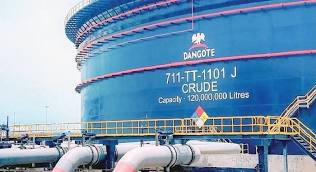
Nigeria’s Dangote refinery has boosted exports of petrol and urea to African countries hit by supply disruptions caused by the Iran war.

Aliko ​Dangote said on Monday that the 650,000-barrels-per-day refinery had helped cushion the full impact of the crisis both in Nigeria and across ​the continent.

“What I can do is assure Nigerians … and most of West Africa, ​Central Africa, and East Africa, we have the capacity to supply them,” Dangote said during a tour of the facility.

He said the ​refinery had shipped some 17 cargoes of gasoline to other African nations, ​and exports of urea fertiliser had also recently risen, as buyers sought alternative sources of ‌supply.

“In ⁠the last couple of days, we’ve been looking to mostly African countries, which we were not doing before,” he said, referring to the fertiliser shipments, without giving figures.

The refinery has capacity to produce up to 3 million metric ​tons of urea ​annually, most of ⁠which is typically exported to the United States and South America, officials say.

Fuel prices in Nigeria have reached record-high ​levels, industry figures show, as maximum output from Dangote ​refinery has ⁠not offset the impact of high crude prices.

Dangote said the refinery hoped to get more crude cargoes priced in local currency to help curb fuel costs.

A Reuters report last week quoted two trade sources and a refinery official that the Nigerian National Petroleum Company (NNPC) was allocating seven May cargoes to Dangote refinery, ​up from five in previous months.

Oil extended gains on Tuesday as a U.S.-imposed deadline for Iran to open the Strait of Hormuz or be “taken out” approaches.

President Donald Trump threatened to order attacks on Iranian bridges and power plants and to rain “hell” on Tehran if it fails to comply with his deadline of 8 p.m. EDT ​Tuesday (0000 GMT Wednesday) to reopen the strait.

About a fifth of the global oil supply is normally shipped through the Strait.

Brent crude futures rose $1.74, or 1.6%, to $111.51 a barrel by 0530 GMT, while U.S. West Texas Intermediate crude futures were up $3.45, or 3.1%, at $115.86.

On Sunday, OPEC+ agreed to a modest rise of 206,000 barrels per day for May. Saudi Arabia also set the official selling price of May Arab Light crude oil to Asia at a record premium of $19.50 a barrel, above the Oman/Dubai average, an increase of $17 from the previous month.

Continue Reading

Trending

Copyright © 2026 TheColumn NG