
News
FG Sets For Fresh Hike In Electricity Tariff

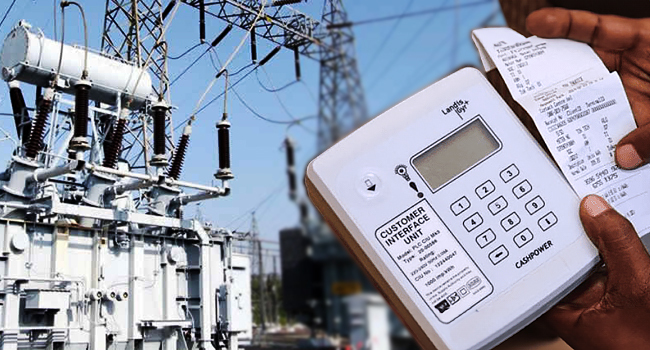
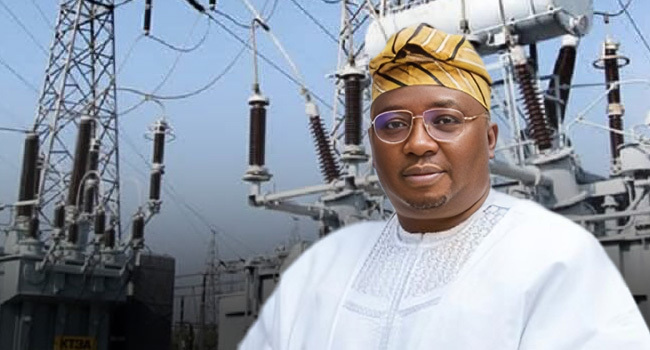
The Minister of Power, Adebayo Adelabu, has stated that the federal government is working on transitioning to a cost reflective tariff to stop an increase in the N4trn debt it owes the sector.
The minister who spoke during the Mission 300 Stakeholders’ Engagement meeting in Abuja, said this is part of reforms to set the power sector on the path of sustainability and bankability.
It would be recalled that despite the increase of electricity tariff for Band A customers, electricity consumers have complained of low electricity supply and continuous payment of faulty electricity installation.
But Adelabu said the decision is critical to the economic growth and development of Nigeria.
“Currently, there’s a huge outstanding debt to the power generation companies in the form of unpaid government subsidies which stands at about N4trn as of December 2024.
“The Federal Government is already working out modalities to defray this obligation and to ensure that further obligations are not accrued going forward, the government is working on a plan to transition the sector to a fully cost-reflective regime while implementing targeted subsidies for the economically vulnerable citizens in the country.”
The implication of this is that the government would end the subsidy regime in the electricity sector which would trigger an increase in tariff across board.
Report says government had accrued N1.1tr as subsidy payment in the first six months of 2025 making its debt climbing to N5tr.
The minister in a statement by his media aide, Bolaji Tunji, said improving power generation through recovery of idle capacities and expanding energy mix to ensure energy security and to dilute the power pool with cheaper and cleaner energy sources would be a priority.
He announced the priorities of the government in power sector reforms to include “addressing the market liquidity issues and initiating required sector reforms”.
“Other areas included expanding transmission infrastructure to deliver more power, ensuring stability of the national grid to put an end to several grid disturbances and collapses previously observed on the grid, and to further strengthen the coordination and management of the national grid.
The Minister also said that the ministry is pursuing increased renewable energy through its rural electrification and energy transition drive, to provide a reliable power supply to unserved and underserved communities.
He said the stakeholders meeting would provide an opportunity for them to align, strategize, and to build the partnerships needed to move from Nigeria Energy Compact, to concrete results, as he called on development partners, the private sector, philanthropic actors, the public sector, and the civil society organizations to rally around this mission.
The Minister of Finance, Chief Wale Edun, who spoke through zoom from Brazil also said that the reforms the government was undertaking in the power sector were critical towards unlocking the full potentials of the economy as it would lead to job creation. He said the reforms have led to over 40 percent increase in power distribution in the first quarter of 2025.
Cost reflective tariff versus allowed tariff
The cost reflective tariff for Band A – Non-MD customers is N231.79 while the allowed tariff is N209.50, Band A – MD1, cost reflective tariff is N225.90 while allowed tariff is N209.50 similarly, cost reflective tariff for Band A – MD2 is N220.01 while allowed tariff is N209.50.
For Band B – Non-MD, cost reflective tariff is N223.94 while allowed tariff is N68.96; Band B – MD1 cost reflective tariff is N220.01 while allowed tariff is N67.18, Band B – MD2, cost reflective tariff tariff is N216.08 while allowed tariff is N67.12.
For Band C- Non-MD, cost reflective tariff is N209.32 while allowed tariff is N56.38; Band C-MD1 cost reflective tariff is N200.37 while allowed tariff is N54.64 and Band C – MD2 cost reflective tariff is N200.37 while allowed tariff is N54.64.
Band D – Non-MD cost reflective tariff is N164.34 while allowed tariff is N39.67; Band D – MD1 cost reflective tariff is N207.67 while allowed tariff is N55.4; Band D – MD2 cost effective tariff is N207.56 while allowed tariff is N55.43.
Lastly, Band E – Non-MD cost reflective tariff is N145.07 while allowed tariff is N39.44, Band E – MD1 cost reflective tariff is N207.35 while allowed tariff is N55.43 and Band E – MD2 cost reflective tariff is N207.35 while allowed tariff is N55.43.
Consumers kick
According to a Daily Trust report, the President of Nigeria Consumer Protection Network, Kunle Olubiyo, said any increment with the current service delivery means electricity consumers will be fleeced by utility companies.
He said there has not been an increase in power generation, transmission infrastructure or upscale of distribution networks despite band segmentation helping to triple the inflow of revenue in the last one year.
“If you increase across boards, what assurance will there be of cost-reflective service? The Performance Improvement Plan, and investment in infrastructure, in the last 10 years, have not brought about any increase in generation, transmission evacuation, and distribution.
“You can imagine that between 2015 to date, we’ve only added 400 megawatts, because as of the time of Jonathan’s administration, we celebrated equilibrium of generation, transmission, and distribution at 5,600 megawatts. And now, since 2015, when Jonathan was leaving, to date we’ve not been able to hit 600 megawatts.”
He added that the government needs to make decisions to reflect political economy and political sensitivity, adding they should put people at the heart of its policies.
“The bullets should not be fired simultaneously such that it may have unintended consequences politically for the present administration. So, tariffs should not be at the expense of enforcement or implementation of the commitment to service level agreement.”
On his part, the CEO at Sage Consulting & Communications, Bode Fadipe, said the issue of liquidity has been a major challenge in the sector which has affected investment.
He said as long as there is no right investment in the sector, the sector will not progress.
But there is also the second argument that at what point can you say that you have achieved cost reflectivity, given the number of adjustments that you have seen in the sector, vis-a-vis the performance of the sector itself? What has been the consequence?”
He added that Band A customers that have increased the revenue in the sector are still not enjoying the amount that they pay for 20 hours and above.
“When you come from that perspective, you then begin to wonder whether another adjustment, or what has been described as cost reflectivity, will solve the problem.”
He stated that this means cost reflectivity is not the only problem that is plaguing the sector.
‘We must stop concentrating on costs’
“Why are we not addressing the other issues, policy issues, for instance, that are plaguing the sector? Why is it that it is only costs that we are concentrating on, and we are not looking at other issues that are associated with the sector? These are fundamental things. I do concede that the liquidity issue has been a historical factor, but is it the only problem that requires the kind of attention that liquidity is receiving?”
“I know that Generation is being owed about N4tr and the government is wondering where will they get the money from as the market is under that burden, but is it cost reflectivity alone that will bring about a translation into the power sector that we all desire? So for me, I think we really need to sit down and do a critical examination of the sector, and not that we’ll just be adjusting price alone.”
An electricity consumer on Band C, Abubakar Aliyu, said he gets less than 6 hours of electricity daily and on some days his community in Gwagwalada would be in total darkness.
He said any increase in electricity tariff will have to come with increased service, adding that he doubts if the DisCos have the capacity to do it.
“It is just like the electricity is being rationed as the electricity fluctuates daily. This move will be very bad as we all know how poor the DisCos are in terms of service delivery and repairs of faults. Even if the government wants to increase the tariff, they should ensure everything is in order first.”

Entertainment
NIBAD 2026: Abike Dabiri To Take Centre Stage As Bunmi Ebony, DJ X-One Host Baltimore Event

The Chairman and Chief Executive Officer of the Nigerians in Diaspora Commission (NiDCOM), Hon. Dr Abike Dabiri-Erewa ( OON) has been scheduled for honour, among other awardees, at the 2026 and the 6th edition of the annual Nigerian Independence Ball, Awards, and Dinner (NIBAD),billed to hold in Baltimore, Maryland, on the 18th of October .
At the instance of Naija Times USA and Raindrop Group led by Olaniyi Thompson Tabi, activities marking the 6th edition of NIBAD commenced on the 3rd of October with Independence carnival in Maryland.
As part of the expanded 6th edition, the Annual Independence stage play titled ‘Your Excellency Sir!’ …The saga of a nation, written and directed by Olaniyi Thompson Tabi, was showcased at a very colorful event on the 9th of October.
Designed to be an unforgettable celebration of Nigeria’s 66th Independence celebration, the grand finale of the celebration is billed for Sunday, the 18th of October, 4.00pm, at Gabriel Community Centre, 6948, Dogwood Road, Windsor Mill, MD 21244.
The evening will not only commemorate Nigeria’s rich history and vibrant culture but will also spotlight the exceptional contributions of Nigerians at home and abroad in various fields such as business, healthcare, education, community service, and more.
The evening will feature a grand awards ceremony to honor those who have demonstrated leadership, innovation, and dedication in their respective industries. Among them, Dr Dabiri- Erewa
Hon. Dr. Abike Kafayat Oluwatoyin Dabiri-Erewa (OON) is a prominent Nigerian politician, public administrator, and former broadcast journalist who has been able to show leadership since her appointment as the Chairman and Chief Executive Officer of the Nigerians in Diaspora Commission (NiDCOM).
To add colour to the event also, is
Dj X-One, reputed as the best Disc Jockey in the DMV area. Bunmi Ebony, a fast rising Juju Artiste in Atlanta will also be on the bandstand to thrill guests at the event to celebrate Nigeria.
****About NIBAD: The Nigerian Independence Ball, Awards, and Dinner (NIBAD) is an annual event that celebrates Nigeria’s Independence while recognizing the achievements of Nigerians in the diaspora. NIBAD aims to highlight the cultural pride, resilience, and accomplishments of Nigerians globally, bringing together community leaders, professionals, and influencers for an evening of celebration, inspiration, and unity.
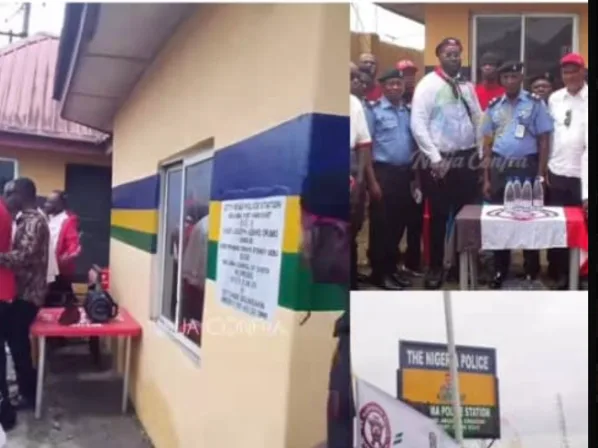
The Rivers State Police Command under CP Olugbenga A. Adepoju has condemned the purported renovation of the Abuloma Police Outpost by suspected cultists and ordered a full investigation into the incident.
Police Public Relations Officer (PPRO) of the command, ASP Blessing Agabe disclosed this in a Friday statement.
She said the command’s action follows a trending social media report and circulating video alleging that suspected cultists renovated the outpost and visited the facility on Thursday, October 15, to celebrate completion of the renovation.
The command said it “strongly condemns any action or association capable of compromising the integrity, discipline and professional standards of the Nigeria Police Force or conferring legitimacy, recognition or acceptance on suspected cult groups or other unlawful organisations.”
It added, “Police facilities are public institutions established for the protection of citizens and the enforcement of law and must not become platforms through which criminal groups seek public validation or influence.”
The command said CP Adepoju maintains zero tolerance for criminality and any conduct that undermines public confidence in the police.
Consequently, he has queried and relieved the Divisional Police Officer in charge of Abuloma Division and the Divisional Officer overseeing the affected outpost of their duties pending investigation.
The CP has also ordered a full investigation to establish the circumstances surrounding the incident and the veracity of the allegations, including the identities and backgrounds of the individuals or groups who financed or facilitated the renovation; the police officers who authorised or approved the project; whether due procedures were followed; whether any officer breached professional standards or compromised the integrity of the force; and the extent of any involvement by police personnel.
The command said while it welcomes legitimate community support for improving police facilities, consistent with Section 26(1)(d) of the Nigeria Police Act 2020, which provides for gifts and contributions to the Police General Fund, such support must not compromise police independence, professional standards or security.
“No donation or assistance confers immunity from investigation or prosecution,” the command stated, adding that the investigation will establish whether necessary approvals were obtained and appropriate checks conducted on those who financed the renovation.
It reiterated that it would not condone unprofessional conduct or any form of improper association with criminal elements and that appropriate disciplinary and legal action would be taken against anyone found culpable.
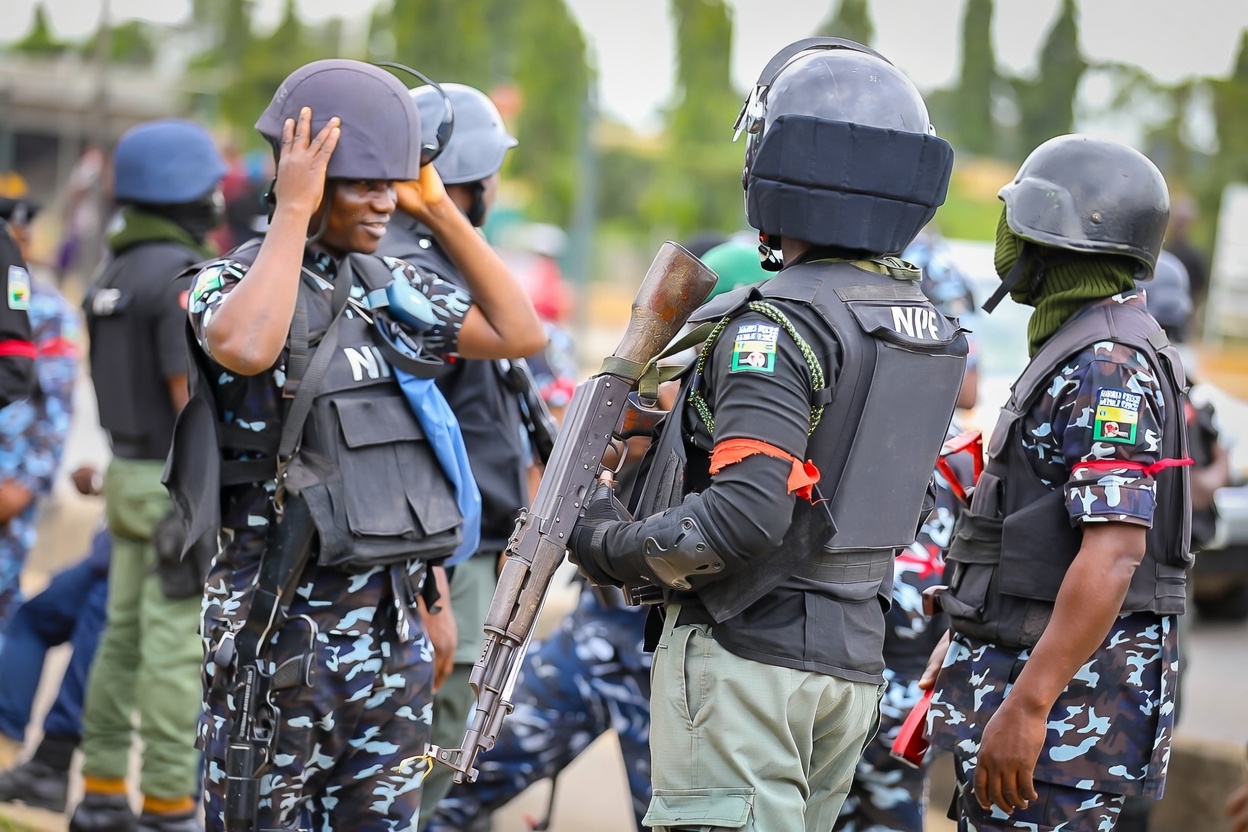
The Police Command in Benue State has confirmed the abduction of Rev. Fr. John Otache, Parish Priest of St. Margaret’s Parish, Ajegbe-Awume, in Ohimini Local Government Area of the state.
The Police Public Relations Officer, DSP Aondogu Orchia confirmed the incident on Friday in Makurdi.
Orchia said the command had commenced full investigation into the incident and efforts were ongoing to rescue the priest.
Meanwhile, the Catholic Diocese of Otukpo, in a statement signed by the Diocesan Chancellor, Rev. Fr. Joseph Itodo, said the priest was abducted on October 13.
According to Itodo, Otache was returning home from Otukpo when he encountered the abductors along the Otobi Amejo-Ajegbe Road in Ohimini Local Government Area.
He expressed sadness over the incident, saying the Bishop of Otukpo, Most Rev. Michael Apochi, was deeply pained by the development.
He called on priests, religious members, the laity and other well-meaning individuals to pray for the priest’s safe and speedy release.
He also urged prayers for other persons held by kidnappers across the country, expressing hope for their safe return.
-
 Health & Wellness1 year ago
President Tinubu Directs Cut in Dialysis Cost from ₦50,000 to ₦12,000
-
News2 years ago
CBN Debunks Fake Circular on New ₦5,000 and ₦10,000 Notes
-
 Business7 months ago
Dangote Refinery Reduces Petrol Gantry Price To ₦1,200 Per Litre
-

 International News7 months ago
Indian Police Arrest Nigerian Over ₦290m Drug Haul
-
 Business7 months ago
After Plea Bargain, Court Discharges Stella Oduah of ₦2.5bn Fraud
-
Business2 years ago
Dangote; We Did Not Fix ₦600/Litre Petrol Price
-
 Trending News1 year ago
NELFUND Disburses ₦86bn To 449,000 Beneficiaries
-
 Opinion2 years ago
Championing the People’s Voice: Obasa’s Dedication to Grassroots Representation By Dave Agboola⁰