Connect with us

News

Gov Mutfwang Bans Night Grazing, Restricts Motorcycles Amid Plateau Killings

Published

on

Spread the love

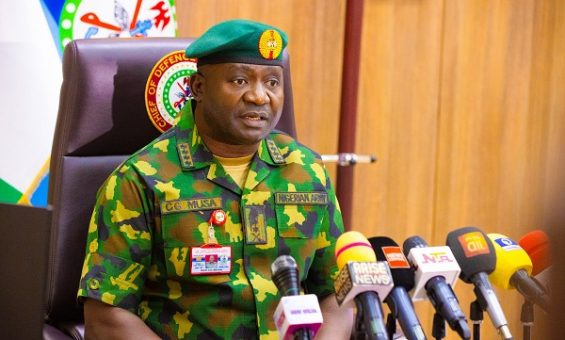
Plateau State Governor, Caleb Mutfwang, has announced a ban on night grazing and restricted the use of motorcycles across the state following incessant attacks.

In a state broadcast on Wednesday, Mutfwang described the attacks as “coordinated acts of terror” aimed at displacing residents and undermining their right to exist peacefully on their ancestral lands.

The governor also prohibited the transportation of cattle by vehicles after 7pm.

He said the directives take immediate effect, with the restriction on motorcycle use in place from 7pm to 6am across the state until further notice.

“The tragic echoes of Dogo Na Hawa, Riyom, Barkin-Ladi, Mangu, and the Christmas Eve massacres in Bokkos remain vivid. The cycle continues, but it must not endure. Enough Is Enough,” the governor said.

“As your governor, I stand resolved — Plateau shall not be overrun by fear, nor shall we accept this culture of bloodshed as the new normal.

“My administration is intensifying efforts to protect our people and enforce the rule of law across all local governments.

“I hereby announce the following measures, effective Wednesday, April 16: Night grazing of cattle is strictly prohibited; transportation of cattle by vehicle is banned after 7pm.

“The use of motorcycles is restricted from 7pm to 6am across the state until further notice.”


Muftwang said communities must be actively involved in defending themselves within the confines of the law.

At least 50 people were reportedly killed after gunmen invaded Kimakpa village, Miango district, in Bassa LGA of the state on April 14.

The attack came barely two weeks after gunmen killed many residents in five communities in Bokkos and Mangu LGAs.

Authorities have been scrambling to contain the attacks in a state where ethnic tensions have long simmered.

“There was no specific target. They were just shooting,” said Peter John, a survivor from Sunday night’s attack on the village of Kimakpa, some 25 kilometres (15 miles) from the state capital Jos.

John, 25, who spoke to AFP while receiving treatment at a nearby hospital, said he escaped the attackers, who burst into his family’s home around 10:00 pm, by climbing onto the roof.

 Sister, brother, nieces killed

His sister and her daughter, as well as his older brother and nine-month-old niece, all died from gunshot and machete wounds as the unidentified men rampaged from house to house.

“They shot and killed my younger sister and her daughter right in front of me,” he said.

Farmers and herders in Plateau have long clashed over access to dwindling pasture and fields in a state ravaged by climate change, illegal mining and land grabs.

The fact that most farmers are Christian and most herders from the Muslim Fulani ethnic group gives the conflict an ethnic and religious dimension.

John and other witnesses told AFP the attackers were speaking the Fulani language.

When local officials made similar remarks in reference to the earlier massacre this month, a local herder’s group denounced the killings — but also said their members were under attack from farmers.

With no reported arrests or proven motive for the assaults, authorities have not been able to explain the recent uptick in violence.

‘Systematic and premeditated campaign’

That has not stopped some politicians from warning of a “genocide” — language that critics say distracts from the larger issue of criminal impunity and lack of government control in the countryside.

“This is not an isolated conflict between farmers and herders,” said Governor Caleb Mutfwang in a speech on Wednesday.

“What we are witnessing is a systematic and premeditated campaign,” he alleged, claiming the killers had outside “sponsors”.

In response to the massacre, Mutfwang banned cattle grazing at night and transporting cattle by vehicle after 7:00 pm. He called on local vigilante groups to “organize night patrols in coordination with the security agencies”.

John said he called a vigilante group on Sunday night — to no avail.

“It was too late,” he told AFP, as his seven-year-old nephew lay in the hospital in deep pain, with severe injuries to his neck and head from a machete.

Earlier in the day, security forces had been present. But they had left before the evening killings started.

He said that prior to the attack, there was another incident in Kimakpa, where security had been provided due to rising insecurity in the area.

“The attackers came, shouting ‘Allahu Akbar’ (‘God is Greater’), and began shooting, killing people, and burning houses,” John said.

Diwe Gado Diwe, 41, whose cousin was killed, described the attack as one of the worst experiences of his life.

He was away from the village when the attackers struck — when his sister called him, he could not return because it was too dangerous.

“She told me not to come,” he told AFP at the hospital, shortly after his brother died in the intensive care unit after being shot and hacked.

“I tried calling the vigilante group, but the line didn’t go through,” said Diwe, who works in neighbouring Bauchi state but was back in the area visiting family.

He was later told that one of the first people killed was a vigilante on patrol.

Jessica John, 45, sat at the bedside of her son, Saryie John, awaiting surgery to remove a bullet lodged in his chest.

Her son, like others, fled the house but returned later with a friend to check on the family.

The friend was shot dead. Saryie John has survived, for now.

International News

Israel Says It had Struck Two Naval Missile Production Sites In Tehran

Published

on

Spread the love

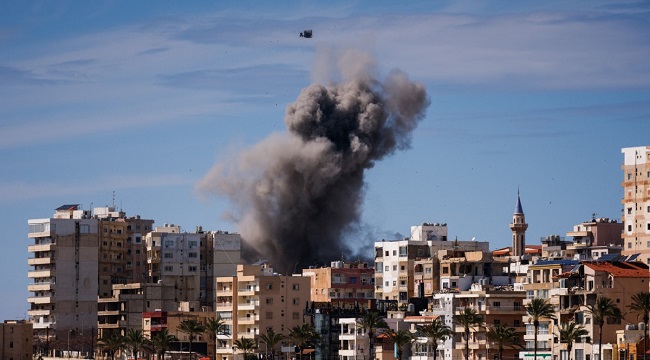
The Israeli military announced on Wednesday it had struck two naval cruise missile production facilities operating under Iran’s ministry of defence in Tehran.


“In recent days, the Israeli air force acting on IDF intelligence struck two key naval cruise missile production sites in Tehran,” the military said.

It said the facilities were used to “develop and manufacture long-range naval cruise missiles, which are capable of rapidly destroying targets at sea and on land”.

The strikes “represent another step in deepening the damage done to the regime’s military production infrastructure”, the military added.

Last week, the military announced its fighter jets had struck several Iranian naval ships in the Caspian Sea, including vessels equipped with anti-submarine missiles.


AFP

Continue Reading

International News

2025 ‘Deadliest Year’ Yet For Red Sea Migrants, UN Reports 922 Deaths

Published

on

Spread the love

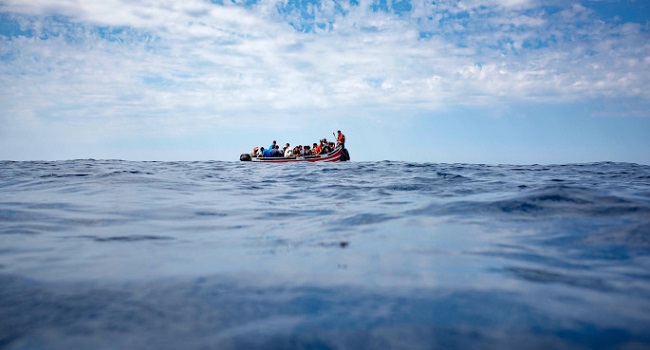
The number of migrants who died on the “Eastern Route” from the Horn of Africa to the Arabian Peninsula doubled to a record high of 922 last year, the UN migration agency said Wednesday.

Tens of thousands of migrants from Ethiopia, Somalia and neighbouring countries take the route across the Red Sea each year, mostly from Djibouti to Yemen, in search of work as labourers or domestic workers in wealthy Gulf countries.

“2025 was the deadliest year ever recorded on the Eastern migration route… with 922 people dead or missing — double the number from the previous year,” Tanja Pacifico, head of mission for the International Organisation for Migration (IOM) in Djibouti, told AFP.

The majority of victims were from Ethiopia, the second most-populous country in Africa with more than 130 million people. It is plagued by multiple internal conflicts and deep poverty.

“IOM remains fully committed to working alongside the government of Djibouti to promote safe and dignified migration pathways, in order to prevent further tragedies,” said Pacifico.

Many migrants who cross the Red Sea find themselves stuck in Yemen, the poorest country on the Arabian Peninsula, which has been embroiled in a civil war for nearly a decade, and some even choose to return.

Rapid economic growth in Ethiopia — estimated to reach around 10 percent in 2026 — could encourage less migration, IOM says, but that is mitigated by high inflation, also around 10 percent in February.


AFP

Continue Reading

International News

Denmark Faces Lengthy Negotiations To Form A Government

Published

on

Spread the love
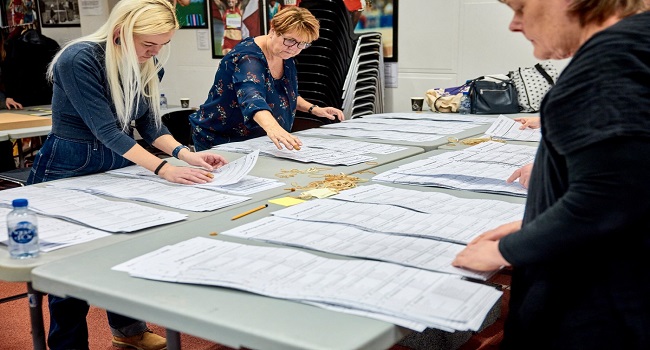
Election workers recount ballots in the Marselisborg Hallen in Aarhus, Denmark on March 25, 2026. (Photo by Mikkel Berg Pedersen / Ritzau Scanpix / AFP) /

Denmark’s political parties began the thorny process of forming a government Wednesday, with the centrist Moderates as kingmaker after the prime minister’s Social Democrats scraped through a general election without a majority.

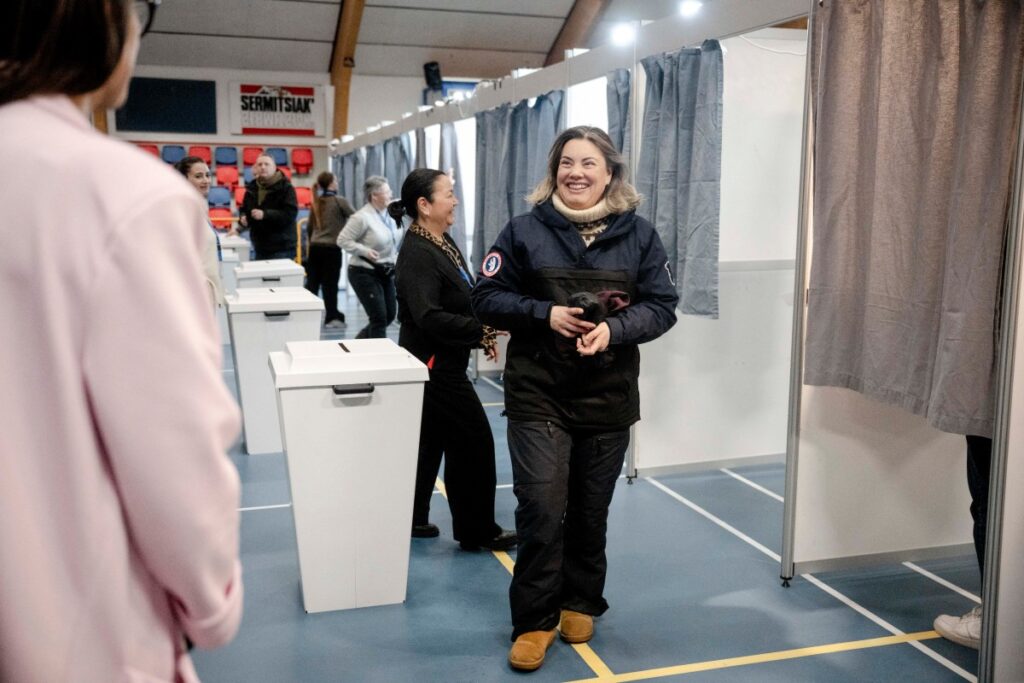
Greenland’s Inuit Ataqatigiit party member Naaja Nathanielsen (C) looks on in a polling station in Nuuk, on March 24, 2026, during the parliamentary election in Denmark (Photo by Oscar Scott Carl / Ritzau Scanpix / AFP) / Denmark OUT

Danes were braced for a weeks-long process as Prime Minister Mette Frederiksen seeks to consolidate power in the deeply splintered parliament after Tuesday’s snap vote.

Denmark’s Prime Minister Mette Frederiksen arrives at Amalienborg Palace in Copenhagen to inform the king about the election result one day after the parliamentary election on March 25, 2026. (Photo by Martin Sylvest / Ritzau Scanpix / AFP) 

A left-wing bloc made up of five parties, including Frederiksen’s Social Democrats, won 84 seats; the right-wing and far-right claimed 77; and the Moderates won 14 in the election.

The Social Democrats posted their worst election score since 1903—though they remained Denmark’s largest single party, with 38 seats in the 179-seat parliament.

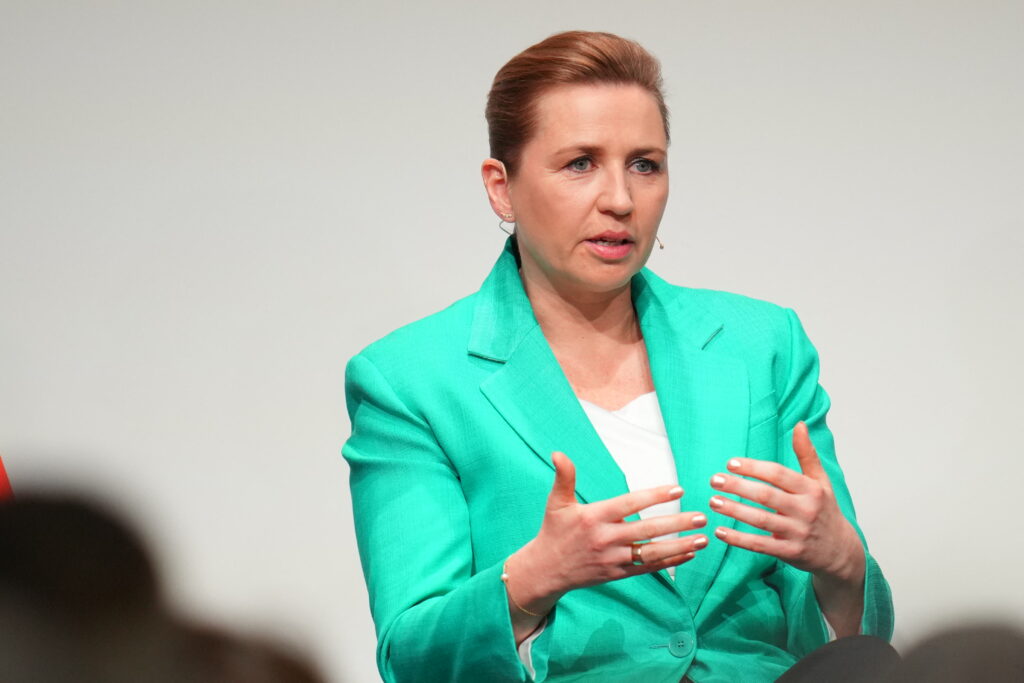
Chairwoman of the Social Democrats Mette Frederiksen attends a party leader debate hosted by Publicists’ Club one the day after the parliamentary election at the Confederation of Danish Industry’s building in Copenhagen on March 25, 2026. (Photo by Liselotte Sabroe / Ritzau Scanpix / AFP)


Frederiksen formally tendered her coalition government’s resignation to King Frederik on Wednesday, telling a televised party leader debate she wanted to try to form a centre-left government.

“The most realistic scenario” would be a coalition with the five parties on the left and the centre-right Moderates, she said.

But it is not certain the Moderates, led by Foreign Minister Lars Lokke Rasmussen, would agree to that.

“I don’t believe that Denmark needs policies aligned with” the leftist Red-Green Alliance, Lokke said.

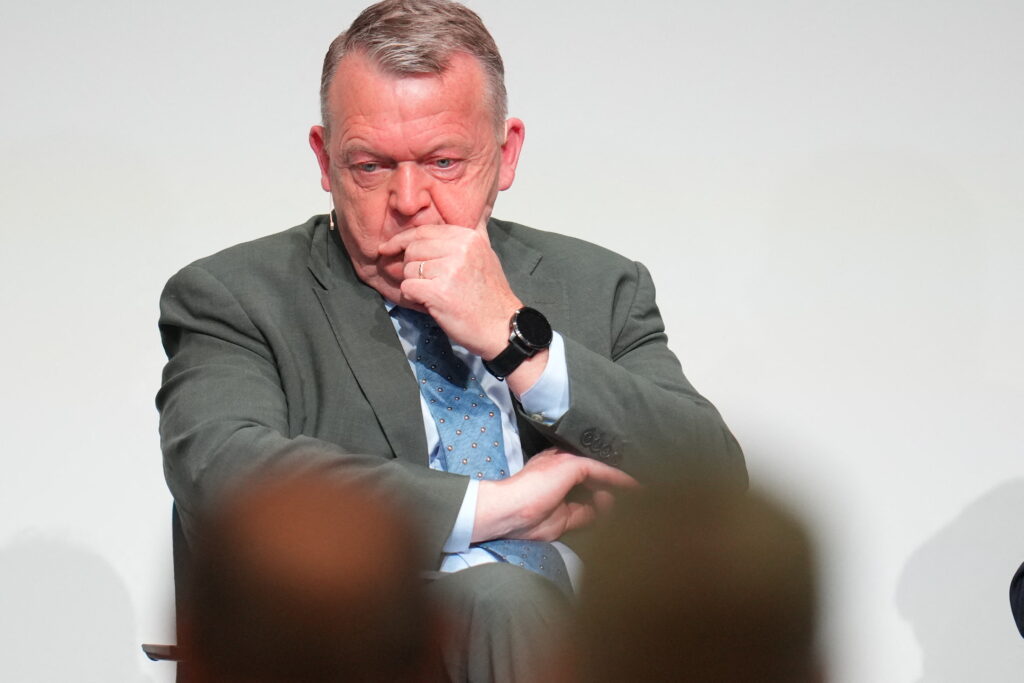
Chairman of the Moderates Lars Loekke Rasmussen attends a party leader debate at the Confederation of Danish Industry’s building in Copenhagen on March 25, 2026, the day after the parliamentary election. (Photo by Liselotte Sabroe / Ritzau Scanpix / AFP) / Denmark OUT

King Frederik was to meet party leaders individually later Wednesday to determine who should be asked to try to form the next government.

“My expectation is that Mette Frederiksen will become prime minister,” University of Copenhagen political science professor Rune Stubager told reporters.

“But I don’t know with the backing of which parties, like the left wing or the right wing,” he said.

He noted that Lokke, a two-time former prime minister, would likely vie for the position of prime minister, even though he has adamantly denied any interest in the job.

“Danes want me and not another prime minister. I still have the backing to be able to continue on behalf of the Danish people,” Frederiksen insisted during the debate.

Frederiksen has for the past four years headed an unprecedented left-right coalition made up of her Social Democrats, the Moderates and the Liberals.

The Liberals have refused to continue in a Social Democrat-led government.

‘Too Hard To Say’

Danes are now prepared for long negotiations. After the 2022 election, the talks lasted six weeks.

“It’s a long process, which means the government won’t be formed and it will be quite difficult to pass laws during this period,” lamented Jesper Dyrfjeld Christensen, a 54-year-old engineer.

“It’s really too hard to say who will be part of the coalition,” admitted Stubager.

With 12 parties in parliament, the political landscape is jagged — though Denmark is accustomed to minority governments.

“To some extent, this is the way Danish politics works. You have a minority government in the centre which forms a majority with the left on some issues and with the right on others,” he explained.

The negotiations are expected to focus on economic and pension issues, pollution and immigration, he said.

The traditional far-right party, the Danish People’s Party, which has heavily influenced policy since the late 1990s but slumped in the 2022 election, more than tripled its result to 9.1 per cent of votes.

The three anti-immigration groups together garnered 17 per cent, a stable figure for Denmark’s populist right over the past two decades.

“If negotiations take place in the left-wing bloc with the moderates, then there will be more focus on green issues than on immigration,” Stubager said.

“But if, instead, the Moderates negotiate with the parties on the right, then the central issue will be immigration.”

Four seats in Denmark’s parliament are held by its two autonomous territories — two for Greenland and two for the Faroe Islands.

While the Faroese renewed the mandates of the two outgoing lawmakers, with one for each bloc, Greenland overwhelmingly backed the left-wing party and Naleraq, which advocates rapid independence from Denmark.


AFP

Continue Reading

Trending

Copyright © 2026 TheColumn NG