Connect with us

International News

Internal Displacement In Africa Triples In 15 Years

Published

on

Spread the love
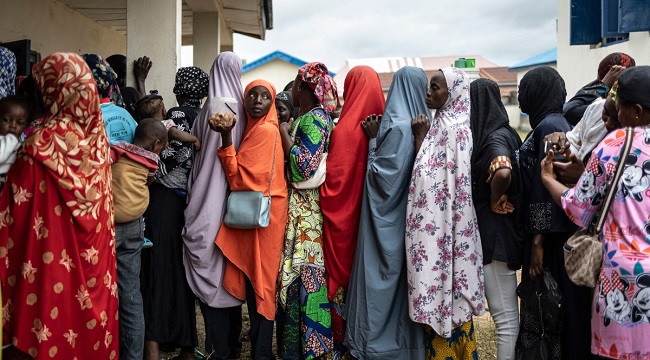
Internally displaced persons from the flood queue at St. Luke school used as a shelter in Lokoja on October 22, 2024. – Human-caused climate change worsened floods that have killed hundreds of people and displaced millions in Cameroon, Chad, Niger, Nigeria and Sudan this year, according to a study published on October 23, 2024. (Photo by OLYMPIA DE MAISMONT / AFP)


Conflicts, violence and disasters across Africa have dramatically driven up the number of displaced people on the continent over the past 15 years, international monitors said Tuesday.

By the end of last year, Africa counted 35 million people living displaced within their own countries, according to a report by the Internal Displacement Monitoring Centre (IDMC).

That is nearly half of the number of internally displaced people (IDPs) worldwide, IDMC chief Alexandra Bilak told AFP.
 

Poeple line up on a store for food during the third day of a massive power outage in Havana on October 20, 2024. – Hurricane Oscar landed in a locality in Baracoa, in the east of Cuba, when the island prepares for its third night of a blackout, which the authorities intended to resolve without success. (Photo by YAMIL LAGE / AFP)

“We have seen a tripling of the number of IDPs on the African continent over the last 15 years,” she said, adding that “the majority of this internal displacement is being caused by conflict and violence, but is also now triggered more and more by disasters”.
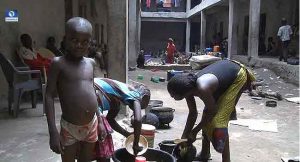
 

Benue State Internally Displaced Persons’ Camps

While IDPs typically receive less focus than refugees who flee across borders, they are far more numerous and their lives are equally turned upside down.

Displacement disrupts livelihoods, the cultural identity and social ties of entire communities, making them more vulnerable, the IDMC pointed out.
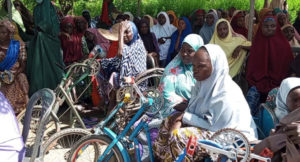
Katsina Distributes Palliatives to 3,850 IDPs, Widows, Others

It can set back a country’s development agenda by disrupting the ability of those displaced to generate income, pay rent or taxes, as countries are called on to provide additional housing, healthcare, education and protection.

– Conflict main culprit –

Tuesday’s report showed that rising levels of conflict and violence were responsible for driving 32.5 million people into internal displacement in Africa.
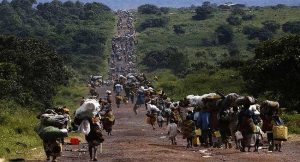
File Photo: Borno IDPs

Eighty percent of them were displaced within five countries — the Democratic Republic of the Congo, Ethiopia, Nigeria, Somalia and Sudan.

Conflict and violence “cause cyclical patterns of displacement, and the people who were displaced by conflicts already 10, 15, in some cases 20, 25 years ago have not been able to find a solution”, Bilak said.
 

“They haven’t been able to return home,” she said, adding that “new waves of violence and displacement are added on to protracted caseloads”, pushing IDP numbers ever higher.


Displacement due to disasters, in particular floods, is also on the rise in Africa, as climate change makes itself increasingly felt.
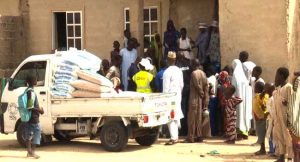
 

The number of times people were forced to flee disasters rose sixfold between 2009 and 2023, from 1.1 million displacements per year to 6.3 million, the IDMC said.

Floods triggered more than three-quarters of these movements, while droughts accounted for another 11 percent, the report showed.
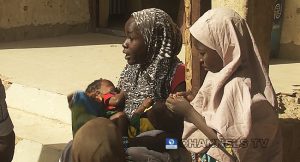
 

Borno IDPs

– Overlap –

The IDMC cautioned that conflicts, violence and disasters often overlap, driving complex crises, which see many displaced repeatedly or for prolonged periods.


The organisation highlighted the African Union’s Kampala Convention on protecting and assisting IDPs as an important tool to address the problem.

That convention, which was adopted in 2009 and entered into force in December 2012, set an international standard as the first, and still the only, legally-binding regional agreement addressing internal displacement.
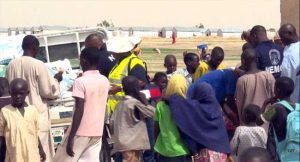
 

File Photo of IDPs

Thirty-four African countries have since ratified the treaty, with many developing legal frameworks and making significant investments to address the issue.

But the IDMC said governments had struggled in the face of rising conflicts and disasters worsened and made more frequent by climate change.
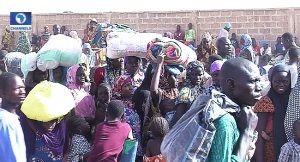
 

IDPs

“It hasn’t fixed the problem,” Bilak said.

With most displacement in Africa due to conflict, she stressed that “much more has to be done when it comes to peace-building and diplomacy and conflict transformation”.

“That is really the key of the issue.”


AFP

International News

Germany Deports 137 Nigerians In Five Chartered Flights

Published

on

Spread the love


German authorities deported at least 137 Nigerian citizens across five chartered flights between February and June 2026, according to migration monitoring reports.


Data from the DERS Team and Refugees4refugees.org shows the deportations occurred in phases, with 27 Nigerians returned in February, 37 in March through a joint European Union operation, 24 in April, 23 in May, and 26 in June.

The February operation departed from Stuttgart and landed at Lagos Cargo Airport, with Baden-Württemberg listed as a primary participant. The March operation represented the largest single return of Nigerians recorded over three years and was executed in collaboration with Spain, Austria, and Belgium.

The reports indicate a growing reliance on multi-national chartered flights by European states to repatriate undocumented or non-resident individuals to Nigeria.

Continue Reading

International News

US Wants Justice In The killing Of Pastor Dachomo’s 9 Family Members 

Published

on

Spread the love


The United States has condemned the killing of members of the family of Plateau-based cleric, Rev. Ezekiel Dachomo, describing the attack as horrific and urging Nigerian authorities to ensure those responsible are brought to justice.


In a statement shared on X on Thursday, the US Department of State’s Bureau of African Affairs expressed condolences to the victims’ families and called for stronger measures to prevent further attacks on vulnerable communities across Nigeria’s Middle Belt.

“The United States strongly condemns the horrific killing of members of Rev. Ezekiel Dachomo’s family in Plateau State, Nigeria. The continued violence targeting Christian communities and other vulnerable populations in Nigeria’s Middle Belt is deeply alarming,” the bureau said

The US said it had already engaged Nigerian officials on the worsening security situation, stressing that urgent action was needed to curb recurring attacks and hold perpetrators accountable.

“As I discussed last week with Nigerian officials, we must do more to prevent violent acts. The perpetrators must be held accountable, and urgent action is needed to strengthen security and protect Christians and other vulnerable communities,” the statement added.

The bureau reaffirmed Washington’s commitment to working with the Nigerian government to combat terrorism and violent extremism, stressing that Christians and other Nigerians should be able to practise their faith without fear of violence.

The statement followed the July 12 attack on Kum community in Riyom Local Government Area of Plateau State, where nine members of Rev. Dachomo’s extended family, including a two-month-old baby, were killed.

According to the cleric, the attackers, believed to be armed Fulani militias, asked for him by name before opening fire on his relatives.

Dachomo, who serves as Regional Chairman of the Church of Christ in Nations (COCIN) in Barkin Ladi Local Government Area, said his family had repeatedly been targeted because of his outspoken criticism of the violence in Plateau State.

He recalled that his grandmother and an uncle were also killed in previous attacks, adding that days after burying his relatives, he received a written death threat from the same group, warning that he would be their next target.

Continue Reading

International News

Nigeria Missing As Saudi Arabia Names African Countries Eligible For eVisa

Published

on

Spread the love


Saudi Arabia has updated its tourist eVisa programme for 2026, limiting eligibility in Africa to only three countries as part of its list of 66 nations whose citizens can apply through the Kingdom’s online visa platform.


The move leaves most African countries, including Nigeria, outside the simplified entry scheme.

The electronic visa allows eligible travellers to visit Saudi Arabia for tourism, leisure activities, family visits and Umrah, excluding the annual Hajj pilgrimage. Applications are completed online, eliminating the need for embassy visits and lengthy visa processing.

Saudi authorities said the eVisa forms part of ongoing efforts to expand tourism, attract international visitors and simplify travel procedures through a fully digital application system. The visa is available only to citizens of approved countries and territories listed on the Kingdom’s official tourism portal.

Below is the list of African countries eligible for Saudi Arabia’s eVisa.

1. Mauritius

2. Seychelles

3. South Africa

Continue Reading

Trending

Copyright © 2026 TheColumn NG