

Connect with us

International News

NERC: States Cutting Power Tariffs Required to Fund Subsidy

Published

on

Spread the love

The Nigerian Electricity Regulatory Commission (NERC) has stated that state governments lack jurisdiction over the national grid and power stations established under federal laws or operating with licenses issued by the commission.


The commission stated this in its reaction to the controversies generated by the Enugu Electricity Regulatory Commission’s decision to slash the Band A tariff.

In a notice on Thursday, the national power regulator advised state governments to reflect the wholesale costs in tariffs or be ready to pay subsidies for any tariff shortfall.

The commission acknowledged that states that have assumed full regulatory oversight over their intrastate markets are now authorized to create and regulate transactions in their state electricity markets, saying this extends to the development of tariff methodologies that shall apply to end-use customers in their respective states.

This came as the power distribution and generation companies warned that states’ absolute power to determine tariffs begins when they start generating and transmitting electricity.

The NERC, in its notice on Thursday, cautioned, “As states do not have jurisdiction over the national grid and over electric power stations established under federal laws/operating under licences issued by the commission; they must holistically incorporate the wholesale costs of grid supply to their states without any qualification or deviation in their design of tariffs for end-use customers in order not to distort the dynamics of the market or be prepared to make a policy intervention by way a subsidy for any deviation in the tariff structure that distorts the wholesale generation, transmission and legacy financing costs in the Nigeria Electricity Supply Industry.”

NERC said no institution would take decisions that expose the national grid and wholesale electricity market to a financial crisis in contravention of express powers granted to them by the constitution.

“The commission’s attention has been drawn to the increasing stakeholders’ concerns on the Tariff Order (Order No. EERC/2025/003) issued by the Enugu State Electricity Regulatory Commission, to its Licensee Mainpower Electricity Distribution Limited that relies exclusively on electricity supply (generation and transmission) from the national grid.

“NESI stakeholders have expressed concern about the consequences of the reduction of tariffs for Band A customers in MEDL’s network area to N160.4 per kWh and the freezing of tariffs of customers in the other bands on the wholesale generation and transmission costs, along with the financing costs for legacy obligations in NESI. It is pertinent to state that the N160.4 per kWh was arrived at largely by reducing the current average Generation Tariff of N112.60 per kWh to NGN45.75, with an assumption of a subsidy component, a difference of N66.85 per kWh.

“Section 34(1) of the EA places a statutory obligation on the commission to create, promote and preserve efficient electricity industry and market structures, and ensure the optimal utilisation of resources for the provision of electricity and we are also aware that EERC as a sub-national electricity regulator also has a similar statutory obligation in their enabling law; and neither NERC nor EERC as responsible regulatory institutions would take decisions that expose the national grid and wholesale electricity market to a financial crisis in contravention of express powers granted to them by the constitution,” the Federal Government agency said.

It informed all stakeholders that the commission is currently engaging EERC on their tariff order as it relates to any perceived area of misinterpretation/misunderstanding on wholesale generation and transmission costs on their import of power from the national grid and grants further assurances of its unwavering statutory commitment that the electricity market will be made whole in terms of cost recovery in compliance with the laws of the Federal Republic of Nigeria.

Meanwhile, the Association of Nigerian Electricity Distributors and the Association of Power Generation Companies said the Enugu Electricity Distribution Company and other states contemplating tariff reductions should wait till they start generating and transmitting their electricity before slashing tariffs.

The Chief Executive Officer of ANED, Sunday Oduntan, told Band A customers in Enugu State not to rejoice yet, saying there can’t be a 20-hour power supply at N160 per kilowatt-hour.

On Sunday, the Enugu Electricity Regulatory Commission announced the reduction of the Band A electricity tariff from N209/kWh to N160/kWh, asking MainPower Electricity Distribution Company to implement this from August 1.

The decision has since sparked crises as generation and distribution companies accused the EERC of attempts to create more financial burden in the power sector, saying no state should impose more subsidy obligations on the Federal Government that is still owing N5.2tn of unpaid shortfalls.

While the ERRC said it did its calculations well before dropping the tariff to N160/kWh, Oduntan warned that no state has the power to determine the cost of electricity at the moment, stressing that the states can only align with the tariff order of the Nigerian Electricity Regulatory Commission, except if the value chain totally belongs to them.

Earlier in a statement, Oduntan raised the alarm over growing consumer resistance to electricity bill payments following the tariff cut by the Enugu State Electricity Regulatory Commission, warning that the move threatens to destabilise the country’s fragile power sector.

He disclosed that since EERC announced a reduction in Band A tariffs, customers in other states have begun to demand similar cuts, with some outrightly refusing to pay their electricity bills.

The Chief Executive Officer of the Association of Power Generation Companies, Joy Ogaji, also shared the same sentiment. According to her, states cannot unilaterally fix tariffs because they do not produce electricity.

“The fact speaks for itself. The fact that EERC still regulates a product it does not produce at the state level, but from the wholesale market, they cannot unilaterally regulate that price,” she said.

Ogaji added that the EERC made reference to NERC’s tariff regulations, which assume a subsidy that she deemed imaginary because there is no written policy from the Federal Government stating that there is a subsidy, nor is there a financing plan to backstop the ever-growing and accumulating debts, which have impaired GenCos’ books.

“Their claim based on an imaginary subsidy is baseless. You can’t build something on nothing. Tariff documents are not child’s play. They form the fulcrum for many decisions, including business decisions, potential investors, and so on.

“This regulatory rascality will not be sustainable for decentralisation. Do you even have a justification for claiming a subsidy? Let’s assume there is one in a federal market, you have applied to be independent of? Can you eat your cake and still have it? How do you even claim this subsidy as a state? Unfortunately, we lack leadership in this sector,” she said.

Meanwhile, the EERC clarified that its recent tariff cut did not tamper with the prevailing cost of power generation in the country in any way. The commission maintained that, based on MainPower’s costs, there was no justification to keep the price of electricity for Band A at N209/kWh in the state.

In a statement by EERC’s Commissioner for Electricity Market Operations, Reuben Okoye, the agency maintained that although it inherited the current tariff regime, “the commission is focused on developing a sub-national electricity market that is transparent, accountable, reliable and sustainable and therefore will review utility costs of service to achieve its mandate to the people of Enugu.”

International News

Israel Says Struck Two Naval Missile Production Sites In Tehran

Published

on

Spread the love

The Israeli military announced on Wednesday it had struck two naval cruise missile production facilities operating under Iran’s ministry of defence in Tehran.


“In recent days, the Israeli air force acting on IDF intelligence struck two key naval cruise missile production sites in Tehran,” the military said.

It said the facilities were used to “develop and manufacture long-range naval cruise missiles, which are capable of rapidly destroying targets at sea and on land”.

The strikes “represent another step in deepening the damage done to the regime’s military production infrastructure”, the military added.

Last week, the military announced its fighter jets had struck several Iranian naval ships in the Caspian Sea, including vessels equipped with anti-submarine missiles.


AFP

Continue Reading

International News

2025 ‘Deadliest Year’ Yet For Red Sea Migrants, UN Reports 922 Deaths

Published

on

Spread the love

The number of migrants who died on the “Eastern Route” from the Horn of Africa to the Arabian Peninsula doubled to a record high of 922 last year, the UN migration agency said Wednesday.

Tens of thousands of migrants from Ethiopia, Somalia and neighbouring countries take the route across the Red Sea each year, mostly from Djibouti to Yemen, in search of work as labourers or domestic workers in wealthy Gulf countries.

“2025 was the deadliest year ever recorded on the Eastern migration route… with 922 people dead or missing — double the number from the previous year,” Tanja Pacifico, head of mission for the International Organisation for Migration (IOM) in Djibouti, told AFP.

The majority of victims were from Ethiopia, the second most-populous country in Africa with more than 130 million people. It is plagued by multiple internal conflicts and deep poverty.

“IOM remains fully committed to working alongside the government of Djibouti to promote safe and dignified migration pathways, in order to prevent further tragedies,” said Pacifico.

Many migrants who cross the Red Sea find themselves stuck in Yemen, the poorest country on the Arabian Peninsula, which has been embroiled in a civil war for nearly a decade, and some even choose to return.

Rapid economic growth in Ethiopia — estimated to reach around 10 percent in 2026 — could encourage less migration, IOM says, but that is mitigated by high inflation, also around 10 percent in February.


AFP

Continue Reading

International News

Denmark Faces Lengthy Negotiations To Form A Government

Published

on

Spread the love
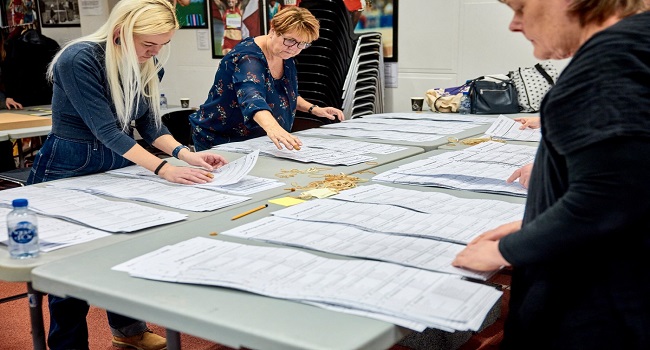
Election workers recount ballots in the Marselisborg Hallen in Aarhus, Denmark on March 25, 2026. (Photo by Mikkel Berg Pedersen / Ritzau Scanpix / AFP) /

Denmark’s political parties began the thorny process of forming a government Wednesday, with the centrist Moderates as kingmaker after the prime minister’s Social Democrats scraped through a general election without a majority.
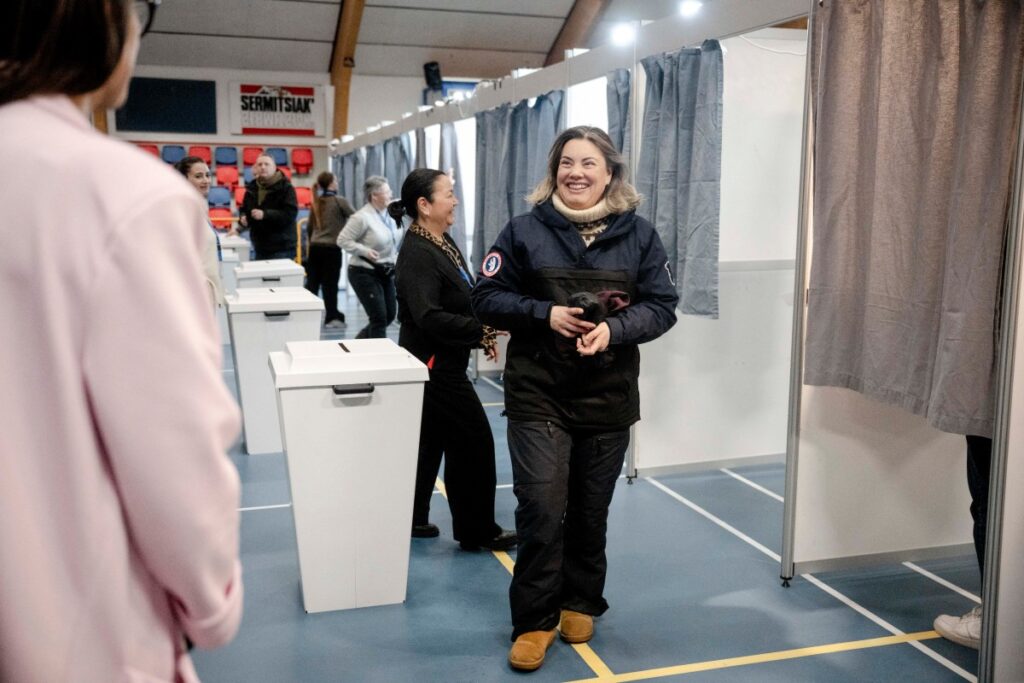
Greenland’s Inuit Ataqatigiit party member Naaja Nathanielsen (C) looks on in a polling station in Nuuk, on March 24, 2026, during the parliamentary election in Denmark (Photo by Oscar Scott Carl / Ritzau Scanpix / AFP) / Denmark OUT

Danes were braced for a weeks-long process as Prime Minister Mette Frederiksen seeks to consolidate power in the deeply splintered parliament after Tuesday’s snap vote.

Denmark’s Prime Minister Mette Frederiksen arrives at Amalienborg Palace in Copenhagen to inform the king about the election result one day after the parliamentary election on March 25, 2026. (Photo by Martin Sylvest / Ritzau Scanpix / AFP) 

A left-wing bloc made up of five parties, including Frederiksen’s Social Democrats, won 84 seats; the right-wing and far-right claimed 77; and the Moderates won 14 in the election.

The Social Democrats posted their worst election score since 1903—though they remained Denmark’s largest single party, with 38 seats in the 179-seat parliament.
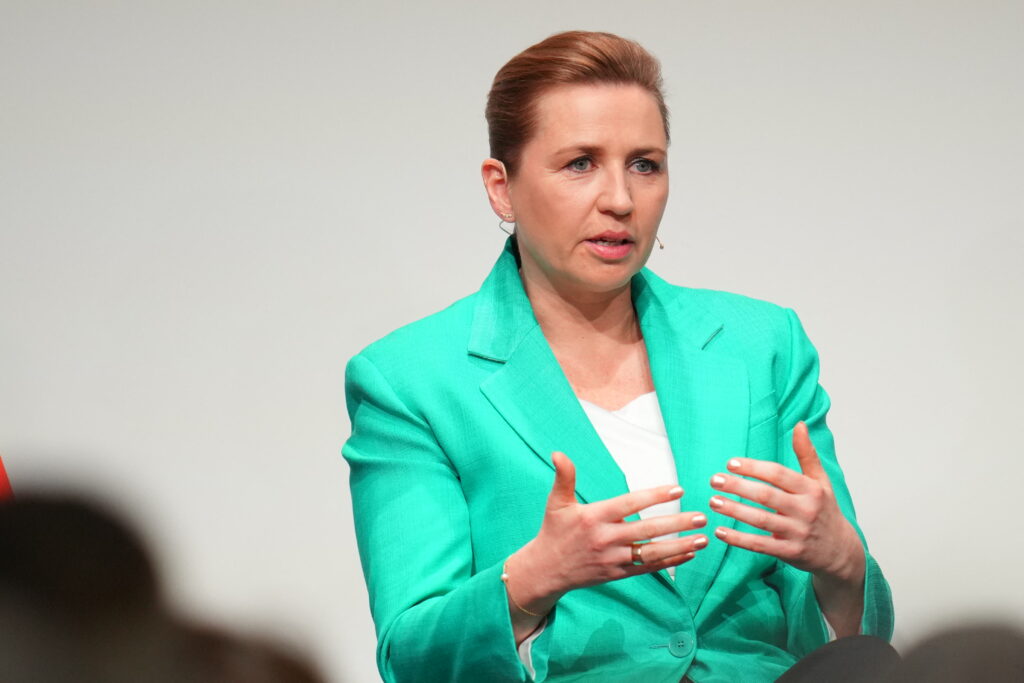
Chairwoman of the Social Democrats Mette Frederiksen attends a party leader debate hosted by Publicists’ Club one the day after the parliamentary election at the Confederation of Danish Industry’s building in Copenhagen on March 25, 2026. (Photo by Liselotte Sabroe / Ritzau Scanpix / AFP)


Frederiksen formally tendered her coalition government’s resignation to King Frederik on Wednesday, telling a televised party leader debate she wanted to try to form a centre-left government.

“The most realistic scenario” would be a coalition with the five parties on the left and the centre-right Moderates, she said.

But it is not certain the Moderates, led by Foreign Minister Lars Lokke Rasmussen, would agree to that.

“I don’t believe that Denmark needs policies aligned with” the leftist Red-Green Alliance, Lokke said.
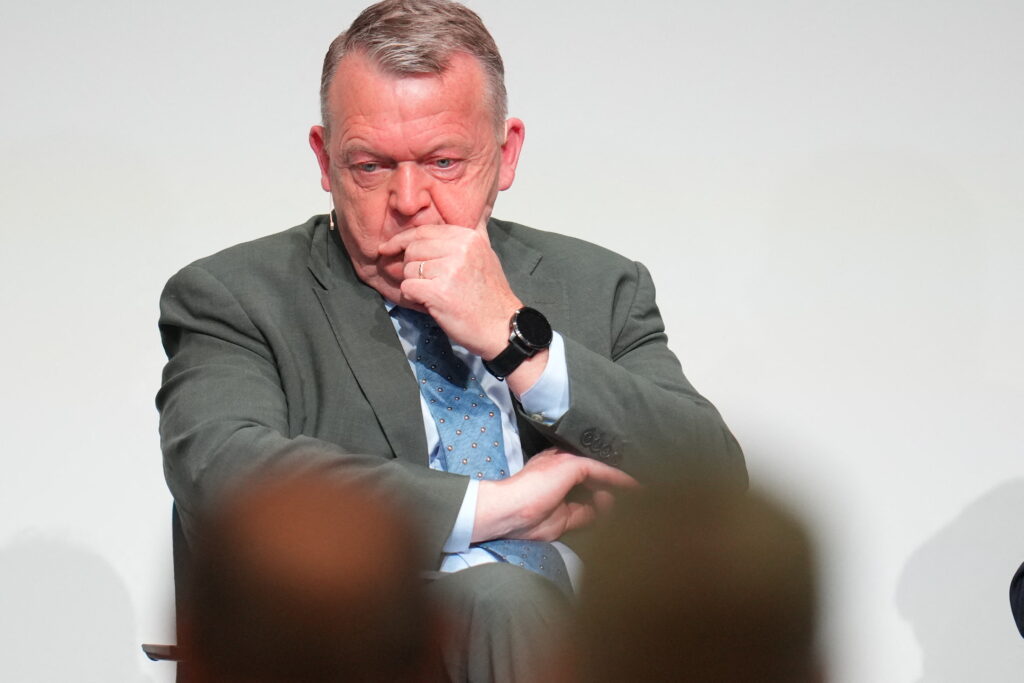
Chairman of the Moderates Lars Loekke Rasmussen attends a party leader debate at the Confederation of Danish Industry’s building in Copenhagen on March 25, 2026, the day after the parliamentary election. (Photo by Liselotte Sabroe / Ritzau Scanpix / AFP) / Denmark OUT

King Frederik was to meet party leaders individually later Wednesday to determine who should be asked to try to form the next government.

“My expectation is that Mette Frederiksen will become prime minister,” University of Copenhagen political science professor Rune Stubager told reporters.

“But I don’t know with the backing of which parties, like the left wing or the right wing,” he said.

He noted that Lokke, a two-time former prime minister, would likely vie for the position of prime minister, even though he has adamantly denied any interest in the job.

“Danes want me and not another prime minister. I still have the backing to be able to continue on behalf of the Danish people,” Frederiksen insisted during the debate.

Frederiksen has for the past four years headed an unprecedented left-right coalition made up of her Social Democrats, the Moderates and the Liberals.

The Liberals have refused to continue in a Social Democrat-led government.

‘Too Hard To Say’

Danes are now prepared for long negotiations. After the 2022 election, the talks lasted six weeks.

“It’s a long process, which means the government won’t be formed and it will be quite difficult to pass laws during this period,” lamented Jesper Dyrfjeld Christensen, a 54-year-old engineer.

“It’s really too hard to say who will be part of the coalition,” admitted Stubager.

With 12 parties in parliament, the political landscape is jagged — though Denmark is accustomed to minority governments.

“To some extent, this is the way Danish politics works. You have a minority government in the centre which forms a majority with the left on some issues and with the right on others,” he explained.

The negotiations are expected to focus on economic and pension issues, pollution and immigration, he said.

The traditional far-right party, the Danish People’s Party, which has heavily influenced policy since the late 1990s but slumped in the 2022 election, more than tripled its result to 9.1 per cent of votes.

The three anti-immigration groups together garnered 17 per cent, a stable figure for Denmark’s populist right over the past two decades.

“If negotiations take place in the left-wing bloc with the moderates, then there will be more focus on green issues than on immigration,” Stubager said.

“But if, instead, the Moderates negotiate with the parties on the right, then the central issue will be immigration.”

Four seats in Denmark’s parliament are held by its two autonomous territories — two for Greenland and two for the Faroe Islands.

While the Faroese renewed the mandates of the two outgoing lawmakers, with one for each bloc, Greenland overwhelmingly backed the left-wing party and Naleraq, which advocates rapid independence from Denmark.



AFP

Continue Reading

Trending

Copyright © 2026 TheColumn NG