
Education
One Killed As Fresh Attack On NIPSS Fails

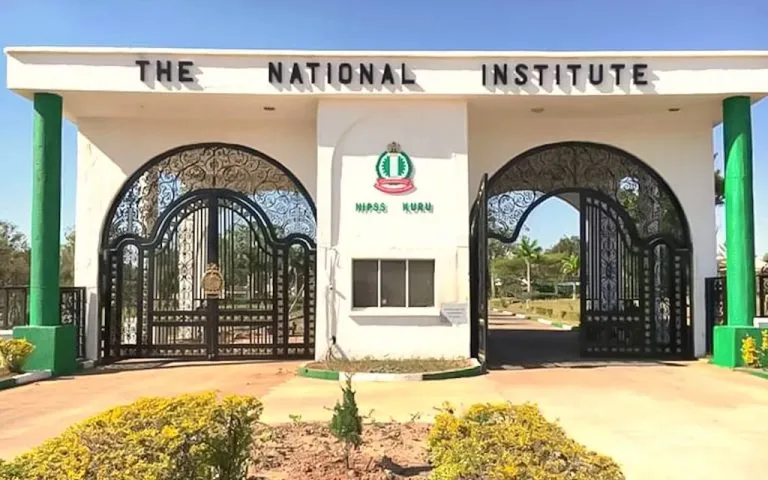
One suspected attacker was killed Wednesday night by security operatives at the National Institute for Policy and Strategic Studies (NIPSS), Kuru, Plateau State.
The development comes barely two weeks after armed men attacked the institute, killing three security operatives.
The assailants were said to have targeted the residences of the Acting Director of Studies, Barrister Nima Salman-Mann and a Directing Staff, Professor Haruna Dabin.
However, confirming the latest attack, NIPSS Head of Public Affairs, Dr Osime Samuel, explained that the security operatives engaged the attackers in a fierce gun duel, thereby forcing them to retreat.
“The National Institute for Policy and Strategic Studies (NIPSS) Kuru wishes to inform the public that another attempt by unidentified armed assailants to breach the Institute’s security perimeter was successfully repelled by security personnel late yesterday night, Wednesday, 1 July 2026.”
“The attackers engaged security operatives in a gun duel, but were forced to retreat following the swift and coordinated response of the security forces. One of the assailants was neutralised during the encounter, while others escaped with varying degrees of injuries.
“The Institute is pleased to report that there was no breach of the security perimeter. All participants, staff, residents and Institute facilities remain safe and secure.
“Security agencies have intensified efforts to apprehend the fleeing suspects, while surveillance and other proactive security measures have been further strengthened within and around the Institute.
“The National Institute for Policy and Strategic Studies reassures participants, staff, their families and the general public that the security of lives and property remains its highest priority.
“The Institute appreciates the prompt response and professionalism of the security agencies and urges the public to disregard any misinformation capable of causing anxiety,” the statement read.

The Joint Admissions and Matriculation Board (JAMB) has cautioned candidates against accepting admission offers outside its Central Admissions Processing System (CAPS), warning that such offers may not be recognised as valid.
The board issued the warning in a post on X on Monday, advising prospective students to verify their admission status on CAPS before accepting any offer.
“An admission offered by an institution outside the approved JAMB admission process may not be recognised as valid.
“Accepting such an offer could put your academic journey at risk and create complications with your admission records and related processes,” the board said.
JAMB gave the warning while promoting an episode of its JAMB Explained series, which examines what constitutes illegal admission, the consequences and how candidates can protect themselves.
“Your admission journey deserves the right foundation. Verify before you accept,” the board added.
According to information on JAMB’s official website, CAPS was developed to automate admission into tertiary institutions.
The platform allows candidates to check their admission status and accept or reject provisional offers, while enabling institutions to process admissions through the approved system.
JAMB’s 2026 admission guidelines state that admission offers must be processed through the board and made available on its e-Facility platform.
“Any offer of admission from any tertiary institution without JAMB Admission Letter is illegal and is not recognized by the Board,” the guidelines state.
The guidelines also warn that candidates who accept admission outside CAPS do so at their own risk, adding that the board will neither recognise such admissions nor condone them.

The Federal Government has released withheld salaries of members of the Senior Staff Association of Nigerian Universities (SSANU) who threatened to paralyse academic activities on various campuses.
The government, which was given a 14-day ultimatum over the implementation of the 2026 FGN/SSANU Agreement, released eight months out of the salary arrears the workers are being owed.
SSANU had demanded the immediate release of funds and full payment of outstanding Consolidated University Teaching and Tertiary Institutions Salary Structure (CONTTA) arrears calculated from January 1, 2026.
The demands were contained in a communiqué issued after its 56th National Executive Council (NEC) meeting in University of Uyo, Akwa Ibom State, during the weekend.
The union had warned that failure by the Federal Government to meet its demand within 14 days would compel the union to resume a “total, comprehensive and indefinite strike action” without further notice.
The ultimatum also demanded payment of two months’ salaries withheld during the 2022 industrial action and one-year arrears arising from the 25 per cent and 35 per cent salary increases.
In apparent reaction to the threat, less than 48 hours after the union made its position public, the Federal Government released the eight months’ arrears, averting an imminent disruption of academic activities across Nigerian universities.
Confirming the release of the eight months arrears, SSANU President, Comrade Mohammed Haruna Ibrahim, told journalists that his members would soon start receiving alerts.
He described the development as a demonstration that constructive engagement, when matched with prompt action, can protect industrial harmony and workers’ welfare.
The labour particularly lauded Minister of Education, Tunji Alausa’s efforts for his intervention and for keeping to his promise to facilitate the release of the funds.
Mohammed advised members of the union in their various branches to liaise with the management of their universities to ensure prompt and judicious payment and report back any shortfall.
Before the ultimatum was issued, the minister reportedly contacted SSANU’s national president, Ibrahim, to confirm that the Ministry of Finance and the Office of the Accountant-General of the Federation were processing the funds for release.
SSANU said the minister’s proactive engagement, followed by actual release of the arrears, reflected a commendable departure from the usual delay in implementing negotiated agreements.
The union, however, urged the Federal Government to sustain this responsive approach in settling all remaining entitlements of university workers.
Despite the release of the eight months’ arrears, SSANU maintained that the Federal Government must still settle the outstanding two months’ salaries withheld during the 2022 strike and the one-year arrears from the 25 per cent and 35 per cent salary increases.
The union described the obligations as legitimate entitlements that should not be subjected to further delay.
NEC had also called on state governments and governing councils of state-owned universities to ensure full, equitable and properly funded implementation of the agreement, warning that selective or delayed implementation could fuel unrest in the university system.
While welcoming the government’s action, SSANU reaffirmed its commitment to constructive engagement and industrial peace.
It, however, insisted that it would deploy all lawful and constitutional means to protect the rights, welfare and professional advancement of its members where agreements are not faithfully implemented.
The union said the prompt settlement of the arrears had strengthened confidence that constructive engagement between government and university-based unions could deliver tangible results for workers, students and the wider Nigerian University System.
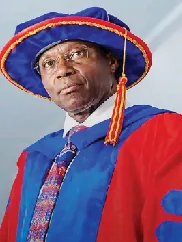
Dr Matthew Uwuigbe, a senior lecturer at Ambrose Alli University (AAU), Ekpoma, Edo State, has died in a hotel room after reportedly having an encounter with a 21-year-old commercial sex worker.
Uwuigbe, a lecturer in the Faculty of Medical Laboratory Science, was said to have died on Monday, October 5, 2026, at a hotel in the Mosco area of Ekpoma, Esan West Local Government Area of the State.
Confirming the incident, spokesperson of the Edo State Police Command, Eno Ikoedem, said the hotel owner, manager and the lady involved in the incident had been arrested and detained for questioning.
Ikoedem disclosed that the command received a report at about 8pm on Monday that the lecturer lodged in the hotel and engaged the services of a 21-year-old woman identified as Angela Defa Jacob.
The police spokesperson added that the lecturer later asked the woman to go out and purchase water for him but came back to find the lifeless body of the lecturer. She said the investigation has commenced.
“The woman returned to the room and discovered Uwuigbe lying lifeless, prompting the report to the police,” the PPRO stated.
Ikoedem further disclosed that the circumstances surrounding the lecturer’s death were being investigated, adding that “the arrests were part of efforts to establish what transpired before his death.”
She disclosed that Uwuigbe’s remains had been deposited at the Oriaifo Memorial Hospital Mortuary for preservation, while the investigation continues.
Also reacting to the incident, the university management distanced the institution from the circumstances surrounding the incident, stressing that the death occurred outside the university environment.
Spokesperson for AAU, Otunba Aladenika, confirmed that Uwuigbe was a staff member of the university, stressing that the incident was unrelated to the institution’s official activities.
Aladenika emphasized that the woman involved was not a student of the university and described the matter as the lecturer’s private affair.
-
 Health & Wellness1 year ago
President Tinubu Directs Cut in Dialysis Cost from ₦50,000 to ₦12,000
-
News2 years ago
CBN Debunks Fake Circular on New ₦5,000 and ₦10,000 Notes
-

 International News7 months ago
Indian Police Arrest Nigerian Over ₦290m Drug Haul
-

 Business7 months ago
Dangote Refinery Reduces Petrol Gantry Price To ₦1,200 Per Litre
-

 Business7 months ago
After Plea Bargain, Court Discharges Stella Oduah of ₦2.5bn Fraud
-
Business2 years ago
Dangote; We Did Not Fix ₦600/Litre Petrol Price
-
 Trending News1 year ago
NELFUND Disburses ₦86bn To 449,000 Beneficiaries
-
 Opinion2 years ago
Championing the People’s Voice: Obasa’s Dedication to Grassroots Representation By Dave Agboola⁰