Connect with us

Business

One-Third Of Musk’s DOGE Staff Resign In Protest

Published

on

Spread the love
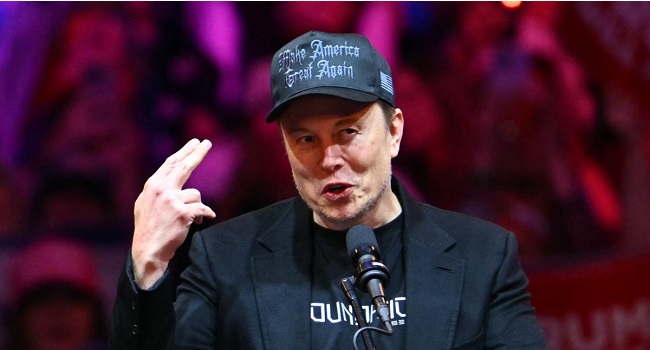
(FILES) Tesla and SpaceX CEO Elon Musk speaks at a rally for former US President and Republican presidential candidate Donald Trump at Madison Square Garden in New York, October 27, 2024. (Photo by ANGELA WEISS / AFP)


Roughly a third of staffers at Elon Musk’s Department of Government Efficiency have resigned in protest, saying that they will not push through demanded changes that put the country at risk.

“We swore to serve the American people and uphold our oath to the Constitution across presidential administrations,” 21 staffers of DOGE wrote in a letter, seen by AFP on Tuesday, to White House chief of staff Susan Wiles.

“However, it has become clear that we can no longer honor those commitments,” they added.

The workers initially worked for the United States Digital Service, which was transformed into DOGE after President Donald Trump took office on January 20th, with Musk effectively taking over the department.

Musk is the political force behind DOGE, with a small group of employees faithful to the multi-billionaire being dispatched across government and working toward gutting federal staffing and spending.

While Musk is not the formal administrator of DOGE, the SpaceX and Tesla CEO is nonetheless directing operations and will even attend Trump’s first cabinet meeting on Wednesday.

The world’s wealthiest person and a top Trump donor, Musk has no ministerial portfolio or formal decision-making authority but has status as a “special government employee” and “senior adviser to the president.”

He downplayed the significance of the departures, saying that the workers were “political holdovers” who worked remotely and refused to return to the office as ordered by Trump.

“They would have been fired had they not resigned,” he added on X, the platform he owns.

The signatories describe a chaotic transition process that began on January 21 with hastily conducted interviews by unidentified individuals wearing White House visitor badges.

The interviewers questioned staff about political loyalty, attempted to create division among team members, and displayed “limited technical ability.”

Tensions escalated on February 14 when approximately one-third of USDS staff were abruptly terminated via anonymous email.

The dismissed employees had been working on modernizing critical government systems including Social Security, veterans’ services, tax filing, healthcare, and disaster relief platforms, the letter said.

“Their removal endangers millions of Americans who rely on these services every day. The sudden loss of their technology expertise makes critical systems and Americans’ data less safe,” the letter stated.

The employees explicitly refused to participate in what they described as efforts to “compromise core government systems, jeopardize Americans’ sensitive data, or dismantle critical public services.”

 Software for firing
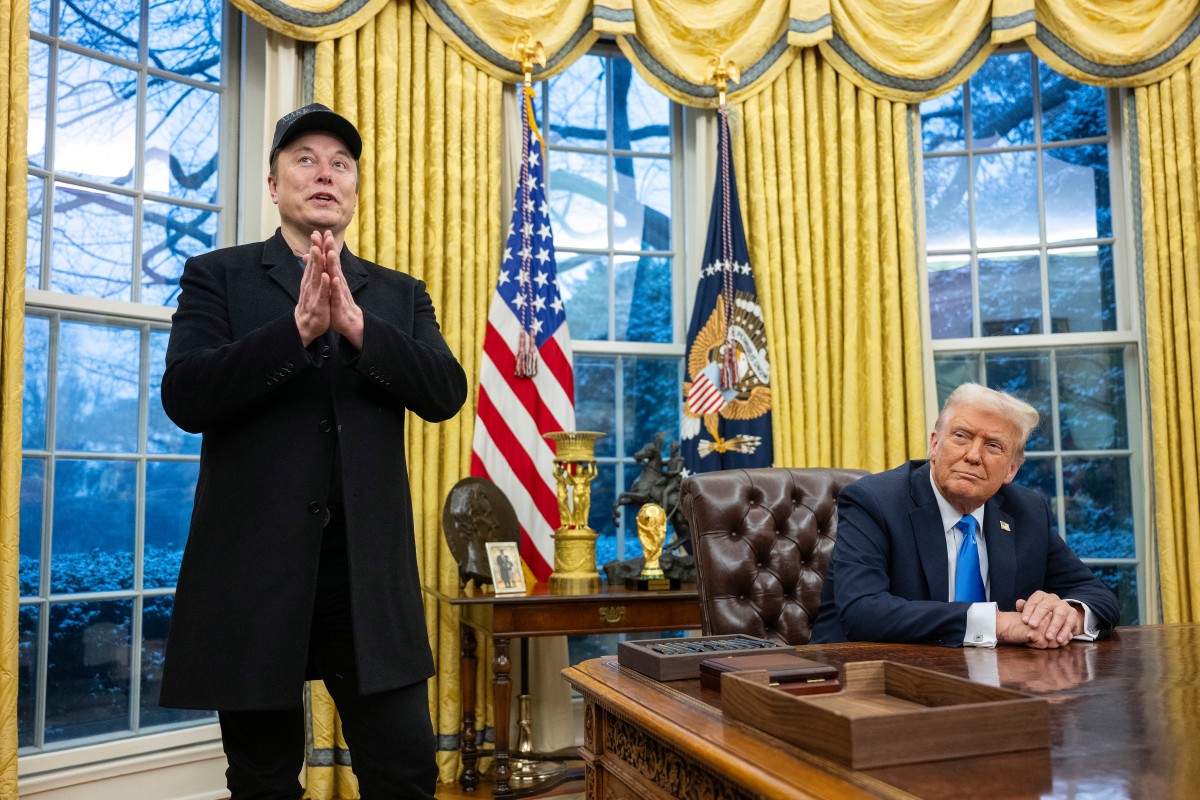
Elon Musk speaks as US President Donald Trump looks on in the Oval Office of the White House in Washington, DC, on February 11, 2025. (Photo by Jim WATSON / AFP)


The USDS was established in 2014 during Barack Obama’s administration and has historically operated as a non-partisan technology unit tasked with improving government digital services.

The mass resignation came days after Musk engineered a mass email to the federal government’s two million workers, ordering them to justify their work in an email or risk being fired.

Government departments on Monday largely told staff to either ignore the DOGE-inspired email or downplayed the risks of not answering it.

According to Wired magazine, engineers at DOGE are working on new software that could assist mass firings of federal workers across the government.

So far, thousands of mainly probationary workers — employees who are recently hired, promoted, or otherwise changed roles — have been terminated since Trump’s inauguration.

The new software would streamline the dismissal process, known as a reduction in force, for firing federal workers with stronger civil service protections.



AFP

Business

Wema Bank Records ₦221.9bn PBT as Assets Hit ₦5trn

Published

on

Spread the love

Nigeria’s oldest indigenous bank, most innovative and pioneer of Africa’s first fully digital bank, ALAT Wema Bank, has released its FY 2025 Audited Financial Results, achieving record-breaking growth and unparalleled performance across several key metrics.


Key figures include the doubling of the Bank’s Profit Before Tax (PBT) from ₦102.5bn in FY 2024 to ₦221.9bn, an impressive 116.4% increase. Profit After Tax (PAT) also surged by 125.4% from FY 2024’s ₦86.2bn to ₦194.5bn. Total assets also reached the 5 trillion mark, with the attainment of ₦5.07tn, a 41.5% increase from FY 2024’s ₦3.59tn, reflecting a growingly resilient balance sheet. Gross earnings increased by 52.8% to ₦660.6 billion from ₦432.3 billion in FY 2024, a feat driven largely by a 62.7% growth in interest income, reflecting improved yields on earning assets and growth in the loan book.

Customer deposits grew by 30.3% to ₦3.29 trillion from ₦2.52 trillion in FY 2024, demonstrating sustained customer confidence. This growth in deposits provided stable funding for asset growth while supporting liquidity and balance sheet resilience. Net interest income more than doubled, rising by 103.9% to ₦361.0 billion, supported by improved asset pricing and balance sheet expansion. Non-interest income also grew modestly by 8.3% to ₦85.3 billion. Net loans and advances increased by 44.7% to ₦1.74 trillion, up from ₦1.20 trillion in FY 2024, thus reflecting Wema Bank’s continued support for key sectors of the economy while maintaining a disciplined risk management approach. Overall, Wema Bank is set to pay dividend per share of N1.25.

Commenting on the remarkable performance, Wema Bank’s Managing Director/Chief Executive Officer, Moruf Oseni, reiterated the Bank’s unwavering commitment to sustaining its impressive growth momentum and delivering superior value to all stakeholders. According to him, “Wema Bank has delivered one of the strongest growth trajectories in its history. From a Profit Before Tax of ₦14.75 billion three years ago, we grew to ₦43.59 billion in 2023 and reached ₦102 billion in 2024. In 2025, we have taken an even bolder step forward, recording a Profit Before Tax of ₦221 billion. Our Total Assets, which hit the ₦1tn mark in 2021, surpassed ₦3tn in 2024, standing at a staggering ₦5tn as of FY2025. This overall performance not only speaks strongly of Wema Bank’s exceptional financial strength and capacity for sustained growth, but also reflects disciplined execution, a resilient business model, and the unwavering commitment of our people”.

“As of September 2025, Wema Bank successfully surpassed the ₦200bn recapitalisation minimum threshold for commercial banks with national authorisation. Our FY2025 Financial Results only corroborate what has become abundantly clear—Wema Bank is here not just to stay, but to lead the future of banking in Africa. Our 80th anniversary celebration in 2025 marked a fitting commemoration of our 80 years of impact in the finance industry and beyond. With the launch of ‘ALAT: The Evolution’, the upgraded version of our pioneering fully digital bank, ALAT, we not just redefining the digital banking experience with enhanced intelligence, personalisation and flexibility; we ushering Africa into a future filled with profound possibilities”, Oseni concluded.

Wema Bank is a leading financial services entity with banking operations across Nigeria and the globe, through its trailblazing innovative solution, Africa’s first fully digital bank, ALAT. From surpassing the recapitalisation benchmark set by the Central Bank of Nigeria (CBN) to maintaining an unparalleled growth trajectory over the past 5 years, Wema Bank has proven itself stronger than ever—numbers perpetually skyrocketing.

The Bank’s position as leading innovative bank further proves that it is not only able to meet the prevalent needs of its customers but also equipped to anticipate and meet evolving needs as digital banking continues to reshape the finance industry.


Wema Bank’s Managing Director/Chief Executive Officer, Moruf Oseni


FOR FURTHER INFORMATION:
WEMA Bank Plc
Femi Akinfolarin (Head, Strategy & Investor Relations): +234 1 4622632 [email protected]
Bunmi Oladosu (Chief Finance Officer): +234 1 2778959 bunmi.oladosu@@wemabank.com

Continue Reading

Business

FG Introduces New Leasing Scheme To Replace Rider Hire-Purchase System

Published

on

Spread the love

The Federal Government has unveiled a new leasing model aimed at replacing what it described as exploitative hire purchase arrangements for motorcycle and tricycle operators across the country.


The initiative, introduced through the Equipment Leasing Registration Authority in partnership with Century Information Systems Ltd. and the National Commercial Tricycle and Motorcycle Owners and Riders Association of Nigeria, is designed to improve access to vehicles while easing financial burdens on operators.

In a statement issued in Abuja on Thursday by the Head of Media and Corporate Communication of ELRA, Adebola Sunday, the agency said the model would provide a structured alternative to existing financing systems that have long disadvantaged riders.

Sunday quoted the Registrar and Chief Executive Officer of ELRA, Donald Wokoma, as describing the partnership as a major step toward promoting financial inclusion and economic empowerment within the informal transport sector.

Wokoma explained that the initiative seeks to address the challenges posed by high upfront costs and rigid repayment conditions that have limited access to motorcycles and tricycles for many operators.

“Leasing opens the door to economic participation for many who were previously excluded. By removing heavy upfront payment requirements and introducing structured repayment plans, operators can preserve capital, improve productivity, and increase daily earnings. It is a model that strengthens both individual livelihoods and the national economy,” he said.

He added that access to newer and better-maintained vehicles would help reduce breakdown-related losses and improve operational efficiency across the sector.

Also speaking, the Managing Director of Century Information Systems Ltd., Abdul Balarabe, said the programme would leverage technology-driven solutions to enhance safety and accountability.

According to the statement, Balarabe noted that advanced tracking systems would be deployed to monitor leased assets, curb theft, and improve recovery efforts.

Balarabe said the company would continue to onboard trade associations, cooperatives, and other stakeholders into the leasing ecosystem in order to expand access to structured financing and asset acquisition opportunities.

He urged interested organisations to engage with the company to begin the onboarding process.

In his remarks, the National President of NATOMORAS, Usman Gwoza, welcomed the development, describing it as long-awaited relief for members burdened by high-cost financing and unsustainable repayment terms.

Gwoza assured that the association would mobilise its members nationwide to participate in the scheme, adding that the model would promote dignity, stability, and financial independence among riders.

The move aligns with broader efforts by FG to deepen financial inclusion and formalise large segments of the informal economy, particularly the transport sector, which employs millions of Nigerians.

These conditions have limited operators’ ability to build equity, expand their businesses, or achieve long-term financial stability.

Continue Reading

Business

Dangote Refinery Boosts Petrol, Urea Exports Across Africa Amid Supply Crunch

Published

on

Spread the love

Nigeria’s Dangote refinery has boosted exports of petrol and urea to African countries hit by supply disruptions caused by the Iran war.

Aliko ​Dangote said on Monday that the 650,000-barrels-per-day refinery had helped cushion the full impact of the crisis both in Nigeria and across ​the continent.

“What I can do is assure Nigerians … and most of West Africa, ​Central Africa, and East Africa, we have the capacity to supply them,” Dangote said during a tour of the facility.

He said the ​refinery had shipped some 17 cargoes of gasoline to other African nations, ​and exports of urea fertiliser had also recently risen, as buyers sought alternative sources of ‌supply.

“In ⁠the last couple of days, we’ve been looking to mostly African countries, which we were not doing before,” he said, referring to the fertiliser shipments, without giving figures.

The refinery has capacity to produce up to 3 million metric ​tons of urea ​annually, most of ⁠which is typically exported to the United States and South America, officials say.

Fuel prices in Nigeria have reached record-high ​levels, industry figures show, as maximum output from Dangote ​refinery has ⁠not offset the impact of high crude prices.

Dangote said the refinery hoped to get more crude cargoes priced in local currency to help curb fuel costs.

A Reuters report last week quoted two trade sources and a refinery official that the Nigerian National Petroleum Company (NNPC) was allocating seven May cargoes to Dangote refinery, ​up from five in previous months.

Oil extended gains on Tuesday as a U.S.-imposed deadline for Iran to open the Strait of Hormuz or be “taken out” approaches.

President Donald Trump threatened to order attacks on Iranian bridges and power plants and to rain “hell” on Tehran if it fails to comply with his deadline of 8 p.m. EDT ​Tuesday (0000 GMT Wednesday) to reopen the strait.

About a fifth of the global oil supply is normally shipped through the Strait.

Brent crude futures rose $1.74, or 1.6%, to $111.51 a barrel by 0530 GMT, while U.S. West Texas Intermediate crude futures were up $3.45, or 3.1%, at $115.86.

On Sunday, OPEC+ agreed to a modest rise of 206,000 barrels per day for May. Saudi Arabia also set the official selling price of May Arab Light crude oil to Asia at a record premium of $19.50 a barrel, above the Oman/Dubai average, an increase of $17 from the previous month.

Continue Reading

Trending

Copyright © 2026 TheColumn NG