Connect with us

Business

Saudi Stocks Take 5-Year Record Fall After US Tariffs

Published

on

Spread the love
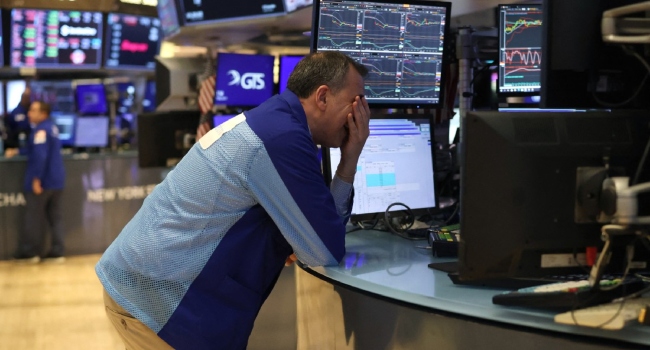
Traders work on the floor of the New York Stock Exchange (NYSE) in New York City, on April 4, 2025. (Photo by TIMOTHY A. CLARY / AFP)

The Saudi stock exchange was down 6.78 percent on Sunday, the worst daily loss since the Covid-19 pandemic according to state media, after sweeping US trade tariffs sent global markets tumbling.

President Donald Trump’s tariff offensive unleashed this week has sparked a global stock market rout, also raising fears of a general trade war and recession.

In Saudi Arabia, the state-run Al-Ekhbariya television channel reported online that “the Saudi stock index closed trading down (nearly) 7 percent, losing more than 800 points” on Sunday.

The network called it “the largest daily loss in five years” since the early days of the Covid-19 pandemic, with dozens of Saudi companies including oil giant Aramco in the red.

“Trump’s tariffs weighed heavily on global markets, and specifically today on Saudi markets,” Al-Ekhbariya reported.

The utilities sector was down 8.4 percent, banking 6.9 percent, telecommunications 5.9 percent and energy 5.29 percent, it added.

Shares in Saudi Aramco — the crown jewel of the kingdom’s economy — fell 6.2 percent.

State-run financial newspaper Al-Eqtisadiah said that “the Saudi stock market lost more than half a trillion riyals (about $133 billion) in market value during Sunday’s trading”.

A large portion of the losses was attributed to Aramco shares, with the energy giant’s market value falling by “more than 340 billion riyals”, according to Al-Eqtisadiah.

Other Gulf markets also took a dive, reflecting global trends as countries around the world grapple with Trump’s shock tariffs affecting US allies and rivals alike.

According to official news agencies, Kuwait’s primary index fell 5.7 percent, the Qatari stock exchange was down 4.2 percent, and in Oman, the Muscat stock market closed with a 2.6-percent decline.

There was no trade in Abu Dhabi and Dubai, as the United Arab Emirates now has a Western-style Saturday-Sunday weekend.

The uncertainty over trade and manufacturing has helped to fuel a days-long panic in global markets.

Stock exchanges in Europe and Asia closed at a loss on Friday, and analysts expect further declines when they reopen on Monday.


AFP

Continue Reading
Click to comment

Leave a Reply

Your email address will not be published. Required fields are marked *

Business

Dangote Group Plans 650,000bpd Refinery Project in East Africa

Published

on

Spread the love

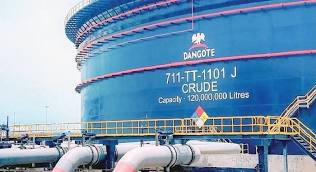
Africa’s richest man, Aliko Dangote, has announced plans to build a 650,000 barrels-per-day refinery in East Africa, mirroring the scale of his flagship facility in Nigeria, as part of a broader push to deepen industrial capacity across the continent.

Dangote made the disclosure at a high-level summit in Nairobi on Thursday, where African leaders, financiers, and industry stakeholders gathered to discuss the continent’s growing energy and infrastructure needs.

Addressing Presidents William Ruto and Yoweri Museveni, Dangote said the refinery project would depend on strong government backing and policy consistency.


“That’s why, as a group, we have now launched an initiative where, between now and 2030, we’re investing $40 billion in various fields,” he said

“Even now, I can give a commitment to the two presidents who are here that if they support the refinery, we will build an identical one to what we have in Nigeria—650,000 barrels.”

He emphasised that the proposal is still at an early stage but expressed confidence in its feasibility.

When asked about the feasibility of the project, the industrialist said it will “definitely” work, adding that “There’s nothing that can stop it.”

Push for Self-Sufficiency

Dangote is Africa’s richest man.


Dangote used the platform to argue that Africa must move away from its long-standing dependence on imports and instead build domestic industrial capacity.

“We export raw materials, which means when you export raw materials, you are exporting jobs, and when you import, you are importing poverty because you are creating jobs out there, not here on the continent,” he said.

He stressed that industrialisation—particularly in refining, fertiliser production and petrochemicals—is critical to reversing that trend and creating jobs on the continent.

The proposed East African refinery forms part of a wider $40 billion investment plan by his group between now and 2030, targeting key sectors that underpin economic transformation.

Backdrop of Growing Fuel Deficit

Dangote’s announcement comes as the Africa Finance Corporation (AFC) warned that the continent could face an 86 million tonne fuel shortfall by 2040.

According to the AFC report presented at the summit, Africa currently imports over 70 percent of its refined fuel and spends about $230 billion annually on essential imports, including fuel, food, and industrial goods.

The report projects that fuel import demand will rise from 74 million tonnes in 2023 to 86 million tonnes by 2040—equivalent to nearly three refineries the size of Dangote’s Lagos facility.

Leaders Call for Shift in Strategy


President William Ruto echoed Dangote’s position, warning that Africa must rethink its economic model.

“Our ambitions will remain unrealised if we continue to depend on external capital whose primary interest is securing raw materials,” Ruto said, adding: “We cannot continue to export raw materials and import finished products made from them.”

The summit also highlighted vulnerabilities in Africa’s energy systems, particularly exposure to global supply shocks and infrastructure gaps across the continent.

A Broader Industrial Vision

Beyond refining, Dangote pointed to ongoing efforts to scale fertiliser production and petrochemical capacity across Africa, including plans to expand urea output and establish blending plants in underserved regions.

“With the support of the government, there’s nothing that is impossible,” he said, expressing confidence that Africa can achieve self-sufficiency in key industrial inputs.

For Dangote, the refinery proposal represents a continuation of a larger vision—to reposition Africa from a net importer to a global industrial player.

“Let us not be scared… It is possible. Africans can do it,” he said.

As discussions continue, the proposed East Africa refinery could mark a significant step toward addressing the continent’s looming fuel deficit while advancing its long-term goal of economic independence.

Continue Reading

Business

EFCC Raises Alarm Over Growing Fake Sting Operations

Published

on

Spread the love

The Economic and Financial Crimes Commission, EFCC, says it is constrained to alert the public about increasing waves of attack on its image by criminal characters parading themselves as officers of the Commission in different guises.


In a statement by Dele Oyewale, Head, Media & Publicity and made available to The column, the EFCC said the Intelligence available to the Commission showed “that several ingenious but fraudulent means are being employed by dark characters to besmirch the reputation of the EFCC.

” For instance, there is a gang of fraudsters now operating around popular Eateries or funspots in our major cities. Their modus operandi is laying ambush for innocent youths coming out of the Eateries and harassing them on unfounded suspicions of being internet fraudsters and dispossessing them of their valuables.

” These characters usually portray the identities of authentic EFCC officers by dressing in fake uniforms and moving their victims to locations bearing fictitious resemblance to an EFCC office.

“There is also a gang of itinerant criminals harassing innocent motorists on the identities of their number plates. These ones wield dangerous weapons to compel their victims to offer them money on trumped-up accusations. There is yet another tribe of online impersonators and fraudulent content creators dramatizing fake sting operations of the EFCC with evidence of broken doors, windows and forced entrance into their premises. Such uncharacteristic portrayals of the EFCC could deceive unsuspecting members of the public into holding the Commission and its officers culpable of contrived actions of impersonators”

The agency thus enjoined public, to be circumspect in its evaluation of claims intended to drag the Commission’s image into the mud. ” The EFCC has its standard operating procedures about all its activities and appropriate channels of ventilating grievances against any operation or officer of the Commission are in place.

“While the EFCC is steadfastly pursuing its mandate of ridding the nation of economic and financial crimes and other acts of corruption, well-meaning and reform-minded Nigerians should not allow their judgment of the works of the Commission to be negatively affected by the activities of these impersonators, blackmailers and fake characters using the identities of the Commission to serve their nefarious interests” the statement concluded.

Continue Reading

Business

CBN Recapitalisation: Wema Bank Secures National Banking Statusl

Published

on

Spread the love

Wema Bank, Nigeria’s oldest indigenous national bank and pioneer of Africa’s first fully digital bank, ALAT, has successfully met and surpassed the Central Bank of Nigeria’s (CBN) recapitalisation requirements, reaffirming its status as a National bank.


This achievement represents a critical milestone in the Bank’s growth journey, reflecting its ability to meet regulatory expectations and its deliberate strategy to scale sustainably, strengthen its balance sheet, and reinforce its position within Nigeria’s banking sector.

The milestone follows the Bank’s successful completion of a ₦150 billion Rights Issue and an additional ₦50 billion special placement in 2025, bringing its Total Qualifying Capital to ₦264.7 billion, well above the regulatory minimum. This achievement was concluded six months ahead of the CBN’s stipulated deadline, further reinforcing the Bank’s strong financial position, shareholder confidence, and long-term growth trajectory.

Earlier in April 2026, the Central Bank of Nigeria also formally confirmed that Wema Bank, alongside 32 other financial institutions across international, national, and regional categories, had successfully concluded the recapitalisation process. Notably, Wema stands among only ten national banks that met and surpassed the minimum required capital threshold, thereby sustaining its national banking license.

This milestone not only affirms regulatory compliance but also signals a new phase of accelerated growth for the Bank; one defined by stronger capital base, increased capacity to support customers, and a reinforced position within Nigeria’s competitive banking landscape.

Commenting on the milestone, the Managing Director/Chief Executive Officer of Wema Bank, Moruf Oseni, stated, “The successful completion of our recapitalisation exercise is a defining moment for Wema Bank.

It is a strong validation of our strategy, our performance, and the enduring confidence our shareholders and stakeholders have in our vision. We have not only met the CBN’s requirements; we have exceeded them, reinforcing our position as a National Bank with the scale, strength, and stability to compete and lead.”

In March 2024, the Central Bank of Nigeria announced the recapitalisation programme requiring all national banks to maintain a minimum capital base of ₦200 billion. The initiative was designed to strengthen the resilience of financial institutions, enhance their capacity to absorb economic shocks, and position them to drive sustainable economic growth.

In response, Wema Bank embarked on a strategic capital raise through the stock market, successfully strengthening its shareholder base and securing the required capital through strong participation from existing investors. The ₦150 billion Rights Issue, which opened on April 14, 2025, and closed on May 21, 2025, marked a significant step in this journey.

This was subsequently complemented by a ₦50 billion special placement later in the year, ensuring the Bank not only met but exceeded the regulatory threshold well ahead of schedule.

For Wema Bank, this journey is a testament to its transformation. After regaining its national license in 2015, the Bank has consistently demonstrated financial discipline and strategic foresight. By raising the necessary capital primarily from existing shareholders, the Bank has underscored a deep-seated mutual trust between the institution and its investors.

Speaking further on what this achievement means for the Bank’s future and its customers, Oseni added: “This milestone strengthens our ability to compete at scale, deepen our market presence, and deliver more value to our customers across Nigeria through improved access to credit, enhanced digital banking experiences, and innovative financial solutions. It positions us to play an even bigger role in powering Nigeria’s economy while continuing to deliver sustainable value to all our stakeholders.

Looking ahead, we remain focused on deepening our market presence, driving customer-centric innovation, and strengthening our role as a catalyst for growth across retail, SME, and corporate segments. This is not just about retaining our license; it is about building a bigger, stronger, and more impactful Wema Bank.”

The successful conclusion of the recapitalisation process underscores Wema Bank’s financial strength, disciplined execution, and unwavering commitment to regulatory compliance as it continues to expand its footprint across Nigeria. With a significantly strengthened capital base, the Bank is now positioned to do more – support more customers, enable more businesses, and unlock more opportunities across every segment it serves.

As it enters this new phase, Wema Bank is not only reaffirming its status as a National Bank; it is stepping forward with greater scale, sharper ambition, and a clear intent to lead. The Bank remains firmly committed to powering progress, driving innovation through ALAT, and delivering sustained value; powering a future of possibilities for all its stakeholders.


CBN Recapitalisation: Wema Bank Secures National Banking Status

Continue Reading

Trending

Copyright © 2026 TheColumn NG