
News
Ticketing: Black Marketers Takeover As Abuja-Kaduna Train Services Drop To Single Trip Daily

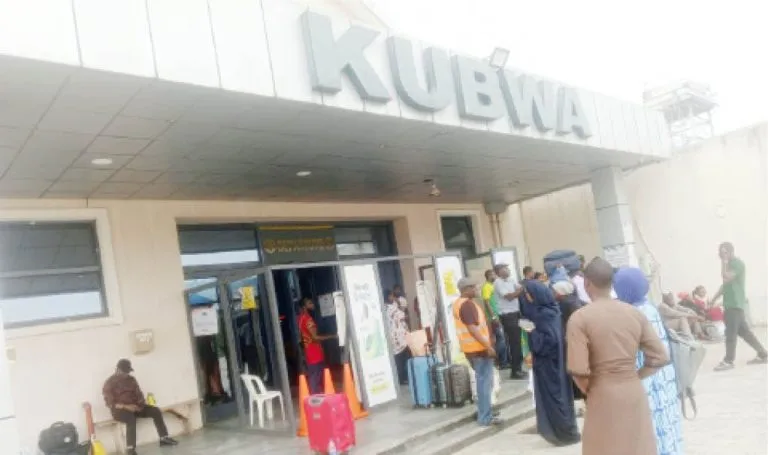
Passengers using the Abuja-Kaduna train service have expressed concern over the continued reduction in train operations along the corridor.
The route, which at one time recorded about five trips daily from both ends, has now been reduced to a single trip, forcing passengers to compete for the limited tickets amid allegations of black-market racketeering.
This is in addition to the suspension of operations every Wednesday to allow for maintenance of train engines and the rail tracks.
According to report, the latest reduction began penultimate Friday, one of the four days when the Nigeria Railway Corporation (NRC) previously operated two trips because of high passenger demand from both Abuja and Kaduna.
Before the development, the NRC operated two trips on Fridays and Saturdays from Abuja, while similar schedules were maintained on Sundays and Mondays from Kaduna to cater to the high number of passengers travelling to and from the Federal Capital Territory for weekend activities.
Sources at the Kubwa Train Station said he the reduction became necessary after one of the two locomotives serving the route developed a mechanical fault.
“As you may know, each train operates with two engines – one at the front of the coaches and another at the rear,” one source said.
“The front engine powers the train to its destination, while the rear engine is used for the return journey. Each engine also serves as a backup for the other.
“With one of the engines currently faulty, we have had to reduce operations to a single trip daily because it would be risky to operate two trips using only one engine.”
The situation has compounded the challenges faced by travellers, making tickets increasingly difficult to obtain through both online and over-the-counter channels.
Passengers currently purchase tickets under three categories – economy, business class and executive – with different prices for online and physical purchases.
Economy tickets purchased online 48 hours before departure cost about N4,000, while over-the-counter tickets, when available shortly before departure, cost N3,500.
Business class tickets cost N7,000 online and N6,500 over the counter, while executive class tickets sell for N13,000 online and N12,000 at station counters.
Speaking on the development, a passenger, Comrade Adamu Abdulmumini, who travels along the corridor twice weekly, said the purpose for which the rail service was established had gradually been undermined since the end of the administration of the late President Muhammadu Buhari, under whom the service was inaugurated.
He alleged that the ticketing system now resembles a black-market operation.
“Passengers find it almost impossible to secure tickets online because the portal hardly works, while over-the-counter tickets are sold only a few minutes before departure, if they are available at all,” he said.
“Instead, people are advised to buy tickets from individuals outside the station, who sell them at exorbitant prices.
“Because passengers are desperate to travel by train, many have no choice but to buy from these people, who may be staff members or agents.”
He added that such tickets often bear names different from those of the actual passengers using them.
Another passenger, Abigail Gani, said she spent almost a week trying unsuccessfully to obtain an online ticket before finally securing one for Saturday’s trip last Friday.
According to her, economy tickets that officially cost between N3,500 and N4,000 are resold on the black market for between N5,000 and N10,000.
Another commuter, Ismaila Idris, said repeated attempts to buy tickets online had resulted in his account being debited several times without successful bookings.
“The same thing happened to my wife. After reporting the issue, the management told her the problem was with her bank.
“The bank promised to refund the money if it was responsible, but she has yet to receive the refund,” he said.
Another passenger, Thank-God Aya, who travelled from Mararaba in Nasarawa State to the Kubwa Train Station, said he was disappointed after being informed that over-the-counter tickets were unavailable.
Similarly, Abraham Jacob said he waited for ticket sales to commence but was unable to secure one.
Efforts to obtain an official response from the NRC were unsuccessful.
The Kubwa Train Station Manager, Shedrack Kure, declined to comment, saying he was not authorised to speak to the media on matters relating to train operations.
However, another official at the station, who requested anonymity, said the Abuja-Kaduna rail service was facing serious operational challenges, including inadequate locomotives and coaches.
A source at the Federal Ministry of Transportation also said about N5 billion would be required to fully revamp the corridor.
“Even if 10 trips were operated daily from both ends of the corridor, they would still attract enough passengers,” the source said.
“There was an attempt to move an additional locomotive from Lagos, where it is currently at an NRC warehouse, but the plan has yet to receive approval due to a lack of political will.”

The Federal Government has raised alarm over the growing use of new technologies by terrorist groups in Africa, calling for stronger intelligence sharing and better funding to tackle the security threat.
The Minister of Foreign Affairs, Ambassador Bianca Odumegwu-Ojukwu, raised the concern in a statement issued by the ministry on Friday, following her remarks at the opening of the Consultative Forum on Strengthening the Functional Performance of the African Union Peace and Security Architecture in Abuja.
Odumegwu-Ojukwu said armed groups were increasingly using new technologies in their operations and funding their activities through transnational organised crime and illicit financial flows.
She decried the growing wave of terrorism on the African continent, noting that armed groups were adopting new technologies to carry out their operations and using proceeds of transnational organised crime to finance their activities.
She called on African countries to take greater responsibility for addressing the continent’s security challenges amid growing terrorism, regional security threats and weaknesses in existing security frameworks.
Against the backdrop of growing regional security threats and pressures on multilateralism, the minister called for “a stronger, better funded and self-reliant African peace and security architecture” capable of addressing the continent’s evolving security challenges.
The minister urged African states to strengthen intelligence sharing, improve early warning systems and support African-led mediation efforts to prevent conflicts and respond to emerging threats.
She urged African states to strengthen the Continental Early Warning System, African mediatory initiatives and the African Peer Review Mechanism (APRM).
She also called for greater attention to local grievances, youth unemployment and community resilience, noting the need to address issues that could contribute to insecurity.
The minister underscored the importance of building enduring national peace infrastructures and enhancing intelligence sharing among African states to improve the continent’s response to security threats.
Odumegwu-Ojukwu stressed the importance of rehabilitation and reintegration programmes for people affected by terrorism and encouraged African countries to use the African Union Counter-Terrorism Centre to coordinate counter-terrorism efforts across the continent.
She stressed the need for increased support for rehabilitation and reintegration programmes and encouraged African countries to leverage the African Union Counter-Terrorism Centre (AUTC) for the coordination of continental counter-terrorism efforts.
She further called for predictable funding for African Union-led peace operations, stressing the need to strengthen the AU Peace Fund and complement it with international funding commitments, including support from the United Nations.
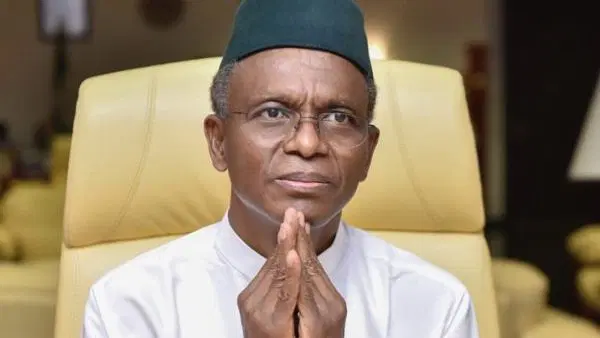
Former Governor of Kaduna State, Nasir El-Rufai, has failed to persuade the Federal High Court in Abuja to stop the Independent Corrupt Practices and Other Related Offences Commission (ICPC) and other anti-graft agencies in the country from freezing his bank accounts.
In a ruling by Justice Joyce Abdulmalik, the court dismissed a suit filed by the former governor, who has been in detention, seeking an order restraining federal government agencies from moving against his assets.
The court held that the suit not only lacked merit but was speculative, as no reasonable cause of action was disclosed against the agencies the applicant listed as defendants.
Therefore, the Economic and Financial Crimes Commission (EFCC), the Department of State Services (DSS) and the Attorney General of the Federation (AGF) were struck out from the case.
In the suit he filed on February 24, El-Rufai prayed the court for an interim injunction directing the respondents to maintain the status quo ante regarding his assets.
According to him, the order was necessary to prevent him from being placed in a state of helplessness. He insisted that the severance pay he received upon completing his tenure as governor of Kaduna State between 2015 and 2023 could not reasonably be suspected to be proceeds of any unlawful activity.
He urged the court to declare that properties purchased from his severance pay were lawfully acquired.
The banks the applicant prayed the court to protect from the respondents included Zenith Bank Plc, Naira Account Number: 1007158671; Zenith Bank Plc, Domiciliary Account Number: 507 1511327; Guaranty Trust Bank (GTB) Plc, Account Number: 0023824978; Access Bank, Dollar Account Number: 1396386493; and Access Bank, Naira Account Number: 1396382103.
El-Rufai also sought a declaration that any attempt by the respondents to apply for, obtain or execute any interim or final forfeiture or freezing order, without first establishing a reasonable suspicion supported by credible evidence as required by relevant law, would amount to a breach of his rights.
He relied on Section 17(1) of the Advance Fee Fraud and Other Related Offences Act, 2006, and the Supreme Court decision in Melrose General Services Ltd v. EFCC (2024) SC/1519/2019, to pray the court to declare that, as a citizen of Nigeria, he is entitled to the presumption of innocence and the protection of his fundamental rights.
He argued that any action by the respondents seeking to circumvent his constitutionally guaranteed rights through ex parte applications that conceal material facts would amount to a breach of Section 36(5) of the Constitution and a violation of the principles of fair hearing.
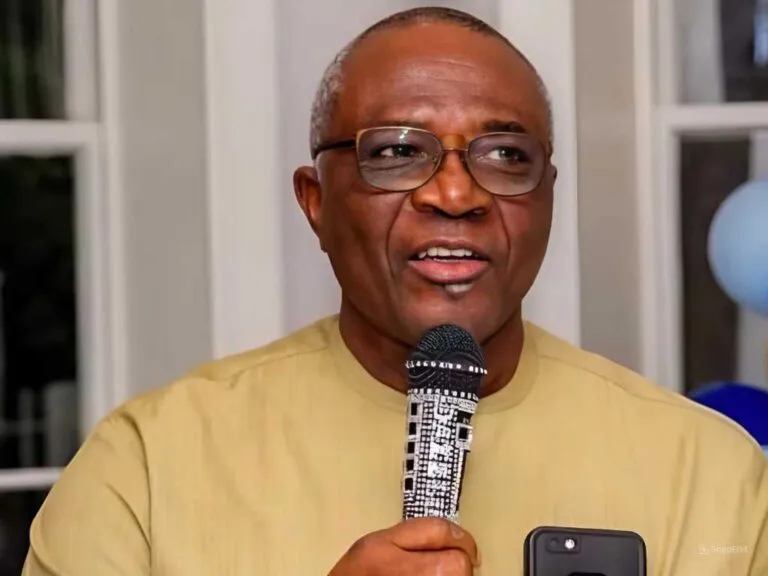
The Federal Government is working to bring down inflation to single digits, Bayo Onanuga, Presidential spokesman, has said.
Onanuga said this while announcing additional measures that the government introduced to support Nigerians amid the global fuel crisis.
Earlier on Thursday, Minister of Finance, Taiwo Oyedele, announced that fuel would be sold at a discounted rate across NNPC filling stations for 30 days.
Although the minister made it clear that the move is not an attempt to reintroduce subsidy, many Nigerians, especially on social media, described it as an attempt to subsidize the product.
In his statement, Onanuga said, “The Nigerian National Petroleum Company (NNPC) agreed today to forgo its petrol retail profit margin and sell to Nigerians at cost to cushion the impact of global crude oil price shocks and volatility on vulnerable households.
“NNPC Retail, which already sells petrol at the lowest price in the market, will offer this new deal within the next 30 days. This means if NNPC’s landing cost is N1300, it will sell fuel to Nigerians, especially commercial vehicles, at the same price.
“The company’s discount gesture, backed by President Bola Ahmed Tinubu, was among the raft of measures the Finance Minister and Coordinating Minister of the Economy, Taiwo Oyedele, announced today.
“Oyedele said he hoped other marketers would take a cue from the NNPC, as the sharp rise in crude and petrol prices is not expected to last long.
“Oyedele was emphatic that NNPC agreeing to sell at a discount must not be misinterpreted as the restoration of petrol subsidy, which ended on May 29, 2023.”
Onanuga added that “The Federal Government is also working on a comprehensive package of fiscal measures to bring inflation down to single digits sustainably in the near term.”
-
 Health & Wellness1 year ago
President Tinubu Directs Cut in Dialysis Cost from ₦50,000 to ₦12,000
-
News2 years ago
CBN Debunks Fake Circular on New ₦5,000 and ₦10,000 Notes
-

 International News6 months ago
Indian Police Arrest Nigerian Over ₦290m Drug Haul
-
 Business7 months ago
Dangote Refinery Reduces Petrol Gantry Price To ₦1,200 Per Litre
-
 Business7 months ago
After Plea Bargain, Court Discharges Stella Oduah of ₦2.5bn Fraud
-
Business2 years ago
Dangote; We Did Not Fix ₦600/Litre Petrol Price
-
 Trending News1 year ago
NELFUND Disburses ₦86bn To 449,000 Beneficiaries
-
 Opinion2 years ago
Championing the People’s Voice: Obasa’s Dedication to Grassroots Representation By Dave Agboola⁰