
News
Tinubu Calls For African Investment In Minerals, Stronger Global Role At UNGA 80


Nigeria President Bola Tinubu has called for a total rephase in the global financial architecture of Africa’s mineral resources, saying it was time for its nations to begin to not only finance its mineral sector but also assert their influence and power in the African products’ global supply chains.
The President stated that this had become necessary if African nations’ sovereignty is to be protected, just as he recommended collective action by development allies and partners, to bring Africa’s mineral economy to reality for the benefit of the continent.
President Tinubu, represented by Vice President Kashim Shettima, called for these decisive actions at the Second Africa Minerals Strategy Group (AMSG) High-Level Roundtable on Critical Minerals Development in Africa, held on the margins of the 80th Session of the United Nations General Assembly, New York City.
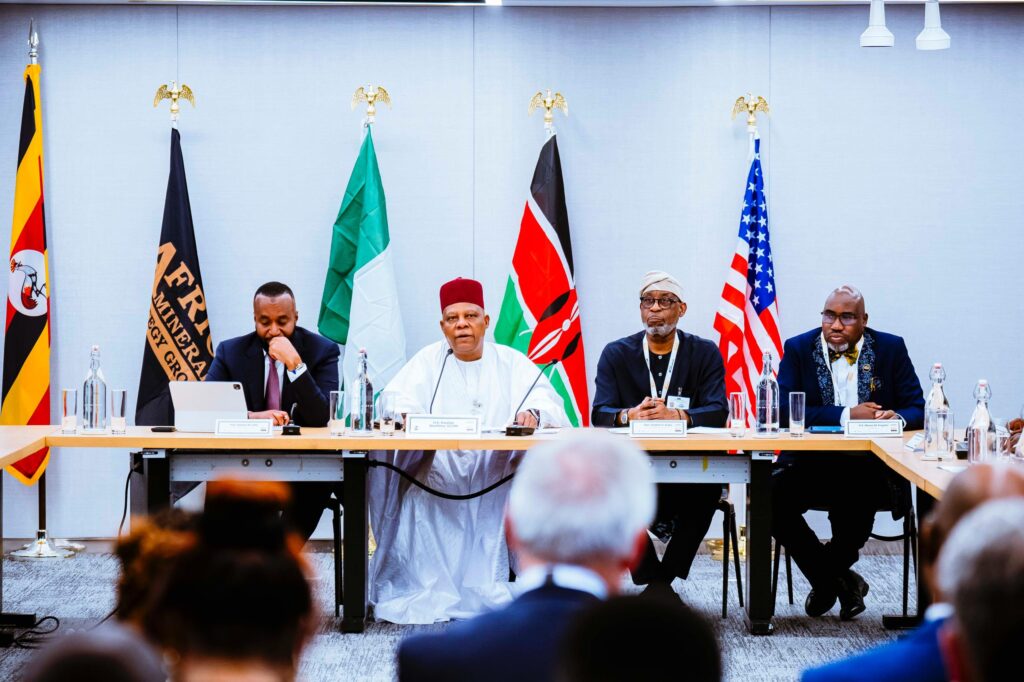
Tinubu’s position at the event position was made known in a statement on Tuesday by Stanley Nkwocha, Senior Special Assistant to The President on Media & Communications.
“We must take the bull by the horns in financing our future. Never again shall we wait for capital to trickle in. With sovereign funds, blended vehicles, and innovation tools like the Africa Mineral Token, Africa shall finance Africa. To safeguard this sovereignty, we must guard our cobalt, lithium, graphite, gold, and rare earths not as fragmented states but as one continental bloc, wielding collective power in global supply chains,” the President submitted.
Pledging Nigeria’s commitment towards catalyzing a mineral-led renaissance under the Renewed Hope Agenda, as exemplified back home, President Tinubu urged African leaders to end the “ignoble cycle” of importing finished goods through accelerated government-led mineral exploration.
To unlock Africa’s mineral economic future, the President said the objective will materialize based on four imperatives.
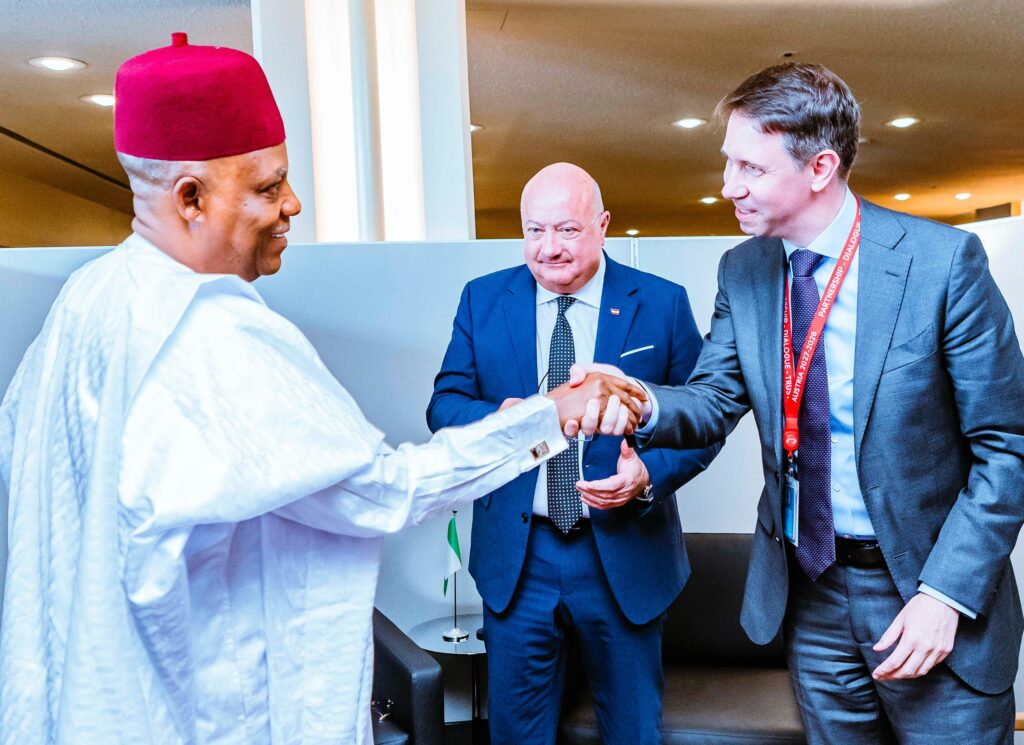
First, Tinubu urged African nations to climb the value chain, adding, “We must end the ignoble cycle of exporting rocks and importing finished goods. From beneficiation to green manufacturing, Africa must build industries on African soil.”
The President continued, “Second, I am proud to announce that with the African Minerals and Energy Resource Classification (AMREC), and the Pan-African Resource Reporting Code (PARC), we will no longer beg for geological knowledge of our own land. Africa’s data will be mapped, standardized, and owned by Africans.
“Third, data alone is not enough. We must accelerate government-led mineral exploration and national geological mapping.
“Without exploration, there is no sovereignty. Without mapping, there is no value. Every member state must prioritize country-wide surveys, strengthen geological agencies, and pool expertise through AMSG. For when Africa owns the map, Africa owns the future.”
Fourthly, President Tinubu urged African leaders to take the bull by the horns in financing Africa’s future. “With sovereign funds, blended vehicles, and innovative tools like the Africa Mineral Token, Africa shall finance Africa,” the President maintained.
The President demanded a collective demonstration of leadership while calling upon sovereign wealth funds, private partners, and development allies to join Africa in rewriting the story of Africa’s mineral economy.
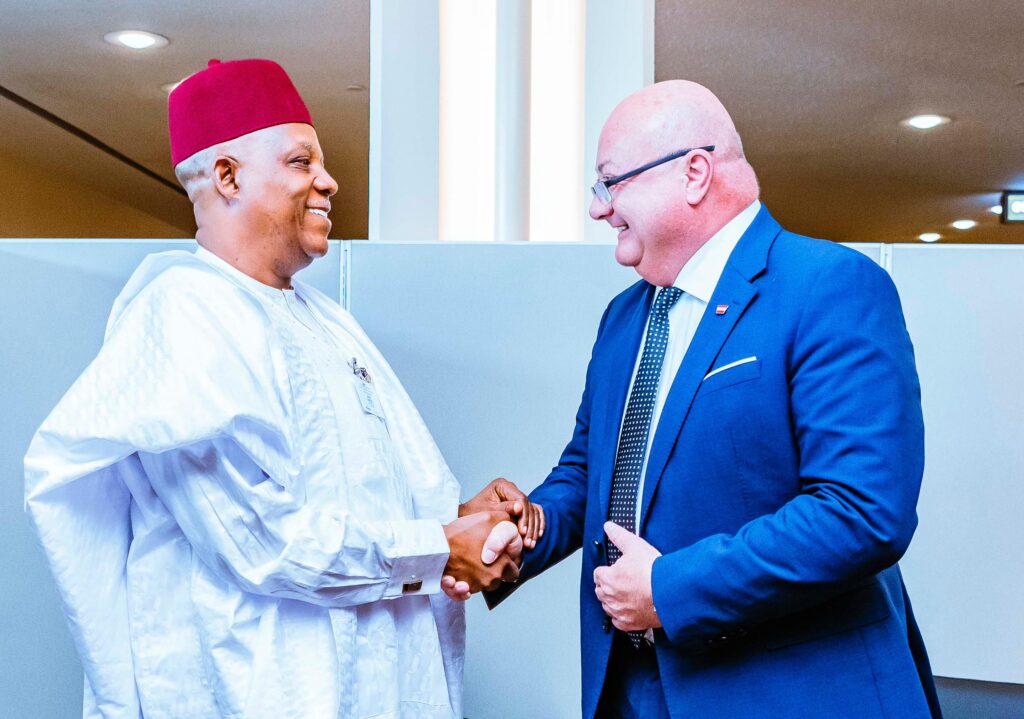
“Nigeria, Uganda, Zimbabwe, Burkina Faso, Mali, Botswana, Gabon, and Ghana are already leading this new age of equal exchange, enforcing bans on the export of raw minerals to promote domestic beneficiation. Zimbabwe’s ban on raw lithium in 2022, Gabon’s decision to end manganese exports by 2029, and Kenya’s plan to restrict raw gold exports are historic acts of courage.Nigeria is accelerating similar reforms, for we know this is the road to jobs, to industries, and to prosperity,” the President said.
The President commended Nigeria’s Minister of Solid Minerals Development, Dr. Dele Alake, who chairs the event, and the Secretary-General, H.E. Moses Michael Engadu of Uganda, for guiding Africa towards a path of productivity and pride.
The President concluded, “As Chair of this Roundtable, I pledge Nigeria’s unflinching commitment to ensuring that AMSG fulfils its promise of catalyzing a mineral-led renaissance. Let us rise from this dialogue with a communiqué of clarity, a framework for action, and a spirit of unity.”
Earlier, Dele Alake while welcoming stakeholders and partners to the event called for cohesion amongst African nations saying with determined focus and a reinvigorated sense of partnership and transparency in the minerals sector, Africa will harness in all ramifications the total benefits of a sustained, deepened and well harmonised mineral sector, adding that, “these resources are indispensable for global sustainable development and remain catalyst for Africa’s rapid industrialisation”.
Speaking at the event, UN’s Assistant Secretary General and Regional Director, Africa UNDP, Ahunna Eziakonwa, urged African leaders to be cautious in terms of how they position to make most of the African resources for the people rather than to be subjected to extreme exploitation which is already happening, and being extracted without appropriate value.
She also emphasised the need for leaders in the continent to ensure partnership that delivers technology transfer, beneficiation and create jobs, saying ” there is a scramble and a lot of interest in Africa’s minerals, people are coming to partner, Africa can shape the quantum of that partnership and determine what works from the partnership.
Also, Jozef Stkela, European Union Commissioner for International Partnership, said in the last few years, European Union structured its approach, boost, and secured its supply of critical raw materials.
He said that EU adopted Critical Raw Materials Act in 2024, to increase domestic production and diversity supply outside the European Union,saying “under this Act and our global gateways strategy, we have signed 14 strategic partnership with on raw materials value chain of which four are in Africa.”


Entertainment
NIBAD 2026: Abike Dabiri To Take Centre Stage As Bunmi Ebony, DJ X-One Host Baltimore Event

The Chairman and Chief Executive Officer of the Nigerians in Diaspora Commission (NiDCOM), Hon. Dr Abike Dabiri-Erewa ( OON) has been scheduled for honour, among other awardees, at the 2026 and the 6th edition of the annual Nigerian Independence Ball, Awards, and Dinner (NIBAD),billed to hold in Baltimore, Maryland, on the 18th of October .
At the instance of Naija Times USA and Raindrop Group led by Olaniyi Thompson Tabi, activities marking the 6th edition of NIBAD commenced on the 3rd of October with Independence carnival in Maryland.
As part of the expanded 6th edition, the Annual Independence stage play titled ‘Your Excellency Sir!’ …The saga of a nation, written and directed by Olaniyi Thompson Tabi, was showcased at a very colorful event on the 9th of October.
Designed to be an unforgettable celebration of Nigeria’s 66th Independence celebration, the grand finale of the celebration is billed for Sunday, the 18th of October, 4.00pm, at Gabriel Community Centre, 6948, Dogwood Road, Windsor Mill, MD 21244.
The evening will not only commemorate Nigeria’s rich history and vibrant culture but will also spotlight the exceptional contributions of Nigerians at home and abroad in various fields such as business, healthcare, education, community service, and more.
The evening will feature a grand awards ceremony to honor those who have demonstrated leadership, innovation, and dedication in their respective industries. Among them, Dr Dabiri- Erewa
Hon. Dr. Abike Kafayat Oluwatoyin Dabiri-Erewa (OON) is a prominent Nigerian politician, public administrator, and former broadcast journalist who has been able to show leadership since her appointment as the Chairman and Chief Executive Officer of the Nigerians in Diaspora Commission (NiDCOM).
To add colour to the event also, is
Dj X-One, reputed as the best Disc Jockey in the DMV area. Bunmi Ebony, a fast rising Juju Artiste in Atlanta will also be on the bandstand to thrill guests at the event to celebrate Nigeria.
****About NIBAD: The Nigerian Independence Ball, Awards, and Dinner (NIBAD) is an annual event that celebrates Nigeria’s Independence while recognizing the achievements of Nigerians in the diaspora. NIBAD aims to highlight the cultural pride, resilience, and accomplishments of Nigerians globally, bringing together community leaders, professionals, and influencers for an evening of celebration, inspiration, and unity.
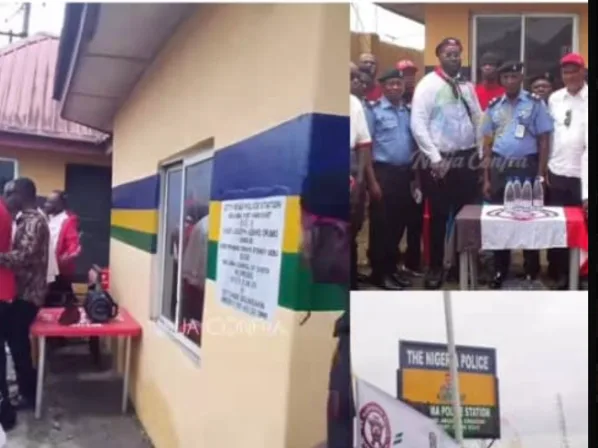
The Rivers State Police Command under CP Olugbenga A. Adepoju has condemned the purported renovation of the Abuloma Police Outpost by suspected cultists and ordered a full investigation into the incident.
Police Public Relations Officer (PPRO) of the command, ASP Blessing Agabe disclosed this in a Friday statement.
She said the command’s action follows a trending social media report and circulating video alleging that suspected cultists renovated the outpost and visited the facility on Thursday, October 15, to celebrate completion of the renovation.
The command said it “strongly condemns any action or association capable of compromising the integrity, discipline and professional standards of the Nigeria Police Force or conferring legitimacy, recognition or acceptance on suspected cult groups or other unlawful organisations.”
It added, “Police facilities are public institutions established for the protection of citizens and the enforcement of law and must not become platforms through which criminal groups seek public validation or influence.”
The command said CP Adepoju maintains zero tolerance for criminality and any conduct that undermines public confidence in the police.
Consequently, he has queried and relieved the Divisional Police Officer in charge of Abuloma Division and the Divisional Officer overseeing the affected outpost of their duties pending investigation.
The CP has also ordered a full investigation to establish the circumstances surrounding the incident and the veracity of the allegations, including the identities and backgrounds of the individuals or groups who financed or facilitated the renovation; the police officers who authorised or approved the project; whether due procedures were followed; whether any officer breached professional standards or compromised the integrity of the force; and the extent of any involvement by police personnel.
The command said while it welcomes legitimate community support for improving police facilities, consistent with Section 26(1)(d) of the Nigeria Police Act 2020, which provides for gifts and contributions to the Police General Fund, such support must not compromise police independence, professional standards or security.
“No donation or assistance confers immunity from investigation or prosecution,” the command stated, adding that the investigation will establish whether necessary approvals were obtained and appropriate checks conducted on those who financed the renovation.
It reiterated that it would not condone unprofessional conduct or any form of improper association with criminal elements and that appropriate disciplinary and legal action would be taken against anyone found culpable.
The Police Command in Benue State has confirmed the abduction of Rev. Fr. John Otache, Parish Priest of St. Margaret’s Parish, Ajegbe-Awume, in Ohimini Local Government Area of the state.
The Police Public Relations Officer, DSP Aondogu Orchia confirmed the incident on Friday in Makurdi.
Orchia said the command had commenced full investigation into the incident and efforts were ongoing to rescue the priest.
Meanwhile, the Catholic Diocese of Otukpo, in a statement signed by the Diocesan Chancellor, Rev. Fr. Joseph Itodo, said the priest was abducted on October 13.
According to Itodo, Otache was returning home from Otukpo when he encountered the abductors along the Otobi Amejo-Ajegbe Road in Ohimini Local Government Area.
He expressed sadness over the incident, saying the Bishop of Otukpo, Most Rev. Michael Apochi, was deeply pained by the development.
He called on priests, religious members, the laity and other well-meaning individuals to pray for the priest’s safe and speedy release.
He also urged prayers for other persons held by kidnappers across the country, expressing hope for their safe return.
-
 Health & Wellness1 year ago
President Tinubu Directs Cut in Dialysis Cost from ₦50,000 to ₦12,000
-
News2 years ago
CBN Debunks Fake Circular on New ₦5,000 and ₦10,000 Notes
-
 Business7 months ago
Dangote Refinery Reduces Petrol Gantry Price To ₦1,200 Per Litre
-

 International News7 months ago
Indian Police Arrest Nigerian Over ₦290m Drug Haul
-
 Business7 months ago
After Plea Bargain, Court Discharges Stella Oduah of ₦2.5bn Fraud
-
Business2 years ago
Dangote; We Did Not Fix ₦600/Litre Petrol Price
-
 Trending News1 year ago
NELFUND Disburses ₦86bn To 449,000 Beneficiaries
-
 Opinion2 years ago
Championing the People’s Voice: Obasa’s Dedication to Grassroots Representation By Dave Agboola⁰