
International News
155 Killed In Tanzania As Heavy Rains Lash East Africa

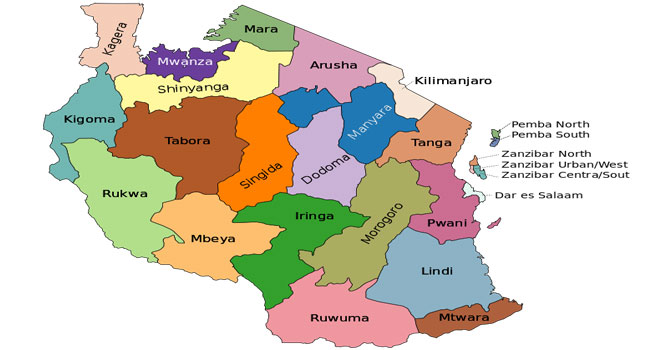
At least 155 people have died in Tanzania as torrential rains linked to El Nino triggered flooding and landslides, the country’s prime minister said Thursday.
Tanzania and other countries in East Africa — a region highly vulnerable to climate change — have been pounded by heavier than usual rainfall during the current rainy season, with several dozen deaths also reported in Kenya.
Prime Minister Kassim Majaliwa said more than 200,000 people have been affected by the disaster in Tanzania, with 155 fatalities and 236 people injured.
“The heavy El Nino rains, accompanied by strong winds, floods and landslides in various parts of the country, have caused significant damage,” Majaliwa told parliament.
He said homes, property, crops and infrastructure such as roads, bridges, railways and schools had been damaged or destroyed.
The devastating effects of the rains were “primarily due to environmental degradation”, he added, blaming deforestation, unsustainable farming practices such as “slash and burn” agriculture and unregulated livestock grazing.
On April 14, the government said a total of 58 people, including children, had been killed in rains and floods since the beginning of the month.
El Nino is a naturally occurring climate pattern typically associated with increased heat worldwide, as well as drought in some parts of the world and heavy rains elsewhere and can have a devastating impact in East Africa.
Deadly flash floods in Nairobi
In Kenya, about 45 people have been killed since the start of the rainy season in March, including 13 who lost their lives in flash floods in the capital Nairobi this week.
President William Ruto convened an emergency multi-agency meeting Thursday to respond to the crisis after torrential rains and floods caused chaos across the city, blocking roads and engulfing homes in slum districts.
Some parts of Nairobi remained under water on Thursday, and Kenyans have been warned to stay on alert, with the forecast for more heavy rains across the country in coming days.
Deputy President Rigathi Gachagua told a press briefing that people affected by the floods would be given food and other goods, while those living in the most vulnerable areas would be relocated.
“The government… will do whatever it takes, apply all the required resources in terms of money and personnel to make sure that lives are not lost and the people of Kenya are protected from this disaster,” he said.
In Burundi, one of the poorest countries on the planet, around 96,000 people have been displaced by months of relentless rains, the UN and the government said earlier this month.
Meanwhile, the UN humanitarian response agency, OCHA, said in an update this week that in Somalia, the Gu (April to June) rains are intensifying, with flash floods reported since April 19.
It said four people have been reportedly killed and more than 800 people affected or displaced nationwide.
Uganda has also suffered heavy storms that have caused riverbanks to burst, with two fatalities confirmed and several hundred villagers displaced.
Late last year, more than 300 people died in torrential rains and floods in Kenya, Somalia and Ethiopia, just as the region was trying to recover from its worst drought in four decades that left millions of people hungry.
From October 1997 to January 1998, massive floods caused more than 6,000 deaths in five countries in the region.
The UN’s World Meteorological Organization (WMO) said in March that El Nino, which peaked in December, was one of the five strongest ever recorded
.
Though the weather pattern is now gradually weakening, its impact will continue over the coming months by fuelling the heat trapped in the atmosphere by greenhouse gases, it said.
Therefore “above normal temperatures are predicted over almost all land areas between March and May”, the WMO said in a quarterly update.
AFP


International News
Portuguese Economy Minister: Ronaldo’s Value Is Greater Than Football, Many People Know Our Country Because Of Him
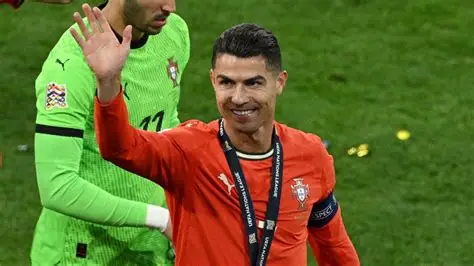
Portugal’s Economy Minister, Manuel Castro Almeida, says Cristiano Ronaldo matters to Portugal in ways that reach far beyond football. “Many people know Portugal only because of Cristiano Ronaldo,” he stressed.
His comments land as the fallout from Ronaldo’s sudden exit from the national team camp continues to dominate the headlines.
Speaking in remarks carried by the Portuguese website The Resident from the Now channel, the minister painted Ronaldo as a huge asset for Portugal’s image on the world stage. “Cristiano Ronaldo has an enormous impact in promoting and highlighting Portugal’s image,” he said. He went further still, likening the Portugal star to “the most famous company in Portugal”
On the row between Ronaldo and coach Jorge Jesus, Castro Almeida pleaded ignorance. He insisted he was “not an expert” and refused to judge who was in the right.
His focus stayed on Ronaldo’s wider worth to Portugal and its standing abroad.
That global recognition, the Economy Minister argues, makes Ronaldo “a value and an asset” to the country. “It would be good if Portugal could continue to rely on this asset,” he said.
He added: “From the angle of enhancing Portugal’s image and reputation, Cristiano holds extremely important value, and it would be very good for Portugal to continue to benefit from this potential.”
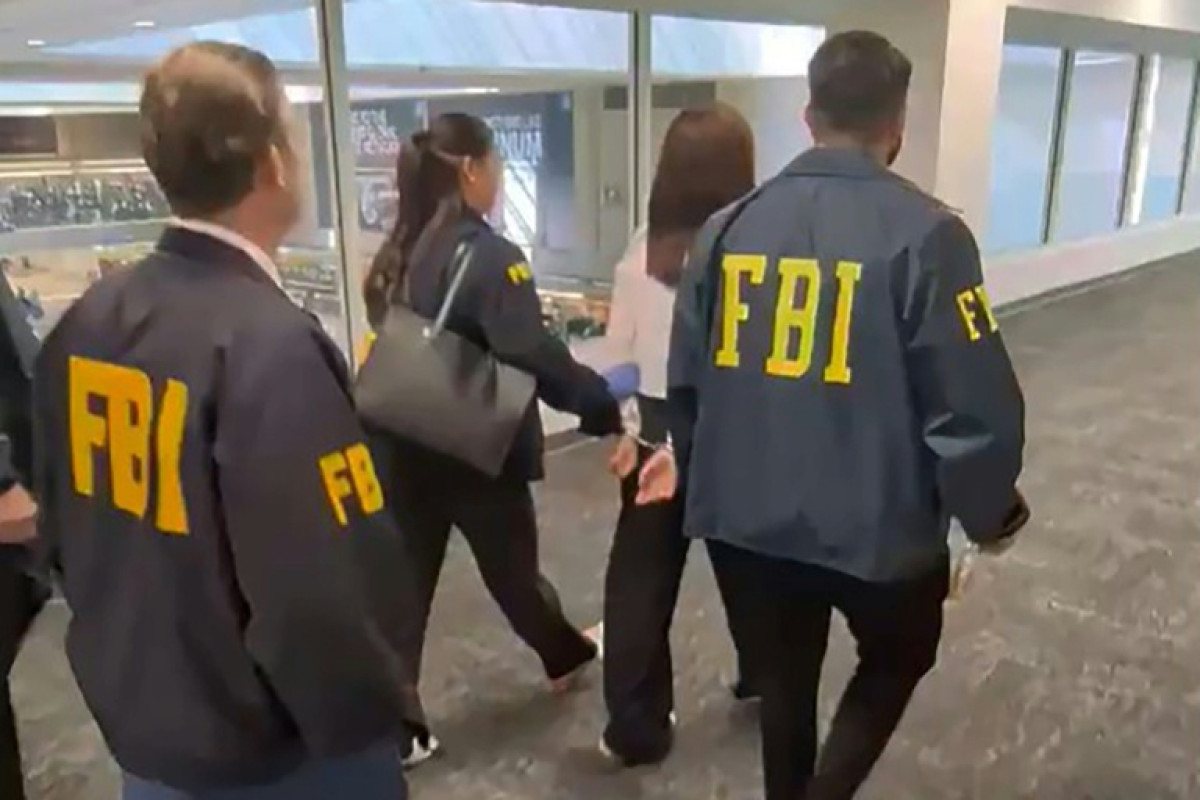
A woman accused of spying for China on Taiwanese President Lai Ching-te’s son and his family was arrested Sunday in the United States, US and Taiwanese officials said.
Wanying Zhang, 34, was detained by the FBI at Los Angeles airport “attempting to depart for China”, First Assistant United States Attorney Bill Essayli said in an X post.
Zhang is accused of acting as an unregistered agent of China and spying on a “close relative of a Taiwanese government official” in the United States, Essayli said.
The woman allegedly surveilled Lai’s “son and his family — filming their home, vehicles, and reporting information back to (People’s Republic of China) handlers”, the FBI said on its rapid response account on X.
China claims Taiwan is part of its territory and has threatened to use force to annex the island.
Zhang traveled to Seattle in 2025 and, acting at the direction of Chinese officials, sent “photos, videos, and license plate information to those officials”, Essayli said.
FBI Director Kash Patel cheered the arrest in an X post, warning foreign adversaries that “America is no longer a safe place to run your espionage operations.”
“Allegedly surveil a foreign leader’s family on US soil for the PRC — and try to catch a flight back to Shanghai? Not happening,” Patel said.
Lai, who was elected president in January 2024, has been an outspoken defender of Taiwan’s sovereignty and is detested by Chinese leaders.
Lai’s office condemned the “barbaric acts”, which it confirmed had targeted the president’s family, and said it was a case of “transnational repression.”
“Such behavior should not be tolerated in the civilized world,” Presidential Office spokeswoman Karen Kuo said in a statement, thanking US judicial authorities for “their assistance and protection of our citizens.”
Taiwan’s government has warned Taiwanese people of growing risks to their safety in China and elsewhere after Beijing’s ethnic unity law took effect in July.
The Law on Promoting Ethnic Unity and Progress aims to forge a “shared” national identity among ethnic groups.
But overseas campaigners have argued it will further degrade the rights of ethnic minorities, like Uyghurs and Tibetans, that Beijing is accused of persecuting.
They also point to a clause stating that people can be held liable for violating the law even when outside China, saying it gives the Chinese government more justification for targeting its opponents abroad.
Zhang, who resides in Irvine, California, “coordinated the trip with an associate and used tradecraft to avoid detection,” Essayli said.
Zhang is expected to make her initial appearance in federal court on Monday.
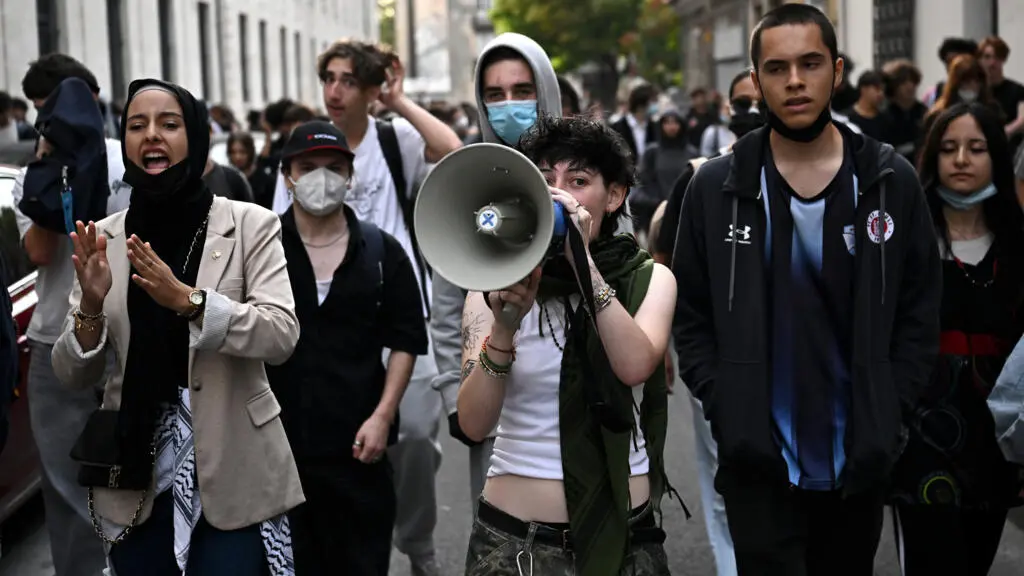
Lessons were suspended at hundreds of French high schools on Monday, as part of a wave of student protest over learning conditions that have rocked the European nation.
Students trickled into some schools despite ongoing protests outside their gates, ahead of a day of larger demonstrations expected on Tuesday.
Since late September, pupils have barred the entrances to their schools, complaining of teacher absences, overloaded timetables, dilapidated classrooms and buildings ill-adapted to rising temperatures, among other grievances.
The government has sought to address the grievances, while accusing hard-left activists of having hijacked the protest movement.
Up to 500 out of France’s 3,700 high schools, known as lycees, were expected to be partially or totally closed on Monday, Education Minister Edouard Geffray said late Sunday.
A third of the 468 lycees for teenagers aged 15 to 17 were to be closed in the Paris region, authorities said.
In the capital’s central third district on Monday morning, dozens of teenage students chanted in protest, as cars honked their horns in support while driving past, while others made their way into class.
“No means, no silence,” read one cardboard sign outside the Turgot high school.
“We’re missing our lessons to give you one,” read another.
In the western city of Rennes, more than 20 pupils gathered outside the Montaigne lycee, one clutching a sign that read “Not enough teachers”, but staff allowed other students into their classrooms.
In the northern city of Lille, masked protesters destroyed bus shelters or set fire to dustbins, as police fired teargas towards several hundred demonstrators.
The movement started on September 17 at a high school in the Paris suburb of Creteil, in support of teachers striking over a lack of staff and resources.
It gained momentum and spread across France, at times spiralling into vandalism, including the destruction of bus shelters, the burning of school entrances and clashes between protesters and security forces.
Since the start of the movement, 24 schools had been “burned or ransacked”, according to the education minister.
More than 5,000 people, 85 percent of them minors, have been arrested.
Protesters have also accused the police of using disproportionate force, and internal investigations have been opened into at least three instances of alleged police brutality.
Prime Minister Sebastien Lecornu set out a timetable on Sunday urging local authorities to prioritise filling gaps left by long-term teacher absences and unfilled posts.
He called a meeting for Tuesday with regional presidents to discuss overhauling the country’s often-dilapidated school buildings.
The government is also hoping to pass through parliament a bill to make those who are responsible for damaging public property pay for repairs themselves, instead of drawing from taxpayer money.
Government spokeswoman Maud Bregeon defended the bill.
“When you have 14-, 15-, 16-year-olds who, at 9 am, are burning bus shelters or — perhaps even more seriously — the high school where they study, that raises the question of parental responsibility,” she told Europe1/Cnews broadcaster.
Lecornu has said the draft law, first presented before the protests, would allow these sums to be “taken from family allowances and housing benefits, while ensuring a minimum income is preserved”.
The head of the main CGT labour union, Sophie Binet, slammed what she called a “populist announcement”, which she said would “end up targeting the most vulnerable families”.
-
 Health & Wellness1 year ago
President Tinubu Directs Cut in Dialysis Cost from ₦50,000 to ₦12,000
-
News2 years ago
CBN Debunks Fake Circular on New ₦5,000 and ₦10,000 Notes
-

 International News6 months ago
Indian Police Arrest Nigerian Over ₦290m Drug Haul
-

 Business7 months ago
Dangote Refinery Reduces Petrol Gantry Price To ₦1,200 Per Litre
-

 Business7 months ago
After Plea Bargain, Court Discharges Stella Oduah of ₦2.5bn Fraud
-
Business2 years ago
Dangote; We Did Not Fix ₦600/Litre Petrol Price
-
 Trending News1 year ago
NELFUND Disburses ₦86bn To 449,000 Beneficiaries
-
 Opinion2 years ago
Championing the People’s Voice: Obasa’s Dedication to Grassroots Representation By Dave Agboola⁰