
News
Sanusi Queries El-Rufai’s Prolonged Detention

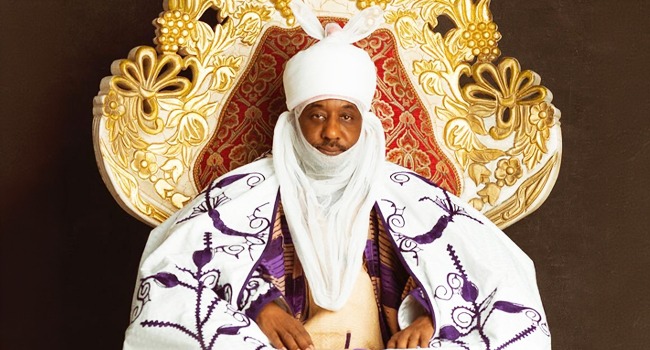
Emir of Kano Muhammadu Sanusi II has questioned the fairness of Nigeria’s anti-corruption fight, saying political connections can influence how cases are investigated and prosecuted.
He also shared his thoughts on the prosecution and continued detention of Nasir el-Rufai, former governor of Kaduna state.
Sanusi spoke on Monday in an interview on the sidelines of the launch of ‘The Unexplained Wealth Trilogy’ by Wahab Shittu, a senior advocate of Nigeria (SAN), in Lagos.
The emir said having laws to tackle corruption are not enough, noting that existing legislation must also be properly implemented by institutions responsible for investigation, prosecution and adjudication.
“The laws are one thing. Even the existing laws we have need to be implemented better. You have institutions that are supposed to identify corrupt people and prosecute them. You have courts that are supposed to do it,” Sanusi said.
He alleged that some corruption cases have been dropped because the suspects had political connections or belonged to the “right political environment”.
“We have seen in this country people who are facing corruption charges who basically just get those charges dropped because they belong to the right political environment or have the right political support,” he said.
Sanusi said the handling of some cases had also raised questions about whether the anti-corruption campaign is being pursued consistently or used against political opponents.
“We have legal processes where people are questioning if, in fact, it is a fight against corruption or political persecution,” he said.
The emir cited the case involving el-Rufai who is facing alleged corruption and money laundering-related charges.
“An example is my brother, Nasir el-Rufai, who’s been denied bail. He’s been in detention for seven months, not having been convicted for anything, using the courts,” he stated.
Sanusi said cases such as el-Rufai’s could make the public question the motives behind anti-corruption proceedings.
“So people begin to wonder, is this really a fight against corruption, or is it a political battle?” he asked.
Sanusi added that political officeholders and judicial institutions must ensure that laws are applied for the purposes for which they were enacted.
“Now, until the politicians and those who control political office and the judiciary decide that they are going to use these laws for the purpose for which they are set up, we’re not going to get anywhere,” he said.
He added that reviewing anti-corruption laws is useful but argued that equal attention should be paid to the institutions responsible for enforcing them.
“So the laws are one thing, and I think it’s a good thing that we’re looking at the laws, but we also have to look at the institutions that are involved in the structure of the law, and that is only where you make progress,” Sanusi said.
“Otherwise, anyone knows that you can get away with anything if you have the right political connections.”

The Niger State Police Command has confirmed the kidnap of 20 women working on a groundnut farm in Mukura village, Kasuwan-Garba District of Mariga local government of the state even as the LG Chairmen puts the figure of the victims at 47.
Police Public Relations Officer PPRO Superintendent of Police Wasiu Abiodun who confirmed the incident said it occured on Saturday.
“On 28th Sept 2026, report received indicated that on 27th Sept 2026 at about 3pm, suspected bandits abducted over twenty persons at Mukura village, Kasuwan-Garba District of Mariga LGA.
Abiodun said joint security rescue efforts were ongoing.
However the Chairman of the local government, Alhaji Aliyu Bagga Muhamadu, speaking to local reporters said 47 farmers, all women, working on a groundnut farm were kidnapped.
“47 people were abducted and report reaching me indicated that one of the women has given birth in their custody”.
Aliyu Bagga Muhamadu also added that the kidnappers have made contacts with the families of the women, demanding ransom of N2 million for each of them before they would be released.
According to him, the military and vigilance groups have been mobilized and are now trailing them to ensure the safe release of the victims.
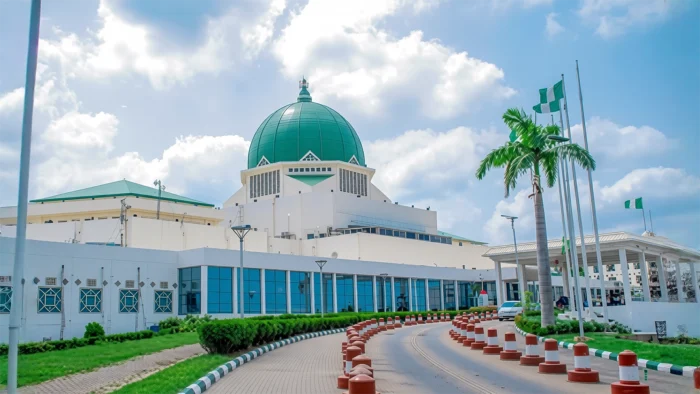
The National Assembly will soon deepen the digitisation of parliamentary records by translating Nigerian laws into Igbo Hausa, Yoruba and other local languages to expand public access to legislative information.
Mr Henry Nwawuba, the Executive Secretary, National Assembly Library Trust Fund disclosed this while declaring open the 2026 National Assembly Library Week on Monday in Abuja.
The event was themed, “Parliamentary Memory: Connecting Records, Legislation and the People.”
Nwawuba said the three-day programme was designed as an annual platform to promote legislative research, access to information and effective utilisation of the resources of the National Assembly Library.
He described the library as more than a collection of books, saying “it serves as the knowledge infrastructure of the legislature and a repository of parliamentary records.”
He said the library was working to ensure that lawmakers, legislative aides, researchers and other stakeholders have access to authoritative parliamentary records, including Order Papers, Votes and Proceedings, Committee reports and Acts passed by the National Assembly.
Nwawuba said the Trust Fund was investing in electronic repositories and upgrading of its E-Library, while developing a National Assembly Library mobile application to make legislative information more accessible to lawmakers, staff members, researchers and members of the public.
He also announced plans for a Bills Tracker, which would enable users to follow bills and monitor their progress through the legislative process.
According to him, the library is developing infographics, audiovisual materials and video explainers to simplify Bills, Acts and legislative procedures for Nigerians.
He said the planned translation of laws into local languages would broaden access to legislative information and enable more citizens to understand laws that affect their daily lives.
Nwawuba said the library would also organise public policy dialogues to deepen citizens’ participation in public hearings and create more opportunities for interaction among legislators, citizens, researchers and other stakeholders.
He added that the initiatives were aimed at addressing inconsistencies in official parliamentary documents and the circulation of fake or unauthorised copies of National Assembly records.
Senate President, Godswill Akpabio, urged lawmakers to make greater use of the library, particularly in an era of increasing misinformation, disinformation and the rapid development of artificial intelligence.
Akpabio, represented by Sen. Osita Ngwu, described the library as a critical link between evidence, knowledge and legislative decision-making and called for continued support for its development.
The Speaker of the House of Representatives, Abbas Tajudeen, represented by the House Leader, Prof. Julius Ihonvbere, said legislative records were essential to understanding Nigeria’s legislative history and strengthening democratic governance.
Tajudeen said the strength of a legislature should be measured not only by the laws it enacted, but also on how effectively it documented its activities, preserved institutional knowledge and made such information available to future generations.
He said technology and artificial intelligence could improve legislative research, records preservation and access to information, but cautioned that their adoption must be guided by accuracy, security, professional judgment.
The Clerk to the National Assembly, Kamoru Ogunlana, said the National Assembly could not be truly independent if it lacked the capacity to generate, preserve, retrieve and authenticate its institutional knowledge and records.
Ogunlana said the library had an important role as a bridge between parliamentary records, legislation and the people, stressing that Parliament could not be fully transparent if its records could not be found, understood and trusted.
He identified the Order Paper, Votes and Proceedings and Hansard as key components of Nigeria’s democratic memory, explaining that the Order Paper provides the agenda for legislative business.
The Clerk warned against the circulation of incomplete, outdated, altered or unauthorised Bills, Acts and other parliamentary documents, saying digital technology had made it possible for documents to be manipulated and circulated.
He stressed that the integrity of an Act depended not merely on the existence of a document, but on the ability to establish which version was authentic, which was authoritative and the legal process through which it emerged.
He noted that the continued widespread use of the Laws of the Federation of Nigeria, LFN 2004, highlighted the challenges of maintaining a current and authoritative consolidated body of federal legislation.
He explained that the LFN 2004 reflected the laws covered by that revision exercise and was not automatically updated whenever a new Act was enacted.
Ogunlana said the National Assembly must also strengthen cybersecurity, digital preservation, secure authentication, access controls, backup systems and staff members’ training as parliamentary records become increasingly digitised.
He warned that while digitisation would make parliamentary information easier to access, search and disseminate, it could also expose records to cyberattacks, manipulation and impersonation of official sources.
The Clerk said digital platforms must therefore be accessible and secure, while electronic records must be available, authentic and traceable.
He said the National Assembly Library should evolve beyond being a repository where documents are kept to becoming an institution where parliamentary knowledge is preserved, authenticated and made accessible to lawmakers, researchers, journalists, civil society organisations, students and the wider public.
The President of the Nigerian Library Association, Dr Lawal Umar, called for sustained investment in libraries and modern information technology to improve access to legislative information, while urging stronger collaboration between the National Assembly and state Houses of Assembly.
The Secretary-General, Conference of Speakers of African Legislatures, Amb. Debo Oyewale, said African legislatures had much to learn from one another in building institutions capable of preserving legislative memory.
(NAN)
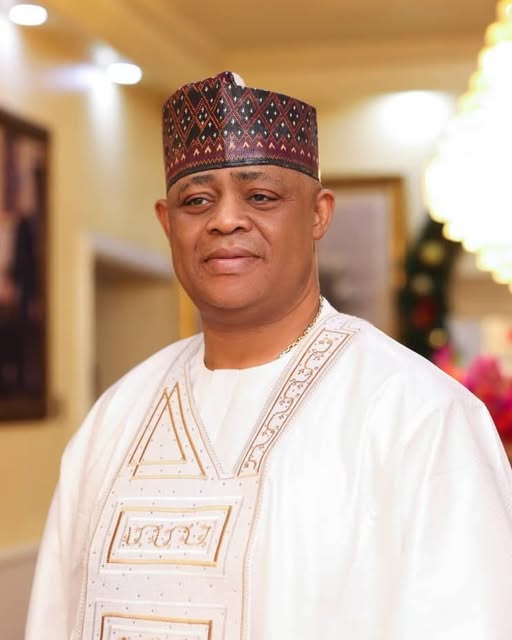
Three more Nigerians have been killed in separate incidents in South Africa. The deaths occurred within four days, according to Nigeria’s ambassador designate to South Africa, Femi Fani-Kayode.
Fani-Kayode, in a statement on Monday, said the latest killings occurred on September 18, 20 and 21, 2026, bringing the number of Nigerians allegedly killed in South Africa this year to 12.
He said the information was brought to his attention by the Nigerian Consul-General in Johannesburg, adding that details of the three incidents were contained in a formal statement issued by the Nigerian Consulate.
According to him, 112 Nigerians have now been killed in South Africa since 2022, including 32 allegedly killed by members of the South African security forces.
Fani-Kayode also alleged that none of those responsible for the killings had been brought to justice or convicted.
He condemned the latest deaths and appealed to the South African authorities to investigate the incidents, bring those responsible to justice and take steps to protect Nigerians living in the country.
He expressed condolences to the families and loved ones of the victims, praying for the repose of their souls.
Meanwhile, the Consulate General of Nigeria in Johannesburg has formally condemned the deaths of the three Nigerians, saying the incidents occurred in different parts of South Africa between September 18 and 21.
In its statement signed by the Consul-General, Ambassador Ninikanwa Okey-Uche, the mission identified the victims as Kenechukwu Christopher Igwemmadu, Olaniyi Olaleye Olatunde and Christian Hillary Nnaemeka.
The Consulate said Igwemmadu allegedly jumped to his death on September 18 while attempting to escape police harassment and brutality at Kenlin Court on Douglas Street, Central Business District, Bloemfontein.
It said Olatunde, a security guard, was shot at Spanata Bar and Grills Night Club in Mamelodi East, Pretoria, on September 20.
According to the Consulate, Olatunde had attempted to stop a South African customer from leaving the club with a cup belonging to the establishment when an altercation reportedly followed.
The statement said the customer pulled out a firearm and shot Olatunde in the lower part of his body, causing serious injury and heavy blood loss.
The alleged shooter reportedly fled the scene but later returned and threatened witnesses after realising that his identity was known.
Olatunde was rushed to Mamelodi Hospital but later died from his injuries and was confirmed dead by doctors on September 21.
The Consulate said the third victim, Nnaemeka, died following an encounter with the Sizok’thola team led by South African politician and investigative content creator, Xolani Khumalo, in Primrose, Ekurhuleni, on September 21.
It alleged that Nnaemeka was assaulted and tortured during an operation conducted by members of the team.
The mission said the team allegedly arrested and beat Nnaemeka despite not finding anything incriminating on him.
According to the statement, Nnaemeka subsequently attempted to escape by jumping over a fence but collapsed from injuries and exhaustion.
He was rushed to a hospital, where he was pronounced dead on arrival, the Consulate said.
The mission also recalled the February 9, 2026, death of another Nigerian, Emeka Clement Uzor, who it said was shot dead by the same Xolani Khumalo reality television crew in Windsor East, Randburg.
It said no arrests had been made over Uzor’s death and noted that Khumalo was currently running for election as mayor of Ekurhuleni.
The Consulate said the latest incidents were “deeply troubling” and raised questions about the safety of Nigerians and other foreign nationals in South Africa.
It called on the relevant South African authorities to conduct thorough investigations into the deaths and prosecute anyone found responsible.
The mission stressed that allegations should be handled through established legal processes, adding that suspects should be presumed innocent until proven guilty.
It further urged Nigerians in South Africa to remain calm, law-abiding and security-conscious amid the ongoing xenophobic and “Afrophobic” attacks, threats, general insecurity and ill-treatment of vulnerable black African foreigners, particularly Nigerians.
The Consulate extended condolences to the families of the three deceased Nigerians and said it remained committed to its mandate of protecting the welfare and ensuring the fair treatment of Nigerian nationals in South Africa.
The latest development comes barely two weeks after Fani-Kayode raised concern over the deaths of two other Nigerians in South Africa.
On September 11, he condemned the killing of Bishop Michael Taiwo Fakunle, who was shot at his home in Johannesburg on September 4, and the death of James Uchechukwu Nwankwo, who reportedly died on September 5 following an encounter with South African police.
Fani-Kayode said the two deaths brought the number of Nigerians allegedly killed in South Africa in 2026 to eight at the time, including four he said were killed by South African police officers.
He also warned that Nigeria’s “patience is wearing thin” over the continued killings and called on the South African government to protect Nigerians and bring perpetrators to justice.
The latest alarm adds to longstanding concerns over the safety of Nigerians living and doing business in South Africa.
Nigerian nationals have been victims of killings, xenophobic attacks and other forms of violence over the years.
Tensions between Nigerians and some South Africans have periodically escalated over issues of immigration, employment, crime and allegations of involvement in illicit activities.
Nigerian diplomatic authorities have repeatedly called for the protection of Nigerians and prosecution of perpetrators.
-
 Health & Wellness1 year ago
President Tinubu Directs Cut in Dialysis Cost from ₦50,000 to ₦12,000
-

 Business6 months ago
Dangote Refinery Reduces Petrol Gantry Price To ₦1,200 Per Litre
-
 News1 year ago
PICTURE: In Lagos Couple Sentenced to 22½ Years for Cannabis Trafficking
-
 International News6 months ago
Indian Police Arrest Nigerian Over ₦290m Drug Haul
-
 Business6 months ago
After Plea Bargain, Court Discharges Stella Oduah of ₦2.5bn Fraud
-
 Trending News1 year ago
NELFUND Disburses ₦86bn To 449,000 Beneficiaries
-
Business2 years ago
Dangote; We Did Not Fix ₦600/Litre Petrol Price
-
 Business2 years ago
Heritage Bank Customers’ Path to Securing ₦5m Insured Funds: A Step-By-Step Guide by NDIC”