
News
JUST IN: I Understand The Hardship You Face, Tinubu Tells Nigerians

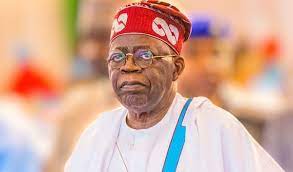
President Bola Tinubu says he understands the hardship Nigerians are facing owing to his government’s economic policies.

President Bola Ahmed Tinubu
The Nigerian leader had pronounced an end to the payment of fuel subsidy among others.
While the move has resulted in a hike in the pump price of the commodity cost of living also high, Tinubu told Nigerians that he understands their plight.
“Our economy is going through a tough patch and you are being hurt by it. The cost of fuel has gone up. Food and other prices have followed it. Households and businesses struggle,” he said in a national broadcast Monday evening.
“Things seem anxious and uncertain. I understand the hardship you face. I wish there were other ways. But there is not. If there were, I would have taken that route as I came here to help not hurt the people and nation that I love.”
Read full statement below
THIS NATIONAL BROADCAST BY PRESIDENT BOLA TINUBU ON CURRENT ECONOMIC CHALLENGES IS RELEASED TO YOU STRICTLY UNDER EMBARGO UNTIL 7.30 PM, JULY 31 AFTER THE PRESIDENT HAS READ IT. KINDLY REFRAIN FROM USE ON YOUR ONLINE PLATFORMS OR ANY PLATFORM WHATSOEVER UNTIL THE AFOREMENTIONED TIME.
TEXT OF THE NATIONAL BROADCAST BY PRESIDENT BOLA TINUBU TO NIGERIANS ON CURRENT ECONOMIC CHALLENGES.
AFTER DARKNESS COMES THE GLORIOUS DAWN
My fellow citizens,
I want to talk to you about our economy. It is important that you understand the reasons for the policy measures I have taken to combat the serious economic challenges this nation has long faced.
2. I am not going to talk in difficult terms by dwelling on economic jargon and concepts. I will speak in plain, clear language so that you know where I stand. More importantly, so that you see and hopefully will share my vision regarding the journey to a better, more productive economy for our beloved country.
3. For several years, I have consistently maintained the position that the fuel subsidy had to go. This once beneficial measure had outlived its usefulness. The subsidy cost us trillions of Naira yearly. Such a vast sum of money would have been better spent on public transportation, healthcare, schools, housing and even national security. Instead, it was being funnelled into the deep pockets and lavish bank accounts of a select group of individuals.
4. This group had amassed so much wealth and power that they became a serious threat to the fairness of our economy and the integrity of our democratic governance. To be blunt, Nigeria could never become the society it was intended to be as long as such small, powerful yet unelected groups hold enormous influence over our political economy and the institutions that govern it.
5. The whims of the few should never hold dominant sway over the hopes and aspirations of the many. If we are to be a democracy, the people and not the power of money must be sovereign.
6. The preceding administration saw this looming danger as well. Indeed, it made no provision in the 2023 Appropriations for subsidy after June this year. Removal of this once helpful device that had transformed into a millstone around the country’s neck had become inevitable.
7. Also, the multiple exchange rate system that had been established became nothing but a highway of currency speculation. It diverted money that should have been used to create jobs, build factories and businesses for millions of people. Our national wealth was doled on favourable terms to a handful of people who have been made filthy rich simply by moving money from one hand to another. This too was extremely unfair.
8. It also compounded the threat that the illicit and mass accumulation of money posed to the future of our democratic system and its economy.
9. I had promised to reform the economy for the long-term good by fighting the major imbalances that had plagued our economy. Ending the subsidy and the preferential exchange rate system were key to this fight. This fight is to define the fate and future of our nation. Much is in the balance.
10. Thus, the defects in our economy immensely profited a tiny elite, the elite of the elite you might call them. As we moved to fight the flaws in the economy, the people who grow rich from them, predictably, will fight back through every means necessary.
11. Our economy is going through a tough patch and you are being hurt by it. The cost of fuel has gone up. Food and other prices have followed it. Households and businesses struggle. Things seem anxious and uncertain. I understand the hardship you face. I wish there were other ways. But there is not. If there were, I would have taken that route as I came here to help not hurt the people and nation that I love.
12. What I can offer in the immediate is to reduce the burden our current economic situation has imposed on all of us, most especially on businesses, the working class and the most vulnerable among us.
13. Already, the Federal Government is working closely with states and local governments to implement interventions that will cushion the pains of our people across socio-economic brackets.
14. Earlier this month, I signed four (4) Executive Orders in keeping with my electoral promise to address unfriendly fiscal policies and multiple taxes that are stifling the business environment. These Executive Orders on suspension and deferred commencement of some taxes will provide the necessary buffers and headroom to businesses in the manufacturing sector to continue to thrive and expand.
15. To strengthen the manufacturing sector, increase its capacity to expand and create good paying jobs, we are going to spend N75 billion between July 2023 and March 2024. Our objective is to fund 75 enterprises with great potential to kick-start a sustainable economic growth, accelerate structural transformation and improve productivity. Each of the 75 manufacturing enterprises will be able to access N1 Billion credit at 9% per annum with maximum of 60 months repayment for long term loans and 12 months for working capital.
16. Our administration recognises the importance of micro, small and medium-sized enterprises and the informal sector as drivers of growth. We are going to energise this very important sector with N125 billion.
17. Out of the sum, we will spend N50 billion on Conditional Grant to 1 million nano businesses between now and March 2024. Our target is to give N50,000 each to 1,300 nano business owners in each of the 774 local governments across the country.
18. Ultimately, this programme will further drive financial inclusion by onboarding beneficiaries into the formal banking system. In like manner, we will fund 100,000 MSMEs and start-ups with N75 billion. Under this scheme, each enterprise promoter will be able to get between N500,000 to N1million at 9% interest per annum and a repayment period of 36 months.
19. To further ensure that prices of food items remain affordable, we have had a multi-stakeholder engagement with various farmers’ associations and operators within the agricultural value chain.
20. In the short and immediate terms, we will ensure staple foods are available and affordable. To this end, I have ordered the release of 200,000 Metric Tonnes of grains from strategic reserves to households across the 36 states and FCT to moderate prices. We are also providing 225,000 metric tonnes of fertilizer, seedlings and other inputs to farmers who are committed to our food security agenda.
21. Our plan to support cultivation of 500,000 hectares of farmland and all-year-round farming practice remains on course. To be specific, N200 billion out of the N500 billion approved by the National Assembly will be disbursed as follows:
-Our administration will invest N50 billion each to cultivate 150,000 hectares of rice and maize.
-N50 billion each will also be earmarked to cultivate 100,000 hectares of wheat and cassava.
22. This expansive agricultural programme will be implemented targeting small-holder farmers and leveraging large-scale private sector players in the agric business with strong performance record.
23. In this regard, the expertise of Development Finance Institutions, commercial banks and microfinance banks will be tapped into to develop a viable and an appropriate transaction structure for all stakeholders.
24. Fellow Nigerians, I made a solemn pledge to work for you. How to improve your welfare and living condition is of paramount importance to me and it’s the only thing that keeps me up day and night.
25. It is in the light of this that I approved the Infrastructure Support Fund for the States. This new Infrastructure Fund will enable States to intervene and invest in critical areas and bring relief to many of the pain points as well as revamp our decaying healthcare and educational Infrastructure.
26. The fund will also bring improvements to rural access roads to ease evacuation of farm produce to markets. With the fund, our states will become more competitive and on a stronger financial footing to deliver economic prosperity to Nigerians.
27. Part of our programme is to roll out buses across the states and local governments for mass transit at a much more affordable rate. We have made provision to invest N100 billion between now and March 2024 to acquire 3000 units of 20-seater CNG-fuelled buses.
28. These buses will be shared to major transportation companies in the states, using the intensity of travel per capital. Participating transport companies will be able to access credit under this facility at 9% per annum with 60 months repayment period.
29. In the same vein, we are also working in collaboration with the Labour unions to introduce a new national minimum wage for workers. I want to tell our workers this: your salary review is coming.
30. Once we agree on the new minimum wage and general upward review, we will make budget provision for it for immediate implementation.
31. I want to use this opportunity to salute many private employers in the Organised Private Sector who have already implemented general salary review for employees.
32. Fellow Nigerians, this period may be hard on us and there is no doubt about it that it is tough on us. But I urge you all to look beyond the present temporary pains and aim at the larger picture. All of our good and helpful plans are in the works. More importantly, I know that they will work.
33. Sadly, there was an unavoidable lag between subsidy removal and these plans coming fully online. However, we are swiftly closing the time gap. I plead with you to please have faith in our ability to deliver and in our concern for your well-being.
34. We will get out of this turbulence. And, due to the measures we have taken, Nigeria will be better equipped and able to take advantage of the future that awaits her.
35. In a little over two months, we have saved over a trillion Naira that would have been squandered on the unproductive fuel subsidy which only benefitted smugglers and fraudsters. That money will now be used more directly and more beneficially for you and your families.
36. For example, we shall fulfill our promise to make education more affordable to all and provide loans to higher education students who may need them. No Nigerian student will have to abandon his or her education because of lack of money.
37. Our commitment is to promote the greatest good for the greatest number of our people. On this principle, we shall never falter.
38. We are also monitoring the effects of the exchange rate and inflation on gasoline prices. If and when necessary, we will intervene.
39. I assure you my fellow country men and women that we are exiting the darkness to enter a new and glorious dawn.
40. Now, I must get back to work in order to make this vision come true.
41. Thank you all for listening and may God bless the Federal Republic of Nigeria.
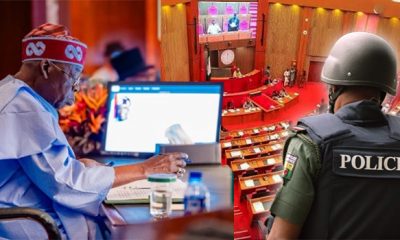




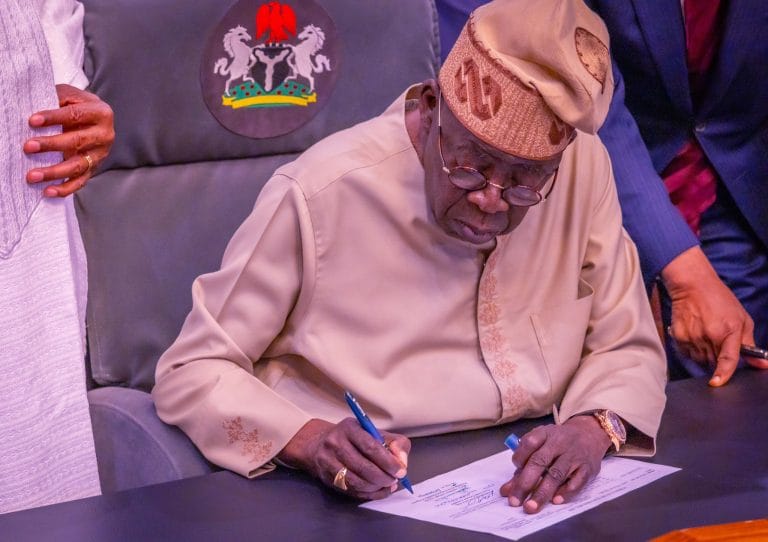
The Federal Government has inaugurated a 10-member independent committee to investigate the deaths of 37 people detained by the Nigeria Security and Civil Defence Corps in Niger State over suspected illegal mining.
The Minister of Interior, Olubunmi Tunji-Ojo, inaugurated the committee on Tuesday in Abuja, following a directive by President Bola Tinubu for a comprehensive investigation into the incident.
The committee is chaired by retired Deputy Director-General of the Department of State Services, Jonathan Kure, while a former Director-General of the Nigerian Law School, Prof Isa Hayatu Chiroma, SAN, will serve as secretary.
Other members are retired AIG Hosea Hassan Karma; Prof Olayinka Buhari, a professor of Histopathology and former Chief Medical Director of the University of Ilorin Teaching Hospital; a representative of the Minna Emirate Council; and a representative of the Niger State Government.
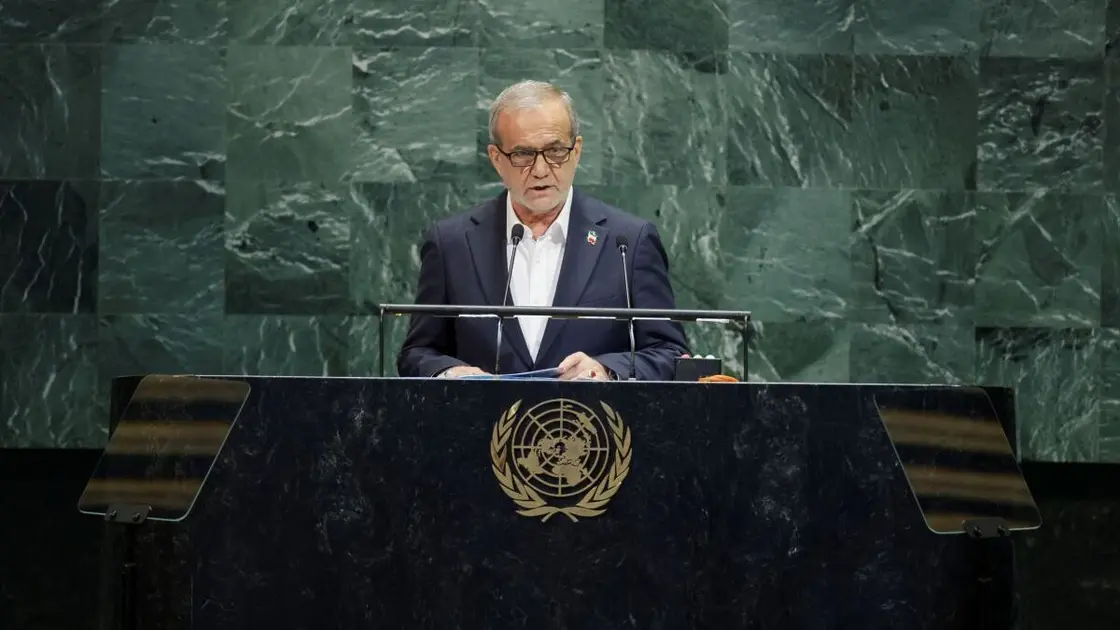
The United States has refused to issue visas for members of Iranian President Masoud Pezeshkian’s delegation, including his communications team, for this week’s trip to the UN General Assembly, Iranian state media reported Monday.
Pezeshkian will be the highest-ranking Iranian official to enter the United States since the Middle East war began with US-Israeli strikes on Iran in February.
“In an unprecedented hostile move by the US government, (US President Donald) Trump has denied US visas to certain members of the president’s high-level delegation, including members of his communications team,” state news agency IRNA reported.
The Mehr news agency also carried the story, citing a spokesperson for the Iranian presidency, and added that Pezeshkian will address the UN General Assembly on Wednesday.
The US has authorised the Iranian delegation to travel for the UN General Assembly but will, like last year, put restrictions in place.
Iran’s delegation will not, for instance, be allowed to purchase luxury goods or other items, the State Department said on Thursday.
Iranian Foreign Minister Abbas Araghchi, part of the delegation to the UN, left Iran on Sunday evening for a stopover in Qatar.
Iran says it has conveyed to the US, via Qatar as mediator, conditions for reopening the strategic Strait of Hormuz oil and gas shipping route, which it has choked off since the war began.
The United States, in turn, is imposing a counterblockade of Iranian ports.
AFP
Civil servants under the Joint National Public Service Negotiating Council, JNPSNC, Trade Union Side, have written to President Bola Ahmed Tinubu, demanding an urgent intervention to address the worsening economic hardship facing workers and their dependants.
The workers called on the Federal Government to stabilise the price of Premium Motor Spirit, PMS, at N500 per litre, approve an immediate Wage Award and upwardly review salaries and allowances across the public service.
They also demanded the immediate constitution of a committee to negotiate a new National Minimum Wage ahead of January 2027.
In a letter addressed to the President at the State House, Abuja, the workers said the recent increase in fuel prices to N1,430 per litre and above in some locations had further worsened the cost-of-living crisis.
They gave the Federal Government until Wednesday, September 30, 2026, to take action on their demands, warning that the prevailing hardship was creating palpable tension among workers and Nigerians.
The JNPSNC said the removal of fuel subsidy three years ago had triggered an astronomical increase in fuel prices and produced multiplier effects on the prices of essential commodities across the economy.
The council said the situation had made life increasingly unbearable for workers, adding that the provision of food palliatives was not a sustainable solution to the economic crisis.
It said: “It has dawned on Nigerian workers that the provision of palliatives such as bags of rice, Indomie, vegetable oil, garri, among other edible foods, is as good as weaponising Nigerians with poverty because it is a Pyrrhic intervention which is unsustainable, inaccessible to the majority of Nigeria’s population and also limited to political cronies.”
The workers argued that a more sustainable intervention would be to reduce the cost of fuel to N500 per litre, saying the measure would have a multiplier effect across the economy.
“Consequent upon the above, it is preferable that the Federal Government should provide an intervention that will trickle down to all Nigerians by making fuel available at an affordable amount as low as N500 (five hundred Naira), the amount at which fuel was being sold when the subsidy was first removed in the year 2023,” they said.
The council identified the restoration of workers’ purchasing power, improved productivity and service delivery, promotion of integrity and accountability, and the reinforcement of trust and industrial peace as major reasons for its demand for improved remuneration.
On fuel prices, the workers said the government should “look inward and stabilize the prices of fuel to an affordable minimum,” arguing that fuel remained an essential commodity with significant implications for the Nigerian economy.
“As a matter of reality, the current hardship being faced by the hapless Nigerian workers is caused by the astronomical increase in the price of Premium Motor Spirit (PMS) to as much as N1,430.00, or more per one litre (this is a killing amount),” the council stated.
The JNPSNC further called for an intervention fund for stakeholders in the oil sector to stabilise fuel prices and eventually bring the pump price down to N500 per litre.
The council said the government could adopt another description for the intervention if the term “fuel subsidy” was considered unacceptable.
“The fuel intervention fund will give the opportunity to every Nigerian to benefit from the intervention fund because it will have multiplier effect in the life of every Nigerian and will naturally trickle down to the downtrodden and all the remotest parts of the country,” it said.
The council also endorsed a position attributed to Nigeria Labour Congress (NLC) President, Joe Ajaero, on measures to address the fuel crisis.
Ajaero was quoted as saying: “Nigeria as an oil-producing country we have sufficient local refining capacity even as this substantially resides with the private sector.”
He also said: “As a nation, and as a people endowed with enormous fossil resources, we are deserving of a certain level of protection or buffer against the gales from the Gulf, and indeed, other gales.”
According to the NLC position cited by the council, “As part of the process of creating this buffer government should sell sufficient crude in Naira to our local refineries; expand our national storage capacity in pursuance of meeting energy emergencies and security. These measures will create jobs, economic value as well as deal with mutating security challenges.”
The statement further said: “There is nothing wrong with government subsidizing the needs of citizens, especially in emergency situations like this. At the moment, there is no oil-producing country we know of that has not intervened or come up with sustainable palliatives in one way or the other in these perilous times.”
The NLC position also stated: “Government is making extra money in the international spot market (of between USD35 and 40 per barrel above the budgeted figure). This translates to trillions of Naira a month.”
It added: “On a long term basis, we are equally concerned that local refineries are importing crude. This is unreasonable and unacceptable and defeats the logic and purpose of local capacity.”
The JNPSNC said it “wholeheartedly subscribe[s] to the submission of NLC leadership” and urged the government to consider the proposals for urgent implementation.
On wages, the council demanded the immediate introduction of a Wage Award covering Federal, State and Local Government workers.
“Wage Award as an urgent intervention and upward review of salaries and allowances of all serving Public Servants in the Nigeria Public Service should be provided with immediate effect to cut across all Federal, State and Local Government workers,” it said.
According to the council, the Wage Award would serve as a precursor to the substantive New National Minimum Wage expected to take effect in January 2027.
The workers also demanded the immediate setting up of a committee to negotiate the new National Minimum Wage, saying early commencement of the process would prevent delays in implementation.
“There is urgent need to immediately set up committee for the negotiation of New National Minimum Wage to accelerate the commencement of the New National Minimum Wage before 2027 so that it can take effect from January, 2027,” the council stated.
The JNPSNC proposed that the minimum salary payable to an officer on Grade Level 01, Step 1, should be N500,000 per month under the 2027 salary template.
The council also called for harmonised wages across Ministries, Departments and Agencies (MDAs), while urging that the review be encouraged at the State and Local Government levels.
It further demanded periodic salary and allowance adjustments linked to inflation, as well as welfare measures including subsidised transportation and affordable housing for civil servants.
The council said public servants remained “the backbone of governance and national development” and the “live wire of any administration,” noting that workers were responsible for policy formulation, implementation of government programmes and the provision of essential public services.
It said rising inflation, fuel prices, transportation costs and the increasing cost of food, housing, healthcare and education had eroded the real value of workers’ salaries.
“Many workers are now struggling to meet basic financial obligations, which has inevitably affected the morale, motivation, and overall productivity within the Public Service,” it stated.
The JNPSNC urged the President to direct the National Salaries, Incomes and Wages Commission (NSIWC) to commence discussions with the Nigeria Labour Congress, NLC, Trade Union Congress of Nigeria TUC, JNPSNC and other relevant stakeholders on the Wage Award and upward review of salaries and allowances.
The council said: “Your Excellency, we trust that this request will receive the prompt attention and action it deserves in the interest of Nigerian workers and their dependants, the Public Service as an age-long institution and the nation at large on or before Wednesday 30th September, 2026 to douse the palpable tension that may erupt.”
It also expressed the expectation that the President’s Independence Day broadcast would address the concerns raised by workers.
“It is the high expectations of Nigerian workers and all patriotic Nigerians that your Independence Day broadcast will attend to our sincere suggestions in order to bring succour and life back to all dying Nigerians,” the council said.
-
 Health & Wellness1 year ago
President Tinubu Directs Cut in Dialysis Cost from ₦50,000 to ₦12,000
-
 News1 year ago
PICTURE: In Lagos Couple Sentenced to 22½ Years for Cannabis Trafficking
-
 Business6 months ago
Dangote Refinery Reduces Petrol Gantry Price To ₦1,200 Per Litre
-
 Business2 years ago
Heritage Bank Customers’ Path to Securing ₦5m Insured Funds: A Step-By-Step Guide by NDIC”
-
 Trending News1 year ago
NELFUND Disburses ₦86bn To 449,000 Beneficiaries
-
 International News6 months ago
Indian Police Arrest Nigerian Over ₦290m Drug Haul
-
 Business6 months ago
After Plea Bargain, Court Discharges Stella Oduah of ₦2.5bn Fraud
-
Business2 years ago
Dangote; We Did Not Fix ₦600/Litre Petrol Price