
Business
ECOWAS: West Africa’s Green Hydrogen Production, Sets Ambitious Target For 2030


The Economic Community of West African States (ECOWAS) has expressed its commitment to emplacing needed infrastructure that would ensure that the regional renewable energy target is achieved.
Speaking at the capacity building workshop for private sector actors on green hydrogen, the regional body said its plan is to produce 0.5 million tonnes of green hydrogen per year by 2030.
The Regional Coordinator for Renewable Energy and Green Hydrogen at West African Science Service Centre on Climate Change and Adapted Land Use (WASCAL), Dr Bruno Korgo, noted that the region has huge potential in terms of renewable energy like solar, wind, hydrogen and so on.
Korgo said that this potential constitutes a good basis to go for green hydrogen production because it is considered as the vector for decarbonising a lot of sectors across the world.
He said: “In the West African Green Hydrogen Policy, the target is for West African region to be able to produce by 2030, 0.5 million of tonnes of green hydrogen per year and by 2050, 10 million tonnes per year. This policy has been adopted by our heads of state.
“But the ministries of energies have to work to make it happen and that is why we are partnering government and private sector to join hands so that we may reach our goal.
“This unique energy is today perceived as the energy of the future. The opportunity to produce, use and export green hydrogen to other demand centres appear like an opportunity for West Africa region to start now to think about green hydrogen to harness its potentials and also capture the future energy market that is coming with regard to green hydrogen demand.”
The Assistant Director in Nigeria’s Ministry of Power, Temitope Dina, said the federal government is ready to harness the immense potentials in green hydrogen to drive economic growth, energy security and environmentally sustainable West Africa.
Dina said this target has been marked by dedication, collaboration and a clear understanding of the pivotal role green hydrogen will play in the energy future.
According to Dina, “Green Hydrogen stands at the forefront of global transition to clean energy. It offers the promise of reducing carbon emission, diversifying our energy source and also fostering innovation.
“In our region, with its abundant renewable energy resource, green hydrogen could be a game changer. This could simulate our local economy, industries, create jobs and provide significant boost to our economies across West Africa.
“This workshop represents a critical opportunity for us to deepen our understanding of the green hydrogen technology, explore best practices and build the partnership necessary for the successful implementation of the green hydrogen policy and strategies.”
On his part, the Executive Vice Chairman of SIDIL Energy Alternatives Limited, Alhassan Dantata, said green hydrogen is the last option of the globe to transit to clean energy.
Dantata said Africa must play its role in achieving this milestone, stressing that: “Africa played different roles in the three past industrial revolutions, the role we played was that we were the catalyst because men and women were enslaved and our raw materials were taken away to develop other parts of the world.”
He added that: “But the beautiful part of this energy we are discussing about is that this is something you have to have your foot on the ground because Africa now has what you can’t take away. We have the wind; the sun and we have the water and you can’t take that away.
“We have the sun 365 days in a year. We have the wind because coming from the Sahara, we have the northeast trade winds that always keep the wind mines on 24/7 and so we got no excuse. We should be the frontrunners in green hydrogen.
“Africa should be about to export power through submarine cables just like we are importing bandwaves from Europe. We should be giving them power because we have the sun, the wind and the water.
“It is just our will. Do we have the political will, the right mindset and can we collaborate to make it happen. From what I have observed over a period of three to four years, the killer effect in Africa is just two – tribalism and religion. If we can overcome that, Africa will be great.”

Nigeria’s 4.43 percent economic growth in the second quarter of 2026 (Q2’26) is masking a deepening industrial crisis, with manufacturing and the broader industrial sector losing ground as services increasingly dominate economic activity, the Manufacturers Association of Nigeria, MAN, has warned.
Reacting to the National Bureau of Statistics, NBS, Q2 2026 GDP, report, yesterday, MAN Director-General, Segun Ajayi-Kadir, said the 4.43 per cent year-on-year real GDP growth recorded in the quarter, up from 3.89 per cent in Q1 2026 and 4.23 percent in Q2 2025, masks deep-seated weaknesses in the real economy.
He noted that services accounted for 56.62 per cent of GDP in Q2, while the broader industrial sector contributed only 17.23 per cent and suffered a dramatic slowdown in growth.
“The growth trajectory remains disproportionately service-driven (56.62 per cent of GDP), while the broader industrial sector (17.23 per cent of GDP) is visibly suffocating under severe structural headwinds,” Ajayi-Kadir said.
He described the near-halving of industrial growth as particularly alarming, noting that it fell from 7.46 pe rcent in Q2 2025 to 3.96 per cent in Q2 2026.
According to him, the sharp deterioration was driven largely by the electricity, gas, steam and air-conditioning supply segment, which contracted by 10.63 per cent during the quarter.
MAN also noted that manufacturing’s share of real GDP plunged from 9.57 per cent in Q1 2026 to 7.72 per cent in Q2, while real manufacturing growth eased marginally from 3.29 per cent to 3.24 per cent.
Ajayi-Kadir attributed the weakening performance to the combination of high production costs, exchange-rate pressures, prohibitive interest rates and soaring electricity tariffs confronting manufacturers.
He warned that continued dependence on services and extraction would leave Nigeria vulnerable to external shocks while doing little to expand productive capacity.
“Ultimately, headline GDP growth driven by non-tradable service activities will fail to strengthen foreign exchange reserves, reduce structural inflation, or create sustainable mass industrial jobs. A nation that trades and consumes what it does not produce builds prosperity on quicksand.”
MAN said the trend portends employment fragility, an inflationary spiral, greater FX vulnerability, and erosion of industrial capacity and technological capability.
To reverse the slide, MAN called for urgent intervention in power, industrial finance, FX allocation and local procurement.
It recommended direct power purchase agreements for industrial clusters, matching grants for manufacturers investing in solar and battery systems, credit guarantees to force down lending rates, and a dedicated FX clearance window for raw materials and capital machinery, amongst others.
MAN also demanded stronger enforcement of local procurement, incentives for vehicle assembly, tax relief for domestic supply chains and legally binding implementation of the Nigeria Industrial Policy.
Ajayi-Kadir said Nigeria must urgently move from consumption-led growth to production-led growth, warning that without a stronger manufacturing base, impressive GDP numbers would remain largely disconnected from improvements in living standards and economic prosperity.
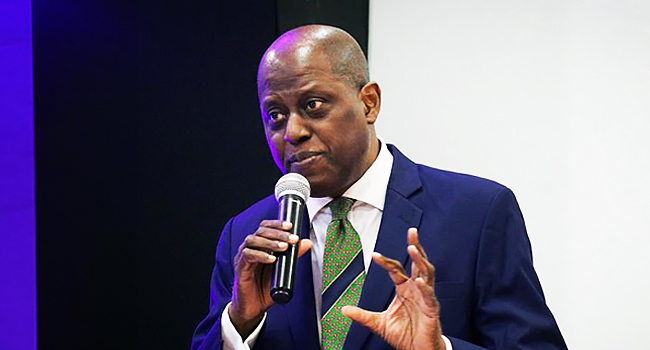
Governor of the Central Bank of Nigeria (CBN), Olayemi Cardoso, has attributed the apparent scarcity of N100 and N200 notes to the increasing adoption of digital payment channels and the declining purchasing power of the lower-denomination currency.
Speaking in Abuja on Tuesday, Cardoso dismissed concerns that the affected notes had been withdrawn from circulation, stressing that they remain legal tender and should continue to be accepted for transactions across the country.
He said the CBN had not announced the withdrawal of any naira denomination and urged Nigerians not to reject the lower-value notes.
“Yes, they remain legal tender. Unless the Central Bank states otherwise, Nigerians should assume that all existing denominations remain legal tender,” Cardoso said.
Explaining the reduced circulation of the N100 and N200 notes, the CBN governor said the situation reflects changing demand patterns within the financial system rather than any deliberate policy to phase them out.
According to him, the expansion of financial inclusion and the widespread use of electronic payment platforms have significantly reduced reliance on physical cash, particularly lower denominations.
Cardoso also noted that the depreciation of the naira has eroded the purchasing power of the smaller notes, making them less useful in day-to-day transactions.
“As to why there appear to be fewer of these notes in circulation, it is largely a matter of demand and supply. The financial ecosystem is evolving in the direction we want it to, with greater financial inclusion and increased digitisation,” he said.
“Of course, we must also acknowledge that currency devaluation has affected the purchasing power of lower-value notes. That is a reality.
“More importantly, however, as financial inclusion expands and digital payments become part of everyday life, fewer people will rely on these denominations.”
On inflation, Cardoso reaffirmed the apex bank’s commitment to restoring price stability and achieving single-digit inflation, despite recent global economic shocks that have slowed progress.
He recalled that Nigeria had recorded 11 consecutive months of declining inflation before external factors disrupted the disinflation trend.
“It is important to remember where we are coming from. We recorded 11 consecutive months of disinflation and, from every indication, we expected that by early 2027 we would be where we wanted to be in terms of inflation, with a path towards single-digit inflation,” he said.
“Unfortunately, we have experienced external shocks that were not anticipated and have lasted much longer than anyone expected.
“As for our single-digit inflation target, we remain committed to it.”
Reacting to the International Monetary Fund’s (IMF) recent assessment that the naira is undervalued, with an estimated fair value of about N1,150 to the US dollar, Cardoso maintained that the exchange rate should be determined by market forces rather than administrative targets.
He said the CBN would continue to support a transparent and market-driven foreign exchange regime anchored on a willing-buyer, willing-seller framework.
The Central Bank of Nigeria (CBN) has mentioned to the House of Representatives ad hoc committee investigating the legal basis, operations and budgetary inclusion of the alleged fake Presidential Foreign Investment Promotion Council (PFIPC) that it received authorisation from the Office of the Accountant-General of the Federation (OAGF) to open two domiciliary accounts for the council.
The revelation from the apex bank is coming as the Independent Corrupt Practices and Other Related Offences Commission (ICPC) on Monday questioned the Chief of Staff to the President, Femi Gbajabiamila, over allegations against him by the purported Director General of the council, Prince Adeniyi Adeyemi.
Adeyemi had alleged that he paid N400 million to Chief of Staff to the President, Femi Gbajabiamila through the late Babatunde Dolapo Tanimola to secure the appointment. He also claimed that the Chief of Staff allegedly demanded 48 per cent from the agency’s N27.3 billion take-off grant. Gbajabiamila had debunked the allegations and filed a N15bn defamation suit against Adeyemi.
Also, over N1.3 billion was allocated to the PFIPC in the approved 2026 budget, raising questions on how the ‘fictitious’ council found its way into the budget without the National Assembly spotting it.
Findings further revealed that Adeyemi got approvals for the employment of 300 staff members and an office space at the Federal Secretariat, Abuja, and opened accounts with the Central Bank of Nigeria (CBN).
But the Office of the Accountant General of the Federation (OAGF) insisted that the disputed council had no account with the apex bank, contradicting the Presidency’s statement that Adeyemi used fake documents and misled the OAGF to fraudulently open a CBN account.
While appearing before the probe panel shortly after the inauguration of the ad hoc committee at the National Assembly on Monday, a director at the CBN, Hamisu Abdullahi, who represented the CBN Governor at the investigative hearing, disclosed that the apex bank received a mandate from the OAGF to open two domiciliary accounts for the Presidential Economic Advisory Council/Presidential Foreign Investment Promotion Council.
According to him, the accounts, one United States dollar domiciliary account and one Pound Sterling domiciliary account, were opened on July 30, 2025.
He, however, informed lawmakers that the accounts remained inactive because the council failed to provide authorised signatories required for their operation.
“The process for opening the account requires a mandate from the office of the Account General of the Federation. So once we receive that mandate, we perform all the necessary verification to confirm that this mandate is actually coming from the Office of the Accountant General. So once we confirm that, we have some internal procedures too, which we follow to open those accounts.
“On the 30th of July 2025, we received a mandate dated 29 July 2025 from the office of the Accountant-General of the Federation to the Central Bank of Nigeria to open two domiciliary accounts for the Presidential Economic Advisory Council/ Presidential Foreign Investment Promotion Council.
“Based on that mandate, we did the normal verification to confirm the genuineness of the mandate and also process the account opening. And two accounts were actually opened: a domiciliary account, one dollar account and one pound sterling account for the Presidential Economic Advisory Council/ Presidential Foreign Investment Promotion. Those two accounts remain inactive with zero balance and have never been operated,” Abdullahi stated.
He further disclosed that there had been no financial activities linked to the accounts, including foreign exchange allocations, remittances, inflows or outflows.
“There have been no foreign exchange allocations, no remittances, no inflows and no outflows. The accounts have maintained zero balance from inception to date,” he said.
The CBN official explained that the bank does not have direct dealings with Ministries, Departments and Agencies (MDAs) on account opening, closure or change of account details except through the OAGF.
“As a banker to the federal government, the Central Bank has responsibility for opening all accounts for Ministries, Departments and Agencies, with the exception of those exempted from the Treasury Single Account,” he said.
Abdullahi added that the apex bank had no direct correspondence with the council regarding the operation of the accounts.
On her part, the Head of the Civil Service of the Federation, Mrs Didi Esther Walson-Jack, told the committee that her office had no constitutional responsibility for establishing government agencies.
She explained that while the office approves administrative structures of federal agencies, the establishment of such agencies falls outside its mandate.
“The approval and establishment of agencies is not within the purview of the Office of the Head of the Civil Service of the Federation (OHCSF). However, the OHCSF is responsible for approving the administrative structure of federal government agencies,” she said.
The OHCSF representative disclosed that the council had submitted a request for approval of its organisational structure on August 6, 2025, but the request was not granted because the required documents were not provided.
She, however, stated that during the 2025 annual manpower budget defence exercise, officials of the Presidential Economic Advisory Council/Presidential Foreign Investment Promotion Council requested an authorised establishment and recruitment waiver.
According to her, the council informed the office that 14 officers, including the Director-General/Chief Executive Officer, were already working with the body and sought approval to commence full operations.
She added that the request was processed alongside those of 87 other MDAs and later approved as part of the fourth batch of manpower approvals.
The approval provided for 314 positions, comprising 14 existing officers and 300 additional positions.
However, the OHCSF disclosed that it later discovered irregularities in documents submitted by the council as its enabling legal instrument.
“It was observed that the document presented by the council as its enabling law or legal instrument did not really carry the requisite features,” she told lawmakers.
The Head of Service also denied deploying civil servants to the council or allocating office accommodation to it.
“We wish to state that there was no deployment of staff by the Office of the Head of the Civil Service of the Federation to the council,” she said.
She added that reports linking the office to the allocation of accommodation at the Federal Secretariat Phase III were incorrect.
Meanwhile, the panel has directed the CBN to provide comprehensive records of all financial transactions linked to the council.
-
 Health & Wellness1 year ago
President Tinubu Directs Cut in Dialysis Cost from ₦50,000 to ₦12,000
-
 News1 year ago
PICTURE: In Lagos Couple Sentenced to 22½ Years for Cannabis Trafficking
-
 Business5 months ago
Dangote Refinery Reduces Petrol Gantry Price To ₦1,200 Per Litre
-
 Trending News1 year ago
NELFUND Disburses ₦86bn To 449,000 Beneficiaries
-
 Business2 years ago
Heritage Bank Customers’ Path to Securing ₦5m Insured Funds: A Step-By-Step Guide by NDIC”
-
Business2 years ago
Dangote; We Did Not Fix ₦600/Litre Petrol Price
-

 International News5 months ago
Indian Police Arrest Nigerian Over ₦290m Drug Haul
-
 Business5 months ago
After Plea Bargain, Court Discharges Stella Oduah of ₦2.5bn Fraud