Connect with us

International News

Trump’s US Pullout Order Leaves WHO Budget Tightened

Published

on

Spread the love
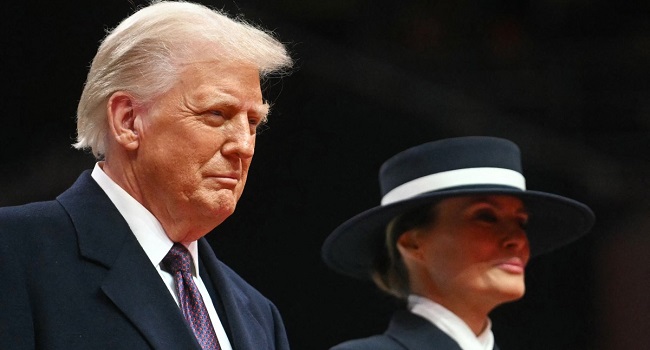
US President Donald Trump and First Lady Melania Trump watch bands perform during the inaugural parade inside Capital One Arena, in Washington, DC, on January 20, 2025. (Photo by Jim WATSON / AFP)


President Donald Trump’s decision to pull the United States out of the World Health Organization leaves the WHO facing a major blow to its budget.

Trump’s move would deprive the UN health agency of a critical partner in tackling public health threats worldwide.

Trump attempted to quit the WHO during his first term but that move was reversed under former president Joe Biden before it could take effect.

Withdrawal from the WHO comes into force one year from notification being formally deposited with the UN.

Trump has meanwhile nominated vaccine sceptic and scathing WHO critic Robert F. Kennedy as his health secretary.

The WHO on Tuesday said it regretted the withdrawal decision and hoped Washington would reconsider.
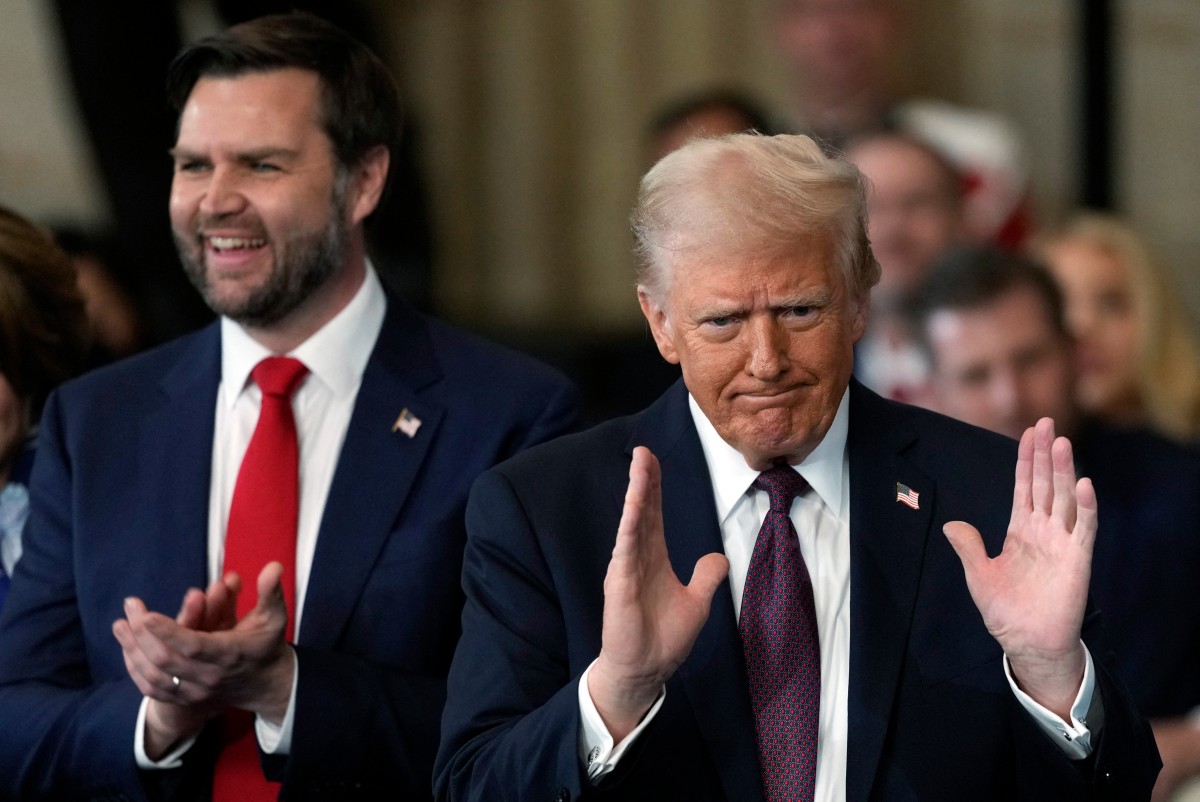
 

US Vice President JD Vance applauds US President Donald Trump after he was sworn in as the 47th US President in the US Capitol Rotunda in Washington, DC, on January 20, 2025. (Photo by Julia Demaree Nikhinson / POOL / AFP)


– US plays major role in WHO –

The United States “plays a crucial role in supporting WHO to protect and improve the health of Americans and people around the world,” the WHO says on its website.

The WHO highlighted Washington’s work in tackling polio and Ebola, and last year the outbreaks of mpox in the DR Congo and Marburg in Rwanda.

“The USA-WHO collaboration also plays a pivotal role in combating global HIV,” it said.

Trump’s executive order says Washington will swiftly pause any future money transfers to the WHO and recall US government staff or contractors working with the organisation.

The United States would join Liechtenstein as the only UN member state not in the WHO.
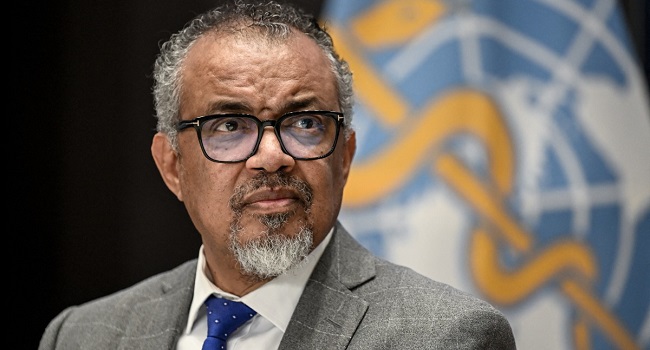
 

WHO Director-General Tedros Adhanom Ghebreyesus looks on during a press conference with the Association of Accredited Correspondents at the United Nations (ACANU) at the World Health Organization’s headquarters in Geneva, on December 10, 2024 (Photo by Fabrice COFFRINI / AFP)


– WHO budget –

The WHO receives money from its 194 member states, plus non-governmental organisations and other donors.

Founded in 1948, the agency initially received all its funding through “assessed contributions”: nations’ membership fees calculated according to wealth and population.

However, the WHO became increasingly reliant on “voluntary contributions”, which only contribute to outcomes specified by the donor.

In the last complete budget cycle, for 2022-23, membership dues accounted for only 12 percent of the WHO’s funding.

The Covid-19 pandemic hammered home the need for more predictable and flexible funding, to better tackle emerging health shocks.

Member states therefore agreed to pivot away from pre-earmarked contributions and increase membership fees to cover 50 percent of the organisation’s budget by 2030.

The WHO announced last November that it had raised nearly $4 billion through a new financing mechanism, after attracting dozens of new donors.

– US the top donor –
The WHO’s budget for the completed 2022 and 2023 cycle stood at $7.89 billion.

In that cycle, the United States was by far the WHO’s biggest donor, contributing $1.3 billion, or 16.3 percent of the total.

The next biggest contributors were Germany ($856 million), the Bill and Melinda Gates Foundation ($830 million), the Gavi vaccine alliance ($481 million) and the European Commission ($468 million).

China, in 11th place, contributed $157 million.

On Monday, Trump said the WHO had “ripped us off”, noting how Washington was paying far more than Beijing.

– Smart tactic? –
Suerie Moon, co-director of the Global Health Centre at the Geneva Graduate Institute, told AFP prior to the US announcement that it would be tactically smarter for Washington to hold off.

If they want “leverage over WHO… it would make sense to at least see what they can get, and then use the withdrawal as a negotiating tool”, she said.

Moon voiced certainty that WHO would survive a US withdrawal.

“Most organisations would survive a 15 percent budget cut, but it would be painful,” she said.

– Pandemic agreement –

Rattled by Covid, WHO member states decided in December 2021 to start drafting an accord on pandemic prevention, preparedness and response.

But deadlines have been repeatedly missed, meaning negotiations were not completed before Trump’s return.

Monday’s executive order says Washington will stop negotiating during its withdrawal, and the agreement will have “no binding force” on the United States.

Moon warned that the US pullout from the talks could give other wary countries “an easy out”.


AFP

International News

UK Teenagers To Trial Social Media Bans, Digital Curfews

Published

on

Spread the love

Hundreds of British teenagers will trial social media bans and time limits on apps as part of consultations over new measures to keep children safe online, the government announced Wednesday.


The pilot comes as the government seeks views from parents on whether to follow Australia and issue a blanket ban on social media for children under 16.

Three hundred youngsters aged 13 to 17 will try out different restrictions on social media use over six weeks to gauge the impact on their schoolwork, sleep and family life.

Some will have their social media apps disabled entirely, while others will have no access to them overnight, said the Department for Science, Innovation and Technology.

[ A young student uses her mobile phone at a public school in Planaltina

A third group will have a one-hour-per-day cap on the most popular apps for teenagers, including Instagram, TikTok and Snapchat.

The results will be compared to a fourth set of children who will continue to receive unlimited access.

“We are determined to give young people the childhood they deserve and to prepare them for the future,” said technology minister Liz Kendall.

“These pilots will give us the evidence we need to take the next steps, informed by the experiences of families themselves.”

Australia in December became the first nation to prohibit people under the age of 16 from using immensely popular and profitable social media platforms.

Several other countries are considering similar bans, including France where lawmakers in January passed a bill that would prohibit use by under-15s, which still needs final approval.

A boy poses at his home as he looks at social media on his tablet

The British government has launched a consultation on a potential Australia-style ban, which will also look at measures including age restrictions and banning addictive features like scrolling.

Earlier this month, British MPs struck down proposals by the upper House of Lords chamber to ban social media for under-16s while it awaits the outcome of the consultation, due to close on May 26.

British public figures including actor Hugh Grant have urged the government to back a prohibition, saying parents alone cannot counter social media harms.

But some experts warn restrictions could be easily circumvented and would rather that tech platforms focus on making their sites safer.

Labour Prime Minister Keir Starmer has not ruled out a ban.

Continue Reading

International News

Israel Defence Minister Says Iran Guards Navy Commander Killed In Strike

Published

on

Spread the love

Defence Minister Israel Katz announced on Thursday that an Israeli airstrike had killed Alireza Tangsiri, commander of the Iranian Revolutionary Guards’ navy.

“Last night, in a precise and lethal operation, the IDF eliminated the commander of the Revolutionary Guards’ navy, Tangsiri, along with senior officers of the naval command,” Katz said in a video statement.

“The man who was directly responsible for the terrorist operation of mining and blocking the Strait of Hormuz to shipping was blown up and eliminated.”

Since the start of the joint US-Israeli attacks on Iran on February 28, Israel has announced the killing of several top Iranian officials, including supreme leader Ali Khamenei and the Islamic republic’s powerful security chief, Ali Larijani.

In recent days, Israeli forces have carried out several strikes targeting the naval assets of Iran.

Last week, Israeli airstrikes hit several Iranian naval ships in the Caspian Sea, including ones equipped with missile systems, support vessels and patrol craft.


AFP

Continue Reading

International News

Iran ‘Afraid’ To Admit It Wants A Deal, Says Trump

Published

on

Spread the love

US President Donald Trump insisted Wednesday that Iran was taking part in peace talks, suggesting Tehran’s denials were because Iranian negotiators fear being killed by their own side.

“They are negotiating, by the way, and they want to make a deal so badly. But they’re afraid to say it, because they figure they’ll be killed by their own people,” Trump told a dinner for Republican members of Congress.

“They’re also afraid they’ll be killed by us.”

The US leader’s comments came after Iranian Foreign Minister Abbas Araghchi said that “we do not intend to negotiate”.

Trump repeated his assertion that Iran was being “decimated” in the conflict now in its fourth week, even though Tehran still maintains an effective stranglehold over the crucial Strait of Hormuz oil route.

Lashing out at his domestic opponents, Trump also claimed Democrats were trying to “deflect from all of the tremendous success that we’re having in this military operation.”

In a mocking reference to calls from Democrats for him to seek the approval of Congress for the conflict, Trump added: “They don’t like the word ‘war,’ because you’re supposed to get approval, so I’ll use the word military operation.”

The White House said earlier that Trump was ready to “unleash hell” if Iran did not admit defeat, while also insisting that Tehran is still taking part in talks.

Iranian state media had earlier cited an unidentified official as saying that the Islamic republic had responded “negatively” to a reported 15-point plan from Washington.

 ‘Talks continue’

“If Iran fails to accept the reality of the current moment, if they fail to understand that they have been defeated militarily and will continue to be, President Trump will ensure they are hit harder than they have ever been hit before,” Press Secretary Karoline Leavitt told reporters.

“President Trump does not bluff and he is prepared to unleash hell. Iran should not miscalculate again.”

Asked if negotiations with Iran had stalled, Leavitt replied: “Talks continue. They are productive.”

Leavitt declined to say whom the US was dealing with in Tehran following the assassination of supreme leader Ali Khamenei, whose son and successor Mojtaba Khamenei has not been seen in public.

Reports have suggested the Trump administration’s interlocutor is Mohammad Bagher Ghalibaf, Iran’s speaker of parliament and one of its most prominent non-clerical figures.

The spokeswoman also declined to confirm reports that top US officials including Vice President JD Vance were set to hold talks with the Iranians in Pakistan, which has emerged as a key mediator.

Trump is moving thousands of airborne troops and extra marines to the Gulf amid speculation that he might order a ground invasion to either seize Iranian oil assets in the Gulf or secure the Strait of Hormuz.

The White House meanwhile appeared to stick to the four to six-week timeline it has previously given for the war.

Trump announced Wednesday that his visit to China to meet Xi Jinping had now been rescheduled for mid-May, having postponed it by six weeks to deal with the conflict.

“We’ve always estimated approximately four to six weeks (for the length of military operations against Iran), so you could do the math on that,” Leavitt added.


AFP

Continue Reading

Trending

Copyright © 2026 TheColumn NG