Connect with us

International News

Trump’s US Pullout Order Leaves WHO Budget Tightened

Published

on

Spread the love
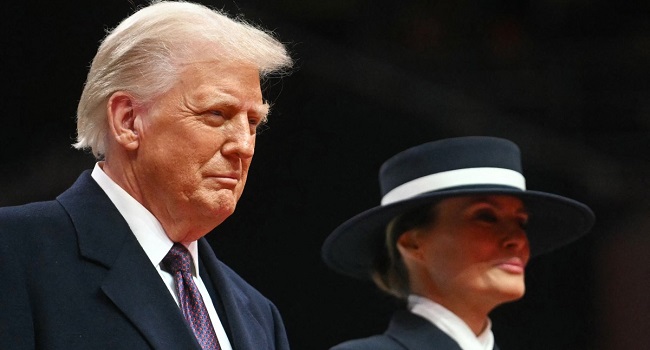
US President Donald Trump and First Lady Melania Trump watch bands perform during the inaugural parade inside Capital One Arena, in Washington, DC, on January 20, 2025. (Photo by Jim WATSON / AFP)


President Donald Trump’s decision to pull the United States out of the World Health Organization leaves the WHO facing a major blow to its budget.

Trump’s move would deprive the UN health agency of a critical partner in tackling public health threats worldwide.

Trump attempted to quit the WHO during his first term but that move was reversed under former president Joe Biden before it could take effect.

Withdrawal from the WHO comes into force one year from notification being formally deposited with the UN.

Trump has meanwhile nominated vaccine sceptic and scathing WHO critic Robert F. Kennedy as his health secretary.

The WHO on Tuesday said it regretted the withdrawal decision and hoped Washington would reconsider.
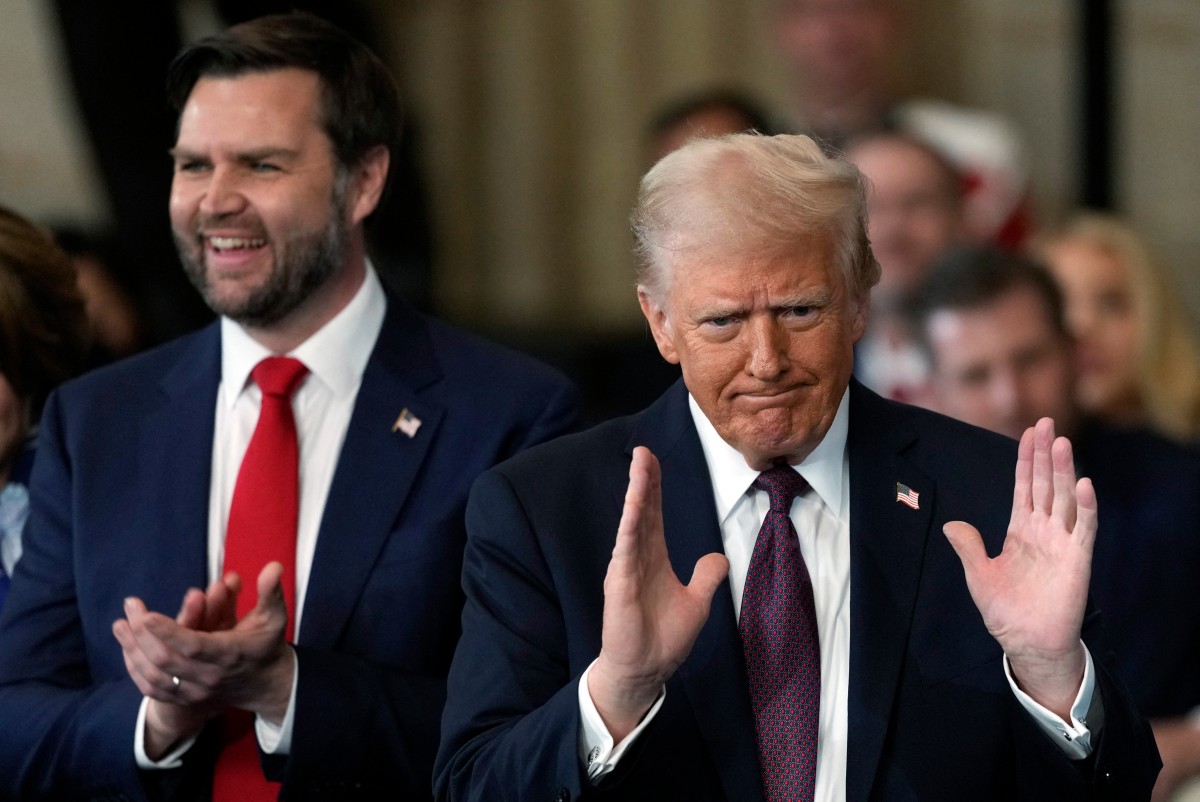
 

US Vice President JD Vance applauds US President Donald Trump after he was sworn in as the 47th US President in the US Capitol Rotunda in Washington, DC, on January 20, 2025. (Photo by Julia Demaree Nikhinson / POOL / AFP)


– US plays major role in WHO –

The United States “plays a crucial role in supporting WHO to protect and improve the health of Americans and people around the world,” the WHO says on its website.

The WHO highlighted Washington’s work in tackling polio and Ebola, and last year the outbreaks of mpox in the DR Congo and Marburg in Rwanda.

“The USA-WHO collaboration also plays a pivotal role in combating global HIV,” it said.

Trump’s executive order says Washington will swiftly pause any future money transfers to the WHO and recall US government staff or contractors working with the organisation.

The United States would join Liechtenstein as the only UN member state not in the WHO.
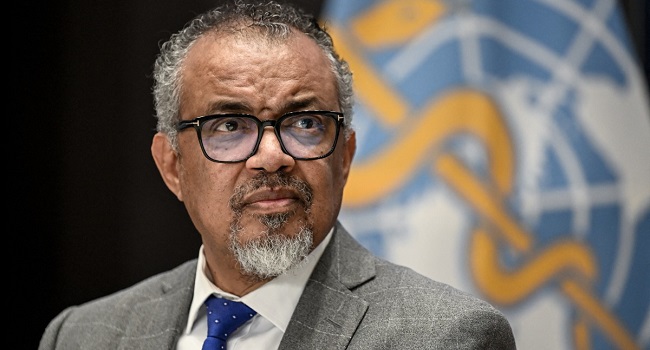
 

WHO Director-General Tedros Adhanom Ghebreyesus looks on during a press conference with the Association of Accredited Correspondents at the United Nations (ACANU) at the World Health Organization’s headquarters in Geneva, on December 10, 2024 (Photo by Fabrice COFFRINI / AFP)


– WHO budget –

The WHO receives money from its 194 member states, plus non-governmental organisations and other donors.

Founded in 1948, the agency initially received all its funding through “assessed contributions”: nations’ membership fees calculated according to wealth and population.

However, the WHO became increasingly reliant on “voluntary contributions”, which only contribute to outcomes specified by the donor.

In the last complete budget cycle, for 2022-23, membership dues accounted for only 12 percent of the WHO’s funding.

The Covid-19 pandemic hammered home the need for more predictable and flexible funding, to better tackle emerging health shocks.

Member states therefore agreed to pivot away from pre-earmarked contributions and increase membership fees to cover 50 percent of the organisation’s budget by 2030.

The WHO announced last November that it had raised nearly $4 billion through a new financing mechanism, after attracting dozens of new donors.

– US the top donor –
The WHO’s budget for the completed 2022 and 2023 cycle stood at $7.89 billion.

In that cycle, the United States was by far the WHO’s biggest donor, contributing $1.3 billion, or 16.3 percent of the total.

The next biggest contributors were Germany ($856 million), the Bill and Melinda Gates Foundation ($830 million), the Gavi vaccine alliance ($481 million) and the European Commission ($468 million).

China, in 11th place, contributed $157 million.

On Monday, Trump said the WHO had “ripped us off”, noting how Washington was paying far more than Beijing.

– Smart tactic? –
Suerie Moon, co-director of the Global Health Centre at the Geneva Graduate Institute, told AFP prior to the US announcement that it would be tactically smarter for Washington to hold off.

If they want “leverage over WHO… it would make sense to at least see what they can get, and then use the withdrawal as a negotiating tool”, she said.

Moon voiced certainty that WHO would survive a US withdrawal.

“Most organisations would survive a 15 percent budget cut, but it would be painful,” she said.

– Pandemic agreement –

Rattled by Covid, WHO member states decided in December 2021 to start drafting an accord on pandemic prevention, preparedness and response.

But deadlines have been repeatedly missed, meaning negotiations were not completed before Trump’s return.

Monday’s executive order says Washington will stop negotiating during its withdrawal, and the agreement will have “no binding force” on the United States.

Moon warned that the US pullout from the talks could give other wary countries “an easy out”.



AFP

International News

Transfer: Real Madrid , Cucurella Reach Verbal Agreement 

Published

on

Spread the love


Chelsea reliable defender, Marc Cucurella may join Spanish giant, Real Madrid before the end of the current transfer window.if information from transfer journalist, Fabrizio Romano are anything to go by.


Romano In a latest transfer update, said Real Madrid has reached verbal agreement to sign Marc Cucurella from Chelsea.

“Verbal agreement in place between all parties, player too — he’s the left back wanted by Mourinho” the update read.

Continue Reading

International News

Ancelotti: Pressure Affected Brazil Against Morocco 

Published

on

Spread the love


Carlo Ancelotti felt Brazil were “anxious” in their World Cup opener against Morocco, as he suggested the pressure got to his players.


Brazil were largely underwhelming at New York New Jersey Stadium, as they opened their Group C campaign with a 1-1 draw.

World Cup 2022 semi-finalists Morocco made a fine start, which was capped off when Ismael Saibari charged through in the 21st minute and lofted a cute finish over Alisson.

With the unfit Neymar watching on from the bench, Vinicius Junior slammed home a brilliant equaliser 11 minutes later, but Brazil could not find a way through Morocco’s defence for a second time.

In fact, Brazil relied on a sharp double save from Alisson late on to preserve a point, and Ancelotti knows there is plenty of scope for improvement.

“I think it was a tough match, especially in the first half,” Ancelotti said, as reported by ESPN

“Maybe the team was a bit anxious, and the nerves were all over the place. The second half was better, but it was still tough, and I’m sure we’ll get better.

“I think that’s something we’ll have to look into.

“There’s a lot of pressure, so it’s natural. Little by little, we’ll improve in that sense.”

Brazil are, at least, unbeaten in their opening match in the last 21 World Cups dating back to 1938 (W17 D4).

It is the longest such streak in the history of the World Cup, more than twice as long as any other (Germany, Netherlands – nine straight).

“We have to reassess what we did,” Ancelotti added.

“In the first half, we were very unbalanced. We did a bit better in the second half. The result isn’t bad. You don’t win the World Cup in your first match.

“I’m not disappointed, but I’m not satisfied, either. We need to work, but that’s normal. Morocco played well. They’re a solid team, very well organised. It was a difficult game.

“For many different reasons, a debut in the World Cup might not end up as expected. The goal is to qualify, move on to the next round and improve over time.”

With uncertainty over how much Neymar will be able to contribute at this tournament, Brazil need Vinicius to step up, and the Real Madrid forward demonstrated his quality with a wonderful run and finish to restore parity.

It marked Vinicius’ 10th goal for Brazil, with three of those coming on American soil.

“We started on a really bad note,” Vinicius said. “For certain, we got to hold on to the ball. We have to move better.”

Continue Reading

International News

Revealed: Why Yamal Lost Spain’s No.10 Shirt To Olmo At The Mundia

Published

on

Spread the love


According to The Athletic, Yamal will not wear the No. 10 jersey for Spain; it will belong to teammate Olmo.


Pelé, Diego Maradona, Zinedine Zidane, Messi, and Roberto Baggio have all delivered superstar-level performances at the FIFA World Cup.

What do they have in common? They all wore the No. 10 jersey at the time.

Historically, this number typically belongs to the most creative player on the team, usually an attacking midfielder, and sometimes even a forward. It is also part of a player’s personal brand, an honor reserved for a special type of player.

Spain is one of the favorites to win this summer’s North American tournament, and there is no bigger name in the squad than Yamal. But he will not wear the No. 10 for Spain; instead, he will wear No. 19, the same number he wore in the summer of 2024 when he helped Spain win the European Championship in Germany.

So, why can’t the 18-year-old, who wears this legendary number at Barcelona—a number most easily associated with the club’s all-time leading goal scorer and appearance record holder Messi—enjoy the same treatment with the Spanish national team?

Spain’s No. 10 this summer will be Olmo, who is also one of Yamal’s teammates at Barcelona.

Olmo wears No. 20 at Barcelona, but for the national team, a simple factor puts him ahead of the young player when deciding numbers: seniority.

Spain’s system for assigning squad numbers dictates that the player with the most national team appearances gets priority in choosing from available numbers.

Yamal has made 25 appearances for the national team since his debut in 2023; Olmo has 50 national team appearances and was already wearing the No. 10 before Yamal joined the Spanish squad.

Yamal has proven capable of handling the challenge of wearing the No. 10 at Barcelona. When Messi left the club in a painful manner in the summer of 2021, it left Barcelona with several issues to resolve, one of which was who would inherit the No. 10 and bear the pressure of the legacy left by the Argentinian.

Ansu Fati, one of the brightest talents to emerge from Barcelona’s La Masia academy in recent years, did not succeed. After Messi’s departure, he inherited the No. 10 but suffered multiple injuries and could not meet expectations.

Barcelona sources believe that giving the number to Fati was a mistake because it placed too much pressure on the young player. Like all quoted sources in this article, they requested anonymity to protect their relationships.

But Yamal’s situation is different. He took over Fati’s No. 10 last summer and hasn’t looked back since. Last season, he achieved his career-best statistics, scoring 24 goals and providing 17 assists in 45 games.

Not wearing the Spanish No. 10 has also not affected Yamal’s progress with the national team.

This is not seen as a problem, but rather as part of the young player’s development. Everyone in the Spanish squad understands the rules, and sources close to Yamal and the team insist that Yamal holds no resentment towards Olmo.

It can also be argued that, besides international recognition, there are commercial factors for jersey numbers that should not be overlooked. Giving Yamal the No. 10 would certainly boost sales of the Spanish team’s jerseys and bring a more significant commercial impact from the star player.

However, respect among teammates, especially for more senior players, is a key tenet for Spain’s coach Luis de la Fuente and the foundation of the culture he is building for this Spanish team.

No individual is important enough to be above this team spirit, not even Yamal. The young player is considered the most important attacking player for Spain and is highly respected in the locker room, but breaking the seniority policy to take a teammate’s number is simply not allowed in this team.

Gavi should also be mentioned. The 21-year-old player has primarily played as a central midfielder for Barcelona this season, even playing as a defensive midfielder, but he will wear No. 9 for Spain, a number more commonly associated with central forwards.

There’s a story behind this too. When Gavi made his Spain debut in 2021, No. 9 was the last available number when he chose.

That year, he made his debut in the Nations League semi-final win against Italy, with an impressive performance, and Gavi has stuck with that number ever since. Whenever the national team’s No. 9 is available, he always chooses it.

Spain’s starting forward Oyarzabal actually began his career as a winger, but he has always chosen No. 21 and decided to keep this number throughout his national team career.

Another forward included in Luis de la Fuente’s FIFA World Cup squad, Celta player Borja Iglesias, has 8 national team appearances, fewer than Gavi’s 30, so he cannot get the No. 9.

Continue Reading

Trending

Copyright © 2026 TheColumn NG