Connect with us

International News

Trump Signs Order Requiring Citizenship Proof In Elections

Published

on

Spread the love
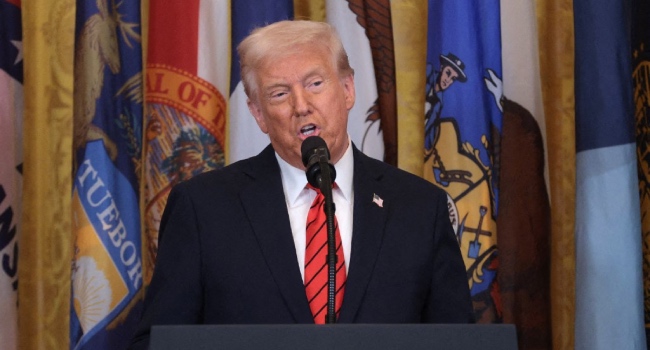
WASHINGTON, DC – MARCH 20: U.S. President Donald Trump delivers remarks before signing an executive order to reduce the size and scope of the Education Department during a ceremony in the East Room of the White House on March 20, 2025 in Washington, DC. (Photo by ALEX WONG / GETTY IMAGES NORTH AMERICA / Getty Images via AFP)


US President Donald Trump on Tuesday ordered tighter controls on federal elections, including requiring proof of citizenship when registering to vote, as the Republican continues to attack a system he insists remains tilted against him.

Experts swiftly denounced his executive order as an abuse of presidential power that could ultimately prevent millions of Americans from casting ballots, and rights groups already have vowed to challenge it in court.

Trump, now in his second term, has never acknowledged his defeat to Joe Biden in the 2020 presidential election, and he maintains baseless claims of massive election fraud — particularly in absentee voting, a method which has become widely used across the United States.

“Perhaps some people think I shouldn’t be complaining, because we won in a landslide” last November, Trump said as he signed the executive order in the White House.

“But we’ve got to straighten out our election. This country is so sick because of the election, the fake elections,” he said. “And we’re going to straighten it out, one way or the other.”
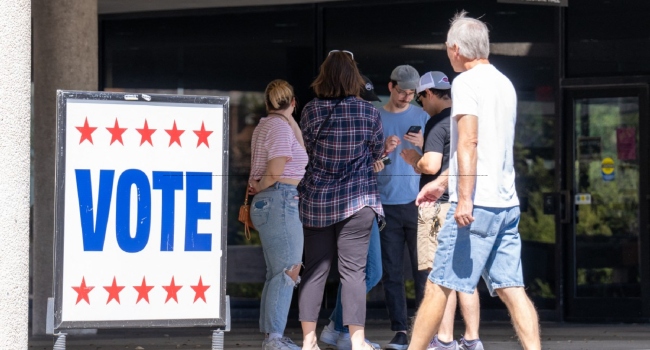
Voters enter a polling location during the Texas primary elections on March 5, 2024 in Austin, Texas. Americans from 15 states and one territory vote simultaneously on “Super Tuesday,” a campaign calendar milestone expected to leave Donald Trump a hair’s breadth from securing the Republican Party’s presidential nomination. (Photo by SUZANNE CORDEIRO / AFP)


The new rules will require proof of citizenship to be presented — through documents such as a passport — when registering to vote in one’s state of residence. US states that fail to comply with the directive could see cuts to their federal election funding.

According to the executive order, the attorney general would be empowered to “take all necessary action… against States that violate these provisions by including absentee or mail-in ballots received after Election Day in the final tabulation of votes.”

Several states allow absentee ballots to be counted if they arrive after Election Day, provided they are postmarked before the polls close in their state.

For law professor Richard Hasen of the University of California, Los Angeles, this “dangerous” executive order could “potentially disenfranchise millions of voters.”

On his Election Law blog, Hasen calls Trump’s directive “an executive power grab,” and notes that federal elections are largely the responsibility of the states, with Congress setting rules for the conduct of elections.

The Brennan Center, a nonprofit public policy institute, denounced the executive order, posting on X that it “would block tens of millions of American citizens from voting. Presidents have no authority to do this.”

The powerful civil liberties group ACLU also slammed the order as “an extreme abuse of power” and suggested legal challenges would be filed. “We’ll see him in court,” it said.

Voting in US federal elections by non-citizens has been a criminal offense for decades, with the law threatening fines, imprisonment and deportation.


AFP

International News

UK Teenagers To Trial Social Media Bans, Digital Curfews

Published

on

Spread the love

Hundreds of British teenagers will trial social media bans and time limits on apps as part of consultations over new measures to keep children safe online, the government announced Wednesday.


The pilot comes as the government seeks views from parents on whether to follow Australia and issue a blanket ban on social media for children under 16.

Three hundred youngsters aged 13 to 17 will try out different restrictions on social media use over six weeks to gauge the impact on their schoolwork, sleep and family life.

Some will have their social media apps disabled entirely, while others will have no access to them overnight, said the Department for Science, Innovation and Technology.

[ A young student uses her mobile phone at a public school in Planaltina

A third group will have a one-hour-per-day cap on the most popular apps for teenagers, including Instagram, TikTok and Snapchat.

The results will be compared to a fourth set of children who will continue to receive unlimited access.

“We are determined to give young people the childhood they deserve and to prepare them for the future,” said technology minister Liz Kendall.

“These pilots will give us the evidence we need to take the next steps, informed by the experiences of families themselves.”

Australia in December became the first nation to prohibit people under the age of 16 from using immensely popular and profitable social media platforms.

Several other countries are considering similar bans, including France where lawmakers in January passed a bill that would prohibit use by under-15s, which still needs final approval.

A boy poses at his home as he looks at social media on his tablet

The British government has launched a consultation on a potential Australia-style ban, which will also look at measures including age restrictions and banning addictive features like scrolling.

Earlier this month, British MPs struck down proposals by the upper House of Lords chamber to ban social media for under-16s while it awaits the outcome of the consultation, due to close on May 26.

British public figures including actor Hugh Grant have urged the government to back a prohibition, saying parents alone cannot counter social media harms.

But some experts warn restrictions could be easily circumvented and would rather that tech platforms focus on making their sites safer.

Labour Prime Minister Keir Starmer has not ruled out a ban.

Continue Reading

International News

Israel Defence Minister Says Iran Guards Navy Commander Killed In Strike

Published

on

Spread the love

Defence Minister Israel Katz announced on Thursday that an Israeli airstrike had killed Alireza Tangsiri, commander of the Iranian Revolutionary Guards’ navy.

“Last night, in a precise and lethal operation, the IDF eliminated the commander of the Revolutionary Guards’ navy, Tangsiri, along with senior officers of the naval command,” Katz said in a video statement.

“The man who was directly responsible for the terrorist operation of mining and blocking the Strait of Hormuz to shipping was blown up and eliminated.”

Since the start of the joint US-Israeli attacks on Iran on February 28, Israel has announced the killing of several top Iranian officials, including supreme leader Ali Khamenei and the Islamic republic’s powerful security chief, Ali Larijani.

In recent days, Israeli forces have carried out several strikes targeting the naval assets of Iran.

Last week, Israeli airstrikes hit several Iranian naval ships in the Caspian Sea, including ones equipped with missile systems, support vessels and patrol craft.


AFP

Continue Reading

International News

Iran ‘Afraid’ To Admit It Wants A Deal, Says Trump

Published

on

Spread the love

US President Donald Trump insisted Wednesday that Iran was taking part in peace talks, suggesting Tehran’s denials were because Iranian negotiators fear being killed by their own side.

“They are negotiating, by the way, and they want to make a deal so badly. But they’re afraid to say it, because they figure they’ll be killed by their own people,” Trump told a dinner for Republican members of Congress.

“They’re also afraid they’ll be killed by us.”

The US leader’s comments came after Iranian Foreign Minister Abbas Araghchi said that “we do not intend to negotiate”.

Trump repeated his assertion that Iran was being “decimated” in the conflict now in its fourth week, even though Tehran still maintains an effective stranglehold over the crucial Strait of Hormuz oil route.

Lashing out at his domestic opponents, Trump also claimed Democrats were trying to “deflect from all of the tremendous success that we’re having in this military operation.”

In a mocking reference to calls from Democrats for him to seek the approval of Congress for the conflict, Trump added: “They don’t like the word ‘war,’ because you’re supposed to get approval, so I’ll use the word military operation.”

The White House said earlier that Trump was ready to “unleash hell” if Iran did not admit defeat, while also insisting that Tehran is still taking part in talks.

Iranian state media had earlier cited an unidentified official as saying that the Islamic republic had responded “negatively” to a reported 15-point plan from Washington.

 ‘Talks continue’

“If Iran fails to accept the reality of the current moment, if they fail to understand that they have been defeated militarily and will continue to be, President Trump will ensure they are hit harder than they have ever been hit before,” Press Secretary Karoline Leavitt told reporters.

“President Trump does not bluff and he is prepared to unleash hell. Iran should not miscalculate again.”

Asked if negotiations with Iran had stalled, Leavitt replied: “Talks continue. They are productive.”

Leavitt declined to say whom the US was dealing with in Tehran following the assassination of supreme leader Ali Khamenei, whose son and successor Mojtaba Khamenei has not been seen in public.

Reports have suggested the Trump administration’s interlocutor is Mohammad Bagher Ghalibaf, Iran’s speaker of parliament and one of its most prominent non-clerical figures.

The spokeswoman also declined to confirm reports that top US officials including Vice President JD Vance were set to hold talks with the Iranians in Pakistan, which has emerged as a key mediator.

Trump is moving thousands of airborne troops and extra marines to the Gulf amid speculation that he might order a ground invasion to either seize Iranian oil assets in the Gulf or secure the Strait of Hormuz.

The White House meanwhile appeared to stick to the four to six-week timeline it has previously given for the war.

Trump announced Wednesday that his visit to China to meet Xi Jinping had now been rescheduled for mid-May, having postponed it by six weeks to deal with the conflict.

“We’ve always estimated approximately four to six weeks (for the length of military operations against Iran), so you could do the math on that,” Leavitt added.


AFP

Continue Reading

Trending

Copyright © 2026 TheColumn NG