
News
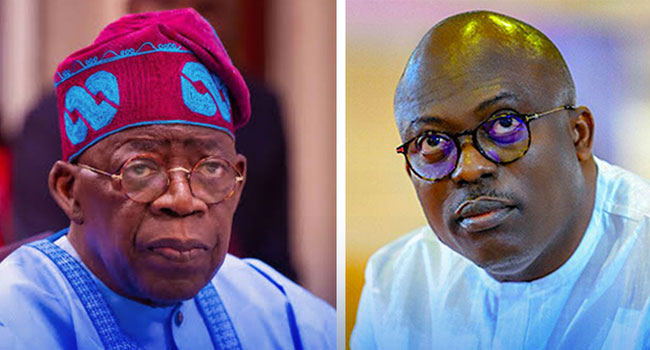
APC in Rivers is ready to work with Fubara, says APC Chairman


The APC said collaborating with the governor will not stop the main opposition in the state from holding Fubara accountable on issues of governance.
The state APC Chairman, Chief Tony Okocha, made the declaration during a news briefing in Port Harcourt, Rivers State capital, on Tuesday.
Okocha assured all that the APC would continue to consolidate on its membership base while also offering constructive criticism of the Fubara administration after his return.
He said, “The governor who was suspended will return to office on September 18. The APC will work with him when he returns.
“There are states where the governor and assembly members are in different parties, so we are going to work with him.
“However, that will not take away our right to criticise him when he does wrong. But for us, the LG chairmen will work with him, except that we will not agree to vicious policies.”
Okocha described the just-concluded local government elections in the state as an introduction to the 2027 general elections, noting that the APC deliberately chose not to field candidates in strongholds of the Peoples Democratic Party but concentrated on areas where it had a comparative advantage.
“The Rivers State LG election is a prelude to what will happen in 2027.
“Whilst we were campaigning, I told our people that there is a need for us to believe in the centre and leave the periphery.
“We did not field candidates in Obio/Akpor, Port Harcourt City, and Ogba/Egbema/Ndoni LGAs because we do not have the strength in those areas.
“It was our own calculated strategy not to field candidates in those LGAs and concentrate only where we have a comparative advantage. Remember that Rivers State was a PDP state,” Okocha explained.
He expressed optimism about the party’s growing influence, contrasting its position in the 2023 elections with its current status.
“In 2023, APC in Rivers State had no shoes. Now we are wearing psychedelic shoes.
“We are going to double and redouble our membership for the President. As far as my party is concerned, we will be fielding him for a second term in 2027,” he said.
Okocha took a swipe at the PDP, saying the party was collapsing and its members were defecting in droves to the APC, which he said now calls the shots.
He stressed, “PDP is in tatters and people are leaving them in droves for other parties, and we’re privileged to have them.
“We’ll continue our pleas for the PDP members, particularly the FCT Minister, to come over to the APC and have peace. The PDP is in tatters.”
Recall that Fubara was suspended from office by President Bola Tinubu on March 18, after he declared a state of emergency in Rivers State following rising political tensions in the state.
Tinubu had based his action on the attack on oil facilities in the state by militants who were allegedly sympathetic to the governor, accusing Fubara of not doing anything to stop the threats to cause mayhem.
The President then appointed former Chief of Naval Staff, Vice Admiral Ibok-Ete Ibas (retd.) as Administrator of the state for an initial six-month period.
Last Saturday, while speaking to newsmen after casting his vote in the just concluded local government elections, the Minister of the Federal Capital Territory, Nyesom Wike, said that with the poll, the ‘coast’ was now clear for Fubara to be reinstated.
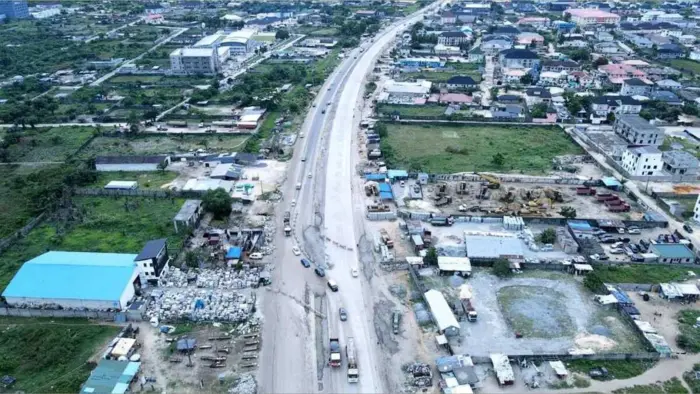
Motorists plying the deteriorating Eti-Osa-Lekki-Epe Expressway are expected to face temporary traffic disruptions as the Lagos State Government begins a 35-day rehabilitation of damaged sections from Bonny Camp to Admiralty Way Junction and around Victoria Garden City (VGC) tomorrow.
The government said traffic diversion arrangements would be introduced to minimise congestion and ensure the safety of road users during the exercise.
The Special Adviser to the Governor on Infrastructure, Olufemi Daramola, disclosed this yesterday at a stakeholders’ engagement organised by the Ministry of Works and Infrastructure to discuss the scope of work and traffic management plans for the project.
Daramola said the meeting was part of the government’s policy of consulting residents, businesses and other road users before embarking on major infrastructure projects, adding that feedback from stakeholders would inform the implementation process.
He appealed for the cooperation of residents and motorists, particularly as Lagos prepares for increased traffic during the festive season.
The rehabilitation is expected to improve road safety and ease movement along the strategic corridor, which connects residential communities, commercial centres and major industrial investments across the Lekki-Epe axis.
The expressway provides access to the Lekki Free Zone, Dangote Refinery, Dangote Fertiliser Factory, Lekki Deep Sea Port and Eleganza Industrial Estate. It also serves major housing developments and educational institutions, including Pan-Atlantic University and Lagos Business School.
However, rapid urbanisation, growing commercial activities and increasing traffic have accelerated the deterioration of some sections, leaving commuters struggling with difficult journeys along the busy route.
Daramola said the government was also addressing drainage concerns along the corridor, adding that the proposed Green Line rail project would form part of a broader plan to improve transportation infrastructure in the area.

The European Union Support to Democratic Governance in Nigeria (EU-SDGN) Election Observation Hub has said vote trading during the Ekiti and Osun states governorship elections was rampant, with voters rewarded heavily for selling their votes.
The Hub, established for election monitoring, is made up of the Kukah Centre (TKC), TAF Africa, Nigerian Women Trust Fund (NWTF), Yiaga Africa, International Press Centre (IPC) and Centre for Media and Society (CEMESO).
Speaking at the presentation and dissemination of the report on the Ekiti and Osun Off-cycle Elections (which took place in June and August, 2026, respectively) in Abuja on Tuesday, Prof. Bolade Eyinla, who read the findings of the Hub, said voters got up to N50,000 for selling their votes.
“The scourge of vote trading is becoming a pandemic,” he said, adding that, “if we don’t do anything about it, the sanctity of the vote and freedom of choice is beginning to come under severe threat and pressure.”
Prof. Eyinla lamented that vote trading has become extremely well organised and standardised, stressing that offenders remain unpunished.
“Maybe the IG (Inspector-General of Police) will tell us if they are arrested. And the result of that is that everybody has assumed a sense of impunity.
“The data shows us that 77% of the 84 verified incidents were vote trading, and party agents were the main actors in at least 90% of these cases.
“In Osun, it was 69%, and as I said, we still have not heard of any reported arrests, investigations, or prosecutions, given the magnitude of vote trading that went on in both elections.”
Describing how it was carried out, he said the voter marks the ballot paper to show his preference, but he then brings it up to show the people who are making the tally.
“And of course, once the agent confirms ‘he has done what we demanded’, payment follows.
“Originally, I was thinking payment was within the range of 10,000 or thereabouts, but the report from Osun even told me that people got N50,000. If you divide N50,000 by the number of voters in Osun, how much that will amount to in terms of the volume of money involved,” he said.
The Hub also called for the presentation of results from the ward level, noting that most of the irregularities are done at that level.
“I think for the presidential election, it’s 8,809 (wards). We want to see the results of the ward level uploaded. If you can upload polling units, then you should be able to upload ward-level results,” he argued.
However, the Hub commended the Independent Electoral Commission for organising a near-perfect election, noting that the election started early and the results were almost the same as those independently compiled.
It also commended the security agencies for ensuring a peaceful poll in Ekiti and Osun.
Dr Akin Akingbulu, the Executive Director, Centre for Media and Society (CEMESO), in his remarks, said the Hub deployed 598 observers across all 16 Local Government Areas in Ekiti on 20 June, and 823 observers across all 30 LGAs in Osun on 15 August.
“That is more than 1,400 trained Nigerians who watched, counted, verified and reported, polling unit by polling unit, so that the conversation we have today rests on facts and not on sentiment,” he said.
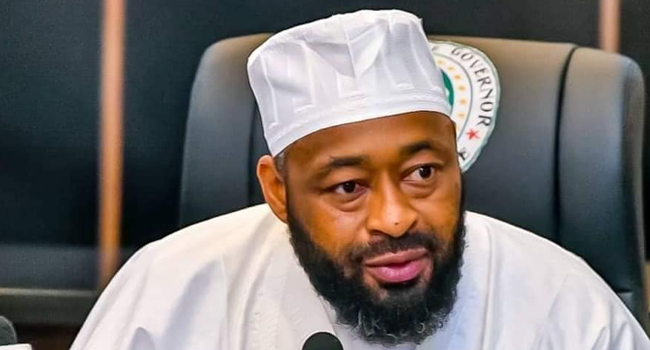
The officer in charge of Minna General Hospital Mortuary, Dr Chinweokwu Alaribe, has told the judicial commission investigating the deaths of miners in Niger State that the facility received 33 corpses, not 37 as reported by the government.
Alaribe stated this while testifying before the nine-member judicial commission, chaired by Justice Mohammed Mohammed, at its resumed sitting in Minna.
According to him, the corpses brought to the mortuary were 33, adding that he could not account for bodies that were not taken to the facility.
“I’m only aware that 33 corpses were brought in, not aware of any 37 as reported. I cannot count the corpses that were not in the mortuary. I only know that 33 corpses were brought to me,” he said.
Report says the mortician told the panel that the corpses were brought to the hospital in two batches in an ambulance.
He added that two nurses from the medical unit of the Nigeria Security and Civil Defence Corps (NSCDC) accompanied the bodies to the hospital.
Alaribe identified the nurses as Mariam and Hauwa, both attached to the NSCDC medical unit in Minna.
-
 Health & Wellness1 year ago
President Tinubu Directs Cut in Dialysis Cost from ₦50,000 to ₦12,000
-
News2 years ago
CBN Debunks Fake Circular on New ₦5,000 and ₦10,000 Notes
-

 International News7 months ago
Indian Police Arrest Nigerian Over ₦290m Drug Haul
-
 Business7 months ago
Dangote Refinery Reduces Petrol Gantry Price To ₦1,200 Per Litre
-
 Business7 months ago
After Plea Bargain, Court Discharges Stella Oduah of ₦2.5bn Fraud
-
Business2 years ago
Dangote; We Did Not Fix ₦600/Litre Petrol Price
-
 Trending News1 year ago
NELFUND Disburses ₦86bn To 449,000 Beneficiaries
-
 Opinion2 years ago
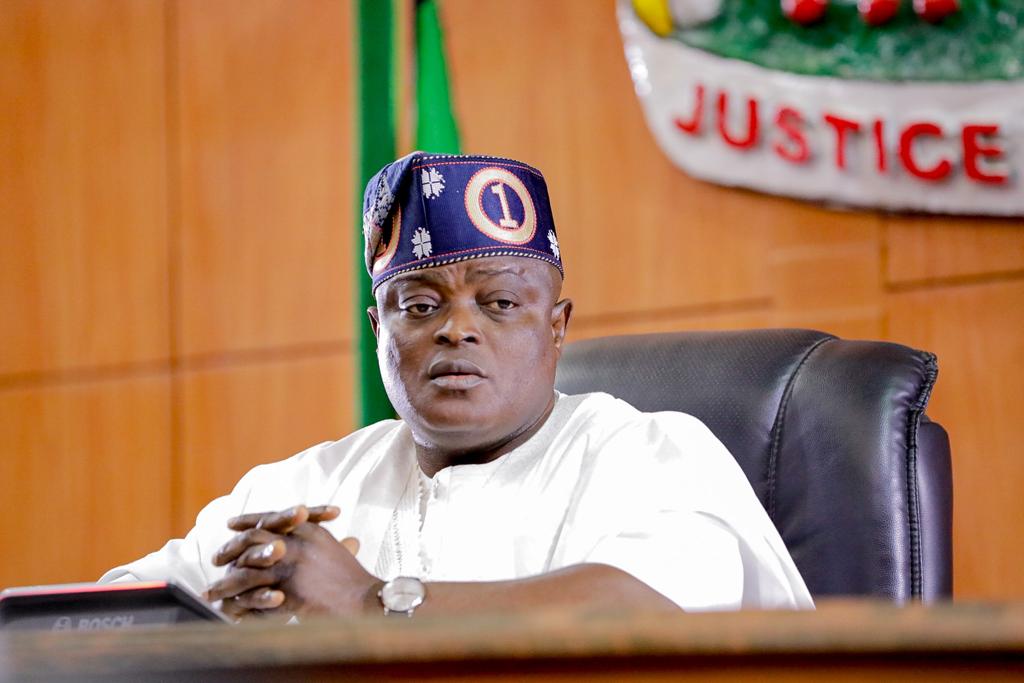
Championing the People’s Voice: Obasa’s Dedication to Grassroots Representation By Dave Agboola⁰