
Business
Nestle Sacks CEO Over Office Relationship


Swiss food giant Nestle on Monday dismissed Laurent Freixe as chief executive with immediate effect over an “undisclosed romantic relationship with a direct subordinate”.
The multinational behind Nespresso coffee capsules and KitKat chocolate bars said Freixe’s dismissal followed an investigation.
In a swift move, Nespresso CEO Philipp Navratil was appointed to take over by his fellow board members.
“The departure of Laurent Freixe follows an investigation into an undisclosed romantic relationship with a direct subordinate which breached Nestle’s code of business conduct,” a statement said.
The board said it had ordered an investigation overseen by chairman Paul Bulcke and lead independent director Pablo Isla, with the support of outside counsel.
“This was a necessary decision. Nestle’s values and governance are strong foundations of our company. I thank Laurent for his years of service,” Bulcke said in a statement.
A company veteran, Freixe joined Nestle in France in 1986. He ran the firm’s European operations until 2014, steering them through the subprime and euro crises that began in 2008.
He headed the Latin America division before his promotion as CEO.
Freixe had only been in the top spot since a surprise switch in September 2024, entrusted with reversing soft spending by consumers for the company’s food and household goods.
Nestle’s share price slumped by nearly a quarter last year, raising concerns in Switzerland, where pension funds invest heavily in the company, whose brands also include Purina dog food, Maggi bouillon cubes, Gerber baby food and Nesquik chocolate-flavoured drinks.
Nestle shares closed up 0.13 per cent at 75.49 Swiss francs on the Swiss stock exchange.
Net Profits
In late July, Nestle reported a 10.3-percent drop in first half profits as it struggled to turn around its fortunes amid sluggish consumer spending in China, even as it passed on higher cocoa and coffee prices to consumers.
New chief executive Navratil had been an executive vice-president at Nestle, which is headquartered in Vevey on Lake Geneva.
“The board is confident that he will drive our growth plans forward and accelerate efficiency efforts. We are not changing course on strategy and we will not lose pace on performance,” insisted chairman Bulcke.
Navratil started his career with Nestle in 2001 and took on various roles in Central America, leading the coffee and beverage business in Mexico from 2013 to 2020, when he took over responsibility for global strategy and innovation for the Nescafe and Starbucks brands.
He became chief executive of the Nespresso brand in July last year and joined the company board in January 2025.
“I fully embrace the company’s strategic direction, as well as the action plan in place to drive Nestle’s performance,” said Navratil, pledging to “drive the value creation plan with intensity”.
Freixe is only the latest of a string of top business figures to be propelled through the exit door in recent years over relationships with colleagues found to be in violation of internal rules.
Bernard Looney resigned unexpectedly as CEO of British energy giant BP in 2023 over his failure to disclose past relationships with colleagues.
Steve Easterbrook was ousted as chief executive of McDonald’s in 2019 for having a “consensual relationship” with an employee, in violation of company policy.
A year earlier, Brian Krzanich stepped down as chief executive of US computer chip giant Intel over a “past consensual relationship” with an employee in violation of the company’s non-fraternisation policy.
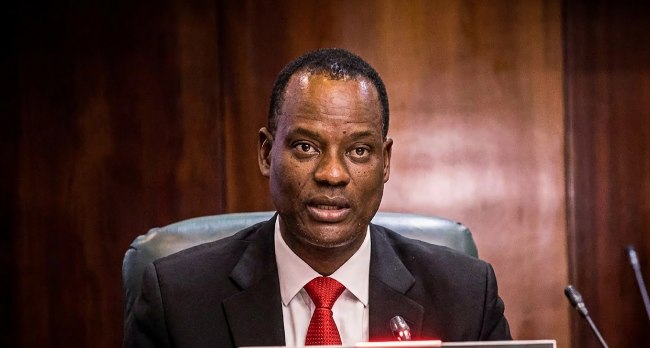
Minister of Finance and Coordinating Minister of the Economy, Taiwo Oyedele, has cautioned governments against introducing new taxes or increasing existing tax burdens on vulnerable citizens and productive sectors, warning that such measures could deepen economic hardship.
Oyedele spoke on the sidelines of the 2026 annual meetings of the International Monetary Fund (IMF) and World Bank in Bangkok, Thailand, where he presented a communiqué on behalf of the Intergovernmental Group of Twenty-Four (G24), which he chairs.
“This is the wrong time to impose new taxes or increase the burden of tax, particularly on the vulnerable population and productive sectors of the economy,” he said.
Responding to questions on how developing countries could reduce debt-servicing costs without cutting essential public spending,report quoted Oyedele as urging governments to identify waste, find savings and improve revenue collection before placing additional financial pressure on citizens and businesses.
He said borrowing remained necessary to finance economic growth but stressed that governments must ensure that debt supports job creation and inclusive development.
“Borrowing and debt financing is a necessary condition for growth, and every country emerging, developing must be able to apply debt financing in a way that is overall of positive impact, particularly to stimulate job-rich and inclusive growth,” he said.
The minister also called for available public funds to be prioritised for essential services, including healthcare and education, while private capital could help finance other areas of investment.
On the choice between taxation and borrowing, Oyedele said both options carried consequences and should be considered in the context of their impact on household welfare.
“If you collect taxes, you raise the money now, and that itself has a lot of trade-offs. What taxes are you collecting? You collect taxes from the most vulnerable, and this will deprive them of money to provide food, health, education,” he said.
He argued that excessive taxation could leave low-income households with less money for basic needs, while borrowing also carried future obligations.
“Debt is future taxes, so it’s not one or the other. It’s to strike a balance, bearing in mind ultimately that the essence of tax and of debts is to cater for the people,” Oyedele said.in the report.
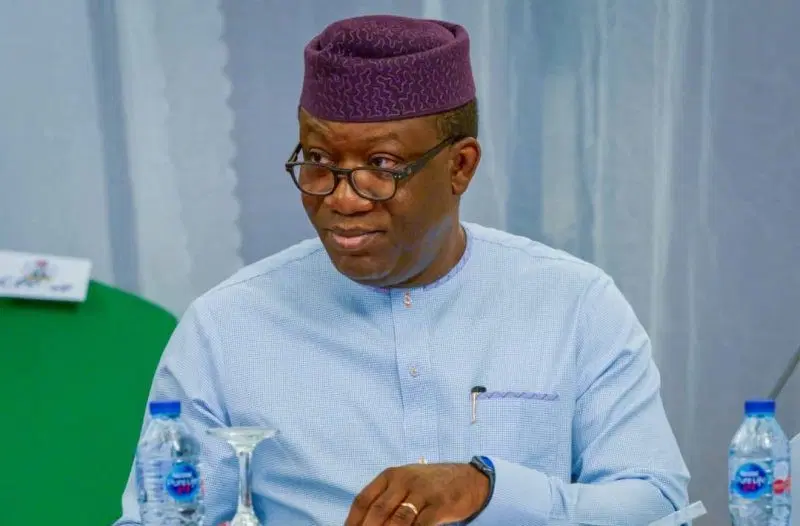
Former Governor of Ekiti State and ex-Minister of Mines and Steel Development, Dr Kayode Fayemi, has warned the United States against slipping into isolationism in its engagement with Africa, insisting that Nigeria remains a must-have strategic partner in the evolving global order.
Fayemi maintained this position in Lagos while speaking as a panelist at the Nigeria Moment, a Nigeria–United States Strategic Dialogue organised by the American Business Council in collaboration with the Heritage Foundation.
In his presentation, which focused on why Nigeria is a must-have partner in the changing world order, Fayemi,former chairman of the Nigeria Governors’ Forum (NGF) stressed the need for a more holistic relationship between both countries grounded in transparency, mutual benefit and shared prosperity.
He insisted that Nigeria must be treated as a strategic partner in the emerging world order.
“While welcoming the growing American interest in Nigeria’s vast mineral endowment, Fayemi warned that the partnership must go beyond resource extraction.
“Nigeria must be engaged as a strategic actor and a co-creator in shaping the future of global energy and resource governance, rather than as a testing ground for experiments. A partnership built on mutual respect, shared interests and long-term cooperation offers the strongest foundation for an enduring relationship between Nigeria and the United States,” Fayemi said.
Describing the engagement as a pleasure, Fayemi said the dialogue brought together a distinguished group of policymakers, business leaders and strategic thinkers to reflect on the future of Nigeria-US relations.
He commended the convener of the dialogue, Mr Ayo Otuyalo,for an excellent convening and for bringing together such high-level participants for the important strategic conversation.
The conference featured Governor Babajide Sanwo-Olu of Lagos State as keynote speaker, alongside senior representatives of the Federal Government, including the Minister of Industry, Trade and Investment, Dr Jumoke Oduwole; Minister of Power,
Also st the event were : Engr Joseph Tegbe; Minister of Solid Minerals Development, Mr Dele Alake, represented by Engr Simon Nkom; and the Head of the Nigerian Upstream Petroleum Regulatory Commission (NUPRC), Mrs Oritsemeyinwa Eyesan among others.

Moove, the global mobility company founded in Lagos, has announced plans to end its operations in Nigeria.
According to report, as part of its exit strategy, the company founded six years ago, said it will transfer full ownership of eligible vehicles “worth approximately N35 billion” to existing customers at no cost.
The affected customers will take full ownership of the vehicles, with no further payments to Moove required from October 1, 2026.
The company said the move forms part of its plans to conclude its Nigerian operations while ensuring that eligible customers retain the vehicles they have been using under its financing model.
Moove was founded by Ladi Delano and Jide Odunsi and has built its business around providing vehicle financing and mobility solutions to drivers.
The company launched in Nigeria six years ago and expanded its operations by financing vehicles for drivers, particularly those operating on ride-hailing platforms.
The report says the transfer of the vehicles means eligible customers will receive assets collectively valued at about N35 billion without making additional payments to the company.
Moove is a global mobility fintech company that has expanded its operations across several markets, providing vehicle financing and other mobility-related services.
This is coming a few weeks after another global mobility company Uber exited Nigerian operations, the report concluded.
-
 Health & Wellness1 year ago
President Tinubu Directs Cut in Dialysis Cost from ₦50,000 to ₦12,000
-
News2 years ago
CBN Debunks Fake Circular on New ₦5,000 and ₦10,000 Notes
-

 International News7 months ago
Indian Police Arrest Nigerian Over ₦290m Drug Haul
-

 Business7 months ago
Dangote Refinery Reduces Petrol Gantry Price To ₦1,200 Per Litre
-

 Business7 months ago
After Plea Bargain, Court Discharges Stella Oduah of ₦2.5bn Fraud
-
Business2 years ago
Dangote; We Did Not Fix ₦600/Litre Petrol Price
-
 Trending News1 year ago
NELFUND Disburses ₦86bn To 449,000 Beneficiaries
-
 Opinion2 years ago
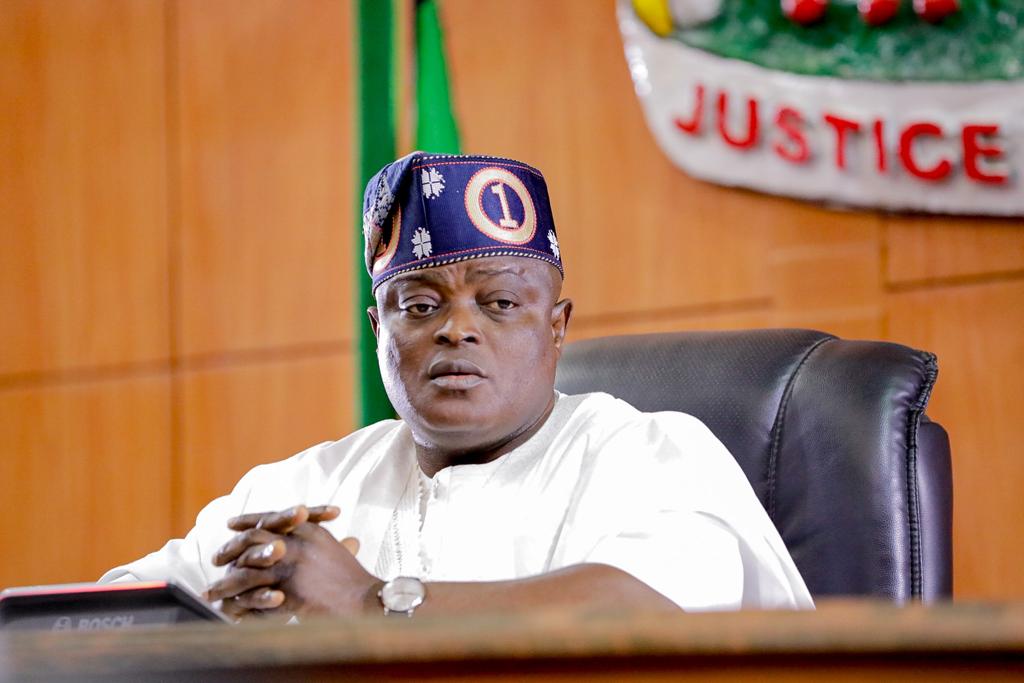
Championing the People’s Voice: Obasa’s Dedication to Grassroots Representation By Dave Agboola⁰