
News
BCOS Under Fire Over Salary Crisis, Alleged Asset Stripping

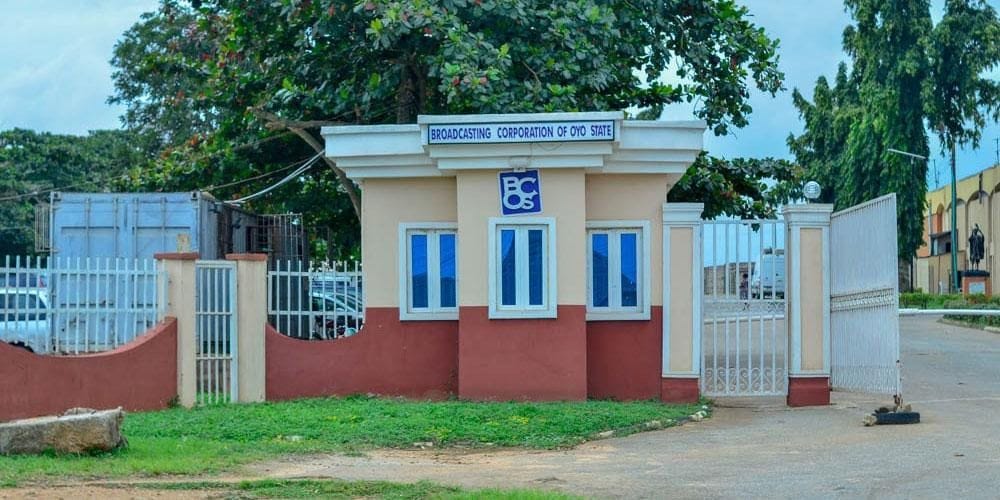
The Broadcasting Corporation of Oyo State (BCOS), once a dominant cultural and media powerhouse in the South-West, is now teetering on the edge of institutional collapse, as mounting salary arrears and explosive allegations of asset stripping ignite widespread outrage among stakeholders.
What was once regarded as a proud voice of the Yoruba people has descended into a symbol of administrative breakdown, worker neglect, and suspected financial recklessness.
At the heart of the crisis is a deepening wage scandal that has left staff in prolonged uncertainty and hardship. As of July, employees are only just receiving salaries for May a delay that has drawn sharp condemnation from labour observers who describe the situation as not just inefficiency, but a blatant erosion of workers’ dignity and a failure of governance.
Even more troubling are allegations that critical state-owned assets belonging to BCOS have been quietly disposed of under questionable circumstances. Reports suggest that valuable equipment including industrial generators, broadcast tools, and essential office infrastructure may have been sold or transferred without compliance with due process or public procurement regulations.
For many observers, this is no longer a case of poor management it is a full-scale institutional crisis unfolding in plain sight.
“A public institution cannot operate under a cloud of opacity and survive,” a media stakeholder noted. “What we are seeing is not just silence it is dangerous complicity.”
The spotlight is now firmly on the leadership of BCOS, particularly the Executive Chairperson, as calls intensify for accountability. Critics argue that the scale of internal decay, declining productivity, and weak oversight structures point to systemic leadership failure. Internal mechanisms meant to protect staff welfare have reportedly collapsed, leaving workers exposed and voiceless.
Beyond the corporation itself, pressure is mounting on the Oyo State Government to intervene decisively. Governor Seyi Makinde, as the custodian of state institutions, is being urged to immediately address the crisis before it spirals beyond recovery.
Analysts warn that allowing BCOS to fail under the current administration could become a defining stain on its governance record.
To salvage what remains of the broadcaster’s legacy, stakeholders are demanding urgent and concrete action. Key among these demands is the immediate launch of an independent forensic audit into all alleged asset disposals, as well as sweeping structural reforms to guarantee timely salary payments.
There are also calls for full transparency from the BCOS board regarding recent administrative decisions, alongside a credible, well-funded recovery plan to restore both operational capacity and public confidence.
For decades, BCOS has served not just as a media outfit, but as a cultural institution — preserving heritage, informing the public, and connecting communities. Today, that legacy hangs in the balance.
Stakeholders warn that history will not be kind to those who stood by in silence while a once-proud institution was allowed to decay.
The time for action, they insist, is now.







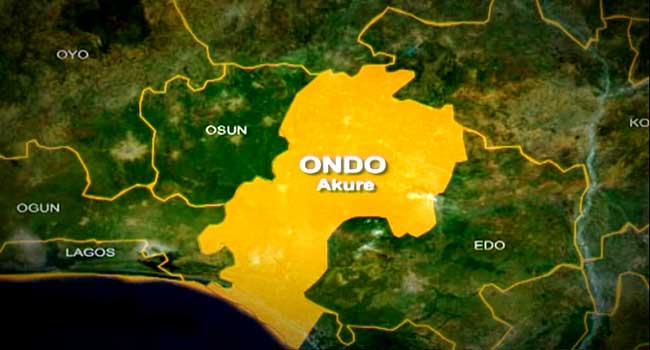
A resident who visited the scene of the Nigerian Air Force (NAF) aircraft crash in Igbokoda, headquarters of Ilaje LGA of Ondo state, on Monday, said human remains, aircraft parts and personal effects were scattered across the area.
In a report, Oluboyo Olusola, the resident, said some bodies were also found inside the water, noting that the difficult terrain initially prevented first responders from reaching the crash site until naval personnel assisted them in gaining access to the area.
Olusola said the incident occurred at about 10 am and that he did not witness the aircraft go down but was alerted by a deafening sound that sent residents rushing towards the scene.
According to him, the condition of the crash site and what was recovered there suggest that there might be no survivors.
“We heard a loud noise like thunder and rushed to the scene, only to discover that it was an aircraft crash. Initially, we thought it was a helicopter but later understood it was an aircraft,” he said.
“It was difficult to access the terrain, but with the assistance of some naval officers, we were able to get there and saw the remains of the aircraft, as well as human remains, clothes, shoes and other personal effects.
“Some of the bodies were also inside the water. From what I saw, it appeared that there was no survivor.”
He added that the difficult terrain and waterlogged nature of the area posed a major challenge to those trying to reach the wreckage.
Oba Afolabi Odidiomo, the Olu of Igbokoda, who also spoke on the incident, said he was in court when the crash occurred and immediately directed some palace aides to proceed to the scene to ascertain what had happened.
The monarch said he initially feared the aircraft could have been a commercial passenger plane, which could have resulted in an even higher number of casualties.
Odidiomo said the aircraft did not crash within the town, adding that such an incident could have resulted in a major tragedy.
“The aircraft crashed into the river and a swampy area. It was raining when the incident happened, and the place was waterlogged,” he said.
“The aircraft did not catch fire, but a substantial part of it has gone into the water.”

Public service workers have threatened to shut down government operations nationwide if the Federal Government fails to address their demands within the next two weeks.
The National Secretary of the Joint National Public Service Negotiating Council (JNPSNC), Gbenga Olowoyo, issued the warning after public sector unions ended a three-day warning strike aimed at forcing the government to respond to growing concerns over fuel prices, workers’ welfare and the proposed new minimum wage.
The unions embarked on the warning strike from October 2 to 4 after the government failed to act on demands submitted to President Bola Tinubu on September 21. The demands included a reduction in petrol prices, improved salaries and allowances, and the immediate constitution of a tripartite committee to begin negotiations on a new minimum wage.
Olowoyo said on Monday, that the warning strike had achieved its immediate objective, claiming about 65 per cent compliance across the country. He said the next phase would be more extensive if the government failed to respond.
“The essence of that strike—because it was a warning strike—was to create awareness and provoke reactions from certain quarters, and it achieved its purpose. Even reports now show that the strike had 65% compliance, across all states of the federation,” he said.
Olowoyo said the workers were disappointed that Tinubu’s Independence Day address did not directly address their demands, adding that the council had therefore decided to prepare for a total strike.
“We are receiving feelers. The body language of the government shows that they may invite us, but we have not received any official invitation. The feeler is that they are putting things together. We are looking up to that, but if nothing is done within one to two weeks’ time, then we go on a total strike,” he said.
He listed the workers’ demands as a drastic reduction in petrol prices, a review of salaries and allowances, and the immediate establishment of a tripartite committee to negotiate the next minimum wage.
Olowoyo said the council was proposing a petrol price of ₦200 per litre, arguing that the current cost of fuel was worsening the financial pressure on workers. He also called for government intervention to cushion the impact of fuel costs while negotiations on wages and the minimum wage take place.
On the proposed wage review, he said the eventual figure should be determined through a tripartite process that would consider inflation, living costs and other economic variables rather than being imposed by any single party.
He also criticised Nigeria’s dependence on the dollar, arguing that the use of foreign currency for crude transactions, imports and several production inputs continued to put pressure on the naira and increase the cost of goods and services.
The latest threat comes after the JNPSNC had earlier demanded that petrol prices be reduced to ₦500 per litre, alongside an immediate wage award and negotiations for a new minimum wage ahead of 2027.

Drug dealers in Lagos and Ogun states have allegedly adopted a new strategy of using persons living with disabilities and female hawkers to distribute narcotics in a bid to evade security agencies.
The development has made detection more difficult, as persons with disabilities are often seen on the streets begging for alms, while female hawkers carrying bowls or other items may attract little suspicion from members of the public.
Report says the new method of drug distribution was uncovered following visit to some police formations in Lagos and Ogun states.
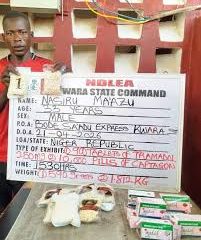
At one of the police stations in Lagos, a male amputee was arrested with a large quantity of different types of hard drugs at a black spot in one of the state’s major markets.
During interrogation, the suspect reportedly confessed that he was introduced to the business, alongside others, by a major drug dealer who is currently at large.
According to him, many of those recruited are operating across Lagos and Ogun states and are paid 10 per cent of their daily sales. He said he had been using the proceeds to supplement the money he made from begging.
In a separate incident, a female hawker was arrested in the Sango-Ota area of Ogun State while allegedly carrying hard drugs concealed beneath a large pot.
The woman reportedly claimed she was hawking native liquid herbs, popularly known as agbo. However, a plain-clothed police officer became suspicious and asked her to drop the pot. She reportedly started trembling, prompting the officer to search it, where several hard drugs were allegedly found.
The report quoted police investigators as saying
that the suspects would be used to trace the major dealers and other kingpins behind the distribution of narcotics in Lagos and Ogun states and, by extension, other parts of the South-West.
Meanwhile, operatives of the Lagos State Police Command have intensified raids on drug joints and identified flashpoints across the state as part of efforts to tackle the activities of drug dealers.
The police said drug abuse was a major factor contributing to criminal activities, adding that some violent crimes, including killings and robberies, are committed by people under the influence of narcotics.
The command also linked drug abuse to mental health problems among youths, citing an incident in Mushin where a young man allegedly became disoriented after taking hard drugs, went to an electricity transformer, and was electrocuted, the report said.
-
 Health & Wellness1 year ago
President Tinubu Directs Cut in Dialysis Cost from ₦50,000 to ₦12,000
-
 International News6 months ago
Indian Police Arrest Nigerian Over ₦290m Drug Haul
-
News2 years ago
CBN Debunks Fake Circular on New ₦5,000 and ₦10,000 Notes
-
 Business6 months ago
Dangote Refinery Reduces Petrol Gantry Price To ₦1,200 Per Litre
-

 Business6 months ago
After Plea Bargain, Court Discharges Stella Oduah of ₦2.5bn Fraud
-
Business2 years ago
Dangote; We Did Not Fix ₦600/Litre Petrol Price
-
 Trending News1 year ago
NELFUND Disburses ₦86bn To 449,000 Beneficiaries
-
 News1 year ago
PICTURE: In Lagos Couple Sentenced to 22½ Years for Cannabis Trafficking