
News
NDLEA 10,000 Captagon Pills in Kwara Crackdown

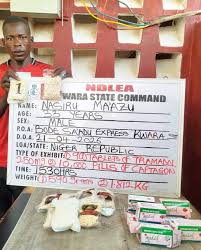
The National Drug Law Enforcement Agency says its operatives have intercepted a consignment of the stimulant drug captagon in Kwara State, alongside other seizures recorded in separate operations across the country.
The agency said this comes barely five years after it recorded the first seizure of captagon in Africa at the Apapa Port in Lagos.
The drug is believed to be a highly addictive amphetamine-type stimulant widely abused in parts of the Middle East.
According to the NDLEA, the drug produces intense euphoria, suppresses fatigue, and can keep users awake for days while reducing fear and increasing reckless behaviour.
The agency also linked its “production and sale to militias and large criminal groups linked to the Islamic State in Iraq and Syria”, which it said use it as a “means of generating funds for weapons and combatants and for use as a stimulant to keep them fighting.”
The NDLEA spokesperson, Femi Babafemi, who disclosed this in a statement made available to The column.ng on Sunday, said, “The latest seizure of captagon, whose street value costs as much as $25 a pill, was made on Tuesday, 21st April 2026, when NDLEA operatives on patrol along Bode Saadu Road, Kwara State, intercepted a trailer conveying passengers.
“A search conducted on one of the passengers, 33-year-old Nasiru Mu’azu, led to the recovery of 10 packs of Captagon consisting of 10,000 pills and nine packets of Tapentadol 250mg.”
In a separate operation at the same Bode Saadu patrol point on Friday, 24 April, NDLEA officers intercepted a trailer marked RMY-70XA.
“A search of the truck led to the recovery of 155,900 capsules of tramadol, 6,000 ampoules of tramadol injection, 3,000 tablets of co-codamol, and 9,000 tablets of bromazepam concealed in a false compartment constructed under the trailer.
“A 24-year-old suspect, Aminu Isah, has been taken into custody in connection with the seizure,” the statement added.
In Oyo State on 21 April, operatives intercepted a commercial bus with registration number MNA 963 ZY at Akinyele along the Ibadan–Oyo Expressway while en route to Sokoto.
“A 33-year-old passenger, Eze Prince Emeka, was brought down from the vehicle and taken for a body scan, which confirmed ingestion of illicit drugs.
“The suspect, who claims to be a businessman in Sokoto, was subsequently placed under close excretion observation during which he excreted a total of forty-five (45) pellets of cocaine with a total weight of 1.043 kilograms in three excretions,” Babafemi said.
He added, “The decision to travel by road to Sokoto with the illicit drug in his stomach was to evade detection by NDLEA at the airport, while further investigation reveals that upon arrival in Sokoto, the suspect was to excrete the pellets, rest for a few days, and subsequently re-ingest the substances to continue the journey through the trans-Saharan routes, with Algeria as a transit point and possible final destination in Europe.
In Edo State, NDLEA operatives on patrol along the Benin–Lagos Expressway on Saturday, 25 April, intercepted a truck marked NLC 146 FC conveying 1,196,000 pills of pharmaceutical opioids.
Two suspects, Osagie Igbinibo, 43, and Omijie Malik, 44, were arrested in connection with the seizure of the consignment, which was reportedly heading to Onitsha, Anambra State.
In Lagos, a suspect, Rasheed Ibuowo, 40, was arrested at Mile 2 Expressway on Saturday, 25 April, while conveying 810 kilograms of Arizona, a strain of cannabis.
In Bauchi State, another suspect, Muktar Bello, 35, was arrested on Wednesday, 22 April, along Misau Road, Azare/Katagum LGA, with 288 blocks of skunk weighing 154.5 kilograms.
NDLEA operatives in Ekiti State recovered 466.8 kilograms of skunk from the house of a suspect, Layit John Matthew, 56, at Ilaro Street, Isinbode-Ekiti. The agency said the drugs were intended for transportation to Yola, Adamawa State.
In Cross River State, about 20,000 kilograms of cannabis were destroyed on eight hectares of farmland in the Uyanga community, Akamkpa LGA, on Saturday, 25 April. The operation, supported by soldiers, also led to the recovery of 170 kilograms of processed cannabis.
In Niger State, 394 pieces of improvised explosive device components were seized from a suspect, Mohammed Aliyu, 26, along the Kontagora–Zuru Road.
He was reportedly transporting the materials in a Toyota vehicle with registration number KNT 617 AE to Shadadi, Mariga LGA. The suspect and exhibits are to be transferred to the relevant security agency for further investigation.
The agency also said its commands across the country continued sensitisation activities under its War Against Drug Abuse campaign in schools, worship centres, workplaces and communities during the week.
These included enlightenment lectures at Mallam Salisu Islamic School, Paiko, Niger State; Madarasatul Abdulrahman Bin Auf Litahafizul Quran, Kano; Sani Zango Daura Model Primary School, Katsina; and a community engagement in Badagry, Lagos State.
The Zonal Commander, Zone 4 Command, ACGN Bridget Viashiama, also led a WADA advocacy visit to the Nasarawa State Governor, Abdullahi Sule.
The Chairman/Chief Executive Officer of the NDLEA, Brig. Gen. Mohamed Buba Marwa (Rtd), commended officers of the Kwara, Oyo, Edo, Cross River, Bauchi, Ekiti, Niger and Lagos Commands for their operations and urged them to sustain the momentum in both enforcement and sensitisation activities.
He described the seizure of 10,000 Captagon pills in Kwara as a significant blow to drug syndicates attempting to revive a trafficking route that had been largely inactive since the Apapa Port seizure five years ago.
Marwa said the interception was a warning against attempts to expand Captagon trafficking networks, adding that the drug is often linked to insecurity due to its stimulant effects.
“We are not just seizing pills; we are disrupting the fuel that powers violence in our communities. Our operatives remain on high alert across all frontiers to ensure this illicit trade finds no foothold,” he said.






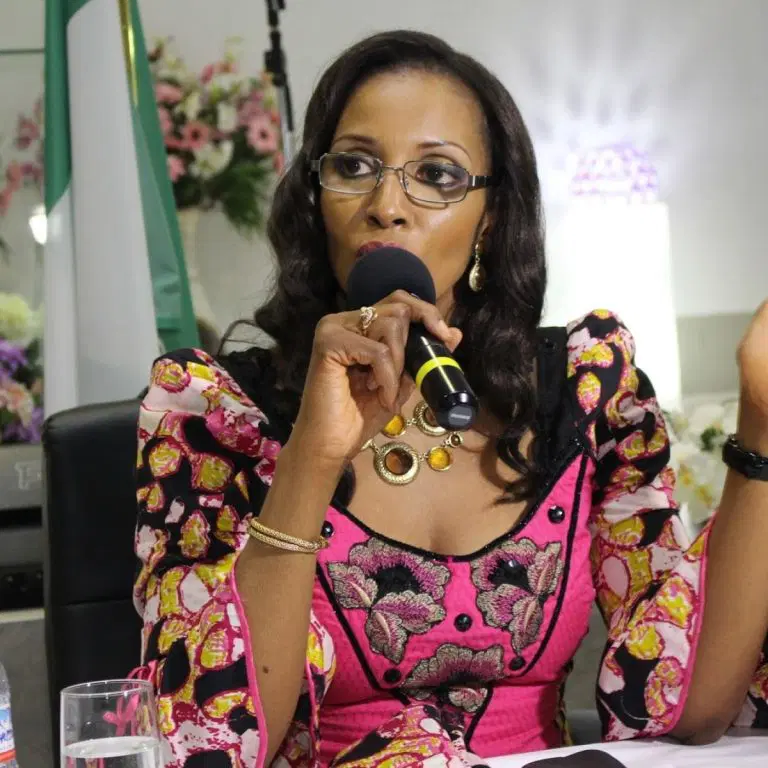
The Federal Government has raised alarm over the growing use of new technologies by terrorist groups in Africa, calling for stronger intelligence sharing and better funding to tackle the security threat.
The Minister of Foreign Affairs, Ambassador Bianca Odumegwu-Ojukwu, raised the concern in a statement issued by the ministry on Friday, following her remarks at the opening of the Consultative Forum on Strengthening the Functional Performance of the African Union Peace and Security Architecture in Abuja.
Odumegwu-Ojukwu said armed groups were increasingly using new technologies in their operations and funding their activities through transnational organised crime and illicit financial flows.
She decried the growing wave of terrorism on the African continent, noting that armed groups were adopting new technologies to carry out their operations and using proceeds of transnational organised crime to finance their activities.
She called on African countries to take greater responsibility for addressing the continent’s security challenges amid growing terrorism, regional security threats and weaknesses in existing security frameworks.
Against the backdrop of growing regional security threats and pressures on multilateralism, the minister called for “a stronger, better funded and self-reliant African peace and security architecture” capable of addressing the continent’s evolving security challenges.
The minister urged African states to strengthen intelligence sharing, improve early warning systems and support African-led mediation efforts to prevent conflicts and respond to emerging threats.
She urged African states to strengthen the Continental Early Warning System, African mediatory initiatives and the African Peer Review Mechanism (APRM).
She also called for greater attention to local grievances, youth unemployment and community resilience, noting the need to address issues that could contribute to insecurity.
The minister underscored the importance of building enduring national peace infrastructures and enhancing intelligence sharing among African states to improve the continent’s response to security threats.
Odumegwu-Ojukwu stressed the importance of rehabilitation and reintegration programmes for people affected by terrorism and encouraged African countries to use the African Union Counter-Terrorism Centre to coordinate counter-terrorism efforts across the continent.
She stressed the need for increased support for rehabilitation and reintegration programmes and encouraged African countries to leverage the African Union Counter-Terrorism Centre (AUTC) for the coordination of continental counter-terrorism efforts.
She further called for predictable funding for African Union-led peace operations, stressing the need to strengthen the AU Peace Fund and complement it with international funding commitments, including support from the United Nations.
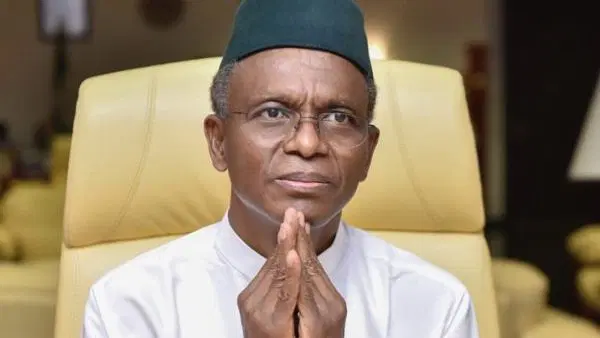
Former Governor of Kaduna State, Nasir El-Rufai, has failed to persuade the Federal High Court in Abuja to stop the Independent Corrupt Practices and Other Related Offences Commission (ICPC) and other anti-graft agencies in the country from freezing his bank accounts.
In a ruling by Justice Joyce Abdulmalik, the court dismissed a suit filed by the former governor, who has been in detention, seeking an order restraining federal government agencies from moving against his assets.
The court held that the suit not only lacked merit but was speculative, as no reasonable cause of action was disclosed against the agencies the applicant listed as defendants.
Therefore, the Economic and Financial Crimes Commission (EFCC), the Department of State Services (DSS) and the Attorney General of the Federation (AGF) were struck out from the case.
In the suit he filed on February 24, El-Rufai prayed the court for an interim injunction directing the respondents to maintain the status quo ante regarding his assets.
According to him, the order was necessary to prevent him from being placed in a state of helplessness. He insisted that the severance pay he received upon completing his tenure as governor of Kaduna State between 2015 and 2023 could not reasonably be suspected to be proceeds of any unlawful activity.
He urged the court to declare that properties purchased from his severance pay were lawfully acquired.
The banks the applicant prayed the court to protect from the respondents included Zenith Bank Plc, Naira Account Number: 1007158671; Zenith Bank Plc, Domiciliary Account Number: 507 1511327; Guaranty Trust Bank (GTB) Plc, Account Number: 0023824978; Access Bank, Dollar Account Number: 1396386493; and Access Bank, Naira Account Number: 1396382103.
El-Rufai also sought a declaration that any attempt by the respondents to apply for, obtain or execute any interim or final forfeiture or freezing order, without first establishing a reasonable suspicion supported by credible evidence as required by relevant law, would amount to a breach of his rights.
He relied on Section 17(1) of the Advance Fee Fraud and Other Related Offences Act, 2006, and the Supreme Court decision in Melrose General Services Ltd v. EFCC (2024) SC/1519/2019, to pray the court to declare that, as a citizen of Nigeria, he is entitled to the presumption of innocence and the protection of his fundamental rights.
He argued that any action by the respondents seeking to circumvent his constitutionally guaranteed rights through ex parte applications that conceal material facts would amount to a breach of Section 36(5) of the Constitution and a violation of the principles of fair hearing.
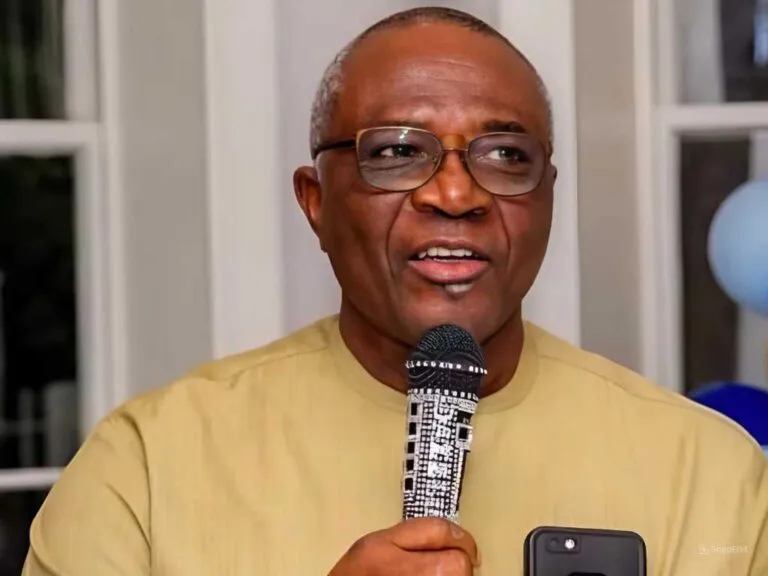
The Federal Government is working to bring down inflation to single digits, Bayo Onanuga, Presidential spokesman, has said.
Onanuga said this while announcing additional measures that the government introduced to support Nigerians amid the global fuel crisis.
Earlier on Thursday, Minister of Finance, Taiwo Oyedele, announced that fuel would be sold at a discounted rate across NNPC filling stations for 30 days.
Although the minister made it clear that the move is not an attempt to reintroduce subsidy, many Nigerians, especially on social media, described it as an attempt to subsidize the product.
In his statement, Onanuga said, “The Nigerian National Petroleum Company (NNPC) agreed today to forgo its petrol retail profit margin and sell to Nigerians at cost to cushion the impact of global crude oil price shocks and volatility on vulnerable households.
“NNPC Retail, which already sells petrol at the lowest price in the market, will offer this new deal within the next 30 days. This means if NNPC’s landing cost is N1300, it will sell fuel to Nigerians, especially commercial vehicles, at the same price.
“The company’s discount gesture, backed by President Bola Ahmed Tinubu, was among the raft of measures the Finance Minister and Coordinating Minister of the Economy, Taiwo Oyedele, announced today.
“Oyedele said he hoped other marketers would take a cue from the NNPC, as the sharp rise in crude and petrol prices is not expected to last long.
“Oyedele was emphatic that NNPC agreeing to sell at a discount must not be misinterpreted as the restoration of petrol subsidy, which ended on May 29, 2023.”
Onanuga added that “The Federal Government is also working on a comprehensive package of fiscal measures to bring inflation down to single digits sustainably in the near term.”
-
 Health & Wellness1 year ago
President Tinubu Directs Cut in Dialysis Cost from ₦50,000 to ₦12,000
-
News2 years ago
CBN Debunks Fake Circular on New ₦5,000 and ₦10,000 Notes
-
 International News6 months ago
Indian Police Arrest Nigerian Over ₦290m Drug Haul
-
 Business7 months ago
Dangote Refinery Reduces Petrol Gantry Price To ₦1,200 Per Litre
-
 Business7 months ago
After Plea Bargain, Court Discharges Stella Oduah of ₦2.5bn Fraud
-
Business2 years ago
Dangote; We Did Not Fix ₦600/Litre Petrol Price
-
 Trending News1 year ago
NELFUND Disburses ₦86bn To 449,000 Beneficiaries
-
 Opinion2 years ago
Championing the People’s Voice: Obasa’s Dedication to Grassroots Representation By Dave Agboola⁰