Connect with us

International News

How EU Is Responding To Trump’s Trade Assault

Published

on

Spread the love
European Union logo

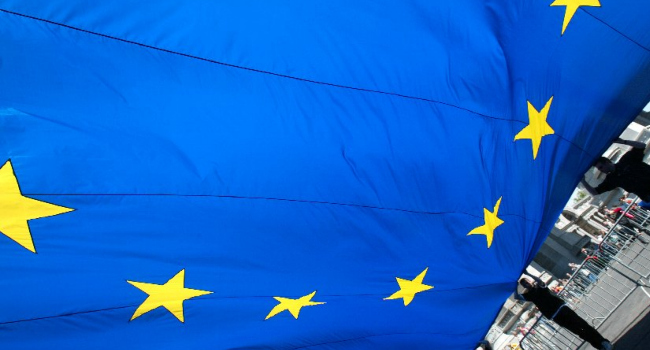
by three waves of painful US tariffs since President Donald Trump returned to office, the European Union’s response has been a high-wire act, balancing calibrated retaliation with a push for negotiations to avert an all-out trade war.

– In March, Trump fired his first shot against the 27-country European Union with 25 percent levies on steel and aluminium imports;

– He then slapped 25-percent tariffs on all foreign-made cars, in effect since last week;

– And in his biggest move, Trump ordered 20 percent tariffs on all other EU goods among a raft of levies on dozens of countries including China, which came into force Wednesday.

 What steps is the EU taking?

The EU’s approach so far has been think first, then act.

After the metals tariffs hit in March, it gave itself a month to fine-tune a list of US goods to target — ranging from soybeans to makeup and motorcycles, and weighted towards states held by Trump’s Republicans.

EU capitals are to green light this list during a meeting Wednesday. Once approved, the majority of the tariffs will kick in in May, and some in December.

Meanwhile, the EU will let levies dating from Trump’s first term — but currently suspended — snap back into place in mid-April.

Next will come the bloc’s response to the sweeping 20-percent import taxes and tariffs on cars, which could be made public as early as next week.

There has been no public indication of how the EU will respond, but France has led the push with Germany and Austria to target US tech titans if negotiations come to nought.

France and Germany have gone further, pushing the EU to be prepared to deploy its so-called trade “bazooka” — the anti-coercion instrument.

The new and yet unused tool is designed to punish any country using economic threats to exert pressure on the EU, once diplomacy fails, and gives the bloc greater powers including limiting trade on services.

 What about negotiations?

What Europe wants above all is to reach a negotiated solution.

“Sooner or later, we’ll be sitting at the negotiating table,” the EU’s trade chief Maros Sefcovic said Monday, while admitting that “engaging the US will take both time and effort.”

A quiet unassuming figure, Sefcovic has led the EU’s outreach in search of a “mutually acceptable compromise”.

He has gone to Washington twice — in February and March — and held calls with his US counterparts, Commerce Secretary Howard Lutnick and Trade Representative Jamieson Greer.

EU chief Ursula von der Leyen this week offered a glimpse into what Europe has put on the table so far, revealing it offered Washington a bilateral tariff exemption for cars and other industrial goods. The response was not positive.

Officials privately admit that there has been little progress in the EU’s talks with the United States, pointing to an unclear picture of what Trump really wants.

One issue could be whether the bloc is talking to the right people.

Trump’s trade advisor, Peter Navarro, appears to be far more influential on the issue than Lutnick or Greer, but EU officials say he has not been a part of the discussions.

 What else might Trump want?

Navarro, believed to be the architect of Trump’s trade offensive, has made it clear he is deeply unhappy with the EU, lambasting a series of “non-tariff” barriers Washington deems unfair.

US officials have set their sights on value-added tax (VAT) but also the EU’s food safety and health rules, and its environmental standards.

“Anybody who wants to come to talk to us, talk to us about lowering your non-tariff barriers,” Navarro said in a Monday interview.

He has also taken umbrage with the EU’s landmark tech laws, the Digital Markets Act and the Digital Services Act, claiming they unfairly target American companies.

The EU has pushed back hard on the VAT and tech claims.

“(We) don’t share the US assessment of what constitutes a non-tariff barrier,” EU spokesman Olof Gill said Tuesday.

He added European tech rules were “separate” from the tariff discussions. “We will not be conflating the two in our negotiations with the US.”

The threat of more duties is far from over. Trump also has the pharma sector in his crosshairs — a critical industry for the EU, especially Ireland.


AFP

Continue Reading
Click to comment

Leave a Reply

Your email address will not be published. Required fields are marked *

International News

Norway To Ban Social Media For Under-16s

Published

on

Spread the love

Norway said Friday it will present a bill this year making it the latest country seeking to ban social networks for under 16s, adding that technology companies will be responsible for verifying the age of its users.


“We are introducing this legislation because we want a childhood where children get to be children. Play, friendships, and everyday life must not be taken over by algorithms and screens,” Prime Minister Jonas Gahr Store said in a statement.

“This is an important measure to safeguard children’s digital lives,” he added.

Several European countries, such as France, Spain, and Denmark have already said they will introduce a digital age of majority for social networks and others like Australia and Türkey have already done so.

The European Commission has also made clear its determination to take action to protect children and adolescents, notably by unveiling in mid-April an age-verification app that will soon be made available to European citizens.

“I expect technology companies to ensure that the age limit is respected. Children cannot be left with the responsibility for staying away from platforms they are not allowed to use,” added Norwegian  Minister of Digitalisation and Public Governance Karianne Tung.

“That responsibility rests with the companies providing these services. They must implement effective age verification and comply with the law from day one”.

The government said the number of children with phones or using social media had declined  due to a host of measures it had already taken, including “national screen-time guidelines and recommendations for mobile-free schools.”

Continue Reading

International News

Trump envoy wants Italy to replace Iran at World Cup — Report

Published

on

Spread the love

An envoy to US President Donald Trump has asked world football’s governing body FIFA to replace Iran with Italy at the World Cup, according to the Financial Times.


US special envoy Paolo Zampolli told the FT it would be a “dream” to see four-time World Cup winners Italy at the finals in the United States, Mexico and Canada despite the fact they lost in a qualification playoff last month.

The suggestion was an effort to repair ties between Trump and Giorgia Meloni after the Italian prime minister fell out with the president after criticising his attack on Pope Leo XIV over the Iran war, the newspaper reported.

“I confirm I have suggested to Trump and (FIFA President Gianni) Infantino that Italy replace Iran at the World Cup. I’m an Italian native, and it would be a dream to see the Azzurri at a US-hosted tournament. With four titles, they have the pedigree to justify inclusion,” Zampolli told the FT.

Italy missed out on the World Cup for the third successive time after losing a penalty shootout to Bosnia and Herzegovina in their qualifying playoff final.

Iran’s participation in the World Cup has been thrown into doubt by the war with the US and Israel that broke out on February 28.

The Iranian football federation (FFIRI) had said in April it was “negotiating” with FIFA to relocate the country’s World Cup matches from the United States to Mexico.

But Infantino told AFP last month, while attending Iran’s friendly against Costa Rica in Turkey, that Iran will be at the World Cup and that they will play “where they are supposed to be, according to the draw”.

Zampolli is an Italian-American socialite, businessman and former modelling agent who claims to have introduced Trump to his current wife, Melania Trump.

Continue Reading

International News

5 Key Players Barca Will Let Go This Summer

Published

on

Spread the love

Barcelona are set to let five key players leave the club this summer, as they plan a squad overhaul, according to reports.


The Blaugrana are currently sitting nine points clear at the top of LaLiga, and are set to romp to a second consecutive title ahead of rivals Real Madrid.

However, after more disappointment in the Champions League, in which they were dumped out by Atletico Madrid, Hansi Flick and the board at Barcelona are preparing to rebuild their squad at the end of the campaign.

Spanish media outlet Marca are reporting that there are five players who have ‘completed a cycle at the club’ and will likely be moved on come the summer.

Marcus Rashford is one of those players. Barcelona can buy the 28-year-old, who is on loan from Manchester United, for £26million under the terms of the deal, but reports have emerged that they are not willing to exercise that option.

The 28-year-old has contributed 12 goals and 13 assists this season to help the Catalan giants run rampant in LaLiga, and as recently as last week, it was believed that Barca would like to keep him.

However, they have made a failed bid to renegotiate the £26m fee with United, who are refusing to budge on the clause which expires on June 15 – four days after the World Cup kicks off in North America.

It means there is a strong chance that Rashford will be forced to return to his boyhood club following England duty if he is selected for the tournament this summer.

Another attacker who seems set for the exit door is none other than Robert Lewandowski.

The Pole, who joined Barcelona from Bayern Munich in 2022, is out of contract in the summer, and there has been little indication that he will sign a new deal at the club.

It is believed that both Lewandowski’s ‘age and recent physical problems’ have thrust his future at Barca into doubt.

Barcelona are said to be looking at freeing up some financial legroom, and for that reason, they want to offload stars on big wage packets.

One of those players is Frenkie de Jong, who is understood to be on just under €400,000 (£348,000) per week, and Marca suggest that he could be sold to ‘ease the financial burden’ on the Spanish giants.

Former Chelsea defender Andreas Christensen and La Masia graduate Marc Casado are also said to be on the proverbial chopping block.

Christensen played 161 games in six seasons with the Blues before making the move to Catalonia in 2022 on a four-year deal. That deal is now set to expire, and there are no plans for an extension at this moment in time.

Casado, however, still has two years left on his contract, but due to a lack of minutes, could be forced to find a new club.

The defensive midfielder has failed to break into the team ahead of Pedri, Eric Garcia, and Gavi, and has started only one of the last eight LaLiga games.

Continue Reading

Trending

Copyright © 2026 TheColumn NG