
News
Insecurity: Ojudu, Farotimi, Others Seek Emergency South-West Summit

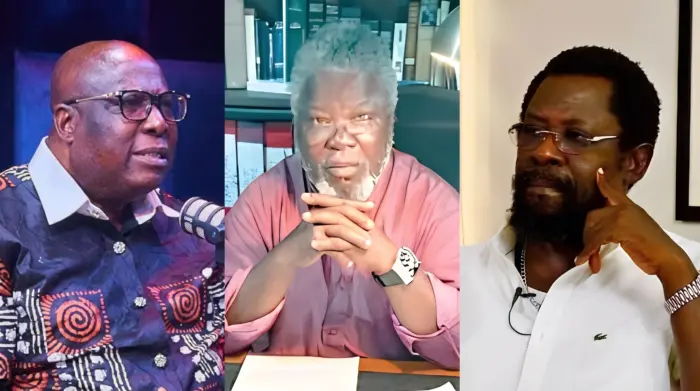
Some Yoruba leaders and professionals under the umbrella of the Omo Oduduwa Collective have called for an emergency security summit to address the worsening insecurity across the South-West, warning that political silence and inaction could deepen the crisis.
The South-West stakeholders urged governors, traditional rulers, lawmakers, security agencies, youth groups and others to forge a united response to what it described as an existential threat to Yorubaland.
The call was contained in an open letter titled “Yorubaland Must Not Be Silent: Insecurity, Civic Responsibility, and the Imperative of Collective Action.”
The letter was signed by the group’s Convener, Prof. Akinyemi Onigbinde, former presidential adviser Babafemi Ojudu, human rights lawyer Dele Farotimi, ASUU leader Dr Adeolu Oyekan, Dr Olasunkanmi Olapeju, Kazeem Olasupo, Samuel Arinloye and Barrister Kayode Okenla.
The collective said kidnappings, violent attacks, criminal occupation of forests and assaults on travellers had become increasingly common across the region, forcing farmers off their land, disrupting businesses and education, and leaving many communities living in fear.
It said the growing abduction of schoolchildren, students and other innocent citizens posed a direct threat to the region’s future and social stability.
Referring to the recent kidnapping incident in Oyo State, the group said although the victims were eventually freed, the episode underscored growing public anxiety over safety and the ability of security institutions to protect lives.
It warned that if left unchecked, the worsening insecurity could erode public confidence in government and democratic institutions.
The group also lamented what it described as the absence of a coordinated response from influential Yoruba institutions despite the deteriorating security situation.
It noted that Yorubaland had historically relied on the collective efforts of traditional rulers, labour unions, professional associations, student bodies, market groups and civil society organisations to confront major challenges, but said such collaboration had been largely missing in the current security crisis.
“Against this historical backdrop, the relative quietness that has accompanied the present security crisis is difficult to ignore. While individual voices have spoken out and isolated interventions have occurred, the region has yet to witness the level of coordinated civic engagement that the scale of the challenge arguably requires,” the letter said.
The collective attributed the silence largely to political considerations.
“We believe that the unhealthy silence in the face of existential danger is motivated in large part by politics. Many stakeholders, either for personal or primordial reasons, consider it prudent to remain indifferent because of political calculations. We consider this approach short-termist and ultimately self-defeating,” it stated.
It stressed that demanding accountability from elected leaders should not be viewed as hostility, saying holding governments accountable while supporting them to overcome security challenges was a civic responsibility.
The group warned against accepting insecurity as the new normal, noting that societies often decline gradually when unacceptable conditions become tolerated.
As part of its recommendations, the collective proposed the immediate convening of a Yoruba Security and Civic Renewal Summit involving governors, traditional rulers, lawmakers, security experts, academics, labour leaders, business executives, youth and women’s organisations, and civil society groups.
According to the group, the summit should develop practical strategies for regional security cooperation, strengthen intelligence sharing, improve collaboration with security agencies and promote sustained civic engagement on public safety.
It also called for the establishment of a standing regional security consultative mechanism and urged universities and research institutions to provide evidence-based policy recommendations to strengthen security governance.
The collective said governors and lawmakers must ensure that resolutions from the proposed summit are translated into laws and effectively implemented.
It expressed confidence that Yorubaland possesses the human resources, institutions and cultural values needed to tackle insecurity but said success would depend on courageous leadership, regional cooperation and collective action.
“The security of communities, the wellbeing of families, the future of young people and the continued prosperity of the region transcend partisan politics. They demand a level of seriousness and collaboration equal to their importance,” the group said.

Amnesty International has condemned what it tagged the arbitrary arrest, detention, and rushed sentencing of a 23-year-old journalist Farida Isiak by authorities in Kaduna State.
“Her arrest and subsequent punishment were clearly because of her attempt to expose abuses by the police. Sentencing a journalist to 4-years in prison after a sham trial is a travesty of justice”the human right body said.
“Farida Isiak, a reporter with Nagarta Radio in Kaduna, was taken into custody around 10:00 p.m. on Monday, 20 October, by officers under the command of the Divisional Police Officer of Mararaban Jos, Usman Adamu. The situation began as a minor disagreement between her mother and a neighbour over a 100 naira change dispute during a sale of charcoal. Police officers initially arrested her mother and later detained her father when he went to secure her release, using their detention as leverage to force Farida to come to the police station.
“When Farida arrived at the station, police officers accused her of defaming them because of a Facebook post she wrote criticizing their unlawful treatment of her parents. Even though she complied with police demands to delete the post and apologize in the hope of securing her parents’ release, officers kept her in custody and rushed her to a Sharia Court in Kawo. “The presiding judge sentenced her to four years in prison or a fine of 1.75 million naira on charges of defamation, completely ignoring the initial police misconduct and the abusive actions that led to the incident.” the human right body narrated.
Reacting in a statement it published through its Facebook account on Thursday, Amnesty International said “the arrest, detention, and hasty sentencing of Farida Isiak are a flagrant abuse of power by the police and weaponization of the judicial system to silence free speech and intimidate journalists.
“Arresting and holding a citizen’s parents to force a journalist to hand herself over is an unlawful tactic that violates rule of law” the body said and thus request that the
Nigeria Police Force launch a full and independent investigation into the conduct of police officers involved in the unlawful detention of her family.
Insisting that the sentence be withdrawn including the monetary fine, Amnesty said Nigerian authorities must stop using defamation charges and the legal system to harass journalists and restrict press freedom.

In it’s renewed move to nip criminality in the state, Edo State government has arrested a ritualist and organ harvester in Esan Central Senatorial Districts.
The Zonal Commander Edo State Security Corps SP Johnson Oyameda (rtd) while briefing newsmen on the development on Thursday,said the success recorded in the arrest of the ritual suspect, Ebhata Eromosele was as a result of over a month surveillance.
Report quoted Oyamada as revealing that “the body of a lady mutilated and dumped in a drainage was recovered while still alive. Not up to two weeks another body was recovered again and these incidents led to stepping up surveillance around the area and the surveillance paid off.
“Ebhata Eromosele murdered a lady and dumped the body but my men on surveillance saw him and trailed him to this apartment which has been demolished today”.the Commander said.
He added that the suspect has carried out three ritual attacks and one out of his victims died, one hospitalized while the other one discharged from the hospital.
The Zonal Commander said upon searching the compound, bloodstained bedspread was seen and other incriminating evidence indicating that the suspect has engaged in criminality activities.
He said the suspected ritualists has been arrested and in the custody of the Edo State Police command for further investigation and prosecution.
The Nigerian Navy Ship, NNS, Beecroft has seized approximately 1.9 tonnes of cannabis in separate operations and arrested 25 stowaways found aboard commercial vessels within its area of responsibility in Lagos and surrounding waters.
The commander of NNS Beecroft, Commodore Adams Aliu disclosed this during a maritime stakeholders’ meeting at the officers’ mess of the Western Naval Command in Apapa, Lagos.
Aliu said the seizures and arrests formed part of the navy’s efforts to curb drug trafficking, smuggling, illegal bunkering and other criminal activities in the maritime environment.
He described the security situation in the area as generally calm but stressed the need for continuous surveillance and stronger collaboration among security agencies, maritime operators, government authorities and host communities
Providing details of the operations, Aliu said naval personnel recovered five bags of cannabis weighing 480 kilogrammes around Abule Odo, Lagos, on February 18, 2026. Other illicit substances, including cannabis, tramadol and codeine, were also seized at Idi Araba, Apapa.
He added that two bags of cannabis weighing 192 kilogrammes were intercepted at Ikare Island on April 28, while 11 bags weighing 756 kilogrammes were recovered at Wiliki Post, off Alpha Beach, on July 22.
The seized substances were subsequently handed over to the National Drug Law Enforcement Agency, NDLEA, for further investigation.
The naval commander also revealed that 25 stowaways were arrested aboard commercial vessels at various locations, including Lagos Anchorage, Lekki Dangote Terminal and Takwa Bay. They were later transferred to the Nigeria Immigration Service for further action.
Aliu said other suspects apprehended during the operations had been handed over to relevant security agencies, including the Nigeria Police Force, Nigerian Army, Department of State Services and Nigeria Security and Civil Defence Corps.
He noted that maritime offences frequently have links to activities on land, making the involvement of host communities essential to preventing and addressing security threats.
The commander urged stakeholders to develop dependable channels for reporting suspicious movements and emerging threats. He also called for the appointment of designated security officers, better communication and a coordinated system for reporting incidents.
-
 Health & Wellness1 year ago
President Tinubu Directs Cut in Dialysis Cost from ₦50,000 to ₦12,000
-
News2 years ago
CBN Debunks Fake Circular on New ₦5,000 and ₦10,000 Notes
-

 Business7 months ago
Dangote Refinery Reduces Petrol Gantry Price To ₦1,200 Per Litre
-

 International News7 months ago
Indian Police Arrest Nigerian Over ₦290m Drug Haul
-

 Business7 months ago
After Plea Bargain, Court Discharges Stella Oduah of ₦2.5bn Fraud
-
Business2 years ago
Dangote; We Did Not Fix ₦600/Litre Petrol Price
-
 Trending News1 year ago
NELFUND Disburses ₦86bn To 449,000 Beneficiaries
-
 Opinion2 years ago
Championing the People’s Voice: Obasa’s Dedication to Grassroots Representation By Dave Agboola⁰