Connect with us

International News

One Year After Niger Coup, Ousted President Still Detained

Published

on

Spread the love

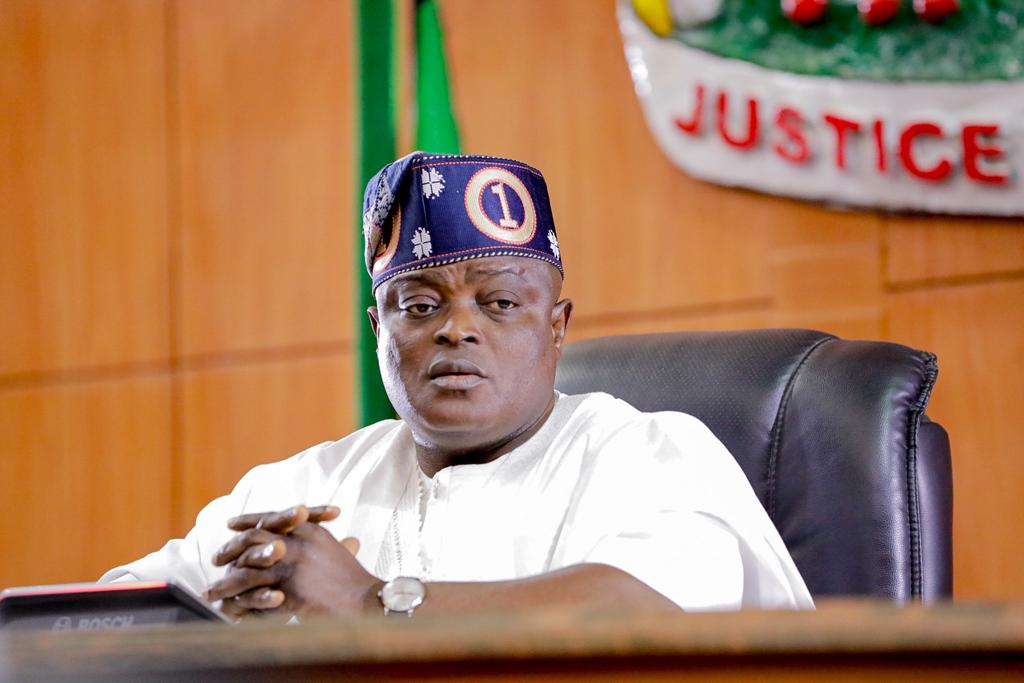
Photo of Niger Republic ousted president, Mohamed Bazoum.


One year after a coup in Niger, ousted president Mohamed Bazoum is still being held under strict detention in Niamey by the ruling military — and the prospect of a looming trial worries those close to him.

Bazoum was overthrown on July 26, 2023 by General Abdourahamane Tiani, the head of his presidential guard. Elected in 2021, he has never resigned and still claims to be president of the Sahelian country.


– What are his detention conditions? –


Since the coup, Mohamed Bazoum and his wife, Hadiza, have been held at the presidential palace in Niamey.

His last public appearance was on August 19, 2023 when national television footage showed him on the steps of the residence during a visit by a Nigerian mediator.


Conditions have since tightened, with the military accusing him in October of attempting to escape — a claim disputed by his lawyers.

Bazoum’s phone has been taken and only his doctor can visit him, twice a week.

Despite the harsh conditions, Bazoum remains steadfast.


“According to him, they are physically fine. Their spirits are very high. The president is committed to continuing his resistance,” his communications advisor, Hamid N’Gade, told AFP.

“He is a man of conviction and a staunch republican. Resigning makes no sense to him.”

A source close to him praised Bazoum as a symbol of courage and democracy, adding that Bazoum “could have resigned, gone back to his children, but he didn’t do that”.


In January, his son Salem Bazoum, who had been detained with his parents, was provisionally released and left the country for Togo.

– What are the military accusing him of? –

The Court of Justice of regional bloc the Economic Community of West African States (ECOWAS) ordered Bazoum’s release in mid-December, but the ruling has not been honoured.


Niger has since withdrawn from ECOWAS, and last month the Court of State — created by the ruling military — lifted Bazoum’s presidential immunity.


Bazoum, who has had no contact with his lawyers, faces charges of “conspiracy to attack the security and authority of the state” and “treason.”


He is accused of telephoning French President Emmanuel Macron and US Secretary of State Antony Blinken to enlist their support for armed intervention during the coup.


“This court has no legitimacy. These people were appointed by a putschist who was never sworn in,” said Mohamed Seydou Diagne, one of Bazoum’s lawyers.


– Will he be tried? –

The lifting of his immunity opens the door to a trial, although no date has yet been set.


And the ensuing sentences could be very severe.

“The crime of treason carries the death penalty, death by shooting, which is still in force in Niger even though it has not been carried out for thirty years,” said Moussa Coulibaly, former president of the Niger Bar Association and Bazoum’s lawyer.


“And for plotting against the authority of the state, it’s life imprisonment.”

A trial could allow Bazoum to speak publicly for the first time since the coup.

“This is an exceptional jurisdiction that does not meet any of the fundamental guarantees of the right to a fair trial,” said Diagne.

“We do not accept sham trials,” he added.


“It will only be a parody of justice, a continuation of what they have started. They are determined to convict him at all costs,” added Oumar Moussa, his deputy chief of staff.


– Who are his supporters? –

In the first weeks after the coup, many Western leaders called for his immediate release.


ECOWAS imposed heavy economic sanctions to pressure the Niamey ruling military and even threatened military intervention to restore Bazoum to power.


But the intervention never took place and the sanctions were lifted in February.

In recent months there have been few international calls for Bazoum’s release.


“He is under unacceptable pressure from the junta, which has taken him hostage. We are worried about the lifting of his immunity and the legal sham that is likely to follow,” said a French diplomatic source contacted by AFP.


“We have no comment (on Bazoum’s situation), we do not interfere in the political decisions of our member states,” a spokesman for the International Monetary Fund, whose aid to Niger has resumed, told AFP.


Rebel movements in Niger demanding his return to power have recently claimed responsibility for attacks on a major oil pipeline.


AFP

Continue Reading
Click to comment

Leave a Reply

Your email address will not be published. Required fields are marked *

International News

Paraguay’s President Santiago Peña Impeached And Arrested Over Bank Collapse 

Published

on

Spread the love


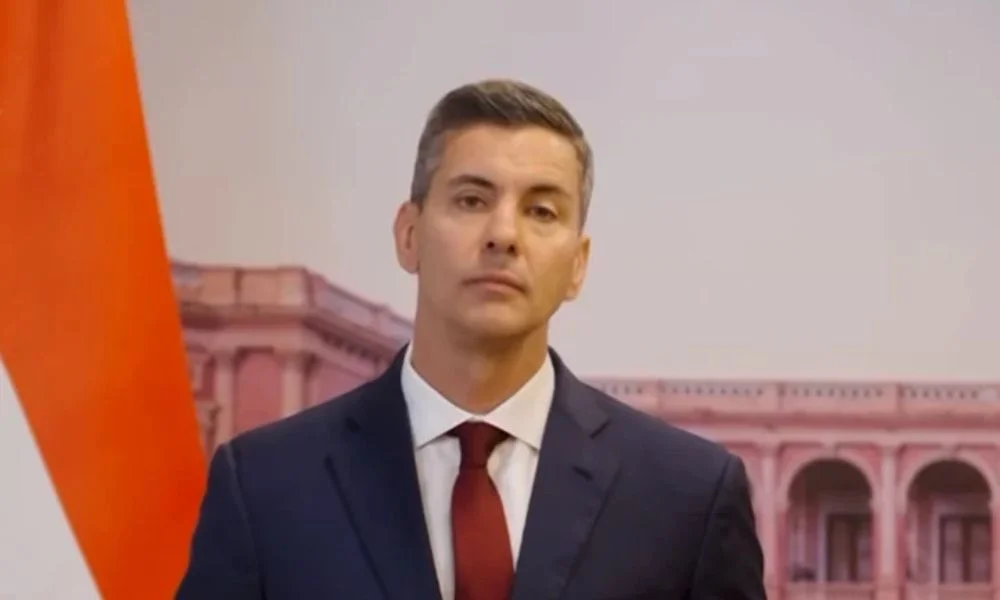
Paraguay’s President Santiago Peña has been impeached and placed under house arrest.


Peña was arrested on Friday minutes after lawmakers, including from his own party, voted to remove him from office due to a crisis triggered by the collapse of Ueno Bank earlier this week.

He had offered to step down on Thursday, but the move to impeach him and charge him with misconduct rather than accept his resignation meant he was stripped of his lifetime Senate seat and the immunity granted to ex-presidents.

Peña, who until last year held shares in the company that owned the bank, has denied any wrongdoing.

The demise of the digital bank has left more than half of Paraguay’s population without access to their savings after it was seized by Paraguay’s central bank.

An estimated three million depositors remain unable to access their savings and pensions prompting widespread protests particularly in the capital, Asunción.

The impeachment charges that led to Peña’s removal alleged he had conflicts of interest, manipulated regulatory oversight, diverted pension funds, and participated in an institutional cover-up involving the central bank.

Peña is due to be questioned today (Saturday) over allegations of breach of trust, influence peddling, and misappropriation of funds, prosecutor Silvia Margarita Gonzalez Vester said.

Peña’s impeachment passed with 44 out of 45 senators voting in favour of it. One lawmaker was absent.

Afterwards, senate president Basilio Núñez said Peña was found guilty of “dereliction of duty”.

Paraguay’s Vice-President Pedro Alliana was then sworn in as interim President.

“Compatriots who are now going through a difficult time as a result of the financial collapse will be fully compensated,” said Alliana, who will serve as President until 2028.

Pedro Alliana takes the oath of office as interim President

Senator Rafael Filizzola said: “We are facing the biggest corruption scandal in our democratic history – a tremendous blow to the state, to private citizens, and to the country’s credibility and image.”

Analysts say Peña is likely to now be prosecuted over the bank’s collapse.

His defence lawyer Ricardo Preda described the allegations as a “reckless accusation” that was “irresponsible and opportunistic”.

In an address to the nation on Thursday, Peña said that he was sorry and that “it was never my intention to betray the trust you placed in me”.

Continue Reading

International News

Kenyan Doomsday Cult Leder Gets Life Sentence For Killing 191 People

Published

on

Spread the love


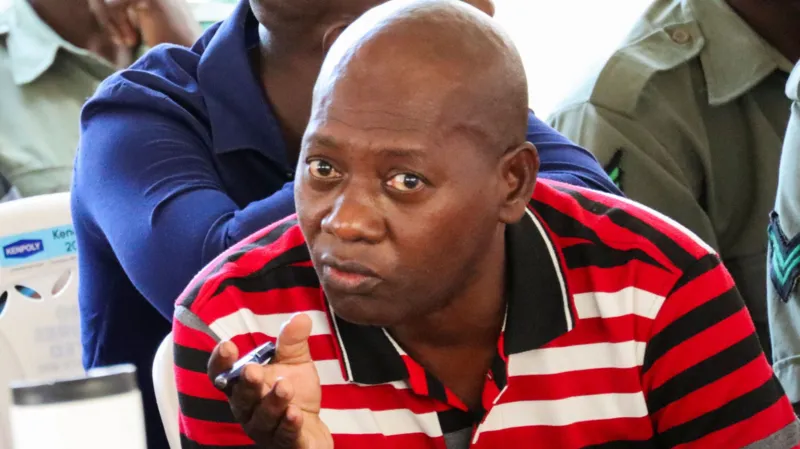
A Kenyan court has sentenced the leader of a doomsday cult, Paul Mackenzie, to 200 years in prison for murdering 191 people, all but one of them children.


Alongside 27 others, Mackenzie was found guilty of the murders for instructing members of his cult to starve their children to death so they could “meet Jesus”.

Justice Diana Mochache said Mackenzie bore the “primary criminal culpability” for ordering his followers to fast to death, in one of Kenya’s deadliest episodes of religious extremism.

“The sentence is appropriate and just, to send an unmistakable message that such atrocities warrant the maximum penalties allowed by law,” the judge added.

The self-styled pastor was arrested in 2023 after the discovery of more than 400 bodies in shallow graves in Shakahola forest near the Kenyan coast. The sprawling investigation into the cases shocked Kenya and drew international attention.

Ahead of sentencing, prosecutors in the court in Mombasa had argued for the death penalty for Mackenzie because of the gravity of the crimes. Capital punishment has not been carried out in Kenya since 1987.

The prosecutors also cited what they described as Mackenzie’s lack of remorse for the crimes. They requested life sentences for his co-accused.

Before the hearing began on Friday morning, Francis Wanje, who lost eight relatives in Shakahola forest, including two grandchildren, told the BBC’s Newsday programme that he was “hoping for… a sentence which will match his [Mackenzie’s] deeds in the forest”.

Mackenzie and the co-accused have formally pleaded for mercy and asked for leniency from the court.

Before their conviction on 19 October, they had all pleaded not guilty and repeatedly insisted that nobody was forced to die.

Mackenzie’s followers believed he was “Jesus’s mouthpiece”, Justice Diana Mochache said as she delivered her eight-hour judgement last month.

Those who opposed Mackenzie’s teachings were beaten to death.

One of his co-accused said he had told his followers that anyone who “resisted the directive to fast must be forced to go to heaven through kicks and blows”.

Burials inside the forest where the cult was based were called “weddings” and those who died “were celebrated as having wedded with Jesus” the judge said.

The judge found that the deaths arose from an organised system, including religious teachings and directives that compelled followers to follow the deadly fasting.

Post-mortem results showed the cause of deaths to be starvation for most victims, while others died from suffocation, strangulation or head injuries.

The cause of death could not be determined for some, with their bodies having decomposed, while others died soon after their rescue as they were so emaciated.

Continue Reading

International News

Comedian Russell Brand Found Guilty By UK Court Of Rape And Gexual Assaults

Published

on

Spread the love


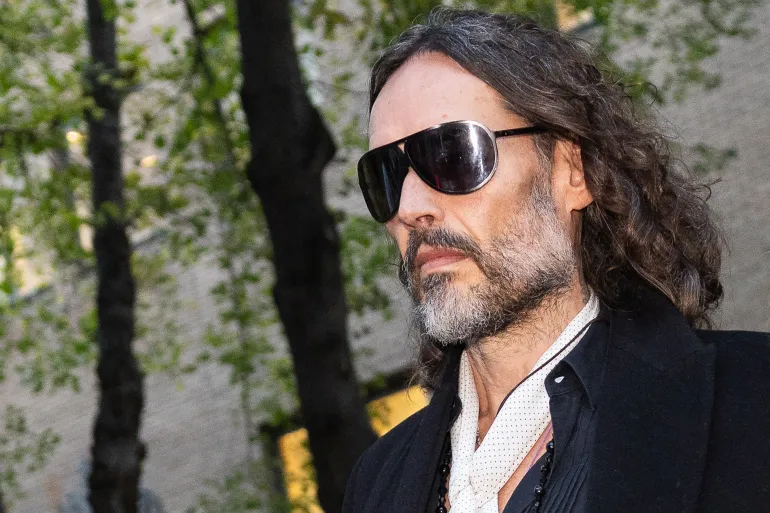
Comedian Russell Brand, once one of Britain’s most high-profile broadcasters and star of several Hollywood movies, faces a lengthy jail term after ​being convicted in a London court on Thursday of raping a woman and sexually assaulting three more.

Prosecutors said Brand, the former husband of US pop singer Katy Perry, was ‌obsessed with sex and used women to satisfy his own desires. One victim said he treated her “like an animal”.

Funny and charming when he wanted to be, but also ruthless, calculating and manipulative, the 51-year-old, who starred in “Get Him to the Greek” and “Arthur”, was interested only in getting what he wanted from women, prosecutors told jurors at Southwark Crown Court.

“The evidence showed Brand to be a calculated sexual predator, using his growing fame and power to create situations in which he could pursue women sexually, ​regardless of what they wanted,” senior Crown prosecutor David Roberts said outside court.

Brand now faces jail and potentially further action as police said he was still under investigation for two other alleged ​rapes, one involving a then 16-year-old girl.

BRAND DENIED THE CHARGES

Brand, known for his loquacious manner and flamboyant appearance, had denied all the charges and ever having non-consensual sex, ⁠saying the incidents, which dated back more than 20 years, had either been consensual, reinvented or re-imagined.

He acknowledged in evidence he had dedicated a lot of his life to “reckless philandering and idiocy” but said sexual consent ​was fundamental.

But, following a four-week trial, the jury found him guilty of rape and three sexual assaults committed between 2004 and 2009. He was acquitted of two other rape charges and an attempted indecent assault.

Judge Joel ​Bennathan said Brand, who was refused bail, would be sentenced on Monday and faced a lengthy prison term.

Continue Reading

Trending

Copyright © 2026 TheColumn NG