
Business
President Tinubu To Boost Nigeria’s Oil Production By 1m BPD


In a renewed bid to grow Nigeria’s crude oil output significantly in the next 12 months, President Bola Tinubu on Monday launched the ‘1MMBOPD’ Initiative meant to raise production by 1 million barrels per day, by harnessing dormant oil assets and optimising existing ones.
At the event in Abuja, which coincided with the 3rd anniversary of the establishment of the Nigerian Upstream Petroleum Regulatory Commission (NUPRC), International Oil Companies (IOCs), indigenous oil producers, banks and oil and gas service providers pledged to support the federal government in the new efforts.
The programme organised by the NUPRC was themed: “Transformation, Innovation & Excellence“ and featured the ‘who is who’ in the country’s oil, gas and banking sectors.
Tinubu stressed that his policy interventions in the oil industry were beginning to bear fruits, expressing confidence in the long-term benefits of the industry’s policy reforms for the good of the country’s over 200 million people.
Represented by the Secretary to the Government of the Federation (SGF), Senator George Akume, the president noted that even though the oil and gas industry had long been the lifeblood of Nigeria’s national economy, the current administration was working tirelessly to change this and diversify the economy from over-reliance on the production of fossil fuels.
However, Tinubu noted that his administration was also determined to maximise its revenue potential from the country’s nature-endowed hydrocarbon resources while focusing on decarbonisation approaches to oil and gas production.
“A renewed drive to economic diversification using the oil and gas industry has evolved, and remains on track to expand government revenue and deploy it to generate employment, eliminate poverty, and grow our gross domestic product in the spirit of shared prosperity.
“We have set a clear roadmap for the oil and gas sector to deepen value from the nation’s substantial resource potential and create opportunities for investors, both local and foreign. Since I declared that Nigeria is indeed open for business, I am delighted that we have witnessed the major financial and investment decisions in the sector across the value chain since then.
“To this end, we must work concertedly to create vibrancy across the sector of oil and gas production to meet domestic and international needs and shore up our foreign exchange. The two-pronged target is necessary to deliver the dividends of good government for our people and justify the trust reposed in us by the citizens during these trying times.
“Early on, we took decisive steps to vacate the encumbrances of investment in the oil and gas sector and entrench the ease of real business. We have issued five executive orders to provide fiscal incentives for investment in Nigeria’s oil and gas sector. We are working with the legislative arm of government to fully implement some of these reforms, as statutory changes will be required in some areas,” he stated.
The president congratulated all active oil and gas industry players for the modest gains in oil production, which he said has now risen to 1.6 million barrels per day.
According to him, ‘Project 1 million bpd’ is a giant step forward for the oil and gas industry, designed to grow sustainably in direct response to his charge to increase production. He explained that by enhancing domestic energy security and supporting economic vibrancy, the initiative will ensure that Nigeria remains a crucial player in the global energy landscape amid the worldwide energy transition.
“ Increased oil production will lead to more job opportunities, increased revenue for the government, and a more stable energy supply for our dear citizens. The project is not just a government one, but a collaborative undertaking involving major producers, service providers, financiers, and other key stakeholders.
“These commitments will be critical in ensuring that we achieve our incremental targets in the next 12 months, growing not just the production levels but also increasing the efficiency and competitiveness of our industry.
“ There will be challenges along the way, such as technical issues, market fluctuations, and regulatory burdens, but with our collective efforts, we are confident that we can overcome these challenges and achieve our goal,” Tinubu emphasised.
In his presentation, the Commission Chief Executive, NUPRC, Gbenga Komolafe, said that in the last three years, the commission had made significant strides towards attaining critical goals despite the persistent challenges of the global push for energy transition and the call for defunding of fossil fuel.
He listed them as development of regulations, growth in oil and gas reserves, rise in level of upstream activities, conclusion of the 2020 marginal bid round and issuance of awards with an anticipated 60,000 bpd and 90MMscfd of incremental oil and gas production, among others.
To enhance investment attractiveness and improve global competitiveness, the licensing framework for the ongoing bid rounds, Komolafe said, was optimised to vacate entry barriers and eliminate huge asset acquisition fees.
On energy sustainability, decarbonisation and environment stewardship, he stated that the NUPRC has retooled its regulatory instruments to incorporate emissions reductions.
At the event, the NUPRC also announced the approval of the much awaited $1.28 billion Seplat-Mobil divestment transaction as well as TotalEnergies EP Nigeria deal with Telema Energies.
“Divestment is an acknowledged practice and within the right of investors in business decisions globally. In recognition of this, as a nation, Nigeria is fully committed to the philosophy of free entry and free exit as further reiterated by our dear President Tinubu on October 1, 2024, speech.
“A total of four (representing 80 per cent) passed regulatory test and secured ministerial consent. The transactions are: Mobil Producing Nigeria Unlimited (MPNU) to Seplat Energy Offshore Limited; Equinor Nigeria Energy Company Limited to Project Odinmin Investments Limited; Nigerian Agip Oil Company Limited to Oando Petroleum and Natural Gas Company Limited and TotalEnergies EP Nigeria Limited to Telema Energies Nigeria Limited.
“However, the divestment of Shell Petroleum Development Company Limited’s assets to Renaissance Africa Energy Company Limited could not scale regulatory test,” Komolafe said, confirming THISDAY’s story earlier on the rejection of the $1.3 billion bid.
Also speaking, Chairman Heirs Holdings, UBA and Transcorp Groups, Tony Elumelu, said that Nigeria is currently faced with the threat of declining production and investment.
“We must acknowledge the elephant in the room. Nigeria’s oil production has been on a downward trajectory, falling from peaks of over 2 million barrels per day to recent lows, below 1.5 million. This decline translates to lost revenues, reduced global market share, and missed opportunities for national development.
“The root causes are multifaceted: Aging infrastructure, security challenges in the Niger Delta, stalled investments, regulatory uncertainties, and a global shift towards renewable energy that has compounded the investment challenge.
“These factors, combined, threaten the very foundation of our economy, as we are heavily dependent on oil. As a nation, we cannot permit this to continue, and squander our inheritance and betray our next generation,” Elumelu stated.
He highlighted that this is where ‘Project 1MMBOPD’ is so critical, a crucial part of the solution to unlocking the next phase of Nigeria’s development.
“By targeting to grow production by 1 million barrels of oil per day from current levels, we are setting a clear and challenging goal. To be sustainable, this initiative should go beyond just increasing production; it should catalyse a comprehensive strategy to revitalise our entire upstream sector,” he observed.
He listed infrastructure modernisation, security enhancement, regulatory streamlining, investment attraction, technology adoption as some of the measures to optimise production.
“By addressing these areas comprehensively, we will not only aim to reach the 1MMBOPD target but also to create a sustainable framework for future growth. As we embark on this ambitious project to boost our oil production, let us also keep our focus on the critical role of gas in our energy mix.
“The path to 1MMBOPD must be constructed on strategies that maximise the value of our gas resources, reducing flaring and increasing utilisation for domestic and export markets,” he added.
At Heirs Energies, in the first 100 days after the company took over operational control of its OML-17 asset in 2021, he said the company doubled its production from 28,000 to over 50,000 barrels per day.
However, he added: “We suffered a setback with unabated crude theft, which caused us to shut-in and work collaboratively with the Nigerian National Petroleum Company Limited (NNPC) to better secure the pipeline system.
“From a low of 5 per cent terminal receipts in December 2021, year-to-date in 2024, we have recorded an average terminal receipt of 85 per cent; a remarkable improvement and a good example of what a purposeful collaboration between NNPC and operators underpinned by rigorous execution can deliver.
“With the improvement in the operating environment, we have restarted our investment and production growth journey, and have now successfully reversed the fall in production that we suffered in 2022 and 2023, as a consequence of the evacuation challenges. A few days ago, OML-17 attained over 51,000 barrels per day, and we continue our production growth journey.”
Also speaking, NNPC’s Group Chief Executive Officer, Mele Kyari, said that it was time to walk the talk, noting that the oil industry must move beyond powerpoint presentations.
“Whatever we need to do, we have a clear roadmap, a specific timeline. And indeed, a very specific contracting process. We think our environment is today very competitive for producing oil.
“The second part of it is about the contracting. As we know, it is very good to have Nigerian content and Nigerian contractors should be encouraged to build local companies. Everybody agrees to this. But it has created a new challenge.
“And what the executive order did is to bring them (service providers) back. So that when you are going to have local partners, they must be specific around what they are going to do. So that instead of carrying a briefcase, the people will now be doing specific things.
“And we have now engaged many of these critical contractors, and many of them are on their way back into our country. And we have substantial indications that they will do this. And lastly, why would anyone put his money into our country, into our assets, when he is not sure of evacuating the production? And the onshore in particular, nobody would do it.
“So we agree that we must replace the pipeline infrastructure. There is no alternative. The best of intention, the best of security intervention will still give you probably 50 per cent of the installed capacity today,” he argued.
At the programme, the Minister of State (Oil), Senator Heineken Lokpobiri and his counterpart in the Ministry of Gas, Ekperikpe Ekpo, assured the industry players of the government’s willingness to clear all the existing bottlenecks.
Lokpobiri stressed that the set target of an additional 1 million barrels per day was achievable, assuring of the president’s political will to get things done.
The chief executives of major oil producers, including those of Shell; Total Energies; ExxonMobil; Chevron; Oando; Agip as well as independent producers like First E&P; Waltersmith; Oriental Energy Resources; Seplat, Heirs Energy and Matrix Energy all pledged to ensure that the new target is achieved.
In addition, funders and strategic service providers like UBA; Geoplex, Standard Chartered Bank; Mercurial and SLB all promised to work to ensure that the oil industry in the country is revamped.




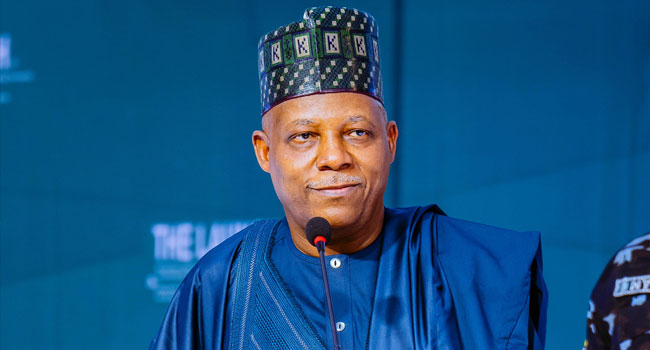

Justice Emeka Nwite of the Federal High Court in Abuja has affirmed the final forfeiture to the Federal Government, the sum of $13 million linked to a Lagos socialite, Ms Aisha Achimugu and her Oceangate Engineering Oil & Gas Ltd.
In a judgment on Wednesday, Justice Nwite held that the foreign currency has been well established by the Economic and Financial Crimes Commission, EFCC, to be proceeds of fraud and unlawful activities.
Delivering judgment in a suit instituted by
Oceangate Engineering Oil & Gas Ltd to claim the fund, the judge held that the company failed woefully to establish how it came about the money.
On the contrary, Justice Nwite said the EFCC satisfied all requirements for the fund to be classified as proceeds of fraud and to be forfeited to the appropriate authority.
The judge dismissed the claims that the
$13 million was gifts received by Oceangate Engineering Company through Aisha Achimugu, adding that the said Aisha Achimugu never came to the court to show cause on why the huge fund should not be forfeited to the Federal Government.
Justice Nwite also noted that no single person who gave the monetary gift to Aisha Achimugu to the tune of $13 million was called to testify.
The judge held that the burden to establish genuine ownership of the money was not established by the applicant to counter the claims of the anti- graft agency that the money was proceeds of fraud based on its investigation.
According to the judge, Oceangate Engineering Company did not show the business it undertook that fetched it the money and did not also show whether any payment was made to it by any of its customers.
Justice Nwite had on 22 August 2025, granted the anti-graft agency’s ex-parte motion for an interim order forfeiting the sum of $13 million linked to Oceangate Ltd to the Federal Government over allegations that the fund was a proceed of unlawful activity.
The judge had then directed the Commission to publish the order in a national daily for interested person(s) to show cause within 14 days why the fund should not be permanently forfeited to the Federal Government.
EFCC investigator, Usman Aliyu, swore to an affidavit filed in support of the application, stating that the Commission received a credible intelligence report alleging that a company known as Oceangate Engineering Limited, without following due process, used funds reasonably suspected to be proceeds of unlawful activity to acquire oil blocks from the Nigerian Upstream Petroleum Regulatory Commission, NUPRC.
Aliyu said investigations revealed that Oceangate, a limited liability company, was registered with the Corporate Affairs Commission, CAC, on 25 February 2005 with number: RC 617736.
He said in 2024, Oceangate participated in an oil block licensing bid for deep offshore PPL302 and shallow water- PPL 3007.
He said upon completion of technical and commercial bid, NUPRC notified the company of its winning bidder status and the condition precedent to be fulfilled before issuance of a licence to the company.
Aliyu said it was discovered that the total financial obligations of Oceangate Ltd to the government before the issuance of the Petroleum Prospecting License (PPL) to the company was $37.2 million ($37, 223,144).
He said the company, through its Zenith Bank account number – 5074678281 – at different installments, transferred millions of dollars to the Federal Government, in tranches of $1.1 million, $1.1 million, $3.8 million, $1.2 million, $3.05 million, $2.1 million, and $500, 000.
The investigator said that on 27 and 28 March 2025, Providus Bank Limited, acting for and on behalf of Oceangate Engineering Oil and Gas Limited, transferred the total sum of $7 million to the Federal Government.
He said his team recovered the evidence of these transactions through Providus Bank Limited from the Central Bank of Nigeria, CBN, through a letter dated June 24,02025.
He said the company between 20 March 2025 and 3 April 2025, paid the total sum of $20 million to the Federal Government for the acquisition of the PPL 302 and PPL 3007.
The officer alleged that to fulfil the requirements for payments of the signature bonuses for PPL 302 and PPL 3007, Oceangate conspired with some unlicensed Bureau de Change operators and bank officials to retain and transfer funds totalling $13 million which funds are reasonably suspected to be proceeds of unlawful activity.
The affidavit stated, “That one Suleiman Muhammed Chiroma was procured and aided by Oceangate Engineering Oil and Gas Limited to collect through his associates in cash and without going through a financial institution, both in Abuja and Lagos the total sum of $13,000,000.00.
“That whilst acting in concert with Oceangate Limited, Muhammed Chiroma engaged one Dantani Abubakar Hassan of Ashrab Energy and Oil Services Limited and one Tirmizi Muhammed Usman of Tripple A & Tee Oil Nigeria Limited, to collect the said $9 million in cash and without going through a financial Institution for the sole purpose of using same to pay for the signature bonuses of the two oil blocks allocated to Oceangate Oil and Gas Limited.”
Aliyu alleged that the company equally procured Chiroma, Tirmizi Usman and Dantani Hassan to receive funds reasonably suspected to be proceeds of unlawful activities from different contractors with the Lagos State Government.
He said to receive and retain funds reasonably suspected to be proceeds of unlawful activity from different contractors with Lagos State, Dantani Abubakar used his company, Ashrab Energy and Oil Services Limited, with account number 1229255048 domiciled in Zenith Bank Plc.
“That whilst still working in concert with Oceangate Engineering Oil and Gas Limited and Suleiman Chiroma, Dantani Abubakar used his company, Ashrab Energy and Oil Services Limited with account Number 1907084038 domiciled in Access Bank Plc to receive and retain the total sum of N855, 057, 560.00 from different contractors executing contracts for and on behalf of the Lagos State Government which sum reasonably suspected to be proceeds of unlawful activity,” the investigator added.
He said the combined sum of N2, 455, 651, 560.00 received in both Zenith and Access Bank accounts of Ashrab Energy were converted to US dollars and subsequently transferred same to Oceangate’s Zenith Bank account for onward payment for the signature bonus of the two oil blocks – PPL 302 and PPL 3007 allocated to the company, among other averments.
Aliyu insisted that the $13 million used by Oceangate to pay for the Signature Bonuses in respect of PPL302 and PPL3007 were not proceeds of any lawful and legitimate business but rather represent funds reasonably suspected to be proceeds of unlawful activity.
According to him, part of the funds used by Oceangate Engineering Oil and Gas Limited to pay for the Signature bonuses in respect of PPL 302 & PPL 3007 was derived from the huge sum of money transferred by the Lagos State Government to the contractors for the execution of contracts for the benefit of the state.
The investigator alleged that there were never any contractual or business relationships between Oceangate and the contractors who transferred the aforementioned public funds to the account of the company.
He said the contractors, who transferred the aforementioned public funds to Oceangate, were neither investors, directors, nor shareholders in Oceangate.
But Oceangate, in its affidavit to show cause sworn by one of the company’s directors, Iliya Wakil, said it came to his knowledge that the court made an order of interim forfeiture of the company’s $13 million used to pay for the signature bonuses of Deep Offshore PPL 302 and Shallow Water PPL 3007 between 20 March 2025 and 3 April 2025.
The company official prayed the court not to make the order of final forfeiture of the funds because all the funds were derived partly from legitimate earnings of the company and partly gifts given to the Group Chief Executive Officer of the Company, Aisha Achimugu.
He maintained that the company did not conspire with any unregistered BDC operators and bank officials to retain and transfer the sum or any sum of money whatsoever which had anything to do with unlawful activity.
He argued that Suleiman Chiroma referred to by the EFCC in its application for interim forfeiture is a licensed BDC agent engaged lawfully by the company to help it source the US dollars needed by the company to settle the signature bonuses of PPL 302 and PPL 3007 oil blocks respectively as same was required to be paid in dollars by the Nigerian government.
He stated that Chiroma acted fully independently and without any form of control by Oceangate Limited.
The director said the company did not know Dantani Hassan or the company known as Ashrab Energy and Oil Services Limited.
Besides, he said Oceangate did not know one Tirmizi Usman and Tripple A & Tee Oil Nigeria Limited, adding that the company had never met, dealt with or transacted with any of the persons mentioned in paragraphs 15 and 16 of the EFCC’s affidavit in any manner and for any reason whatsoever.
He said Oceangate only relied fully and depended on the avowed expertise of
Mr Chiroma, a licensed BDC agent and believed that he followed the due process to source all the funds remitted to the company for the purpose of settling the signature bonuses as stated.
He said the entire naira swapped for the dollars came from legitimate sources, attaching the audited accounts of the company as exhibits.
Oceangate, in its motion on notice filed with the affidavit to show cause, sought an order setting aside the order of interim forfeiture of the $13 million which it claimed belong to it.
The company argued that the order was made by the court without requisite jurisdiction and against the principle of fair hearing.
But EFCC, in its reply to the affidavit to show cause filed by Oceangate, prayed the court to dismiss the application.
Aliyu, who also swore the affidavit on behalf of the commission, said the commission found that Iliya Wakil, who swore Oceangate’s affidavit to show cause, was a mere nominal director with no shareholding status of the company.
Besides, the investigator said Wakil was an employee of Felak Concept Group Limited, also owned by Achimugu, and incorporated on May 5, 2000.
He said Wakil admitted, in his extrajudicial statement to his team on 15 April 2025 that he had worked with Felak Concept from 2000 to date.
He said Wakil also admitted that he held so many positions, “among which are Manager Admin, General Manager Admin and Finance and presently Group General Manager Admin and Finance.’
He said Wakil also stated that he had consistently drawn his monthly salary from his known employer Felak Concept and WishWhich Koncept Limited.
He argued that there was no record of Wakil drawing a salary from Oceangate.
Besides, the officer said Wakil admitted in his extra-judicial statement that he got all his instructions from Achimugu, the GCEO, and he, in turn, gave the same instructions to Chiroma via telephone conversation.
Aliyu described Oceangate as “a briefcase/shell company created as a vehicle for the purpose of holding petroleum related assets procured with funds reasonably suspected to be proceeds of unlawful activity.”
“Hence, describing the company as ‘a professional oil and gas consortium, operating in diverse sectors of the oil and gas sectors of the Nigerian economy,’ is nothing but describing the devil as an angel of light,” Aliyu wrote.
He alleged that the modus operandi of Oceangate is to acquire “petroleum-related assets with tainted funds.”
The officer said the $13 million forfeited in the interim by the court to the federal government was not proceeds of any lawful, legitimate, provable, known and justifiable income of the company.
Aliyu also stated that Oceangate equally procured an auditor, Godwin Ukah, to prepare an audit report which was attached to its affidavit to show cause as exhibit.
He said Ukah was invited to the EFCC’s office after which he volunteered his extra-judicial statement and admitted that he did not see the various account statements of Oceangate when he prepared the audit report.
Besides, he said Ukah admitted that Oceangate had not actively earned from oil and gas exploration.
He said Ukah, who prepared the audit report attached as exhibit relied solely on a memorandum of understanding and not the financial books of Oceangate.
Aliyu said his team also invited Aisha Achimugu, the GCEO of Oceangate and she volunteered her extra-judicial statement.
According to him, Achimugu admitted in her extra-judicial statement that she has the most significant control of Oceangate Oil and Gas Limited.
He said the businesswoman equally admitted that “Oceangate Oil & Gas Limited does not do contract for now nor has it carried out any contract either in private or public sector”.
The investigator told the court that it would be in the interest of justice to forfeit the $13 million to the Federal Government, same having been reasonably suspected to be proceeds of unlawful activity.
The judge had, on 15 September 2025, ordered the final forfeiture of $7 million lodged in Providus Bank branch in Ikoyi, Lagos State, and recovered by the EFCC after nobody came forward to claim it.
A company, Felak Concept Group Limited, later issued a statement to dismiss reports linking its GCEO, Achimugu, and its subsidiary, Oceangate Engineering Oil and Gas Ltd, to the controversial $7 million cash transaction allegedly tied to Providus Bank.
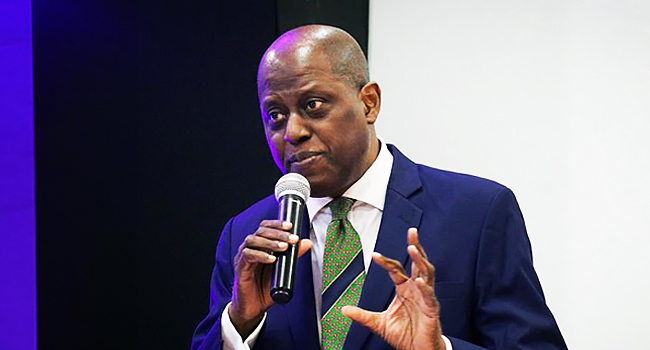
The Governor of the Central Bank of Nigeria (CBN), Mr. Olayemi Cardoso, has urged African financial regulators to strengthen cooperation in managing cross-border risks.
He also restated the CBN’s commitment to entrenching robust corporate governance in Nigeria’s financial system.
Speaking at the fourth Annual IMF/AFRITAC West 2 High-Level Executive Forum for Financial Sector Regulation and Supervision held at the CBN headquarters in Abuja on Tuesday, March 24, 2026, Cardoso explained that, as African banks and financial systems become increasingly interconnected, collaboration among regulators is not optional but essential to safeguard stability and ensure shared prosperity across the continent.
The CBN governor urged African regulators to deepen cooperation in managing cross-border risks, emphasising that regional financial integration is outpacing political coordination.
He called for the adoption of shared prudential principles tailored to Africa’s realities, noting that this framework would enable regulators to respond jointly and effectively to emerging vulnerabilities while supporting inclusive growth.
Building on this continental vision, the apex bank’s governor outlined how Nigeria’s regulatory and supervisory reforms exemplified proactive leadership.
He recalled that in 2024, the CBN anticipated upcoming challenges and launched the Banking Sector Recapitalisation Programme to strengthen the resilience of Nigerian banks.
This proactive policy, he noted, inspired similar reforms across Africa, adding that Nigerian banks, despite navigating subsidy removals and exchange rate reforms, attracted ₦4.61 trillion in new capital, nearly 27 per cent from foreign investors, while even expanding their footprint across African markets.
Cardoso reaffirmed the bank’s commitment to robust corporate governance, emphasising decisive measures such as ending years of regulatory leniency and restricting banking services to chronic defaulters.
“Our stance on corporate governance is unequivocal: zero tolerance for violations. By ending years of regulatory forbearance, we have reinforced accountability, tightened supervision, and elevated compliance standards across the sector,” he declared.
“In line with this, we have implemented a restriction of banking services to non‑performing large‑ticket obligors. This decisive step underscores our commitment to credit discipline, financial integrity, and accountability.
“By curbing access to banking services for chronic defaulters, we are reinforcing the culture of repayment, protecting depositors, and safeguarding the stability of the financial system,” Cardoso added.
On the policy front, he reiterated that the CBN remains firmly anchored in orthodox monetary policy, focused on restoring price stability, strengthening policy credibility, and anchoring expectations through discipline and consistency.
Speaking further on the transformative role of financial technology, the governor outlined the bank’s deliberate strategy to engage and regulate Fintechs in a way that balances innovation with stability.
He said the CBN’s Fintech Policy Report and structural reforms were part of ongoing efforts to build supervisory capacity for a fast-evolving digital financial ecosystem.
Cardoso stated that the forum should continue to serve as a platform for collective learning and action, where regulators can analyse shared challenges, exchange insights, and develop a cohesive African response to global financial trends.
He visualised a future where collaboration among African regulators becomes the continent’s strongest defence and greatest asset, transforming its financial systems into catalysts for sustainable growth and development.
In his opening remarks, the Director, IMF/AFRITAC West 2, Ivohasina Fizara Razafimahefa, said the gathering served as a platform for open dialogue between staff of the International Monetary Fund (IMF) and national financial regulators, enabling the sharing of practical experience, technical insights, and policy innovations across participating countries.
According to him, the forum concentrated on emerging and rapidly evolving risks affecting financial stability, noting that this year’s discussions centred on collective strategies to tackle challenges arising from digital finance, fintech expansion, artificial intelligence (AI), and climate-related financial risks.
These issues, he observed, would demand regional coordination, proactive regulation, and ongoing dialogue among stakeholders to protect the resilience of Africa’s financial systems.
The IMF AFRITAC West 2 High-Level Executive Forum, which attracted senior representatives, including Central Bank Deputy Governors, from six member countries, reaffirmed its commitment to collaboration and shared learning in addressing the region’s evolving financial stability challenges.

As International Women’s Day [IWD] draws near, Wema Bank, Nigeria’s oldest indigenous bank, most innovative and pioneer of Africa’s first fully digital bank, ALAT, has announced its 2026 IWD Grand Event, scheduled to hold on March 4th, 2026.
Inspired by the global IWD 2026 theme “Give To Gain”, Wema Bank’s 2026 IWD event is centred on the topic “When Women Gain, We Grow”, spotlighting not only the importance of giving to women but also the impact of each effort towards this cause, with the ultimate goal of promoting a culture of supporting and celebrating women.
Announcing the event, Wema Bank’s MD/CEO, Moruf Oseni, reiterated the Bank’s commitment to continue pulling its weight in the promotion of women inclusion. According to him, “Wema Bank has never been one to pay lip service and when it comes to gender inclusion; we walk the talk with pride. A society where women are left out is one that is crippled, and as a Bank, we have made it a priority to never relent in providing tailored opportunities for women, celebrating their growth and supporting their journey, towards building a society where every woman can thrive. This was the idea behind the launch of our women-focused proposition, SARA by Wema, in 2019 and this is the inspiration behind all we do as a Bank towards promoting the 5th Sustainable Development Goal [SDG], gender equality”.
“This year’s IWD theme is quite personal to us because as a Bank that continues to give to women, we have seen firsthand the unique potential that lies within women both personally and professionally. As such, we have decided to dedicate this year’s celebration towards reminding the world of the countless ways we can give to women, and why it is not merely an option but a necessity. This year for us, is about impact—spotlighting, celebrating and encouraging it. Our goal is for every person that joins us for this grand event to be positively transformed in mindset and in action, in the hope that more priority will be given to supporting and giving to women both in the little things we do on a daily basis and in the large-scale efforts; as we collectively bridge the gap in gender equality”, Oseni concluded.
Wema Bank’s 2026 IWD event will convene top women across diverse industries and sectors, as well as “everyday” women still trying to navigate life in the face of prevailing realities, providing a platform for women from all walks of life to network, share valuable insights, access viable opportunities and assess shared versus contrasting realities, all towards showcasing how much impact is generated when individuals, institutions and societies give to women.
Among the highlights of Wema Bank’s upcoming IWD event are the SARA Gives to Empower Her Award which promises grants in support of women who have given and made impact on other women; the employee-focused He For She Award which recognises male employees of the Bank who have given to women beyond financial support; the Wema Knight Gives initiative through which the Bank’s staff will give back to women across Nigeria; and the launch of the Wema Bank Girl Child Journal, a reflective journal that collates real-life insights and words of advice for the girl-child from the perspectives of 80 key contributors across different spheres of life.
Anyone interested in attending the event physically or virtually is encouraged to register at wemabank.com/iwd.
-
 News3 years ago
Just In: President Tinubu returns to Nigeria
-
 News3 years ago
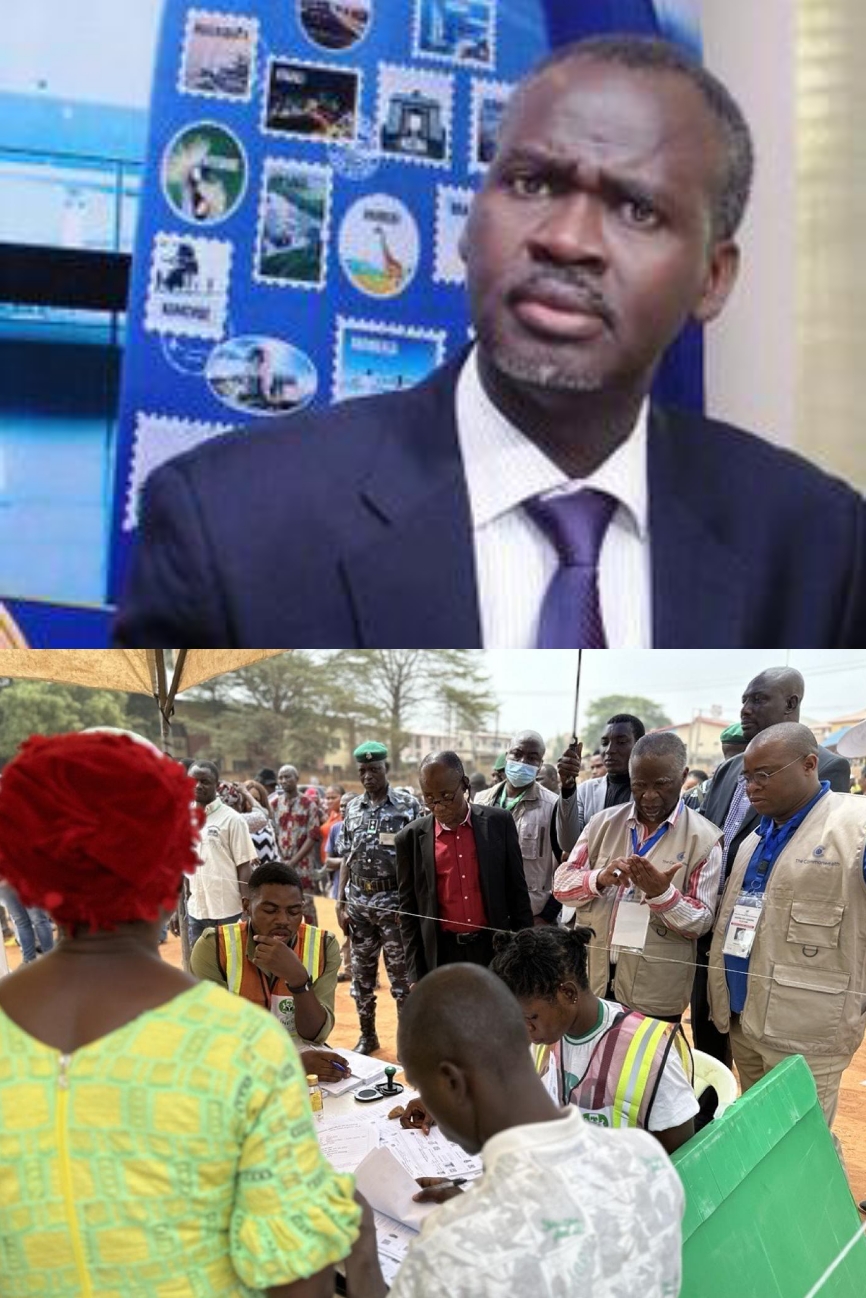
2023 Elections: Outgoing Rwandan High Commissioner say s Nigeria, ‘ handle their destiny’ in a peaceful way.
-
 Entertainment3 years ago
Social media cloth Vendor Found Dead In Ibadan Hotel.
-
 News3 years ago
Ogun HoS Solicit Affordable Housing For Civil Servants
-
 Trending News3 years ago
FG begins 40% pay rise for workers.
-
Sports3 years ago
CAF SALUTES RIVERS UNITED AFTER SEALING QUARTER-FINAL TICKET.
-
 Entertainment3 years ago
9mobile Ambassadors Begin “Meet And Greet” Session With Staffs, Customers.
-
 Health & Wellness3 years ago
Breastfed babies have lower risks of diabetes – Nutritionist