
Business
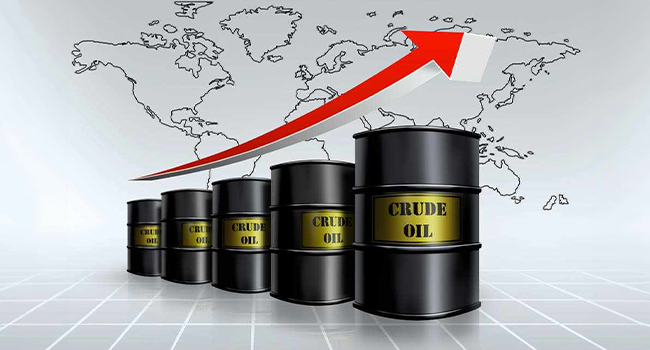
President Tinubu To Boost Nigeria’s Oil Production By 1m BPD


In a renewed bid to grow Nigeria’s crude oil output significantly in the next 12 months, President Bola Tinubu on Monday launched the ‘1MMBOPD’ Initiative meant to raise production by 1 million barrels per day, by harnessing dormant oil assets and optimising existing ones.
At the event in Abuja, which coincided with the 3rd anniversary of the establishment of the Nigerian Upstream Petroleum Regulatory Commission (NUPRC), International Oil Companies (IOCs), indigenous oil producers, banks and oil and gas service providers pledged to support the federal government in the new efforts.
The programme organised by the NUPRC was themed: “Transformation, Innovation & Excellence“ and featured the ‘who is who’ in the country’s oil, gas and banking sectors.
Tinubu stressed that his policy interventions in the oil industry were beginning to bear fruits, expressing confidence in the long-term benefits of the industry’s policy reforms for the good of the country’s over 200 million people.
Represented by the Secretary to the Government of the Federation (SGF), Senator George Akume, the president noted that even though the oil and gas industry had long been the lifeblood of Nigeria’s national economy, the current administration was working tirelessly to change this and diversify the economy from over-reliance on the production of fossil fuels.
However, Tinubu noted that his administration was also determined to maximise its revenue potential from the country’s nature-endowed hydrocarbon resources while focusing on decarbonisation approaches to oil and gas production.
“A renewed drive to economic diversification using the oil and gas industry has evolved, and remains on track to expand government revenue and deploy it to generate employment, eliminate poverty, and grow our gross domestic product in the spirit of shared prosperity.
“We have set a clear roadmap for the oil and gas sector to deepen value from the nation’s substantial resource potential and create opportunities for investors, both local and foreign. Since I declared that Nigeria is indeed open for business, I am delighted that we have witnessed the major financial and investment decisions in the sector across the value chain since then.
“To this end, we must work concertedly to create vibrancy across the sector of oil and gas production to meet domestic and international needs and shore up our foreign exchange. The two-pronged target is necessary to deliver the dividends of good government for our people and justify the trust reposed in us by the citizens during these trying times.
“Early on, we took decisive steps to vacate the encumbrances of investment in the oil and gas sector and entrench the ease of real business. We have issued five executive orders to provide fiscal incentives for investment in Nigeria’s oil and gas sector. We are working with the legislative arm of government to fully implement some of these reforms, as statutory changes will be required in some areas,” he stated.
The president congratulated all active oil and gas industry players for the modest gains in oil production, which he said has now risen to 1.6 million barrels per day.
According to him, ‘Project 1 million bpd’ is a giant step forward for the oil and gas industry, designed to grow sustainably in direct response to his charge to increase production. He explained that by enhancing domestic energy security and supporting economic vibrancy, the initiative will ensure that Nigeria remains a crucial player in the global energy landscape amid the worldwide energy transition.
“ Increased oil production will lead to more job opportunities, increased revenue for the government, and a more stable energy supply for our dear citizens. The project is not just a government one, but a collaborative undertaking involving major producers, service providers, financiers, and other key stakeholders.
“These commitments will be critical in ensuring that we achieve our incremental targets in the next 12 months, growing not just the production levels but also increasing the efficiency and competitiveness of our industry.
“ There will be challenges along the way, such as technical issues, market fluctuations, and regulatory burdens, but with our collective efforts, we are confident that we can overcome these challenges and achieve our goal,” Tinubu emphasised.
In his presentation, the Commission Chief Executive, NUPRC, Gbenga Komolafe, said that in the last three years, the commission had made significant strides towards attaining critical goals despite the persistent challenges of the global push for energy transition and the call for defunding of fossil fuel.
He listed them as development of regulations, growth in oil and gas reserves, rise in level of upstream activities, conclusion of the 2020 marginal bid round and issuance of awards with an anticipated 60,000 bpd and 90MMscfd of incremental oil and gas production, among others.
To enhance investment attractiveness and improve global competitiveness, the licensing framework for the ongoing bid rounds, Komolafe said, was optimised to vacate entry barriers and eliminate huge asset acquisition fees.
On energy sustainability, decarbonisation and environment stewardship, he stated that the NUPRC has retooled its regulatory instruments to incorporate emissions reductions.
At the event, the NUPRC also announced the approval of the much awaited $1.28 billion Seplat-Mobil divestment transaction as well as TotalEnergies EP Nigeria deal with Telema Energies.
“Divestment is an acknowledged practice and within the right of investors in business decisions globally. In recognition of this, as a nation, Nigeria is fully committed to the philosophy of free entry and free exit as further reiterated by our dear President Tinubu on October 1, 2024, speech.
“A total of four (representing 80 per cent) passed regulatory test and secured ministerial consent. The transactions are: Mobil Producing Nigeria Unlimited (MPNU) to Seplat Energy Offshore Limited; Equinor Nigeria Energy Company Limited to Project Odinmin Investments Limited; Nigerian Agip Oil Company Limited to Oando Petroleum and Natural Gas Company Limited and TotalEnergies EP Nigeria Limited to Telema Energies Nigeria Limited.
“However, the divestment of Shell Petroleum Development Company Limited’s assets to Renaissance Africa Energy Company Limited could not scale regulatory test,” Komolafe said, confirming THISDAY’s story earlier on the rejection of the $1.3 billion bid.
Also speaking, Chairman Heirs Holdings, UBA and Transcorp Groups, Tony Elumelu, said that Nigeria is currently faced with the threat of declining production and investment.
“We must acknowledge the elephant in the room. Nigeria’s oil production has been on a downward trajectory, falling from peaks of over 2 million barrels per day to recent lows, below 1.5 million. This decline translates to lost revenues, reduced global market share, and missed opportunities for national development.
“The root causes are multifaceted: Aging infrastructure, security challenges in the Niger Delta, stalled investments, regulatory uncertainties, and a global shift towards renewable energy that has compounded the investment challenge.
“These factors, combined, threaten the very foundation of our economy, as we are heavily dependent on oil. As a nation, we cannot permit this to continue, and squander our inheritance and betray our next generation,” Elumelu stated.
He highlighted that this is where ‘Project 1MMBOPD’ is so critical, a crucial part of the solution to unlocking the next phase of Nigeria’s development.
“By targeting to grow production by 1 million barrels of oil per day from current levels, we are setting a clear and challenging goal. To be sustainable, this initiative should go beyond just increasing production; it should catalyse a comprehensive strategy to revitalise our entire upstream sector,” he observed.
He listed infrastructure modernisation, security enhancement, regulatory streamlining, investment attraction, technology adoption as some of the measures to optimise production.
“By addressing these areas comprehensively, we will not only aim to reach the 1MMBOPD target but also to create a sustainable framework for future growth. As we embark on this ambitious project to boost our oil production, let us also keep our focus on the critical role of gas in our energy mix.
“The path to 1MMBOPD must be constructed on strategies that maximise the value of our gas resources, reducing flaring and increasing utilisation for domestic and export markets,” he added.
At Heirs Energies, in the first 100 days after the company took over operational control of its OML-17 asset in 2021, he said the company doubled its production from 28,000 to over 50,000 barrels per day.
However, he added: “We suffered a setback with unabated crude theft, which caused us to shut-in and work collaboratively with the Nigerian National Petroleum Company Limited (NNPC) to better secure the pipeline system.
“From a low of 5 per cent terminal receipts in December 2021, year-to-date in 2024, we have recorded an average terminal receipt of 85 per cent; a remarkable improvement and a good example of what a purposeful collaboration between NNPC and operators underpinned by rigorous execution can deliver.
“With the improvement in the operating environment, we have restarted our investment and production growth journey, and have now successfully reversed the fall in production that we suffered in 2022 and 2023, as a consequence of the evacuation challenges. A few days ago, OML-17 attained over 51,000 barrels per day, and we continue our production growth journey.”
Also speaking, NNPC’s Group Chief Executive Officer, Mele Kyari, said that it was time to walk the talk, noting that the oil industry must move beyond powerpoint presentations.
“Whatever we need to do, we have a clear roadmap, a specific timeline. And indeed, a very specific contracting process. We think our environment is today very competitive for producing oil.
“The second part of it is about the contracting. As we know, it is very good to have Nigerian content and Nigerian contractors should be encouraged to build local companies. Everybody agrees to this. But it has created a new challenge.
“And what the executive order did is to bring them (service providers) back. So that when you are going to have local partners, they must be specific around what they are going to do. So that instead of carrying a briefcase, the people will now be doing specific things.
“And we have now engaged many of these critical contractors, and many of them are on their way back into our country. And we have substantial indications that they will do this. And lastly, why would anyone put his money into our country, into our assets, when he is not sure of evacuating the production? And the onshore in particular, nobody would do it.
“So we agree that we must replace the pipeline infrastructure. There is no alternative. The best of intention, the best of security intervention will still give you probably 50 per cent of the installed capacity today,” he argued.
At the programme, the Minister of State (Oil), Senator Heineken Lokpobiri and his counterpart in the Ministry of Gas, Ekperikpe Ekpo, assured the industry players of the government’s willingness to clear all the existing bottlenecks.
Lokpobiri stressed that the set target of an additional 1 million barrels per day was achievable, assuring of the president’s political will to get things done.
The chief executives of major oil producers, including those of Shell; Total Energies; ExxonMobil; Chevron; Oando; Agip as well as independent producers like First E&P; Waltersmith; Oriental Energy Resources; Seplat, Heirs Energy and Matrix Energy all pledged to ensure that the new target is achieved.
In addition, funders and strategic service providers like UBA; Geoplex, Standard Chartered Bank; Mercurial and SLB all promised to work to ensure that the oil industry in the country is revamped.



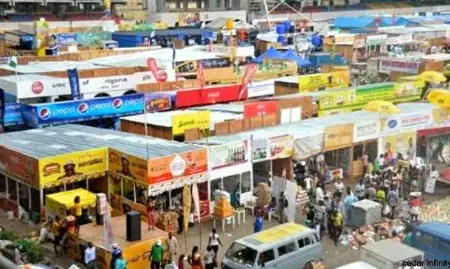
The Lagos International Trade Fair Complex Management Board (LITFCMB) has condemned the use of its facility for the production of counterfeit products and other illegal activities, pledging to work with regulatory and law enforcement agencies to rid the complex of such practice
The board also commended the National Agency for Food and Drug Administration and Control (NAFDAC) for its recent enforcement operation, which led to the arrest of two persons allegedly linked to the illegal revalidation of expired drinks and the production of counterfeit consumables within the complex.
In a statement issued on Wednesday, the Executive Director and Chief Executive Officer of LITFCMB, Veronica Safiya Ndanusa, said the activities were contrary to the board’s commitment to promoting legitimate trade and ethical business practices.
She disclosed that relevant authorities had commenced investigations to establish the facts surrounding the incident and identify measures to prevent a recurrence.
Ndanusa warned that individuals and businesses found culpable of engaging in activities that endanger public health or undermine the integrity of local manufacturing would face the full weight of the law.
“As a body rooted in the principles of ethical business practices, transparency and genuine trade, we strongly condemn any activity that threatens public safety or brings the reputation of the Lagos International Trade Fair Complex Management Board into disrepute,” she said.
“Our facility exists to provide a conducive environment for legitimate businesses to thrive, not to serve as a breeding ground for the production or distribution of counterfeit and substandard products.”
The board chief assured members of the public that the management would collaborate with relevant regulatory and law enforcement agencies to ensure that the complex remained free of illegal activities.
She also urged traders and business operators within the facility to comply with established standards, stressing that the pursuit of profit must never come at the expense of consumers’ health and safety.
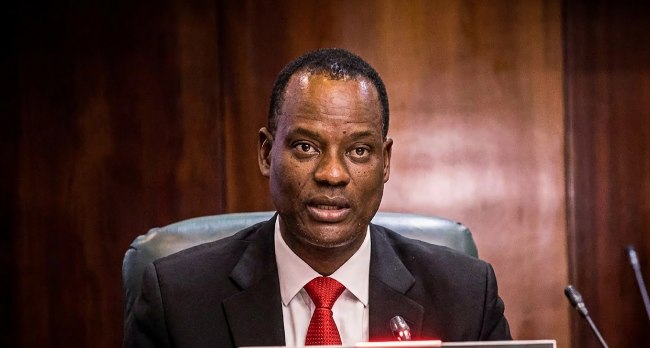
Minister of Finance and Coordinating Minister of the Economy, Taiwo Oyedele, has cautioned governments against introducing new taxes or increasing existing tax burdens on vulnerable citizens and productive sectors, warning that such measures could deepen economic hardship.
Oyedele spoke on the sidelines of the 2026 annual meetings of the International Monetary Fund (IMF) and World Bank in Bangkok, Thailand, where he presented a communiqué on behalf of the Intergovernmental Group of Twenty-Four (G24), which he chairs.
“This is the wrong time to impose new taxes or increase the burden of tax, particularly on the vulnerable population and productive sectors of the economy,” he said.
Responding to questions on how developing countries could reduce debt-servicing costs without cutting essential public spending,report quoted Oyedele as urging governments to identify waste, find savings and improve revenue collection before placing additional financial pressure on citizens and businesses.
He said borrowing remained necessary to finance economic growth but stressed that governments must ensure that debt supports job creation and inclusive development.
“Borrowing and debt financing is a necessary condition for growth, and every country emerging, developing must be able to apply debt financing in a way that is overall of positive impact, particularly to stimulate job-rich and inclusive growth,” he said.
The minister also called for available public funds to be prioritised for essential services, including healthcare and education, while private capital could help finance other areas of investment.
On the choice between taxation and borrowing, Oyedele said both options carried consequences and should be considered in the context of their impact on household welfare.
“If you collect taxes, you raise the money now, and that itself has a lot of trade-offs. What taxes are you collecting? You collect taxes from the most vulnerable, and this will deprive them of money to provide food, health, education,” he said.
He argued that excessive taxation could leave low-income households with less money for basic needs, while borrowing also carried future obligations.
“Debt is future taxes, so it’s not one or the other. It’s to strike a balance, bearing in mind ultimately that the essence of tax and of debts is to cater for the people,” Oyedele said.in the report.
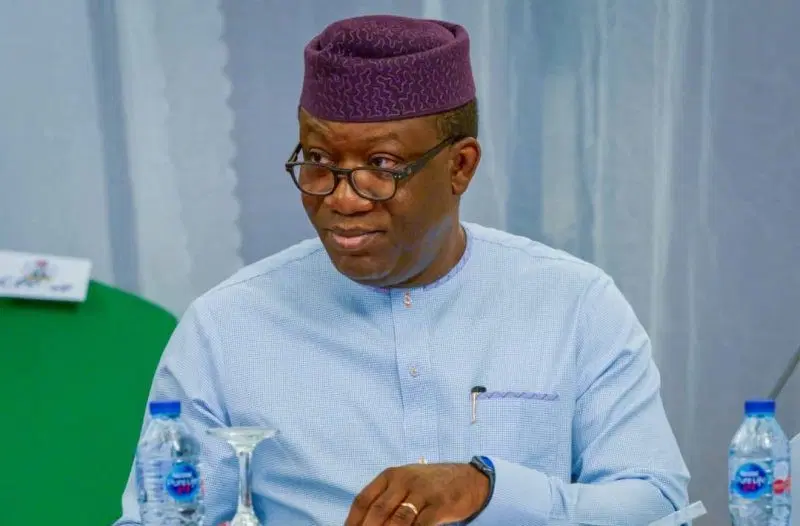
Former Governor of Ekiti State and ex-Minister of Mines and Steel Development, Dr Kayode Fayemi, has warned the United States against slipping into isolationism in its engagement with Africa, insisting that Nigeria remains a must-have strategic partner in the evolving global order.
Fayemi maintained this position in Lagos while speaking as a panelist at the Nigeria Moment, a Nigeria–United States Strategic Dialogue organised by the American Business Council in collaboration with the Heritage Foundation.
In his presentation, which focused on why Nigeria is a must-have partner in the changing world order, Fayemi,former chairman of the Nigeria Governors’ Forum (NGF) stressed the need for a more holistic relationship between both countries grounded in transparency, mutual benefit and shared prosperity.
He insisted that Nigeria must be treated as a strategic partner in the emerging world order.
“While welcoming the growing American interest in Nigeria’s vast mineral endowment, Fayemi warned that the partnership must go beyond resource extraction.
“Nigeria must be engaged as a strategic actor and a co-creator in shaping the future of global energy and resource governance, rather than as a testing ground for experiments. A partnership built on mutual respect, shared interests and long-term cooperation offers the strongest foundation for an enduring relationship between Nigeria and the United States,” Fayemi said.
Describing the engagement as a pleasure, Fayemi said the dialogue brought together a distinguished group of policymakers, business leaders and strategic thinkers to reflect on the future of Nigeria-US relations.
He commended the convener of the dialogue, Mr Ayo Otuyalo,for an excellent convening and for bringing together such high-level participants for the important strategic conversation.
The conference featured Governor Babajide Sanwo-Olu of Lagos State as keynote speaker, alongside senior representatives of the Federal Government, including the Minister of Industry, Trade and Investment, Dr Jumoke Oduwole; Minister of Power,
Also st the event were : Engr Joseph Tegbe; Minister of Solid Minerals Development, Mr Dele Alake, represented by Engr Simon Nkom; and the Head of the Nigerian Upstream Petroleum Regulatory Commission (NUPRC), Mrs Oritsemeyinwa Eyesan among others.
-
 Health & Wellness1 year ago
President Tinubu Directs Cut in Dialysis Cost from ₦50,000 to ₦12,000
-
News2 years ago
CBN Debunks Fake Circular on New ₦5,000 and ₦10,000 Notes
-
 Business7 months ago
Dangote Refinery Reduces Petrol Gantry Price To ₦1,200 Per Litre
-

 International News7 months ago
Indian Police Arrest Nigerian Over ₦290m Drug Haul
-
 Business7 months ago
After Plea Bargain, Court Discharges Stella Oduah of ₦2.5bn Fraud
-
Business2 years ago
Dangote; We Did Not Fix ₦600/Litre Petrol Price
-
 Trending News1 year ago
NELFUND Disburses ₦86bn To 449,000 Beneficiaries
-
 Opinion2 years ago
Championing the People’s Voice: Obasa’s Dedication to Grassroots Representation By Dave Agboola⁰