Connect with us

International News

Sudanese Seek Refuge Underground In Besieged Darfur City

Published

on

Spread the love

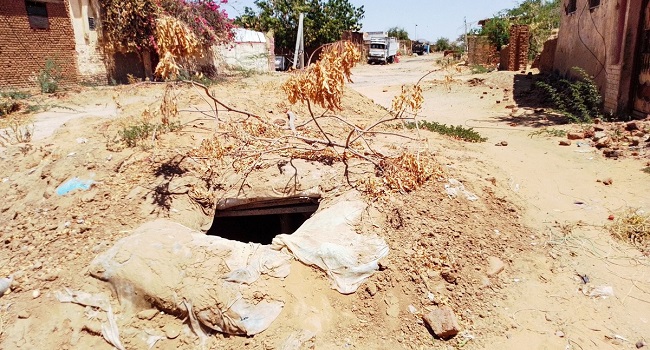
This picture taken on March 13, 2025, shows a makeshift bunker dug by civilians in North Darfur state capital El-Fasher, as a hideout from clashes between the paramilitary Rapid Support Forces (RSF) and the Sudanese army and allied militias. (Photo by Muammar Ibrahim / AFP)

Beneath the broken earth of the besieged Sudanese city of El-Fasher in the western region of Darfur, Nafisa Malik clutches her five children close.

As shells rain down, the 45-year-old mother tries to shield them in a cramped hole barely big enough to crouch in.

“Time slows down here,” Malik said, from her home near El-Fasher’s Hajer Gadou market.

“We sit in the darkness, listening, trying to guess when it’s over,” she told AFP by phone.

For almost two years the paramilitary Rapid Support Forces (RSF) and Sudan’s army have waged a war that has killed tens of thousands.
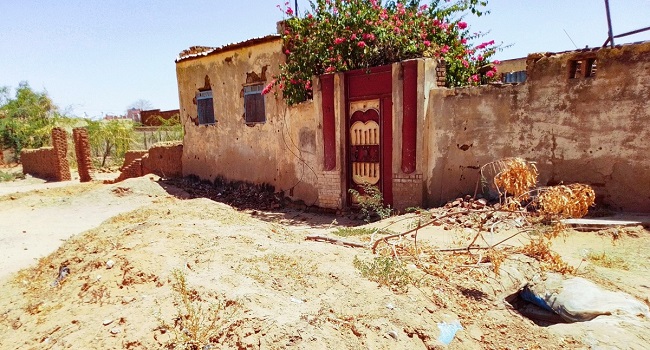
 

This picture taken on March 13, 2025, shows a makeshift bunker dug by civilians in North Darfur state capital El-Fasher, as a hideout from clashes between the paramilitary Rapid Support Forces (RSF) and the Sudanese army and allied militias. (Photo by Muammar Ibrahim / AFP)

United Nations Secretary-General Antonio Guterres on Friday called it a “crisis of staggering scale and brutality”.

El-Fasher, the capital of North Darfur state, is the only major city in Darfur still under army control, making it a strategic prize.

The RSF has tried for months to seize it.

Malik’s crude shelter, held up by splintered wooden planks and scraps of rusted metal, is one of thousands in the war-battered city, according to residents.
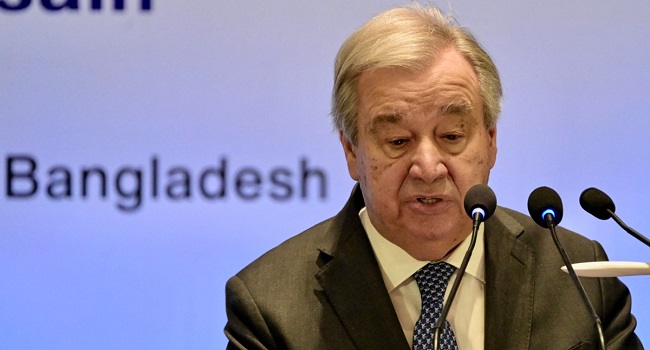
United Nations Secretary-General António Guterres speaks during a press briefing in Dhaka on March 15, 2025. (Photo by MUNIR UZ ZAMAN / AFP)

The army regained much of the capital Khartoum this year, but the RSF has intensified its attacks on El-Fasher.

Desperate for safety from artillery and drone strikes, residents have built makeshift bunkers.

Some are hurriedly excavated foxholes, others are more solid and reinforced with sandbags.

Mohammed Ibrahim, 54, once believed hiding under beds would be enough, “until houses were hit”.

“We lost neighbours,” he said by phone. “The children were terrified.”

Determined to protect his family, Ibrahim dug a hole in his yard. He covered it with sacks of soil with only a narrow entrance.

Doctors underground

Despite the RSF’s siege cutting off supply lines, the army and an allied coalition of armed groups known as the Joint Forces still hold most of the city.

Yale University’s Humanitarian Research Lab, which uses satellite and other data to track the conflict, has identified “clusters of damage”.

It details destruction from munitions and fires including near the airport, market and in the city’s east and south.
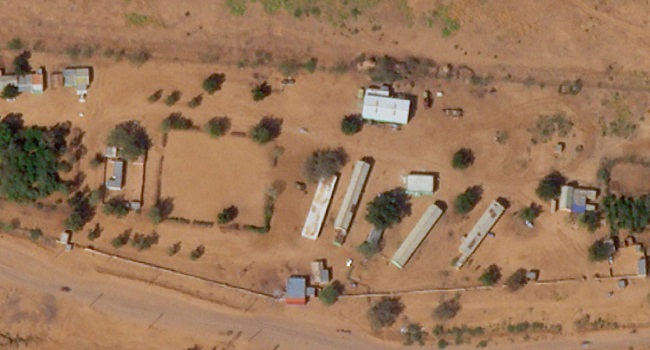
This handout satellite photo obtained from Planet Labs PBC and taken on January 2, 2023 shows the local airport of al-Fasher, the capital of Sudan’s North Darfur state. (Photo by Planet Labs PBC / AFP)

The researchers reported bombardment of “residential structures”, and said its findings are consistent with Sudanese army air strikes as well as RSF artillery and ground attacks.

Staff at the Saudi Hospital, one of the last functioning medical facilities in the city, carved out an underground shelter last October.

“We use it as an operating room during the strikes, lit only by our phones,” one doctor told AFP, requesting anonymity for his safety.

Every explosion sends tremors through the shelter walls, shaking surgical instruments and rattling nerves.

El-Fasher was historically the seat of the Darfur sultanate and has long been a centre of power in Darfur.

Now, it is all that stands between total RSF control of Darfur, whose gold resources provide the paramilitaries with vital revenue, according to the United States Treasury Department.

The African Union warned last week that Sudan risks partition.

“The army is well entrenched in El-Fasher, making it exceedingly difficult for the RSF to capture the city,” said Marc Lavergne, a Sudan expert at France’s University of Tours.

Crucial to the army’s war effort in El-Fasher is its support from the Zaghawa, a non-Arab ethnic group.

The UN says the Zaghawa are among those targeted by RSF and allied Arab militias, exacting “a horrific toll”.

‘Existential threat’

Forces from prominent Zaghawa figures, Darfur Governor Minni Minnawi and Finance Minister Gibril Ibrahim, have joined the city’s defence after being neutral at the war’s beginning.

“The Zhagawa see the fall of El-Fasher as an existential threat,” said Sudanese political analyst Kholood Khair.

“They are concerned that the RSF would commit reprisal attacks against them for breaking their neutrality — if they capture the city,” she told AFP.

But as the RSF tightens its grip, the army and its allies face a dilemma: hold the city at immense human cost or risk ceding a stronghold that Khair said could shift the war’s balance.

“Holding the city depletes resources,” she said. “But losing it would be catastrophic.”

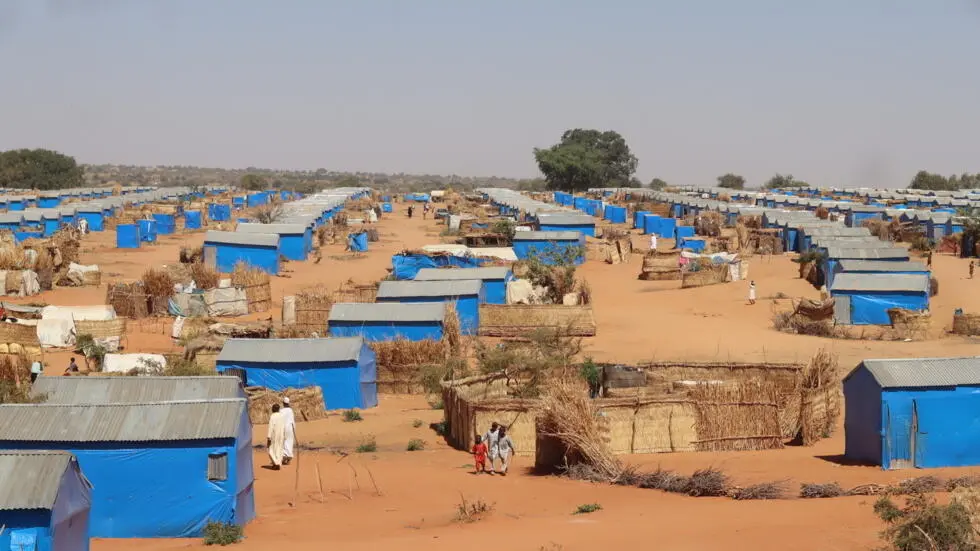
A UN-backed assessment declared famine in three displacement camps around El-Fasher. Famine is expected to spread to five more areas, including El-Fasher itself, by May.

Aid is practically nonexistent.

Remaining humanitarian agencies have suspended operations as the RSF attempts to break through, attacking camps and villages around El-Fasher.

“Bringing goods in has become nearly impossible,” shop owner Ahmed Suleiman said. “Even if you take the risk, you have to pay bribes at checkpoints, which drives up prices.”

Leni Kinzli from the World Food Programme warned of dire consequences.

“If aid continues to be cut off, the fallout will be catastrophic”, she said.


AFP

International News

Doku insists On League Victory Despite Everton Draw With Man City

Published

on

Spread the love

Jeremy Doku insisted Manchester “will keep on fighting” in the Premier League title race despite their “painful” draw with Everton on Monday.


City drew 3-3 with the Toffees at Hill Dickinson Stadium, with Doku scoring a 97th-minute equaliser, having also scored the opening goal.

Doku’s equaliser (96:49) is City’s third-latest goal on record (since 2006-07) in a Premier League game after John Stones’ strike against Arsenal in September 2024 (97:14) and Gabriel Jesus’ goal against Everton in February 2019 (96:52).

Doku has had a hand in six goals across his last five games for City in all competitions (four goals, two assists), as many as in his previous 22 games combined (one goal, five assists).

The Belgian also created the most chances in the match against Everton (four), completed the most dribbles (5/7) and won the most duels (14/19).

City avoided defeat in a Premier League game despite trailing by 2+ goals as late as the 82nd minute for the first time since March 2012 against Sunderland (3-3).

They went on to win the league title in 2011-12, and Doku believes City can still beat Arsenal to the trophy this season.

“First half, we played well and created a lot of chances. We know if we don’t score those chances, it is going to get difficult at the end,” said Doku.

“Obviously, they are at their own stadium, they create chances, and they are dangerous, and they scored two goals, but I think we gave them the game.

“Good that we came back because one point is not bad in games like this.

“We will see. It feels painful now. There is still a lot of games to go. We lost two points, but we know that one point can be important at the end.

“We will keep on fighting. We owe it to ourselves and to our fans.”

Continue Reading

International News

Xenophobia: Nigerians Seeking Return From S A Will Bear The Cost – FG

Published

on

Spread the love

The Ministry of Foreign Affairs said Nigerians interested in repatriation from South Africa will be responsible for the cost of their return trip to Nigeria.

The ministry’s spokesperson, Kimiebi Ebienfa, stated this during a press briefing on Monday in Abuja.
The briefing came shortly after a closed-door meeting between the Ministry’s Permanent Secretary, Dunoma Ahmed, and the South African Acting High Commissioner, Lesoli Machele.

Mr Ebienfa said the process will be self-funded and not state-funded, as it is a voluntary decision that the Nigerian government will only facilitate and coordinate.

In the recent past, such reparations have been sponsored by Nigerian airline owners, particularly Allen Onyema, the CEO of Air Peace.

The Nigerian government, on Sunday, indicated its readiness to repatriate its citizens from South Africa due to xenophobic violence.

The effort primarily targets Nigerians who feel threatened by the xenophobic violence and tension in parts of South Africa, as the protests against black immigrants in the country continue. Two Nigerians were killed last month.

Since the announcement, about 130 Nigerians in South Africa have expressed a willingness to return home voluntarily.

Mr Ebienfa stated that the return of the Nigerians depends on their financial capacity, as they would be expected to fund their trip back home individually.

He said, “Those willing to leave are expected to approach the high commission and, given that their decision is voluntary, have the resources to fund their return to Nigeria.”
The government will not “provide an aircraft from Nigeria to convey them.”

He also noted that the speed of the repatriation process will be determined by the availability of funds.
“Yes, 130 as of this morning have registered, but actualisation would be required to have their flight ticket to move back to Nigeria.”

Mr Ebienfa also explained that Nigerians who have so far expressed interest are motivated either by concerns about threats to their lives or by fear of arrest by South African law enforcement agencies.

“There are two groups of Nigerians who want to come back. One group feels the country is not safe for them and wants to come. They have all their papers intact.

“Then there is also the second group that has travel document violations or resident permit violations. And instead of running away from law enforcement, they are appealing that the government facilitate their movement back to Nigeria,” he explained.

However, he noted that the process is still being worked out and that the government would step in to provide aircraft or other needed assistance if tensions rise and the situation becomes more volatile.

Continue Reading

International News

Marcelino To Leave Villarreal At End Of Season

Published

on

Spread the love
Villarreal head coach Marcelino Garcia Toral will leave ​at the end of the ‌season despite securing a second consecutive Champions League qualification, the LaLiga ​club said on Monday (today). 
The ​60-year-old, who also managed the ⁠team between 2013 and ​2016 and guided them back ​to the Spanish top flight, has led Villarreal more than any other ​coach, overseeing 298 games ​across all competitions.

The Reuters Iran Briefing newsletter keeps you informed with the latest developments and analysis of the Iran war. Sign up here.

Villarreal sit third in LaLiga ‌with ⁠four matches remaining, a position that guarantees them elite European football next season.
Marcelino, who ​rejoined Villarreal ​in ⁠2023, won the Copa del Rey with ​Valencia in 2019 and ​the ⁠Spanish Super Cup with Athletic Bilbao in 2021. He has ⁠been ​linked with English ​Premier League clubs.
Continue Reading

Trending

Copyright © 2026 TheColumn NG