
Opinion
The Great Ifẹ̀ Empire and Its Legacy: A Blueprint for Mending Our Broken World- Akin Ogundiran

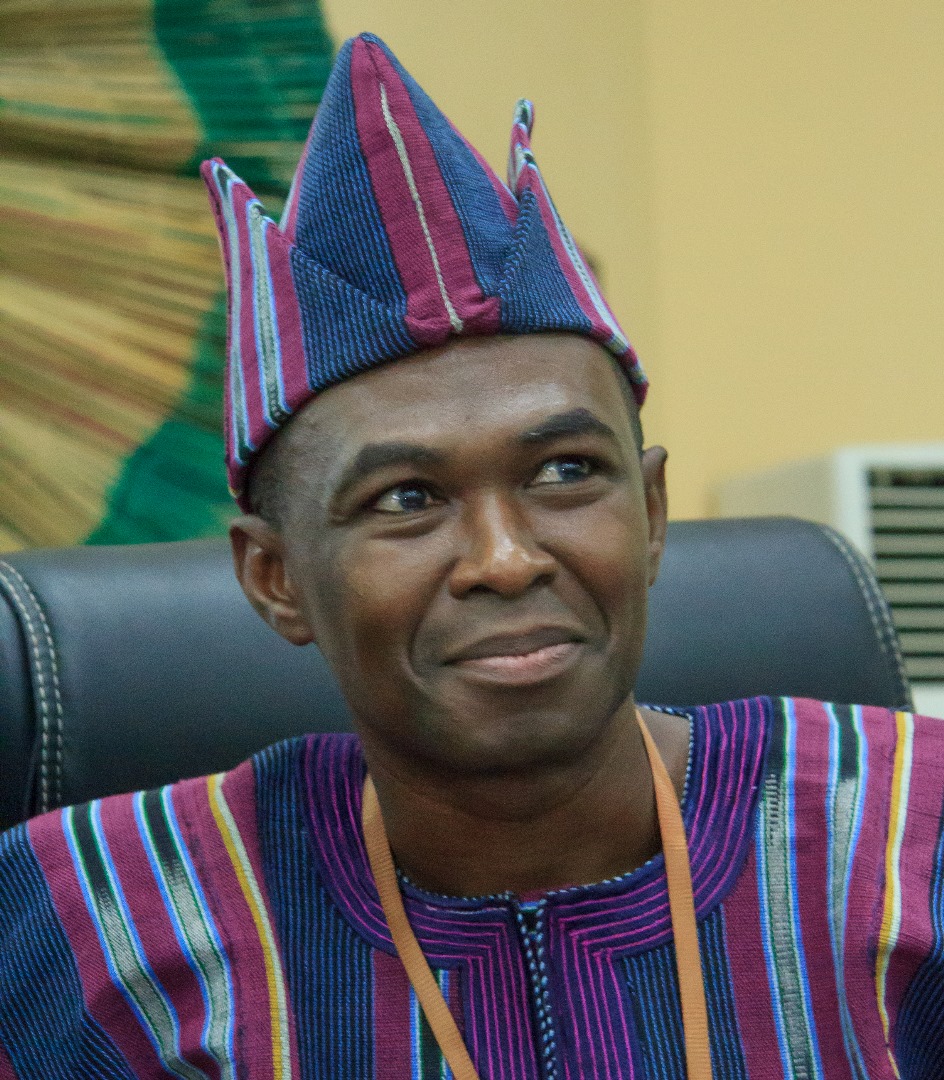
Excerpts of the Keynote Address Presented at the Opening of the International Conference, “Ile-Ife and Yoruba Civilisation: The Nexus between Tradition and Modernity,” at Ojaja Arena, Ile-Ife, October 10, 2023

I pay homage to His Imperial Majesty, Ọ̀ọ̀ni Adéyẹyè Ẹniìtàn Babatúndé Ògúnwùsì, Ọ̀jájá II. I salute government representatives, all the Ọba, Olori, Chieftains, Princes and Princesses, Vice Chancellors, University Administrators, Fellow Scholars, and Conferees—distinguished Ladies and Gentlemen. I am honored to join you this morning. I commend the Imperial Majesty for his vision and generous support for this conference on Yoruba history. My commendation also goes to the conference conveners led by eminent historian Professor Siyan.
In the next three days, the conferees will explore different aspects of Ife history, ancient, recent, and contemporary. They will do so from several disciplinary angles. A multigenerational cast of speakers will showcase their recent discoveries from archaeology to archives, oral tradition to rituals. My contribution this morning focuses on answering the following questions: How can we use the past to guide our present? How can the true knowledge of our history, unmitigated by politics and ideology, set us free from the bondage of ignorance that has broken our world?
Distinguished ladies and gentlemen, I chose “The Great Ifẹ̀ Empire and Its Legacy: A Blueprint for Mending Our Broken World” as the title of my keynote address because of my sincere belief that history has a purpose. In our clime, the ultimate purpose of historical study is to uplift our spirit, explain how we got here, and use historical knowledge to restore and repair our broken selves. Like many of you at this conference, I am committed to studying history so I can use the knowledge of the past to create a new mirror that we can use to look at ourselves. Those who use other people’s mirrors to look at themselves are bound to see distorted images of themselves. The mirrors we create must give us a balanced view of who we are as a people and account for the brilliance and shortcomings that make us human.
The Yoruba believe that Ile-Ife is the origin of their civilization. A century of historical and archaeological research has confirmed this. It also shows that the origin of the civilization is different from the origin of the deep-time Yoruba-speaking people. Those ultimate Yoruba ancestors (proto-Yoruboid) originated from the western part of the Niger-Benue Confluence in the present-day Okun-Yoruba area as early as 2,500 BC. This research has also given us insights into how Ile-Ife spearheaded a revolution about 1000 AD that gave birth to the present-day Yoruba cultural identity. The name, Ile-Ife, hints at how special this city was over the past 1,000 years.
Contrary to the oft-repeated folk etymology, Ile-Ife does not mean “House of Love.” Rather, it means “House of Abundance” and “House of Expansion.” The ancient city also has several aliases, such as “City of Daybreak,” City of Sunrise,” and “The Source.” These names and monikers illustrate the Yoruba belief that Ile-Ife is the ground zero of humanity. It is the place where the earth and humanity were created. The Yoruba ancestors knew that what makes us human is not biology. It is culture and consciousness. So, these labels refer to Ile-Ife as the birthplace of classical Yoruba civilization as we know it.
Historical records show that Ile-Ife occupies a special place in African history. When Ibn Battuta, the Berber-Moroccan traveler, visited the Mali Empire in 1352-53, he was told about Ile-Ife as one of the biggest kingdoms in Africa and its king (the Ọ̀ọ̀ni) as one of the greatest kings in the Land of the Black People (Sudan). Duarte Pereira Pacheco, the Portuguese explorer and soldier, was informed in the court of the King of Benin in 1475 that the King of Ile-Ife was the mighty lord of the region, and the explorer likened the status of the Ọ̀ọ̀ni (Oghoni/Owoni) among the Blacks as similar to that of the Pope among the Europeans. The people of Oyo (Old Oyo) told Richard Landers in 1830 that it was in Ile-Ife where their first parents were created and from where all Africa was peopled. The Yoruba people that Leo Frobenius (German scholar) met in Timbuktu (Mali) in 1909 told him that their forebears originated from Ile-Ife and turned into stones which are to be found in Ile-Ife.
The accomplishments of Ile-Ife in arts, science, technology, commerce, statecraft, religion, and philosophy are the reasons for this fame. Based on archaeological research that several scholars and I have done in Ile-Ife and other parts of Yorubaland, we now know that Ile-Ife is the oldest continuously occupied city in West Africa. Its leaders developed one of the oldest urban planning systems in West African history.
Ile-Ife was one of Africa’s most powerful economic engines during its heyday, 700 to 1000 years ago. The city was famous for glass, iron, and steel production, and its products were sold as far as Ghana and Mali Empires during the eleventh through fourteenth centuries. The material scientists of Ile-Ife invented a unique glass technology, and the city’s political leaders and merchants used this technology to create a glass-bead currency system that integrated the economy of many parts of West Africa, from Igbo-Ukwu in present-day Nigeria to Walata in Mauretania. This is a feat that the Economic Community of West African States (ECOWAS) has yet to accomplish. Through its glass industry, Ile-Ife was a pacesetter in African history on the principle of technological independence. By 1200 AD, the political entrepreneurs of Ile-Ife had converted their vast networks of colonies, trading stations, and client states into the first empire in Yorubaland. It is also the first empire in all parts of Africa that lie south of the River Niger, from Lokoja (Nigeria) to Cape Town (South Africa).
Ancient Ile-Ife was also a centre of learning in all branches of science and arts, including philosophy, material chemistry, Ifa divination, and astronomy. This Yoruba city was a contemporary of other intellectual cities in the world, such as Oxford and Cambridge in the United Kingdom and Timbuktu in present-day Mali. As a centre of education, research, knowledge, pilgrimage, and high art, Ile-Ife was a tourist center, attracting visitors across West Africa.
Unfortunately, the above stories are not taught in Nigerian schools, from nursery to the university. There is hardly a home in Nigeria that is aware of these accomplishments. Even some of our elders and traditional rulers who should know better often mislead us with wrong stories that cater to their ego rather than scientific, historical information. This lack of knowledge about our past is a symptom of our broken world. It is a world beset with little regard for knowledge and innovation and the discipline that goes with it. No respect for human dignity and life. I’m talking of a world where the gaps between political leadership and common people widen daily. In this broken world, there is a lack of confidence and appreciation for African indigenous culture and history, and the priority of the general population is the consumption of imported goods over locally produced goods.
We can’t blame the poorly educated and ill-informed citizens for thinking their ancestors accomplished nothing and that their salvation lies outside the shores of their country, in the hands of those who look different from them. This conference must energize us to re-educate the youth and the old so they can become conscious of the depth and richness of African history. With that consciousness, we will understand that Ile-Ife anticipated and accomplished many aspects of modernity that we often erroneously attribute to the Europeans. In ancient Ile-Ife, respect for human dignity, including people with disabilities, was promoted as the foundational ethos of civilization. In Ile-Ife, it was required that citizens must be educated and become knowledgeable in history, philosophy, arts, and crafts. The Ife ancestors also developed indirect democracy, a system that curtailed and, for the most part, prevented autocracy. They reminded us that you cannot have a true democracy where there is scarcity, hunger, and insecurity. To this end, the philosophers and economic planners of classical Ile-Ife developed an economic theory that was based on the principle of abundance. This is opposed to the principle of scarcity that drives Western economic theories today.
To begin to mend our broken world, our political leaders, educators, teachers, and university administrators must be deliberate and strategic in integrating the accomplishments of the Ife Empire into the history curriculum, noting that these accomplishments are the pride of all Africans, not the Yoruba people alone.
This conference is the beginning of a long conversation and action plan that must be put in place. It cannot achieve everything our royal father and conveners have outlined as the rationale for this three-day gathering. There is so much we still do not know about the history of Ile-Ife and the Yoruba. Therefore, we must continue searching and studying. To convert our talk into action that will yield long-lasting desired results, I urge Ọ̀ọ̀ni Ogunwusi to use his vast social networks and influence to coordinate the setting up of a 100 Billion Naira Global Endowment Fund for Yoruba Historical and Cultural Research. The priority is to use the fund to create a Center for the Advancement of Yoruba Studies that will coordinate such research endeavors, build a top-notch ultra-modern Museum and Library of Yoruba Civilization in Ile-Ife, and provide year-to-year research grants and fellowships for the study of Yoruba archaeology and history.
Every Oba in Yorubaland must also take up the challenge to work towards establishing a Museum of History and Culture in their respective towns and cities. They should rally their sons and daughters at home and abroad to fund and establish these museums. This proposition is not an assignment for the federal, state, or local government. It must be solely a community effort. When you visit any European town or village, they will take you first to their museums. Sometimes, a European town of 5,000 people will have ten museums that tell different aspects of the town’s history. Yoruba towns and cities have as deep a history as those European towns if we can learn to tell our stories with imagination and historical evidence. This is a task we must pursue. We owe it as a duty to our ancestors and the unborn generations. Thank you.
Akin Ogundiran is a Professor of History and Cardiss Collins Professor of Arts and Sciences at Northwestern University (Evanston, USA), President-Elect of the Society of Africanist Archaeologists, and a Member of the Nigerian Academy of Letters. He is the author of The Yoruba: A New History (2020).

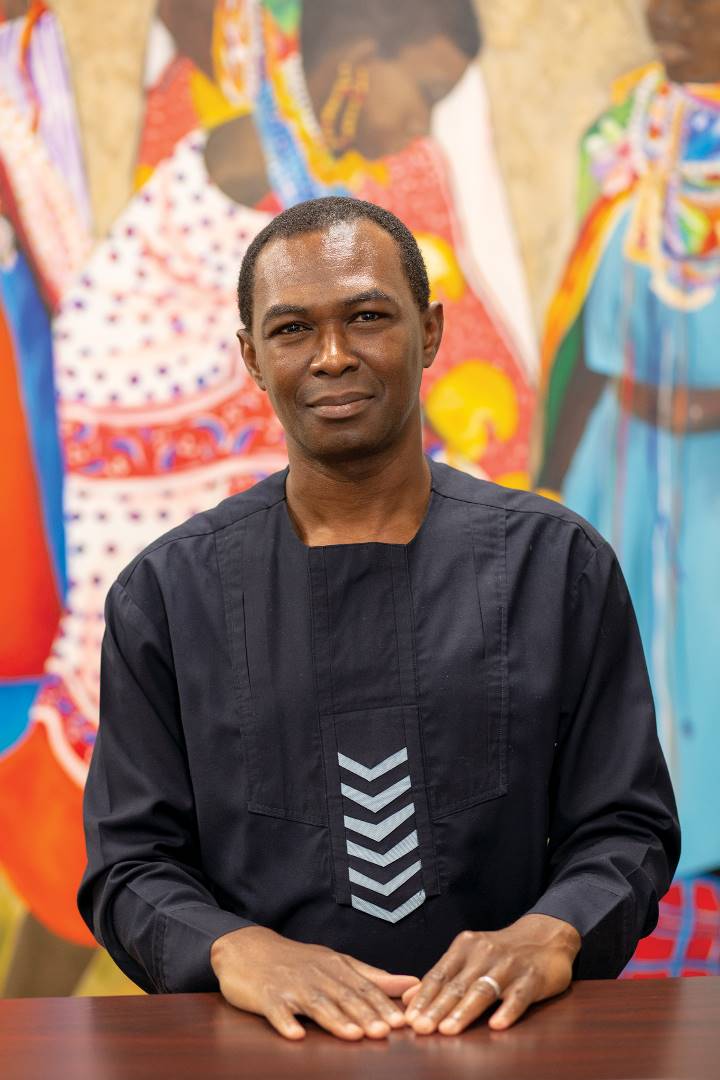


I have watched, with deep concern, how the lines between journalism and broadcasting are being carelessly blurred in Ibadan. As someone who has devoted years to the practice of investigative journalism, I cannot stay silent while many On-Air Personalities (OAPs) parade themselves as journalists simply because they hold a microphone or sit in a studio.
Let me state it plainly: a journalist is trained to gather, verify, analyse, and report facts. My work as a journalist begins long before I speak into a microphone. It takes research, interviews, documents, and a constant weighing of truth against falsehood. That is what journalism is – service to the public through truth.
A broadcaster, on the other hand, is a presenter. He or she may read news, play music, anchor programs, or entertain listeners. Broadcasting is about delivery. Journalism is about content. Both are important, but they are not the same.
The problem in Ibadan today is that many presenters who specialise in banter, slang, and social media virality now call themselves “journalists.” They are not. I say this with all sense of responsibility: if you have not gone through the rigours of news gathering, fact-checking, and ethical reporting, then you are not a journalist. You are a broadcaster, and there is dignity in that role.
What worries me most is the damage this confusion causes. When broadcasters misrepresent themselves as journalists, the public begins to doubt the credibility of real journalism. Sensationalism takes the place of facts. Noise replaces truth. And the noble profession I belong to is dragged into ridicule.
I am not against broadcasters. I work with them daily, and I respect their craft. But they must respect mine too. A journalist digs out the story; a broadcaster delivers it. Neither should wear the other’s title without merit.
If Ibadan wants to retain its reputation as Nigeria’s media hub, it must correct this error. Broadcasters should embrace their role proudly, and those who desire to be journalists must get the training and discipline the profession demands.
I owe it to my profession – and to the public that depends on it – to keep saying this: a broadcaster is not automatically a journalist. The earlier Ibadan’s media practitioners accept this truth, the better for us all.
Cover Stories
“Melody Hymns with Sean Polotee” Returns, Rekindling Sunday Mornings with Soulful Inspiration

In a welcome return to the airwaves, “Melody Hymns with Sean Polotee” is back on Melody 107.7 FM, set to grace Sunday mornings once again from 9:00 AM to 10:00 AM. The show, known for its soul-stirring hymns and uplifting content, is hosted by Sean Polotee, a seasoned broadcast journalist, poet, and media personality.
Renowned for his charismatic on-air presence and deep connection with listeners, Polotee brings nearly two decades of media experience to the program. He is also the recently appointed Special Adviser on Media and Communications to the National Coalition of Apostles, Bishops, Archbishops, and Cardinals (NCABAC) — a role that further highlights his commitment to using media as a force for positive change.
“Melody Hymns” blends carefully curated gospel music with personal reflections and conversations that spark hope, resilience, and faith. Polotee frequently engages guests from various walks of life, offering listeners stories that resonate far beyond the studio walls.
Drawing on his background as a poet and storyteller, Polotee’s style is warm, engaging, and deeply human. His previous hosting credits include popular radio shows like “Maagbon” on Miliki 101.3 FM and the award-winning “Deflower Your Mind” on Jordan 105.5 FM — programs that showcased his ability to connect meaningfully with audiences.
Listeners can expect more than just music — “Melody Hymns” is a celebration of community, faith, and shared experience. It invites audiences to participate by sharing personal testimonies, song requests, and reflections, reinforcing the show’s mission to uplift and unite.
Whether you’re seeking peace, encouragement, or simply a beautiful start to your Sunday, “Melody Hymns with Sean Polotee” offers a refreshing hour of inspiration.
Tune in to Melody 107.7 FM every Sunday at 9:00 AM.
News
Ogbeni Rauf Aregbesola; A Political Titan Whose Relevance Transcends Party Lines – by Adio Abiodun
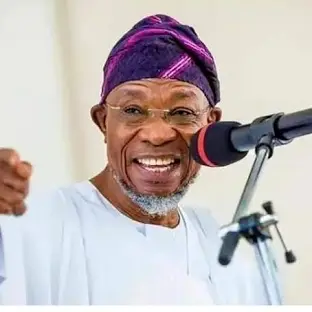
In the ever-evolving theatre of Nigerian politics, it is rare to find a figure whose presence, long after leaving office, continues to shape discourse, influence outcomes, and unsettle opponents. Such is the story of Engr. Rauf Adesoji Aregbesola, popularly called Ogbeni, whose recent appointment as the National Secretary of the African Democratic Congress (ADC), Nigeria’s newly rising opposition platform, has again jolted political structures, particularly within his former party, the All Progressives Congress (APC).
For many, Aregbesola’s reemergence in a new partisan home should have been a moment for sober reflection on his enduring relevance, capacity, and value. Instead, what we have witnessed is an uncoordinated, if not laughable, barrage of attacks and verbal potshots from a few politically naive individuals, most of whom are long-standing rivals within the Osun APC, individuals who, despite their years of scheming, have failed to erase Ogbeni’s towering legacy in the state and beyond.
To understand the roots of this resentment, one must journey back to the formative years of Aregbesola’s political life. From his youthful days as an activist and organiser during the pro-democracy struggles of the 1990s, Ogbeni has always been driven by ideological clarity and revolutionary commitment to the people. He was never the kind of politician who sought office for its trappings; rather, he wielded power as a tool for societal transformation.
His association with Asiwaju Bola Ahmed Tinubu in Lagos became the defining point of his emergence as a political strategist of immense depth. As Commissioner for Works and Infrastructure in Lagos State from 1999 to 2007, Aregbesola helped entrench a new governance model that many states later tried to emulate. His strategic input was critical to the survival of opposition politics in Lagos and other parts of the Southwest, especially during the years when the Peoples Democratic Party (PDP) threatened to overrun the region.
But it was his electoral triumph in Osun State in 2010, following a titanic legal battle, that cemented his status as a political lion. For eight years, Aregbesola redefined governance in Osun, focusing on infrastructure, education, social protection, and youth development. His policies were bold, at times controversial, but undeniably impactful. Even after he left office in 2018, his presence has continued to loom large, which understandably unsettles some within the Osun APC establishment, who have since struggled to fill the vacuum he left behind.
Their discomfort with Aregbesola’s sustained popularity is the real reason for the recent attacks on his person. They fear what his mobilization strength could mean in the lead-up to 2027, particularly now that he is realigning through the ADC, a platform increasingly being seen as the nucleus of a credible third force in Nigerian politics.
His critics, mostly lacking in historical perspective and real grassroots engagement, have failed to acknowledge the fact that Aregbesola’s contributions to the APC’s evolution were not just significant, they were foundational. In Lagos, he helped build the structures that won elections even in the face of federal hostility. In Osun, he delivered two electoral cycles and helped mobilize the Southwest for the APC in the 2015 and 2019 general elections. Across Nigeria, his role as a political tactician was always in demand.
That the APC has now become a party in desperate need of ideological reawakening, internal cohesion, and mass trust, is in part due to the marginalization of men like Aregbesola, men who built, bled, and sacrificed for the party when it was unpopular to do so.
His new role in the ADC, far from being an act of political betrayal, is a reflection of the maturity of Nigeria’s democracy. It signals the possibility of alternative platforms gaining traction, especially when steered by individuals with credibility and experience. If anything, Aregbesola’s involvement in the ADC is bound to reshape alignments, particularly among disenchanted progressives within the APC who now seek a home more reflective of their ideals.
As Nigeria inches towards another defining electoral cycle in 2027, it is clear that Ogbeni remains a central factor in any serious political calculation. His reach, particularly among the youth and the working class, remains formidable. His political structure, developed over decades of activism, governance, and strategic engagement, is not one to be dismissed by opportunistic upstarts.
To dismiss Aregbesola is to misunderstand Nigerian politics. To try and undermine his legacy is to deny reality. For now, and for the foreseeable future, Ogbeni remains not just a man of history, but a man of destiny.
And that, perhaps, is what threatens his rivals the most.
-
 News3 years ago
Just In: President Tinubu returns to Nigeria
-
 News3 years ago
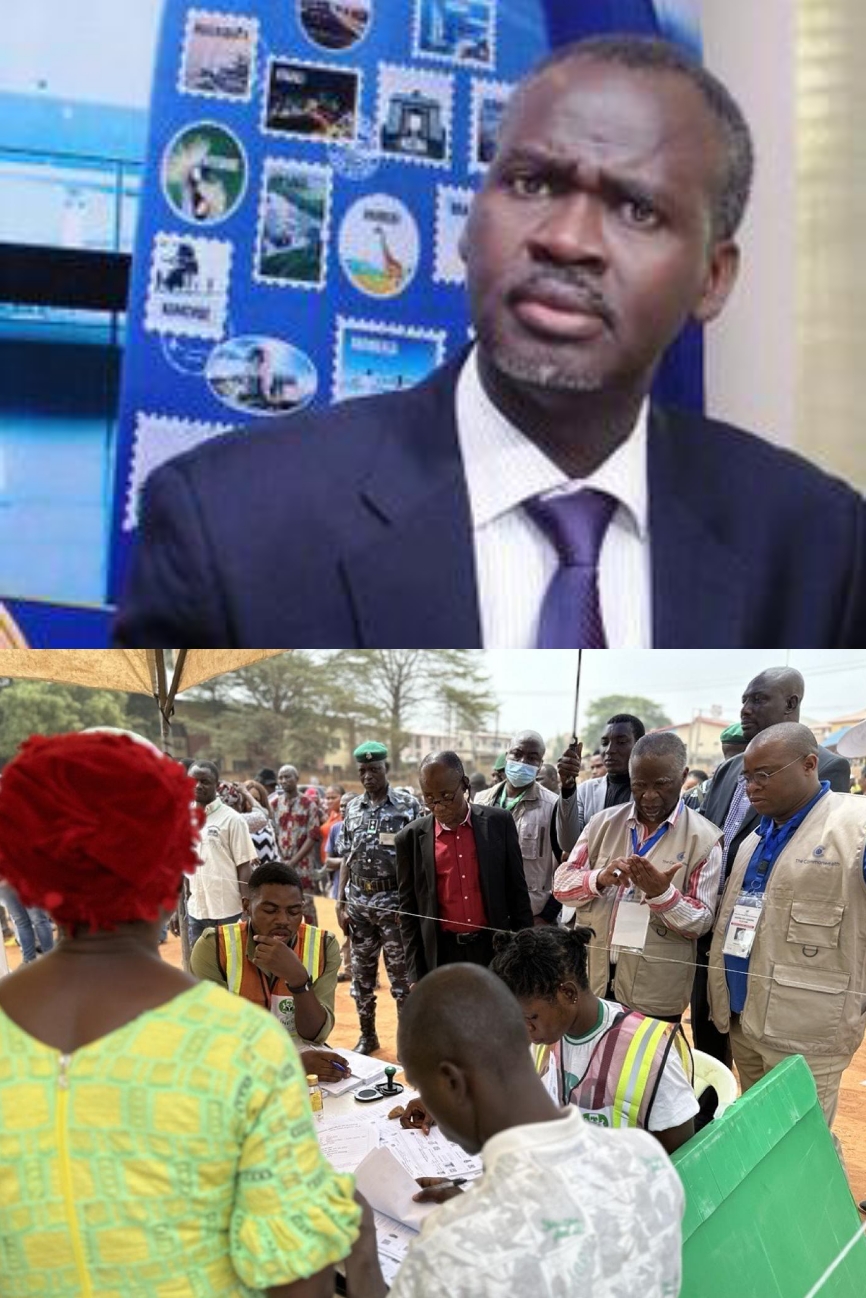
2023 Elections: Outgoing Rwandan High Commissioner say s Nigeria, ‘ handle their destiny’ in a peaceful way.
-
 Entertainment3 years ago
Social media cloth Vendor Found Dead In Ibadan Hotel.
-
 News3 years ago
Ogun HoS Solicit Affordable Housing For Civil Servants
-
Sports3 years ago
CAF SALUTES RIVERS UNITED AFTER SEALING QUARTER-FINAL TICKET.
-
 Trending News3 years ago
FG begins 40% pay rise for workers.
-
 Entertainment3 years ago
9mobile Ambassadors Begin “Meet And Greet” Session With Staffs, Customers.
-
 Health & Wellness3 years ago
Breastfed babies have lower risks of diabetes – Nutritionist