
News
First Bank In Credit Interest Mess, To Pay FAAN N2b


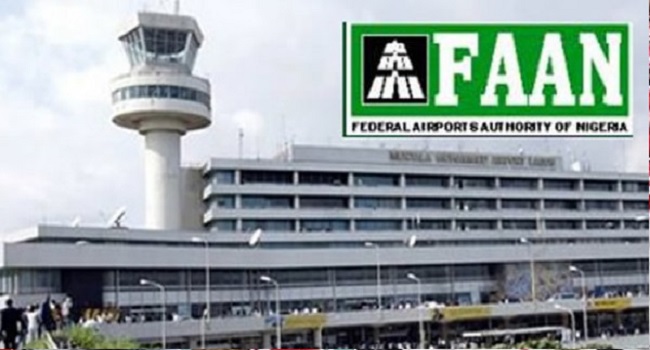
 A Lagos Federal High Court has ordered First Bank of Nigeria (FBN) Plc to pay the sum of N2,937,925,388.52 billion, to the Federal Airports Authority of Nigeria (FAAN) being an interest for not disclosing under-payment of credit interest on deposits in 14 different current accounts domiciled with the bank.
Justice Ayokunle Faji, while delivering judgment in suit numbered FHC/L/CS/67/2021 filed by FAAN, also held that First Bank breached its own professional Code of Ethics, by not disclosing all information on goods and services offered, including the interest rate payable by the bank.
Justice Faji made the above orders and declarations in a judgment delivered on October 9, 2023.
The plaintiff (FAAN) had in its originating Summons dated and filed on January 13, 2021, urged the Court to determine whether First Bank is entitled to pay interest on the applicant’s (FAAN) current deposits in lime with the Central Bank of Nigeria Monetary, Credit Foreign Trade and Exchange Policy Guideline of 2004/2005 No 37, Section 3, Sub-Section 3.2.4(a) Interest Policy, which states that “Banks shall continue to pay interest on current account deposits at rates negotiated between them and their customers.
Consequently, the applicant seeks the following reliefs: “An order for the payment of interest on the underpayment of interest on the current account deposits of the applicant at the respondent’s maximum lending rate from 1st September 2018 up to the date of refund.
“An order for the payment of the sum of N2,117,955, 865.01 billion, being interest on underpayment of credit interest on deposits in the applicant’s current account numbers.
“An Order for the payment of the sum of N819, 969, 523.51 million, being credit interest payable on the applicant’s current account deposits in account numbers: A declaration that in pursuance of the Central Bank of Nigeria Monetary, Credit, Foreign Trade and Exchange Policy Guidelines (Monetary Policy Circular), the Applicant is entitled to credit interest on its current account numbers 2004728814, 2004730671, 2004731403, 2004747983, 2012104714, 2012114742, 2013512417, 2020114013, 2020114439, 2020119427, 2020210135, 2020,211974, 2020213521 and 2020268284; deposits with the respondent.
FAAN Federal Airports Authority of Nigeria
“A declaration that in pursuance of the Central Bank of Nigeria Monetary, Credit, Foreign Trade and Exchange Policy Guidelines (Monetary Policy Circular), the applicant is entitled to receive interest on the credit interest the respondent failed to pay on the current account deposits of the applicant.”
But, in response to the Originating Summons, the First Bank in its 32-paragraph counter affidavit, raised two issues for determination to wit: “Whether having regards to the absence of any negotiation and/or agreement between the applicant and the respondent for payment of interest on the applicant’s current account with the respondent, the applicant is entitled to the reliefs sought on the face of the Originating Summons?
“Whether given the Central Bank of Nigeria’s circular “Time Bar for Resolution of Customer’s Complaint” dated 21st August 2015, this suit is statute-barred and constitutes an abuse of court process?”
First Bank stated that by Section 3.2.10 (a) of the Central Bank of Nigeria Monetary, Credit, Foreign Trade and Exchange Policy Guidelines, the words used in the said Section 3.2.10. (a) are clear and plain and should be given literal or ordinary meaning. It follows, therefore, that before interest can be paid on a current account, the interest rate should have been negotiated and agreed upon between the customer and the bank.
The bank further argued that the applicant did not exhibit or refer to any document to show that it approached or negotiated with the respondent on the interest rate to be paid by the respondent for the credit balances in the applicant’s current accounts with the respondent.
It also stated that the applicant has failed to discharge the burden placed on it by placing sufficient materials before the court, therefore the reliefs sought cannot be granted.
Delivering judgement on the issues raised, Justice Faji held that in line with paragraph 2 of the Bank Customer Bill of Rights and Duties and paragraph 3.5(b) of Nigerian Banking Industry (Professional Code of Ethics and Business Conduct), First Bank is duty bound to disclose to the applicant all information on goods and services offered.
“This seems to me to impose a duty on the defendant as part of the ethics of the banking profession. This is where I therefore have reason to hold that the defendant indeed failed to disclose the interest regime to the plaintiff without which the plaintiff would not have been able to know that the interest was to be negotiated and thus make the first move.
“In any event, it is apparent that a banker owes its customer a fiduciary duty and given the rules guiding the ethics of the banking industry, it seems to me that there was a duty on the defendant to inform the plaintiff of its right to negotiate interest. That duty is imposed by the code of ethics aforesaid which is binding on all banks in Nigeria, the defendant inclusive.
“That is in my view the basis for the fiduciary duty owed the plaintiff by the defendant. It is a code of ethics which the defendant ought to have followed and by which it is bound. By not disclosing such information to the plaintiff, the – defendant had breached its professional code of ethics and that in my view was done to gain an unfair advantage over the plaintiff as regards the payment of interest on current accounts. By those rules, the plaintiff is entitled to information upon which to have a basis to negotiate interest which was not availed by the defendant.
“Furthermore and by paragraph 3.5(b) of Nigerian Banking Industry (Professional Code of Ethics and Business Conduct) 2014, banks are under an obligation to inform their customers about the interest rates applicable to/payable on their deposit, fixed, savings and other accounts.
“This shows clearly that the defendant violated its code of ethics. It is also not in dispute that the interest has not been paid. The plaintiff calculated its expert. The defendant contends that the defendant was not involved in the computation of the interest as done by the plaintiff’s consultant.
“The defendant did not however state its calculation or show its own experts’ report. It also did not an expert show that plaintiffs’ calculations are wrong. I believe the contents of the report tendered by plaintiff’s expert who has shown evidence of experience in matters of this nature.
“I hold that the sums therein stated are due to be paid by the defendant and ought to be so paid. I hold that the sums determined as unpaid interest are due to the plaintiff from the defendant and the defendant is therefore ordered to pay the sums claimed.
“This action therefore succeeds. I answer the 4 questions for determination in the affirmative and in favour of the plaintiff. I grant the declarations sought in reliefs 1 and 3 and make the orders sought in reliefs 2, 4 and 5,” the judge held.



Entertainment
NIBAD 2026: Abike Dabiri To Take Centre Stage As Bunmi Ebony, DJ X-One Host Baltimore Event

The Chairman and Chief Executive Officer of the Nigerians in Diaspora Commission (NiDCOM), Hon. Dr Abike Dabiri-Erewa ( OON) has been scheduled for honour, among other awardees, at the 2026 and the 6th edition of the annual Nigerian Independence Ball, Awards, and Dinner (NIBAD),billed to hold in Baltimore, Maryland, on the 18th of October .
At the instance of Naija Times USA and Raindrop Group led by Olaniyi Thompson Tabi, activities marking the 6th edition of NIBAD commenced on the 3rd of October with Independence carnival in Maryland.
As part of the expanded 6th edition, the Annual Independence stage play titled ‘Your Excellency Sir!’ …The saga of a nation, written and directed by Olaniyi Thompson Tabi, was showcased at a very colorful event on the 9th of October.
Designed to be an unforgettable celebration of Nigeria’s 66th Independence celebration, the grand finale of the celebration is billed for Sunday, the 18th of October, 4.00pm, at Gabriel Community Centre, 6948, Dogwood Road, Windsor Mill, MD 21244.
The evening will not only commemorate Nigeria’s rich history and vibrant culture but will also spotlight the exceptional contributions of Nigerians at home and abroad in various fields such as business, healthcare, education, community service, and more.
The evening will feature a grand awards ceremony to honor those who have demonstrated leadership, innovation, and dedication in their respective industries. Among them, Dr Dabiri- Erewa
Hon. Dr. Abike Kafayat Oluwatoyin Dabiri-Erewa (OON) is a prominent Nigerian politician, public administrator, and former broadcast journalist who has been able to show leadership since her appointment as the Chairman and Chief Executive Officer of the Nigerians in Diaspora Commission (NiDCOM).
To add colour to the event also, is
Dj X-One, reputed as the best Disc Jockey in the DMV area. Bunmi Ebony, a fast rising Juju Artiste in Atlanta will also be on the bandstand to thrill guests at the event to celebrate Nigeria.
****About NIBAD: The Nigerian Independence Ball, Awards, and Dinner (NIBAD) is an annual event that celebrates Nigeria’s Independence while recognizing the achievements of Nigerians in the diaspora. NIBAD aims to highlight the cultural pride, resilience, and accomplishments of Nigerians globally, bringing together community leaders, professionals, and influencers for an evening of celebration, inspiration, and unity.

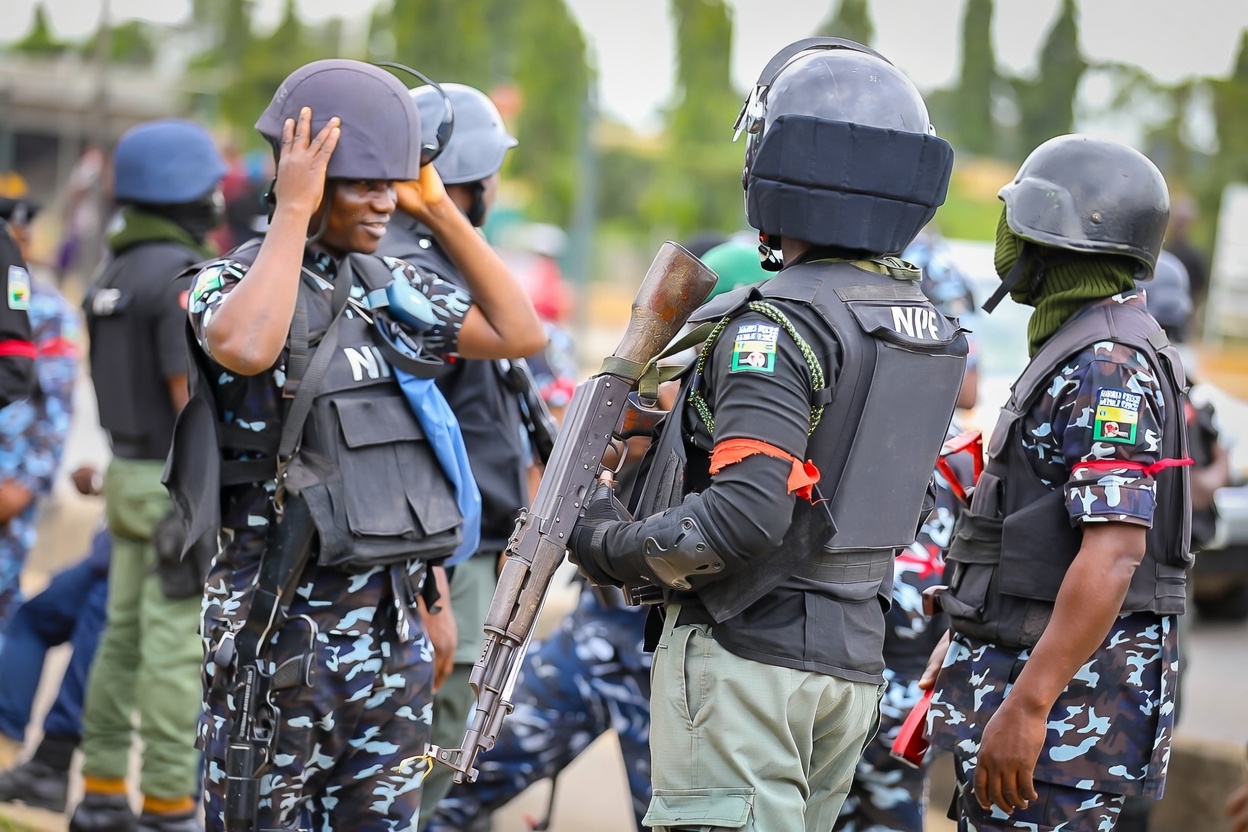
The Rivers State Police Command under CP Olugbenga A. Adepoju has condemned the purported renovation of the Abuloma Police Outpost by suspected cultists and ordered a full investigation into the incident.
Police Public Relations Officer (PPRO) of the command, ASP Blessing Agabe disclosed this in a Friday statement.
She said the command’s action follows a trending social media report and circulating video alleging that suspected cultists renovated the outpost and visited the facility on Thursday, October 15, to celebrate completion of the renovation.
The command said it “strongly condemns any action or association capable of compromising the integrity, discipline and professional standards of the Nigeria Police Force or conferring legitimacy, recognition or acceptance on suspected cult groups or other unlawful organisations.”
It added, “Police facilities are public institutions established for the protection of citizens and the enforcement of law and must not become platforms through which criminal groups seek public validation or influence.”
The command said CP Adepoju maintains zero tolerance for criminality and any conduct that undermines public confidence in the police.
Consequently, he has queried and relieved the Divisional Police Officer in charge of Abuloma Division and the Divisional Officer overseeing the affected outpost of their duties pending investigation.
The CP has also ordered a full investigation to establish the circumstances surrounding the incident and the veracity of the allegations, including the identities and backgrounds of the individuals or groups who financed or facilitated the renovation; the police officers who authorised or approved the project; whether due procedures were followed; whether any officer breached professional standards or compromised the integrity of the force; and the extent of any involvement by police personnel.
The command said while it welcomes legitimate community support for improving police facilities, consistent with Section 26(1)(d) of the Nigeria Police Act 2020, which provides for gifts and contributions to the Police General Fund, such support must not compromise police independence, professional standards or security.
“No donation or assistance confers immunity from investigation or prosecution,” the command stated, adding that the investigation will establish whether necessary approvals were obtained and appropriate checks conducted on those who financed the renovation.
It reiterated that it would not condone unprofessional conduct or any form of improper association with criminal elements and that appropriate disciplinary and legal action would be taken against anyone found culpable.
The Police Command in Benue State has confirmed the abduction of Rev. Fr. John Otache, Parish Priest of St. Margaret’s Parish, Ajegbe-Awume, in Ohimini Local Government Area of the state.
The Police Public Relations Officer, DSP Aondogu Orchia confirmed the incident on Friday in Makurdi.
Orchia said the command had commenced full investigation into the incident and efforts were ongoing to rescue the priest.
Meanwhile, the Catholic Diocese of Otukpo, in a statement signed by the Diocesan Chancellor, Rev. Fr. Joseph Itodo, said the priest was abducted on October 13.
According to Itodo, Otache was returning home from Otukpo when he encountered the abductors along the Otobi Amejo-Ajegbe Road in Ohimini Local Government Area.
He expressed sadness over the incident, saying the Bishop of Otukpo, Most Rev. Michael Apochi, was deeply pained by the development.
He called on priests, religious members, the laity and other well-meaning individuals to pray for the priest’s safe and speedy release.
He also urged prayers for other persons held by kidnappers across the country, expressing hope for their safe return.
-
 Health & Wellness1 year ago
President Tinubu Directs Cut in Dialysis Cost from ₦50,000 to ₦12,000
-
News2 years ago
CBN Debunks Fake Circular on New ₦5,000 and ₦10,000 Notes
-

 Business7 months ago
Dangote Refinery Reduces Petrol Gantry Price To ₦1,200 Per Litre
-

 International News7 months ago
Indian Police Arrest Nigerian Over ₦290m Drug Haul
-

 Business7 months ago
After Plea Bargain, Court Discharges Stella Oduah of ₦2.5bn Fraud
-
Business2 years ago
Dangote; We Did Not Fix ₦600/Litre Petrol Price
-
 Trending News1 year ago
NELFUND Disburses ₦86bn To 449,000 Beneficiaries
-
 Opinion2 years ago
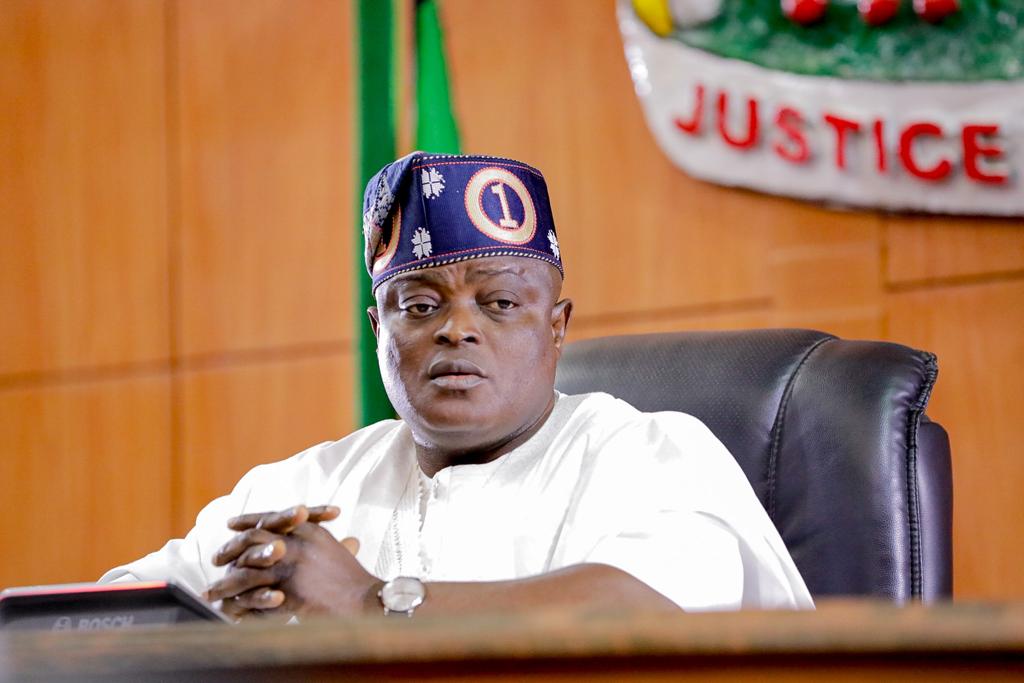
Championing the People’s Voice: Obasa’s Dedication to Grassroots Representation By Dave Agboola⁰