
News
Tinubu: Nigeria Averted Bankruptcy Through Swift Actions

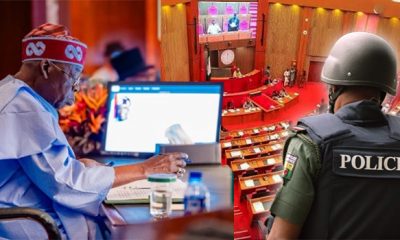
President Bola Tinubu articulated on Thursday the rationale behind his administration’s economic reforms, saying the primary motive was protecting the interests of future generations.
The President said this at the State House in Abuja while receiving a delegation of former National Assembly colleagues from the aborted Third Republic, during which he served as a Senator representing Lagos West.
“For 50 years, Nigeria was spending money of generations yet unborn and servicing the West coast of our subregion with fuel. It was getting difficult to plan for our children’s future,” Tinubu was quoted to have said in a statement by his media aide, Bayo Onanuga.
He highlighted the challenges faced at the beginning of his administration, especially economic and social issues, and expressed his gratitude for the delegation’s support in addressing these difficulties.
“We faced serious headwinds when I took over, very challenging times. Nigeria would have been bankrupt if we had not taken the actions that we took, and we had to prevent the economy’s collapse. President Tinubu declared that the administration had been able to stem the tide and expressed appreciation to Nigerians for their collective support in turning things around.
“Today, we are sitting pretty on a good foundation. We have reversed the problem; the Exchange rate is stabilising. Food prices are coming down, especially during Ramadan. We will have light at the end of the tunnel.”
He said firm adherence to democratic tenets is the best route to economic, social, and political development.
“I am happy that you are holding to your belief in democracy. I thank you for keeping faith and remembering how we started. Some people missed the ball. “Some leadership failed, but we kept the faith with our democratic beliefs and freedom and the right to aspire to the highest office in the land. I am benefitting from it.”
Senator Emmanuel Chiedoziem Nwaka, who spoke on behalf of the group, expressed his delight at some of the programmes that the Tinubu administration had implemented, especially the Nigerian Education Loan Fund (NELFUND) and the Nigerian Consumer Credit Corporation (CREDICORP) and at what the two organisations were offering Nigerians.
“I appreciate you for what you are giving to students because the student population is the largest demographic in the country. I’ve spoken with many of them, and many have benefited from it.
“And the next one is the CREDICORP. That’s a major way of fighting corruption. You see a young man, you come out of school, you want to buy a car, you have to put down cash, you want to buy a house, and you are not married, but with the CREDICORP, you can get things done. I’m following their activities; we are delighted,” he said.
Other members of the delegation were Sen. Bako Aufara Musa, Hon. Terwase Orbunde, Hon. Wasiu Logun, Hon. Amina Aliyu, High Chief Obi Anoliefo and Hon. Eze Nwauwa.






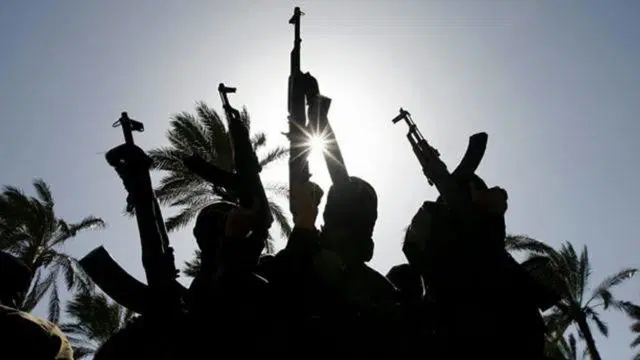
Bandits holding Saidu Abubakar, a young English language teacher and aide to a Social Democratic Party (SDP) governorship aspirant in Zamfara State, have demanded an additional N10 million ransom after collecting the same amount from his family, the Youth Rights Campaign (YRC) has disclosed.
Abubakar was abducted alongside other passengers during a daylight attack along the Tsafe–Magezu axis of Zamfara State on August 25, 2026.
In a statement issued on Wednesday, YRC condemned his continued captivity, noting that the abductors circulated a video showing Abubakar and another victim, identified as an airport staff member, pleading for help to raise the fresh ransom.
According to the statement signed by YRC National Coordinator, Michael Adaramoye Lenin, and National Secretary, Francis Nwapa, the victim’s family has already paid ₦10 million to the abductors, but the bandits have demanded another ₦10 million before releasing him.
The group said the development has left Abubakar’s family financially drained while the victim remains in captivity.
“Since our last statement, Saidu’s family and friends, acting entirely on their own and without any meaningful support from those who ought to have stepped in, have scraped together and paid the sum of Ten Million Naira (₦10,000,000) to the bandits holding him,” YRC said.
“Rather than honour this payment with his release, the bandits have returned with a fresh demand for an additional Ten Million Naira (₦10,000,000) before they will let him go.”
The group described the situation as an example of what it called Nigeria’s “kidnapping economy,” where families are forced to exhaust their resources negotiating for the freedom of relatives abducted by armed groups.
YRC said it is particularly disturbing that Abubakar and the other victim were reduced to pleading for their lives in a video after being abducted while carrying out lawful activities.
“That two Nigerians, a teacher and an aviation worker, going about lawful business, should be reduced to pleading on camera for their lives because the state cannot keep its roads safe is a national disgrace,” the group said.
YRC accused the Zamfara State Government and the APC-led Nigerian Government of failing to adequately protect citizens amid the worsening insecurity in the North-West.
The group said the victims have remained in captivity for weeks despite the involvement of security agencies, noting that two people were reportedly killed during the initial attack.
“Weeks after this abduction, with two lives already lost in the initial attack, the victims remain in captivity, forced to beg for their own ransom on camera, while security agencies that consume trillions of naira in federal allocations and billions of naira in monthly state security votes have yet to secure their rescue,” YRC said.
The group questioned how huge public expenditure on security had translated into the protection of citizens, particularly on major roads where armed groups continue to operate.
“Nigerians are entitled to demand accountability: what have these enormous sums purchased, if citizens can still be abducted in broad daylight on a federal corridor and left to negotiate their own survival for weeks on end?” the group asked.
YRC described the prolonged captivity of Abubakar and other victims as a “damning indictment” of what it described as failures at both state and federal levels.
It also warned that the worsening insecurity in Zamfara and other parts of the North-West should no longer be treated as an abstract security challenge.
YRC demanded the immediate and unconditional release of Abubakar and all other victims still being held by the bandits.
The group also called on the Zamfara State Police Command, Department of State Services (DSS) and Nigerian military to intensify efforts to rescue the victims.
YRC further demanded that the Zamfara State and Federal Governments account for how security budgets and security votes have been deployed to prevent and respond to kidnappings and other attacks.
The group said it would continue to campaign for the release of Abubakar, the airport staff member, and other victims still in captivity.
“YRC will not relent in amplifying this case until Saidu Abubakar, the airport staff victim, and every other person still in captivity are safely released,” the group said.
YRC also called on media organisations, civil society groups and Nigerians to join the campaign for the victims’ safe release.
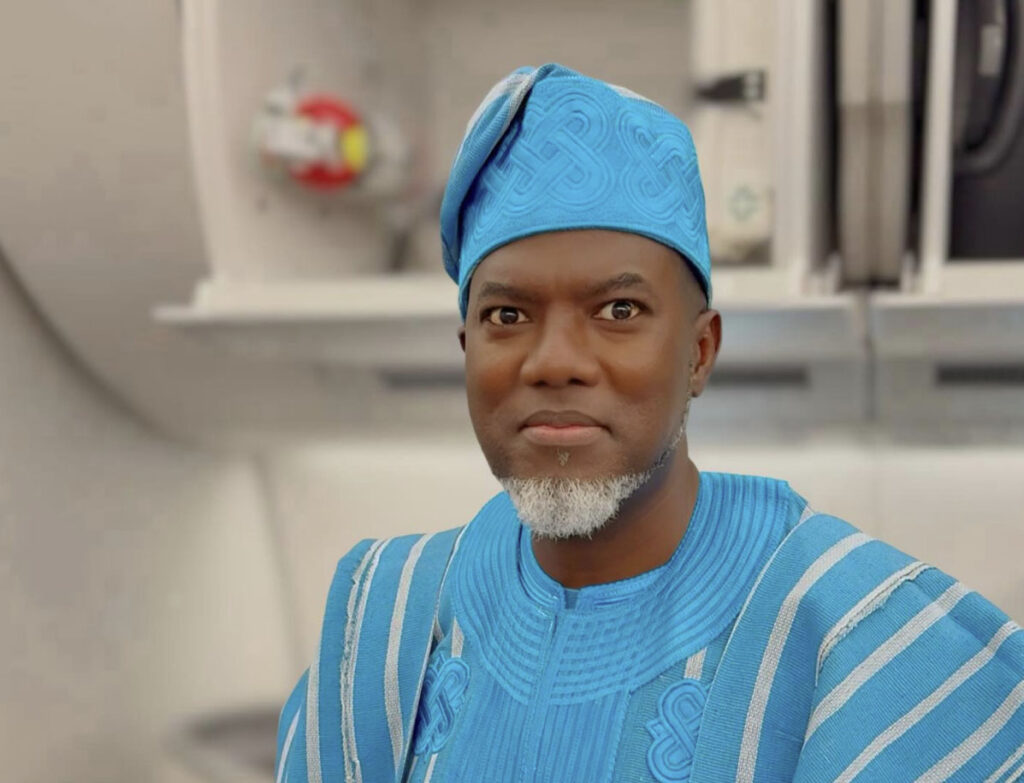
The Mexican government has formally approved Reno Omokri’s appointment as Nigeria’s ambassador to Mexico, bringing an eight-month wait for diplomatic clearance to an end.
Omokri announced the development in a post on X on Tuesday, saying the Mexican government had granted the diplomatic approval, known as agrément, required for his appointment.
According to him, José Manuel Briseño Flores, chargé d’affaires of the Embassy of Mexico in Abuja, presented the formal approval to Babagana Wakil, director of protocol at Nigeria’s Ministry of Foreign Affairs.
The approval clears the way for Omokri to serve as Nigeria’s ambassador extraordinary and plenipotentiary to Mexico, with concurrent accreditation to Guatemala, Honduras and Nicaragua.
Expressing gratitude over the development, Omokri said the diplomatic clearance was formally conveyed in Abuja.
“To God be the glory, the Chargé d’affaires of the Embassy of the United Mexican States in Abuja, Mr José Manuel Briseño Flores, today in Abuja delivered the agrément from the Government of the United Mexican States accepting me,” he said.
The approval resolves the delay that had surrounded Omokri’s posting since President Bola Tinubu approved the deployment of ambassador-designates and high commissioners earlier in the year.
In March, Tinubu approved the posting of 65 ambassador-designates and high commissioners to their respective countries, with Omokri assigned to Mexico.
However, his deployment remained pending because the Mexican government had yet to communicate the formal diplomatic consent required to complete the process.
The delay was subsequently acknowledged by the Ministry of Foreign Affairs, which said in August that Mexico and Japan were among the countries that had yet to formally approve two outstanding ambassadorial appointments.
The ministry explained that it was engaging the relevant authorities in the affected countries to secure the necessary clearances, expressing confidence that the approvals would be communicated in due course.
With Mexico’s approval now secured, the uncertainty surrounding Omokri’s appointment has been resolved.
Agrément is the formal consent granted by a receiving country before a diplomat nominated by another country can be appointed as its ambassador. It is a standard requirement in diplomatic practice and precedes the completion of an ambassador’s accreditation process.
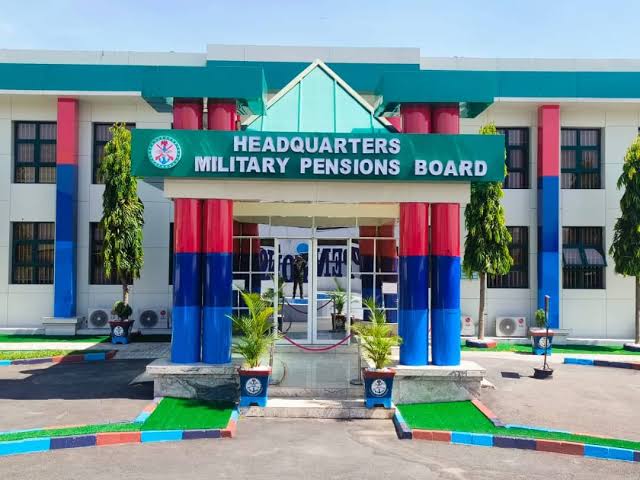
Barely one week after intense disagreement between the management of the Military Pension Board and the retired officers of the Armed Forces, the Chairman of the Board has been replaced, report says.
The report mentioned that sources familiar with the development revealed that last faceoff with the veterans was described as an “embarrassment” to the military high command and the President, who is the Commander-in-Chief.
The faceoff between both parties reached crescendo when a shouting match ensued during a meeting that was later deadlocked.
The meeting came after the protesting retired officers had shut the main gate of the Board’s headquarters over what they described as wrong computation of their take-home and other entitlements.
The protesters, led by a retired Lieutenant-Colonel, Innocent Azubuike, arrived in their numbers as early as 8:30am, while calling on the President to intervene in the matter.
They said their action became imperative after it was observed that the Board was trying to create unnecessary disparities in the pension structures and payments.
Days after the faceoff, both parties couldn’t reach a common ground – the development a source said it also embarrassed the Minister of Defence, Gen. Christopher Musa (Rtd) and the Chief of Defence Staff.
However, report indicates on Wednesday that Mikail Abdulraheem, an Air Vice Marshal in the Nigerian Air Force, has been removed by the authorities over the incident.
A senior officer within the military, who did not want his name in print, said AVM Abdulraheem would step aside and hand over today (Wednesday) to another person who will continue to pilot the affairs of the Board.
“That last week protest by the veterans really embarrassed the Presidency and the military. I think that is the reason the Chairman is being asked to step aside” the report said.
-
 Health & Wellness1 year ago
President Tinubu Directs Cut in Dialysis Cost from ₦50,000 to ₦12,000
-
News2 years ago
CBN Debunks Fake Circular on New ₦5,000 and ₦10,000 Notes
-

 Business7 months ago
Dangote Refinery Reduces Petrol Gantry Price To ₦1,200 Per Litre
-
 International News7 months ago
Indian Police Arrest Nigerian Over ₦290m Drug Haul
-
 Business7 months ago
After Plea Bargain, Court Discharges Stella Oduah of ₦2.5bn Fraud
-
Business2 years ago
Dangote; We Did Not Fix ₦600/Litre Petrol Price
-
 Trending News1 year ago
NELFUND Disburses ₦86bn To 449,000 Beneficiaries
-
 Opinion2 years ago
Championing the People’s Voice: Obasa’s Dedication to Grassroots Representation By Dave Agboola⁰