
International News
Trump Offers More US Troops In Talks With Poland’s Nationalist President


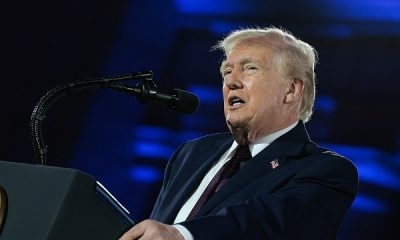
President Donald Trump hosted the new Polish President Karol Nawrocki on Wednesday at the White House, accompanied by a military flyover and an offer to send more US troops to the eastern European ally.
Talks were expected to focus on efforts to end the war in Ukraine, where Trump’s peacemaking efforts have been struggling to get traction.
Trump called it a “stupid war” and said he thought ending it would have been “much easier” for him.
“It’s going to get done,” he vowed to reporters in the Oval Office, with Nawrocki at his side.
Nawrocki, a nationalist historian and fervent Trump supporter, was in Washington for his first foreign visit as president after having visited the US leader to seek his backing during the Polish election campaign.
Trump gave him a warm welcome, including an offer to boost the US military footprint in Poland.
“We’ll put more there if they want,” he said in the Oval Office. “We’re with Poland all the way and we’ll help Poland protect itself.”
Nawrocki praised the US troop presence and said it was “the first time in history” that Poland had been happy to host foreign troops, while stressing that Warsaw aims to keep increasing its own military spending within the NATO alliance.
The White House said a flyover by F-16 and F-35 jets during Nawrocki’s arrival commemorated the death of a Polish F-16 jet pilot killed last week while preparing for an air show.
Deputy Press Secretary Anna Kelly said in a statement to AFP that the flyover, which featured a so-called “missing-man formation,” was staged to “honor the memory of a brave Polish fighter pilot, whose life was tragically taken too soon, and capture the special relationship between our two countries.”
While Trump and Nawrocki see eye-to-eye politically, Poland is closely watching the US leader’s peace efforts in neighboring Ukraine, which Warsaw has largely been frozen out of.
Ukraine war rages on

Key NATO and EU member Poland has been a strong supporter of Ukraine since Russia’s 2022 invasion and is a vital transit country for military and humanitarian supplies, as well as host to thousands of US troops.
Trump’s efforts to get Russian President Vladimir Putin and Ukrainian President Volodymyr Zelensky to the negotiating table have so far stalled.
Putin vowed during a visit to Beijing on Wednesday to keep fighting in Ukraine if a peace deal cannot be reached, while Zelensky said he hoped to talk to Trump on Thursday about possible additional sanctions against Russia.
Nawrocki will also be seeking fresh support from Trump amid deep political polarization in Poland between himself and his country’s pro-EU government, led by former European Council chief Donald Tusk.
The novice Polish president recently blocked a law extending Ukrainian refugees’ rights proposed by Tusk’s government. Nawrocki has also, like Trump, opposed Ukraine’s desire for NATO membership.
The visit is nevertheless a chance for Trump to celebrate the election of yet another right-wing ally in Europe.
Trump welcomed Nawrocki to the Oval Office in June before the Polish election, with the White House posting a picture of the pair grinning and giving the thumbs-up sign.
During the election campaign, Nawrocki highlighted the importance of ties with the United States and his close ties with Trump. His “Poland First, Poles First” echoed Trump’s “America First” slogan

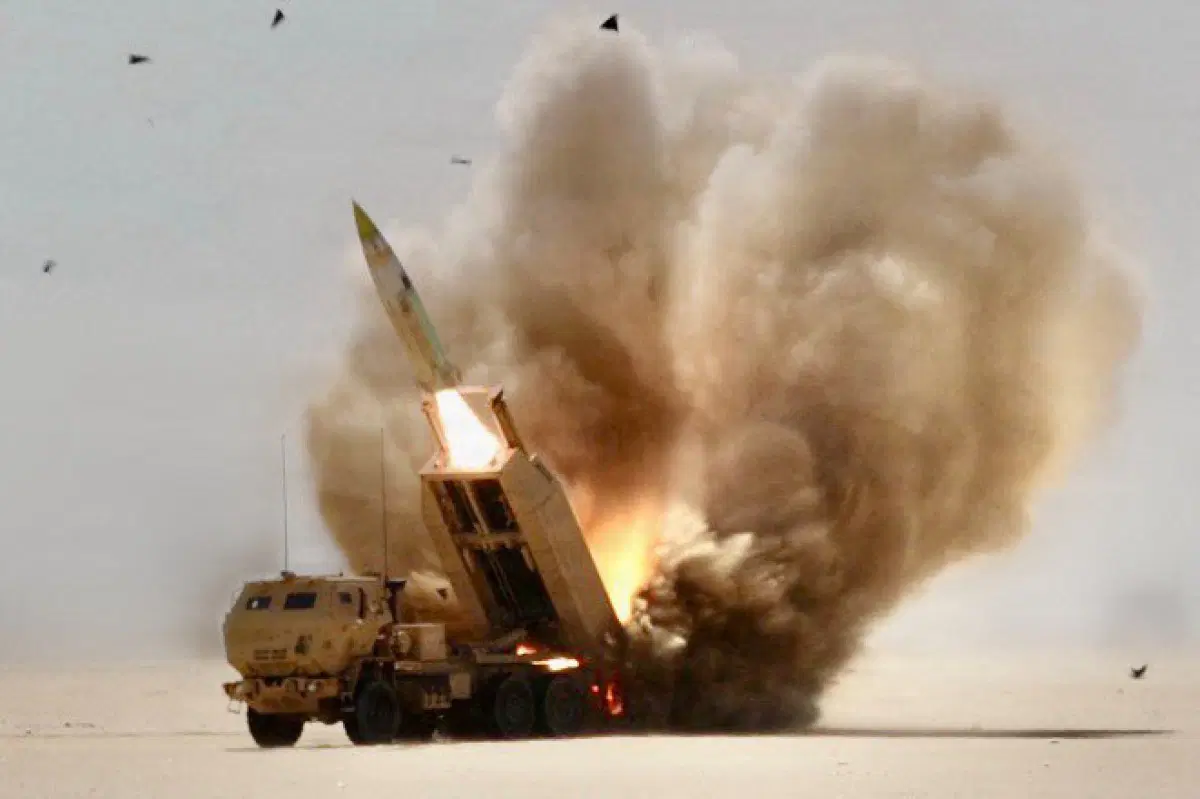


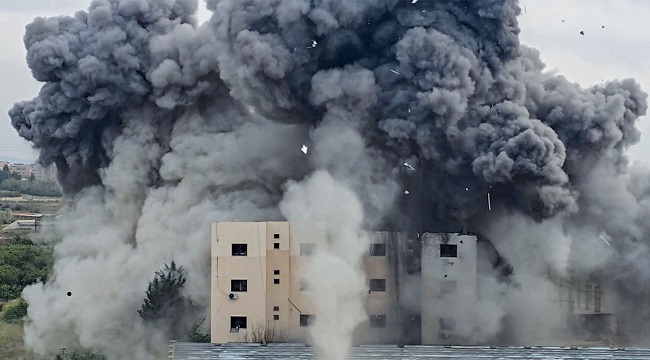
Defence Minister Israel Katz announced on Thursday that an Israeli airstrike had killed Alireza Tangsiri, commander of the Iranian Revolutionary Guards’ navy.
“Last night, in a precise and lethal operation, the IDF eliminated the commander of the Revolutionary Guards’ navy, Tangsiri, along with senior officers of the naval command,” Katz said in a video statement.
“The man who was directly responsible for the terrorist operation of mining and blocking the Strait of Hormuz to shipping was blown up and eliminated.”
Since the start of the joint US-Israeli attacks on Iran on February 28, Israel has announced the killing of several top Iranian officials, including supreme leader Ali Khamenei and the Islamic republic’s powerful security chief, Ali Larijani.
In recent days, Israeli forces have carried out several strikes targeting the naval assets of Iran.
Last week, Israeli airstrikes hit several Iranian naval ships in the Caspian Sea, including ones equipped with missile systems, support vessels and patrol craft.
AFP
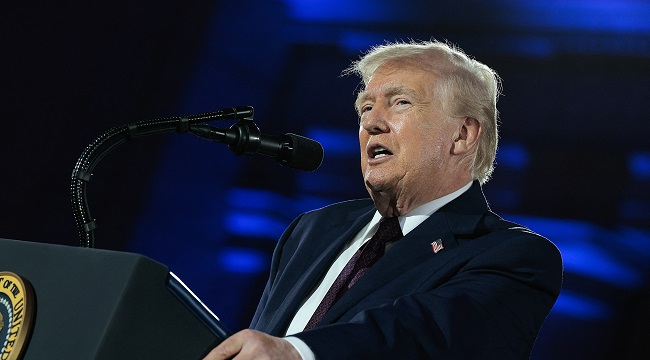
US President Donald Trump insisted Wednesday that Iran was taking part in peace talks, suggesting Tehran’s denials were because Iranian negotiators fear being killed by their own side.
“They are negotiating, by the way, and they want to make a deal so badly. But they’re afraid to say it, because they figure they’ll be killed by their own people,” Trump told a dinner for Republican members of Congress.
“They’re also afraid they’ll be killed by us.”
The US leader’s comments came after Iranian Foreign Minister Abbas Araghchi said that “we do not intend to negotiate”.
Trump repeated his assertion that Iran was being “decimated” in the conflict now in its fourth week, even though Tehran still maintains an effective stranglehold over the crucial Strait of Hormuz oil route.
Lashing out at his domestic opponents, Trump also claimed Democrats were trying to “deflect from all of the tremendous success that we’re having in this military operation.”
In a mocking reference to calls from Democrats for him to seek the approval of Congress for the conflict, Trump added: “They don’t like the word ‘war,’ because you’re supposed to get approval, so I’ll use the word military operation.”
The White House said earlier that Trump was ready to “unleash hell” if Iran did not admit defeat, while also insisting that Tehran is still taking part in talks.
Iranian state media had earlier cited an unidentified official as saying that the Islamic republic had responded “negatively” to a reported 15-point plan from Washington.
‘Talks continue’
“If Iran fails to accept the reality of the current moment, if they fail to understand that they have been defeated militarily and will continue to be, President Trump will ensure they are hit harder than they have ever been hit before,” Press Secretary Karoline Leavitt told reporters.
“President Trump does not bluff and he is prepared to unleash hell. Iran should not miscalculate again.”
Asked if negotiations with Iran had stalled, Leavitt replied: “Talks continue. They are productive.”
Leavitt declined to say whom the US was dealing with in Tehran following the assassination of supreme leader Ali Khamenei, whose son and successor Mojtaba Khamenei has not been seen in public.
Reports have suggested the Trump administration’s interlocutor is Mohammad Bagher Ghalibaf, Iran’s speaker of parliament and one of its most prominent non-clerical figures.
The spokeswoman also declined to confirm reports that top US officials including Vice President JD Vance were set to hold talks with the Iranians in Pakistan, which has emerged as a key mediator.
Trump is moving thousands of airborne troops and extra marines to the Gulf amid speculation that he might order a ground invasion to either seize Iranian oil assets in the Gulf or secure the Strait of Hormuz.
The White House meanwhile appeared to stick to the four to six-week timeline it has previously given for the war.
Trump announced Wednesday that his visit to China to meet Xi Jinping had now been rescheduled for mid-May, having postponed it by six weeks to deal with the conflict.
“We’ve always estimated approximately four to six weeks (for the length of military operations against Iran), so you could do the math on that,” Leavitt added.
AFP
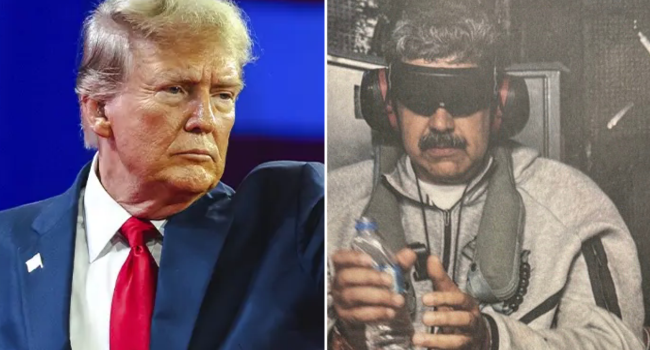
Ousted Venezuelan president Nicolas Maduro will appear in a New York court on Thursday for the second time since his capture by US forces in an extraordinary nighttime raid.
Maduro, 63, and his wife, Cilia Flores, have been held in a Brooklyn jail for almost three months after American commandos snatched the pair from their compound in Caracas in early January.
The stunning operation deposed the strongman who had led Venezuela since 2013 and has since forced the oil-rich country to largely bend to the will of US President Donald Trump.
Maduro has declared himself a “prisoner of war” and pleaded not guilty to the four counts of “narco-terrorism” conspiracy, cocaine importation conspiracy, possession of machine guns and destructive devices, and conspiracy to possess machine guns and destructive devices.
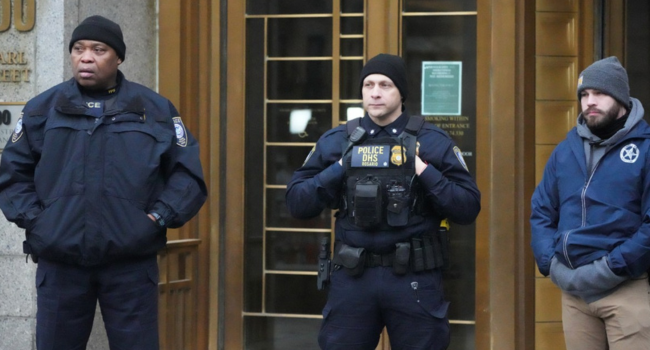
Thursday’s hearing at 11 a.m. (1500 GMT) will likely see Maduro push for the dismissal of his case as lawyers tussle over who will pay the former leader’s legal fees.
Venezuela’s government is seeking to cover the costs, but because of Washington’s sanctions, his lawyer, Barry Pollack, must obtain a US license that has not been issued.
Pollack argued in a court submission that the license requirement violated Maduro’s constitutional right to legal representation and demanded the case be thrown out on procedural grounds.
Deadly Raid
Detained in Brooklyn’s Metropolitan Detention Centre, a federal prison known for unsanitary conditions, Maduro is reportedly alone in a cell with no access to the internet or newspapers.
A source close to the Venezuelan government said the incarcerated Maduro reads the Bible and is referred to as “president” by some of his fellow detainees
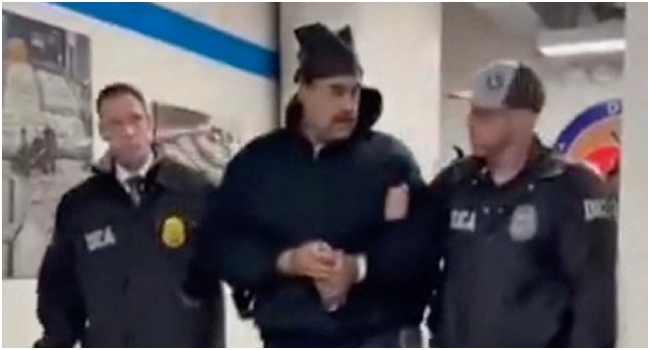
He is only allowed to communicate by phone with his family and lawyers for a maximum of 15 minutes per call, the source added.
“The lawyers told us he is strong. He said we must not be sad,” said his son, Nicolas Maduro Guerra, adding his father told him: “We are fine, we are fighters.”
Maduro and his wife were forcibly taken by US commandos in the early hours of January 3 in airstrikes on the Venezuelan capital backed by warplanes and a heavy naval deployment.
At least 83 people died, and more than 112 people were injured in the assault, according to Venezuelan officials.
No US service members were killed.
US Pressure
At his first US court appearance in January, Maduro struck a defiant tone as he identified himself as the president of Venezuela despite being captured.
The South American country is now led by Delcy Rodriguez, who has been Maduro’s vice president since 2018.
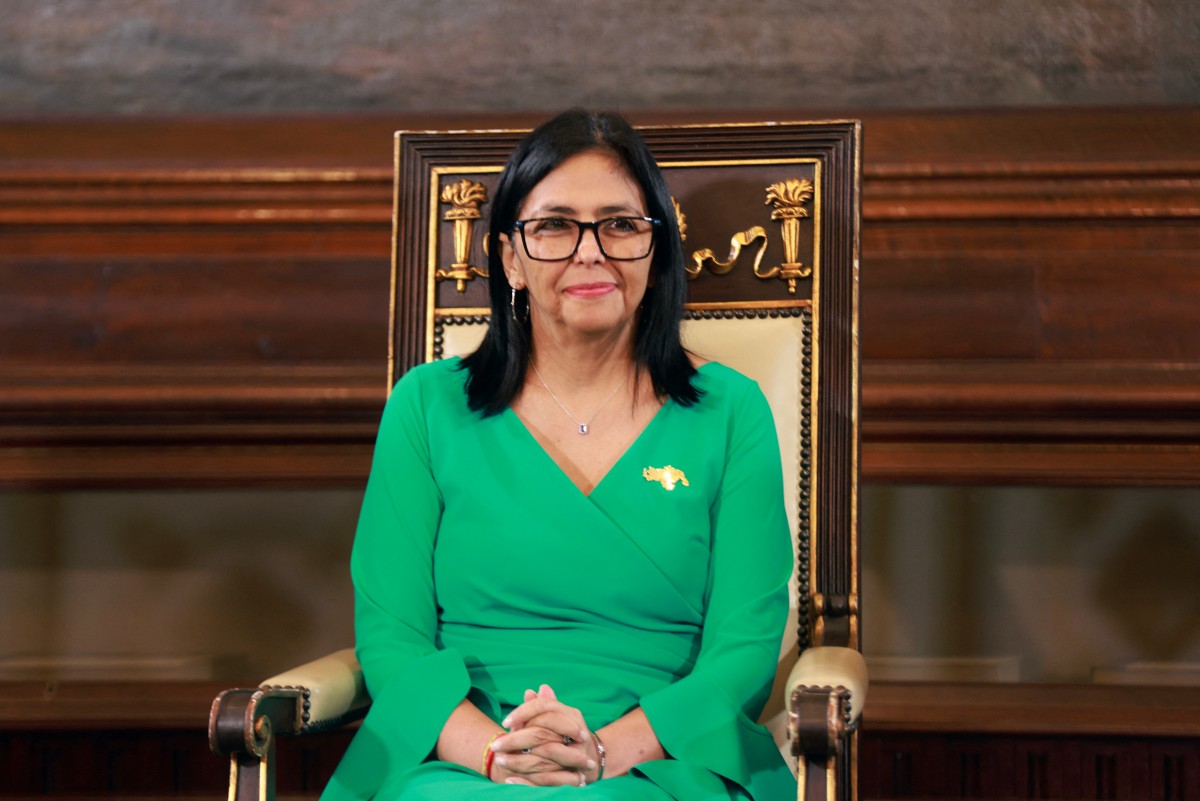
Under US pressure, she is grappling with leading a country saddled with the world’s largest proven oil reserves but an economy in shambles.
Rodriguez has since enacted a historic amnesty law to free political prisoners jailed under Maduro and reformed oil and mining regulations in line with US demands for access to her country’s vast natural wealth.
This month, the State Department said it was restoring diplomatic ties with Venezuela in a sign of thawing relations.
Security is expected to be heightened around the New York courthouse for Thursday’s hearing.
Presiding over the case is Alvin Hellerstein, a 92-year-old judge credited with overseeing several high-profile trials during his decades on the bench.
AFP
-
 News3 years ago
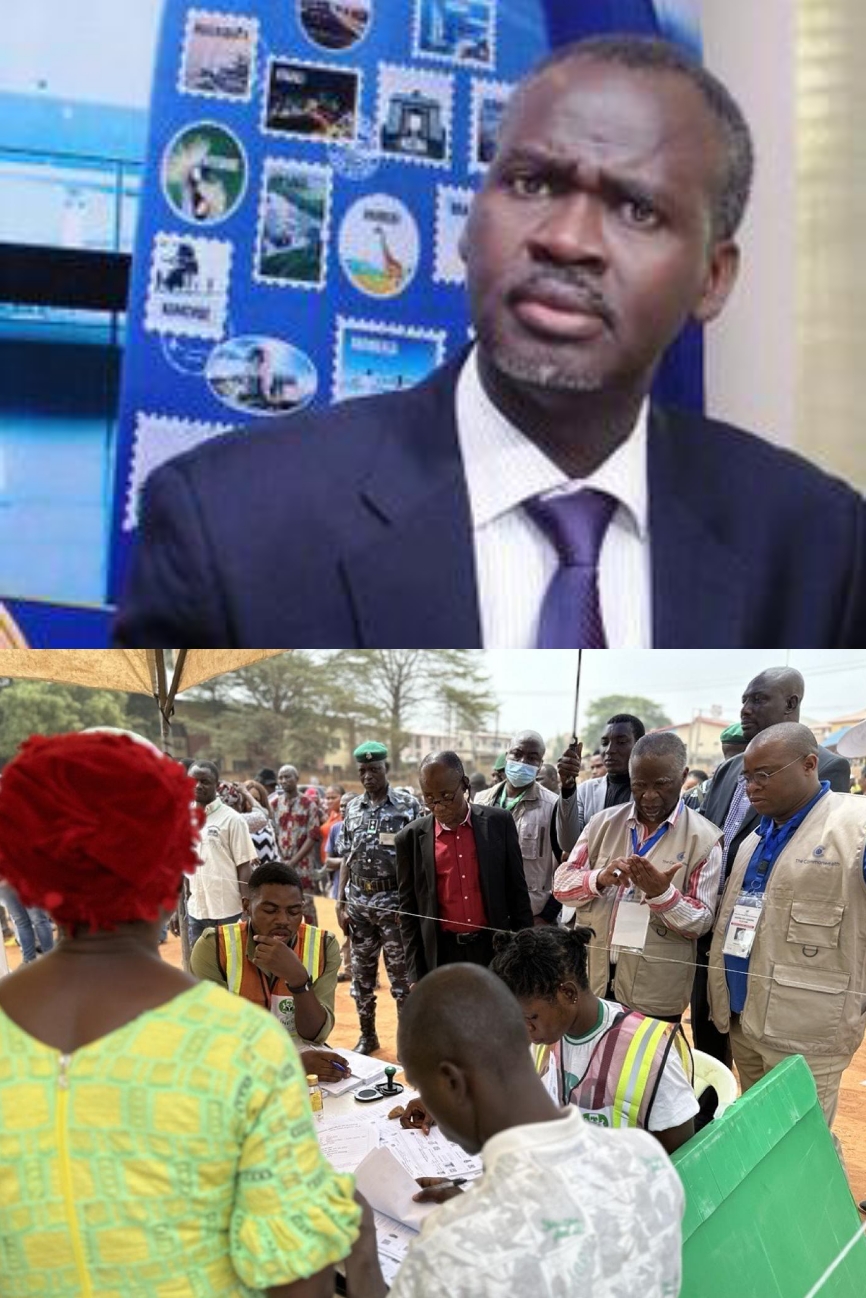
2023 Elections: Outgoing Rwandan High Commissioner say s Nigeria, ‘ handle their destiny’ in a peaceful way.
-
 News3 years ago
Just In: President Tinubu returns to Nigeria
-
 Entertainment3 years ago
Social media cloth Vendor Found Dead In Ibadan Hotel.
-
 News3 years ago
Ogun HoS Solicit Affordable Housing For Civil Servants
-
 Entertainment3 years ago
9mobile Ambassadors Begin “Meet And Greet” Session With Staffs, Customers.
-
 Trending News3 years ago
FG begins 40% pay rise for workers.
-
Sports3 years ago
CAF SALUTES RIVERS UNITED AFTER SEALING QUARTER-FINAL TICKET.
-
 Health & Wellness3 years ago
Breastfed babies have lower risks of diabetes – Nutritionist