
International News
Venezuela’s Maduro Back In US Court After Dramatic Capture

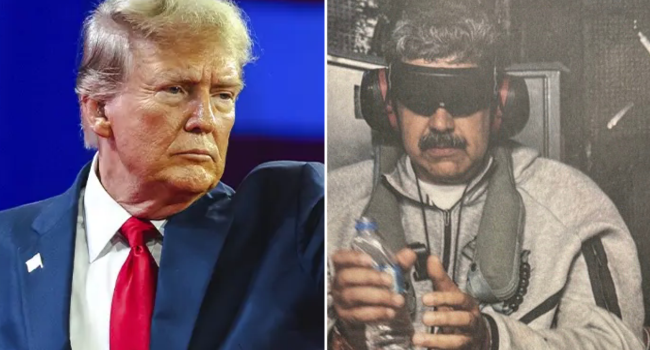
Ousted Venezuelan president Nicolas Maduro will appear in a New York court on Thursday for the second time since his capture by US forces in an extraordinary nighttime raid.
Maduro, 63, and his wife, Cilia Flores, have been held in a Brooklyn jail for almost three months after American commandos snatched the pair from their compound in Caracas in early January.
The stunning operation deposed the strongman who had led Venezuela since 2013 and has since forced the oil-rich country to largely bend to the will of US President Donald Trump.
Maduro has declared himself a “prisoner of war” and pleaded not guilty to the four counts of “narco-terrorism” conspiracy, cocaine importation conspiracy, possession of machine guns and destructive devices, and conspiracy to possess machine guns and destructive devices.
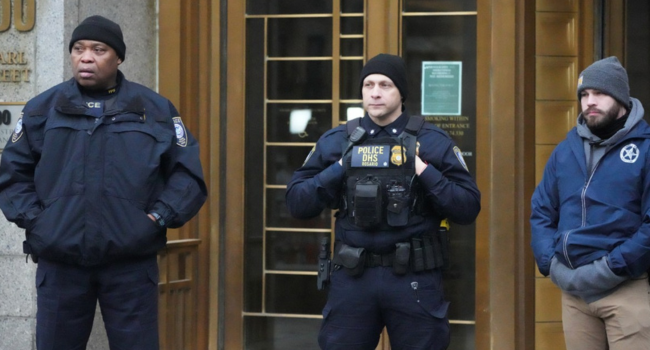
Thursday’s hearing at 11 a.m. (1500 GMT) will likely see Maduro push for the dismissal of his case as lawyers tussle over who will pay the former leader’s legal fees.
Venezuela’s government is seeking to cover the costs, but because of Washington’s sanctions, his lawyer, Barry Pollack, must obtain a US license that has not been issued.
Pollack argued in a court submission that the license requirement violated Maduro’s constitutional right to legal representation and demanded the case be thrown out on procedural grounds.
Deadly Raid
Detained in Brooklyn’s Metropolitan Detention Centre, a federal prison known for unsanitary conditions, Maduro is reportedly alone in a cell with no access to the internet or newspapers.
A source close to the Venezuelan government said the incarcerated Maduro reads the Bible and is referred to as “president” by some of his fellow detainees
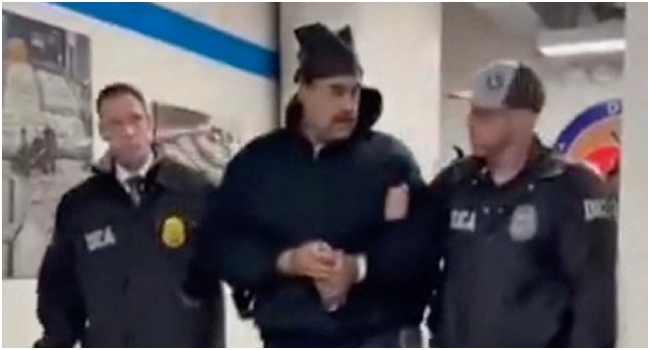
He is only allowed to communicate by phone with his family and lawyers for a maximum of 15 minutes per call, the source added.
“The lawyers told us he is strong. He said we must not be sad,” said his son, Nicolas Maduro Guerra, adding his father told him: “We are fine, we are fighters.”
Maduro and his wife were forcibly taken by US commandos in the early hours of January 3 in airstrikes on the Venezuelan capital backed by warplanes and a heavy naval deployment.
At least 83 people died, and more than 112 people were injured in the assault, according to Venezuelan officials.
No US service members were killed.
US Pressure
At his first US court appearance in January, Maduro struck a defiant tone as he identified himself as the president of Venezuela despite being captured.
The South American country is now led by Delcy Rodriguez, who has been Maduro’s vice president since 2018.
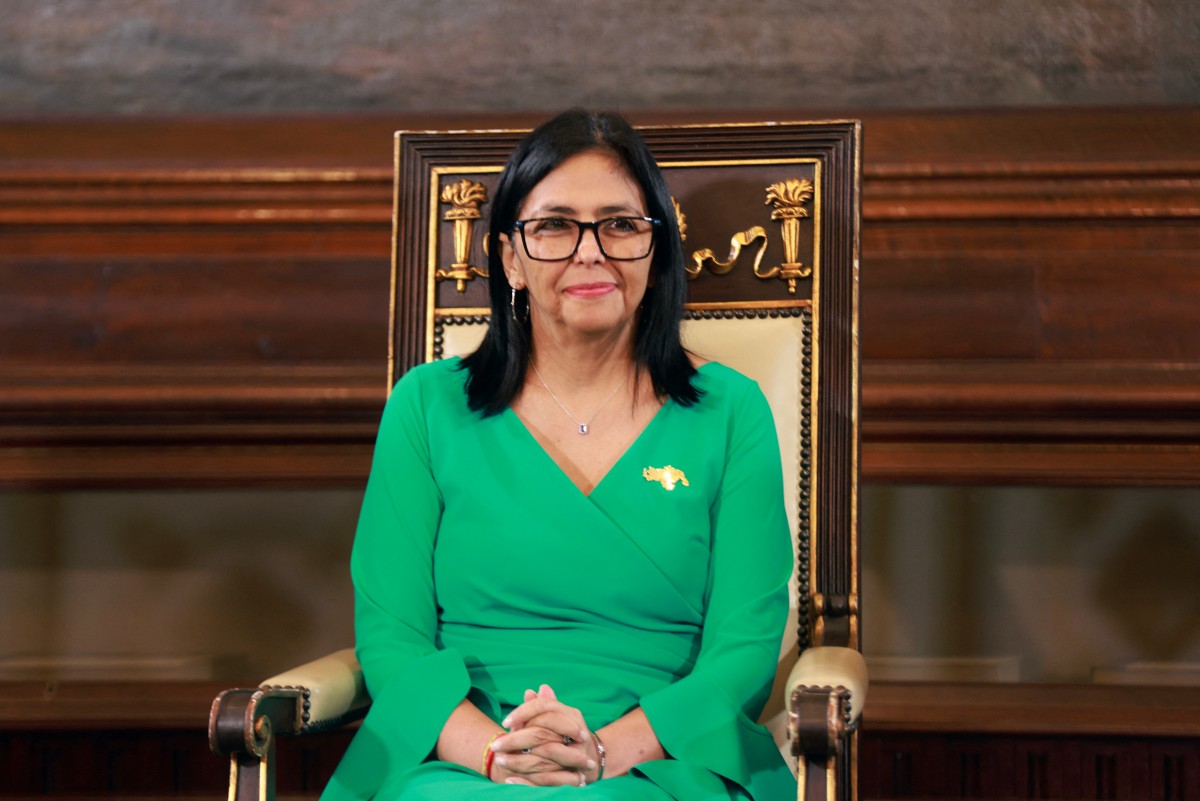
Under US pressure, she is grappling with leading a country saddled with the world’s largest proven oil reserves but an economy in shambles.
Rodriguez has since enacted a historic amnesty law to free political prisoners jailed under Maduro and reformed oil and mining regulations in line with US demands for access to her country’s vast natural wealth.
This month, the State Department said it was restoring diplomatic ties with Venezuela in a sign of thawing relations.
Security is expected to be heightened around the New York courthouse for Thursday’s hearing.
Presiding over the case is Alvin Hellerstein, a 92-year-old judge credited with overseeing several high-profile trials during his decades on the bench.
AFP
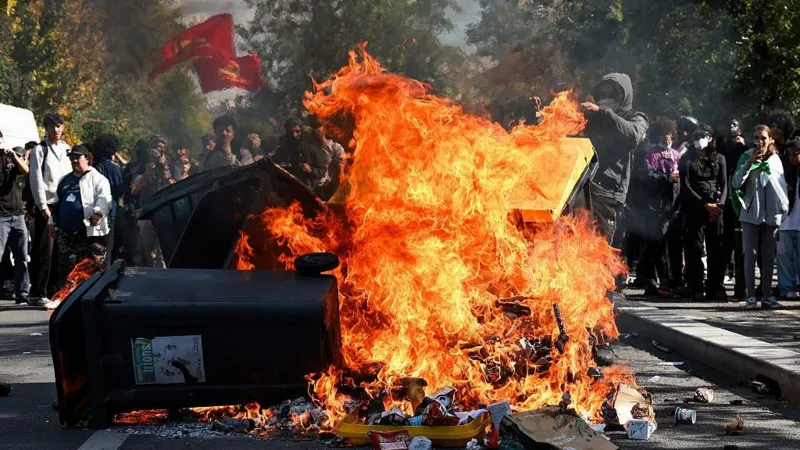
French students have set fire to school entrances and blocked education facilities across the country as protests over teacher shortages, overcrowded classrooms and deteriorating school buildings escalated into violent clashes on Thursday, October 1.
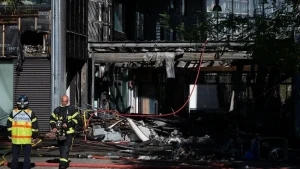
The fires broke out at two high schools in Nantes, western France, while another blaze was recorded at a school in Rouen.
The demonstrations, which began last week, have spread to hundreds of secondary schools and at least 30 universities, with students demanding more teachers, better facilities and improved learning conditions.
In Nantes, a fire at Nelson Mandela High School spread from a burning rubbish bin to the front of the building, damaging the entrance hall.
Another school in the city was also affected by a fire, while footage showed flames at the entrance of a school in Rouen.
The unrest was also reported in Marseille, where staff at Victor Hugo High School were splashed with petrol as protesters reportedly carried containers.
At Saint-Exupery High School, protesters set fire to a fire truck, according to Reuters.
A headteacher at Degrugillier High School in Auchel was also injured in the ear by a firework during the unrest, while authorities reported clashes and arrests in several locations.
French Prime Minister Sébastien Lecornu held a crisis meeting on Thursday following the escalation.
The government later described parts of the demonstrations as having descended into what it called “urban violence.”
French authorities said hundreds of people had been arrested as the protests spread. Interior Minister Laurent Nuñez said 625 people had been detained, while 83 police officers and gendarmes were injured. Education Minister Édouard Geffray said 119 people, including students and school staff, had been injured.
The protests have centred on complaints about shortages of teachers and supervisors, overcrowded classrooms and poorly maintained school buildings. Students have also raised concerns about inadequate facilities, including classrooms, toilets and canteens.
Seventeen-year-old Raphael, who joined a protest in Strasbourg, said that some rooms at his school had leaks and that the institution lacked enough toilets. He also complained about a small cafeteria, limited resources and insufficient supervisors.
The demonstrations have now extended beyond secondary schools, with university students joining the action.
At least 30 universities have reportedly been blocked, including campuses in Paris and Rennes.
Public transport has also been disrupted in parts of the country. Services in Marseille and Strasbourg were halted on Thursday following incidents involving vandalism, threats of violence and attempts to prevent protesters from moving between locations.
The protests have also become a political issue, with government figures and politicians on the right blaming groups associated with the French left for encouraging the unrest
Leaders on the left have rejected responsibility for the violence while arguing that the concerns raised by students over education and public services should be addressed.
National Rally leader Marine Le Pen accused members of La France Insoumise of overseeing the unrest and called for a new anti-rioting law.
La France Insoumise leader Jean-Luc Mélenchon, meanwhile, said he supported non-violent demonstrations and argued that blaming the political left would not resolve the problems behind the protests.
Marseille Mayor Benoît Payan condemned the violence in the city but said young people had legitimate concerns about their future and public services. Nice Mayor Eric Ciotti separately called for parents of young people found responsible for damaging school property to pay for repairs.
The protests began last week and expanded rapidly amid wider public-sector demonstrations over government spending plans. More than 350 high schools had been affected as of Wednesday, with the unrest occurring alongside a broader strike by public-sector workers.
French authorities are now facing pressure to restore order while responding to students’ complaints about staffing and school conditions.
Education Minister, Édouard Geffray, is expected to meet student and union representatives as the government considers measures to prevent further disruption to schools.

A Flydubai passenger plane travelling from Dubai to Tel Aviv made an emergency landing in Saudi Arabia after its two pilots reportedly got into a physical fight in the cockpit.
The Boeing 737, operating as Flight FZ1073, was diverted to Tabuk in northwestern Saudi Arabia after transmitting emergency signals.
The aircraft first sent a general emergency signal before transmitting another indicating possible unlawful interference.
The signal triggered a security alert in Israel, with fighter jets reportedly scrambled over fears that the plane had been hijacked.
However, an Israeli official told Reuters that the signals were sent after the pilots became involved in a physical altercation.
The aircraft later landed safely at Tabuk airport.
Flydubai confirmed that an incident occurred and said all passengers were safe and accounted for.
Flight-tracking data showed the plane made a sharp descent before diverting to Saudi Arabia.
Passengers reportedly heard shouting from the cockpit, while Israeli media reported that one of the pilots may have been injured.
The circumstances surrounding the confrontation remain under investigation.
The aircraft was carrying about 150 passengers and was operating a regular Flydubai service between Dubai and Tel Aviv.
Israeli authorities said the situation was under control and arrangements were being made to return the passengers to Israel.
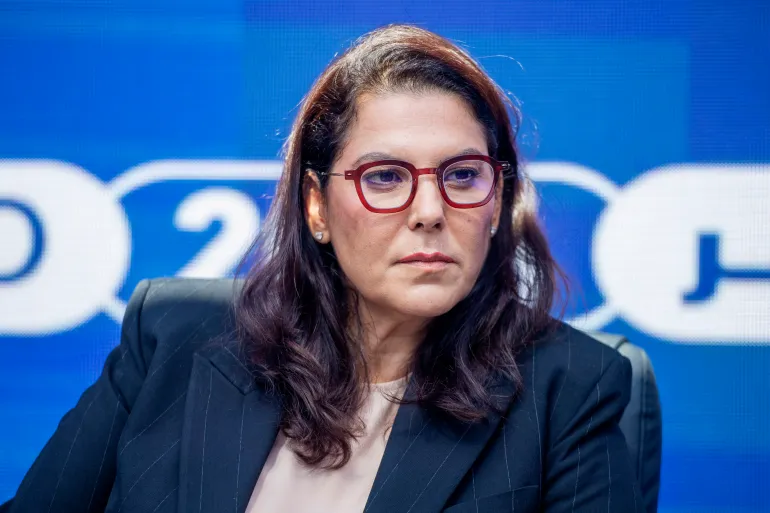
Member of the collective leadership of Morocco’s Authenticity and Modernity Party (PAM), Fatima Ezzahra El Mansouri, who is also Morocco’s Minister of National Planning, Urban Planning, Housing and Urban Policy and Mayor of Marrakesh has been named the country’s Prime Minister. She becomes the first female to be so named.
El Mansouri was elected as Morocco’s prime minister after her party won the most seats in the parliamentary elections held in the North African country.
King Mohammed VI named El Mansouri as the country’s prime minister on Tuesday and tasked her with forming a new government, the Royal Palace said in a statement.
Morocco is a constitutional monarchy, but the king retains significant powers. Under the constitution, the king appoints the head of government from the political party that wins the most seats in the house of representatives.
The 50-year-old attorney was previously the mayor of Marrakech before her appointment as prime minister. She is the second woman to serve as prime minister in the Arab world, after Tunisia’s Najla Bouden.
Fouzi Lekjaa, president of the Royal Moroccan Football Federation and a key figure in the king’s aligned Authenticity and Modernity Party (AMP), was El Mansouri’s strongest contender.
El Mansouri’s government will oversee the final stages of a $20-billion push to prepare Morocco for the 2030 World Cup, which the country will co-host with Portugal and Spain.
She will also be tasked with implementing economic policies aimed at addressing widespread youth discontent, an issue highlighted by a mass border rush on the Spanish enclave of Ceuta in July and deadly Gen-Z-led protests last year.
-
 Health & Wellness1 year ago
President Tinubu Directs Cut in Dialysis Cost from ₦50,000 to ₦12,000
-
 Business6 months ago
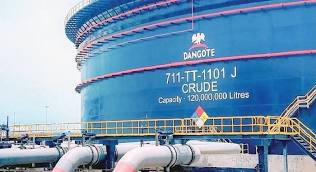
Dangote Refinery Reduces Petrol Gantry Price To ₦1,200 Per Litre
-
 Business6 months ago
After Plea Bargain, Court Discharges Stella Oduah of ₦2.5bn Fraud
-
 International News6 months ago
Indian Police Arrest Nigerian Over ₦290m Drug Haul
-
News1 year ago
CBN Debunks Fake Circular on New ₦5,000 and ₦10,000 Notes
-
Business2 years ago
Dangote; We Did Not Fix ₦600/Litre Petrol Price
-
 Trending News1 year ago
NELFUND Disburses ₦86bn To 449,000 Beneficiaries
-
 News1 year ago
PICTURE: In Lagos Couple Sentenced to 22½ Years for Cannabis Trafficking