
International News
World Coming To An End’: Kenyan Town Copes With Life Underwater


Abdi Hussein sat alone on a Kenyan road strewn with ramshackle tents bound with plastic strings and covered with tarpaulins, peering into the sea of rust-coloured flood water.
The deluge had claimed his livelihood, his home and his wife, leaving the 32-year-old bereft as he pondered what was left of his life.
“It has been like the world is coming to an end,” he told AFP, his forehead resting on his palm.
“The water kept rising and rising and it swallowed everything.
Garissa town in eastern Kenya is no stranger to rain-related disasters, but its residents told AFP that the ongoing monsoon has brought a catastrophic level of flooding that shocked them.
Kenya is grappling with floods that have killed 257 people across the East African nation, following weeks of torrential rainfall scientists have linked to the El Nino weather phenomenon.
Almost 55,000 households have been displaced, with the rains submerging entire villages, blocking roads and hampering delivery of basic goods.
The downpour inundated five dams, unleashing massive overflows of water downstream across Garissa, Tana River and Lamu — a region home to more than 1.5 million people.
“We haven’t seen much rain ourselves but our biggest undoing is living downstream,” said Mwanajuma Raha, whose house was torn down by the deluge that also swept away all her possessions.
Unrelenting
At 27, Suleiman Vuya Abdulahi has been displaced by floods seven times,
including when he was just an infant.
But nothing prepared the soft-spoken farmer with tired brown eyes for this year’s disaster.
Marooned and unable to swim, he spent days on a rooftop, barely above the water, waiting anxiously for help as he watched the rains take over the land.
Displaced in November for three months, he had barely picked up the pieces of his life before the monsoons forced him to leave home again.
“We, ordinary citizens, are really struggling,” he told AFP.
Some people are refusing to leave their homes for fear of seeing them looted, choosing to live on rooftops and wading or swimming to nearby roads when they need food supplies.
The main road into Garissa, a key commercial hub near the border with Somalia, has been cut off, forcing all deliveries to be made by air or boat and causing prices to soar.
“We have never seen such a thing in our region,” said 64-year-old village elder Boya Ali Karani, now sleeping on the roadside after the rains destroyed his house.
No food, no sleep
At the makeshift pier outside Garissa, motorboats — which used to ferry tourists on Lake Naivasha more than 400 kilometres (250 miles) away — are in constant demand as they cart people and supply desperately needed food.
But the journey can be deadly, with a packed passenger boat capsizing last month. Seven bodies, including that of a schoolgirl, have been retrieved. A dozen people are still missing.
Boatman Mohamed Mansur Ali, 36, who was involved in the rescue operation, said the work was “very difficult.”
“First, you don’t get any sleep and it is very tiring because you arrive at work at 6:00 am and finish work at 6:00 pm,” he told AFP.
“You could be resting but then again get a call about a patient who needs to go to the hospital.”
The authorities have put some restrictions in place since the accident, with the navy stationed at the pier to ensure every passenger wears a life jacket and boats are not overloaded.
There are fears that the crisis could worsen as the rains continue, with the massive Masinga dam in central Kenya already at “historic” highs.
Daud Ahmed Shalle, the regional coordinator for the Kenya Red Cross, said the situation was “dire” in the 11 camps housing nearly 6,500 families in Garissa county.
“We have a lot of people in the… camps whose basic need, or most pressing need right now, is lack of food,” he told AFP.
Campaigners have called for more financing to tackle the crisis, pointing out that the worst affected communities are the ones contributing the least to extreme weather phenomena.
“The impact of climate change on communities is irreversible and will only worsen, leading to a continuous rise in the global demand for humanitarian assistance,” said Melaku Yirga, East and Southern Africa regional director for US development charity Mercy Corps.


Hundreds of British teenagers will trial social media bans and time limits on apps as part of consultations over new measures to keep children safe online, the government announced Wednesday.
The pilot comes as the government seeks views from parents on whether to follow Australia and issue a blanket ban on social media for children under 16.
Three hundred youngsters aged 13 to 17 will try out different restrictions on social media use over six weeks to gauge the impact on their schoolwork, sleep and family life.
Some will have their social media apps disabled entirely, while others will have no access to them overnight, said the Department for Science, Innovation and Technology.
[ A young student uses her mobile phone at a public school in Planaltina
A third group will have a one-hour-per-day cap on the most popular apps for teenagers, including Instagram, TikTok and Snapchat.
The results will be compared to a fourth set of children who will continue to receive unlimited access.
“We are determined to give young people the childhood they deserve and to prepare them for the future,” said technology minister Liz Kendall.
“These pilots will give us the evidence we need to take the next steps, informed by the experiences of families themselves.”
Australia in December became the first nation to prohibit people under the age of 16 from using immensely popular and profitable social media platforms.
Several other countries are considering similar bans, including France where lawmakers in January passed a bill that would prohibit use by under-15s, which still needs final approval.

The British government has launched a consultation on a potential Australia-style ban, which will also look at measures including age restrictions and banning addictive features like scrolling.
Earlier this month, British MPs struck down proposals by the upper House of Lords chamber to ban social media for under-16s while it awaits the outcome of the consultation, due to close on May 26.
British public figures including actor Hugh Grant have urged the government to back a prohibition, saying parents alone cannot counter social media harms.
But some experts warn restrictions could be easily circumvented and would rather that tech platforms focus on making their sites safer.
Labour Prime Minister Keir Starmer has not ruled out a ban.
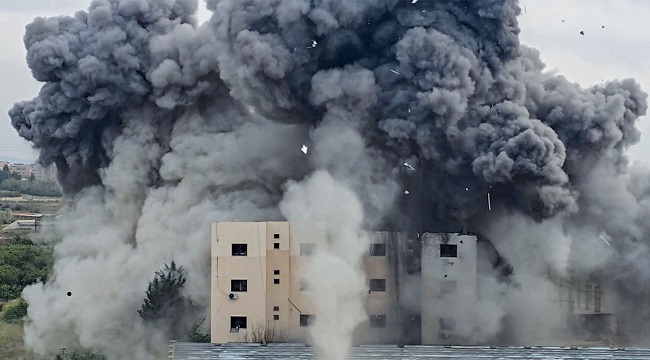
Defence Minister Israel Katz announced on Thursday that an Israeli airstrike had killed Alireza Tangsiri, commander of the Iranian Revolutionary Guards’ navy.
“Last night, in a precise and lethal operation, the IDF eliminated the commander of the Revolutionary Guards’ navy, Tangsiri, along with senior officers of the naval command,” Katz said in a video statement.
“The man who was directly responsible for the terrorist operation of mining and blocking the Strait of Hormuz to shipping was blown up and eliminated.”
Since the start of the joint US-Israeli attacks on Iran on February 28, Israel has announced the killing of several top Iranian officials, including supreme leader Ali Khamenei and the Islamic republic’s powerful security chief, Ali Larijani.
In recent days, Israeli forces have carried out several strikes targeting the naval assets of Iran.
Last week, Israeli airstrikes hit several Iranian naval ships in the Caspian Sea, including ones equipped with missile systems, support vessels and patrol craft.
AFP

US President Donald Trump insisted Wednesday that Iran was taking part in peace talks, suggesting Tehran’s denials were because Iranian negotiators fear being killed by their own side.
“They are negotiating, by the way, and they want to make a deal so badly. But they’re afraid to say it, because they figure they’ll be killed by their own people,” Trump told a dinner for Republican members of Congress.
“They’re also afraid they’ll be killed by us.”
The US leader’s comments came after Iranian Foreign Minister Abbas Araghchi said that “we do not intend to negotiate”.
Trump repeated his assertion that Iran was being “decimated” in the conflict now in its fourth week, even though Tehran still maintains an effective stranglehold over the crucial Strait of Hormuz oil route.
Lashing out at his domestic opponents, Trump also claimed Democrats were trying to “deflect from all of the tremendous success that we’re having in this military operation.”
In a mocking reference to calls from Democrats for him to seek the approval of Congress for the conflict, Trump added: “They don’t like the word ‘war,’ because you’re supposed to get approval, so I’ll use the word military operation.”
The White House said earlier that Trump was ready to “unleash hell” if Iran did not admit defeat, while also insisting that Tehran is still taking part in talks.
Iranian state media had earlier cited an unidentified official as saying that the Islamic republic had responded “negatively” to a reported 15-point plan from Washington.
‘Talks continue’
“If Iran fails to accept the reality of the current moment, if they fail to understand that they have been defeated militarily and will continue to be, President Trump will ensure they are hit harder than they have ever been hit before,” Press Secretary Karoline Leavitt told reporters.
“President Trump does not bluff and he is prepared to unleash hell. Iran should not miscalculate again.”
Asked if negotiations with Iran had stalled, Leavitt replied: “Talks continue. They are productive.”
Leavitt declined to say whom the US was dealing with in Tehran following the assassination of supreme leader Ali Khamenei, whose son and successor Mojtaba Khamenei has not been seen in public.
Reports have suggested the Trump administration’s interlocutor is Mohammad Bagher Ghalibaf, Iran’s speaker of parliament and one of its most prominent non-clerical figures.
The spokeswoman also declined to confirm reports that top US officials including Vice President JD Vance were set to hold talks with the Iranians in Pakistan, which has emerged as a key mediator.
Trump is moving thousands of airborne troops and extra marines to the Gulf amid speculation that he might order a ground invasion to either seize Iranian oil assets in the Gulf or secure the Strait of Hormuz.
The White House meanwhile appeared to stick to the four to six-week timeline it has previously given for the war.
Trump announced Wednesday that his visit to China to meet Xi Jinping had now been rescheduled for mid-May, having postponed it by six weeks to deal with the conflict.
“We’ve always estimated approximately four to six weeks (for the length of military operations against Iran), so you could do the math on that,” Leavitt added.
AFP
-
 News3 years ago
2023 Elections: Outgoing Rwandan High Commissioner say s Nigeria, ‘ handle their destiny’ in a peaceful way.
-
 News3 years ago
Just In: President Tinubu returns to Nigeria
-
 Entertainment3 years ago
Social media cloth Vendor Found Dead In Ibadan Hotel.
-
 News3 years ago
Ogun HoS Solicit Affordable Housing For Civil Servants
-
 Entertainment3 years ago
9mobile Ambassadors Begin “Meet And Greet” Session With Staffs, Customers.
-
Sports3 years ago
CAF SALUTES RIVERS UNITED AFTER SEALING QUARTER-FINAL TICKET.
-
 Trending News3 years ago
FG begins 40% pay rise for workers.
-
 Health & Wellness3 years ago
Breastfed babies have lower risks of diabetes – Nutritionist