
News
ACF Crisis Update: BoT Chair, Dalhatu, Suspended


The apex northern socio-cultural organisation, Arewa Consultative Forum (ACF), has said it has suspended, with immediate effect, the chairman of its Board of Trustees, Alhaji Bashir M. Dalhatu, over alleged financial misconduct and constitutional breaches.
The sealed ACF national headquarters remained firmly under police control.
Police operatives had on Tuesday sealed the ACF national headquarters located at Sokoto Road, Kaduna.
However, the Kaduna State Police Command denied the report, insisting that its officers were deployed to the ACF premises to prevent a possible breakdown of law and order between two rival factions within the organisation.
Meanwhile, the ACF said the decision suspending the Board of Trustees chairman was reached at the National Executive Committee (NEC) meeting of the forum, presided over by its chairman, Mike Osuman (SAN), with members drawn from 18 northern states and the Federal Capital Territory (FCT), Abuja.
Announcing Dalhatu’s suspension, ACF spokesperson Mohammed Baba, alongside the chairman of the Ethics and Conduct Committee, Prof. Mohammed Jamo, said the decision was based on allegations of financial misappropriation.
Speaking with journalists after the meeting held at an undisclosed venue in Kaduna, Muhammad-Baba said delegates from about 18 northern states and the Federal Capital Territory successfully convened the meeting after relocating from the ACF’s sealed headquarters to another venue in Kaduna.
He said the NEC condemned what it described as the unlawful restriction of access to its headquarters, insisting that it amounted to interference with the right to freedom of association and the organisation’s internal affairs.
According to him, the NEC maintained that there was no leadership crisis within the ACF.
The ACF spokesperson also said the meeting deliberated on the report of an Ethics and Conduct Committee set up to investigate a petition on financial management and governance practices within the forum.
Muhammad-Baba said the committee’s preliminary findings raised serious concerns requiring further investigation, particularly regarding due process and financial administration.
Based on the recommendations, the NEC passed a vote of no confidence in the BoT chairman, Dalhatu, and approved his immediate suspension pending further investigation.
He further revealed that the National Executive Committee of the forum also directed an immediate forensic audit of all financial activities of the ACF, including its Endowment Fund, with instructions to recover any funds found to have been improperly managed.
According to him, the NEC also reaffirmed its confidence in the current National Working Committee led by the forum’s chairman, Mike Mamman Osuman, SAN, and maintained the position of the secretary-general pending any constitutional review process.
The NEC also condemned the alleged police sealing-off of its headquarters, describing it as an unacceptable interference with its operations and constitutional rights.
Chairman of the ACF Ethics and Conduct Committee, Prof. Nuhu Mohammad Jamo, on his part, corroborated the explanation that the panel acted on a petition alleging financial and administrative misconduct against the BoT chairman.
Jamo recalled that the committee invited the affected official to respond to the allegations within 48 hours, but the official did not respond.
“Regrettably, most of our findings, if not all, indicate violations of the constitutional provisions of the ACF,” he said.
Earlier, before his suspension, ACF BoT chairman, Alhaji Bashir M. Dalhatu, in a statement on Wednesday, accused ACF secretary-general, Murtala Aliyu, of refusing to vacate his position after the expiration of his tenure.
Dalhatu further claimed that Aliyu’s refusal to leave was the cause of the crisis in the forum’s leadership.
According to him, “Recently, the Board of Trustees, in line with its duty of ensuring compliance with the provisions of the forum’s Constitution — ACF Constitution Section 24 — including respect for term limits and smooth leadership succession, took several steps which did not seem to have pleased some people, especially Mallam Murtala Aliyu, the secretary-general. As a result, he has devoted a great deal of time and energy to pulling down the entire ACF edifice.
“That, accordingly, these positions have, from 10 March 2026, become vacant. However, Mallam Murtala Aliyu, the Secretary-General, was allowed, at his request, to work on his handover notes and to conclude other departure formalities not later than Friday, 15 May 2026. But in a baffling twist of events, Murtala Aliyu, who, contrary to the ACF Constitution, is in his seventh year as Secretary-General, declared his rejection of all these terms of settlement. He is, interestingly, the only person among the four officials whose tenure ended who refuses to step down.”
Dalhatu, however, denied misappropriating the forum’s funds.
“There has, for instance, been no financial infraction committed whatsoever at the level of the BoT. Every single kobo collected as donations into the ACF Endowment Fund has been deposited safely in the bank; far away from the reach of the secretariat, the NEC, and, for that matter, the BoT,” he explained.



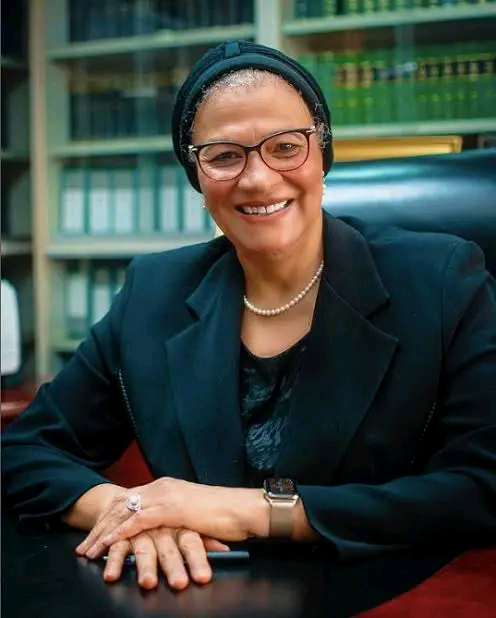
A retired justice of the Supreme Court, Amina Adamu Augie, has warned that corruption within Nigeria’s judiciary and legal profession is eroding public confidence in the administration of justice and transforming the courts from institutions of impartiality into what she described as “market stalls.”
Speaking in Abuja during the 40th anniversary celebration of the Nigerian Law School Class of 1986, popularly known as the Centennial Class, Augie said corrupt practices involving judges, lawyers and court officials had weakened the credibility of the justice system and damaged the public’s perception of the legal profession.
The retired justice called for practitioners found guilty of misconduct to be punished, regardless of their seniority, influence or professional standing.
Augie, who taught at the Nigerian Law School before beginning her judicial career, identified corruption, political interference, inadequate funding and delays in the administration of justice as some of the most serious challenges facing Nigeria’s judiciary.
“The third, which I will not dress up, is corruption. Where it exists on the Bench, at the Bar, or in the Registry, it poisons everything by turning the one place that a citizen should find impartiality into one more market stall,” she said.
She nevertheless cautioned against the blanket condemnation of the judiciary, stressing that the majority of judges and lawyers remained honest, hardworking and poorly remunerated.
According to her, the justice system must be designed in a way that protects judicial officers and other legal practitioners from undue pressure and temptation, rather than exposing them to conditions that make misconduct easier.
Augie expressed particular concern about the conduct of some senior members of the legal profession, saying their actions had contributed substantially to the decline in public trust in the courts and the wider justice system.
“Have we kept faith with them? In part, YES, in part, NO. Public trust has paid the price. The public today is quick to believe the worst of lawyers, and sorry to say, not always without cause,” she said.
“When a few senior members of the profession have been found to traffic in the corruption of justice, the damage is not to them alone; it stains the gown we all wear.”
She said rebuilding confidence in the legal system would require more than public relations campaigns or efforts to improve the image of the judiciary. In her view, the profession must demonstrate a willingness to discipline its members openly and fairly, without being intimidated by their status.
“Restoring that trust is not a matter of better public relations. It is a matter of conduct and a profession willing to discipline its own, without fear or favor, no matter how senior the offender may be in the legal profession,” she said.
The retired justice reminded lawyers that their foremost duty was to the court and the administration of justice, not merely to the clients who retained them. She said professional responsibility demanded honesty, candour, respect for judicial authority and commitment to the rule of law.
Augie urged lawyers to reject attempts to manipulate court proceedings, manufacture or distort evidence, delay cases unnecessarily or secure favourable judgments through improper influence.
She also warned that corruption could not be addressed in isolation from the broader conditions under which the judiciary operates. Inadequate funding, she said, posed a serious threat to judicial independence because a court that depended on the executive for basic infrastructure and operational needs could not be regarded as completely autonomous.
“A Judiciary that must beg the executive for a Courtroom roof, vehicles, or even the Judges’ entitlements is not fully free; financial autonomy for the Courts is not a perk for Justices and Judges, but a guarantee for litigants,” she said.
Augie further criticised the delays and high costs that continue to make litigation inaccessible to many Nigerians. She described delay as the “chronic disease” of the country’s justice system and said it had weakened public confidence in the courts.
Drawing on her experience at the Supreme Court, she said the apex court was burdened by an excessive number of appeals, including disputes that should ordinarily have been resolved at lower levels of the judicial system.
She recalled an appeal concerning the burning of 12 goats that eventually reached the Supreme Court, despite the enormous workload already confronting the court.
According to her, constitutional amendments were needed to narrow the categories of cases that could be taken to the apex court. Such reforms, she said, would enable Supreme Court justices to focus on matters involving significant constitutional, legal and national questions.
Augie also condemned the repeated failure of government authorities to comply with court orders. She cited the prolonged detention of former National Security Adviser Sambo Dasuki and Islamic Movement leader Ibrahim El-Zakzaky, despite judicial directives ordering their release.
She said the disobedience of court orders by public officials weakened the authority of the judiciary and sent a dangerous message that compliance with the law was optional for those in power.
Reflecting on the development of Nigeria’s justice system over the past four decades, Augie acknowledged that progress had been made, particularly since the country’s return to democratic rule in 1999. However, she expressed disappointment that justice remained slow, expensive and beyond the reach of many citizens.
She referred to Nigeria’s ranking of 120th out of 143 countries in the 2025 World Justice Project Rule of Law Index, describing the position as an uncomfortable indication of the country’s institutional weaknesses and the continuing challenges facing its justice system.
Augie called for comprehensive reforms to strengthen judicial independence, improve access to justice, modernise case management, reduce delays and restore ethical standards across the legal profession.
She urged members of the Class of 1986, many of whom now hold senior positions in the judiciary, government and legal profession, to use their influence to defend the rule of law and rebuild public confidence in the courts.
“If Governments obey the Courts, if its Judgments are enforced, if justice comes within a reasonable time and within reach of the poor, if the profession upholds its integrity and disciplines its own, Nigeria would be better positioned to secure its future”, she said.

The Federal Road Safety Corps (FRSC) has announced the death of its Ogun State Sector Commander, Corps Commander Oludare Ogunjobi, following a brief illness.
The FRSC RS2.2 Ogun State Sector Command announced his death in a statement issued on Sunday, expressing sadness over the loss of the senior officer.
The statement, signed by the Command’s Public Relations Officer, Chief Route Commander Afolabi Odunsi, described Ogunjobi’s death as a significant loss to the Corps and the wider road safety community.
“His passing is a great loss to the Corps, his colleagues, and the entire road safety community,” the statement said.
The Command said the late sector commander would be remembered for his leadership, commitment to road safety administration and dedication to the mandate of the Corps.
It added that he contributed to efforts to promote safer roads, enhance public enlightenment, strengthen stakeholder engagement and improve compliance with traffic regulations.
According to the statement, his commitment to these areas formed an important part of his service to the FRSC and its mission to improve road safety.
The Command also extended its condolences to Ogunjobi’s family, loved ones, colleagues and associates, acknowledging the grief caused by his death.
“His demise is deeply regretted, and the Command extends its heartfelt condolences to his family, loved ones, colleagues, and associates during this difficult period,” the statement added.
The FRSC said details of the funeral arrangements would be communicated in due course.
The statement concluded with a prayer for the repose of the deceased’s soul and strength for his family, colleagues and others affected by his passing.
“May God grant his soul eternal rest and give his family, the Corps, and all those affected by his passing the strength to bear this irreparable loss,” it said.
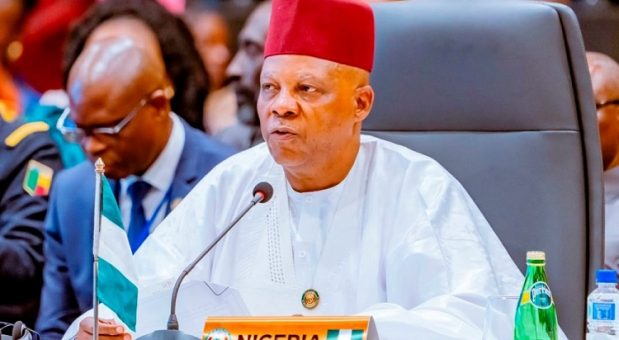
Vice-President Kashim Shettima has said internal divisions within the ruling All Progressives Congress (APC) worry him more than opposition figures Atiku Abubakar and Peter Obi ahead of the 2027 general elections.
Shettima spoke on Saturday in Abuja at the unveiling of the campaign headquarters of Arewa for Asiwaju (A4A), a northern coalition supporting the re-election of President Bola Tinubu and the Vice-President.
“Honestly, I am not afraid of the Peoples Democratic Party (PDP). I am not afraid of a diminished Peter Obi.
“But I am more afraid of internal contradictions within our household. If we unite as a people, as a family, we will conquer,” he said.
He warned northern political leaders against supporting Tinubu’s presidential campaign while undermining APC governors seeking re-election in their states.
“There is no point in championing the cause of the presidential election and then undermining the governor in the gubernatorial election. Honestly, it will not go down well with the system,” he said.
Shettima urged party members to support APC governors, National Assembly members and the President to secure victory in the forthcoming elections.
“Let’s rally round our governors. Let’s rally round our members of the National Assembly. Let’s rally round President Bola Ahmed Tinubu and see to the victory in the next round of elections,” he added.
The Vice-President expressed confidence in the North’s support for Tinubu, saying the region had made its position clear.
“By now, I believe the North has spoken. We have spoken with a resounding voice and unmistakable conviction.
“From Adamawa to Zamfara, from Borno to Niger, we have spoken,” he said.
He also urged APC members to intensify their campaigns ahead of the polls, which he said were less than 100 days away.
On former Vice-President Atiku Abubakar, Shettima challenged party members to defeat him at the polls while maintaining respect.
“Go and perform. Go and defeat Baba Atiku. Defeat him respectfully,” he said.
Shettima said the APC had sufficient personnel to cover the country’s 176,845 polling units, citing the party’s 361,045 officials across ward and local government structures.
He also stressed the need for political appointees to demonstrate their electoral strength in their communities, saying he had asked the Borno State governor to account for appointees from the state down to the local government level.
“Politics is still local,” he said, adding that their performance should be assessed at their polling units, wards and local government areas.
The Vice-President said 18 of the 19 northern states were controlled by the APC. He also claimed that 15 of the 18 members of the House of Representatives elected on the platform of the New Nigeria Peoples Party (NNPP) from Kano State had defected to the APC.
Acknowledging the economic difficulties facing many Nigerians, Shettima said the administration remained conscious of the challenges confronting households.
“Every household struggling to make ends meet reminds us how much remains to be done,” he said. “We lose our hearing when applause becomes our only source of information.”
He defended Tinubu’s economic policies, claiming that the President inherited a fragile economy with foreign reserves of $3.9 billion and Ways and Means advances exceeding ₦27 trillion.
“Nigeria was on the road to Caracas. The economy was teetering on the brink of collapse. He literally saved the nation,” Shettima said.
He added that the country’s foreign reserves had risen to about $58.9 billion, describing the development as a significant improvement.
“For the North, we have absolutely nothing to fear in a Tinubu second term. He has the North at heart,” he said.
APC National Chairman, Professor Nentawe Yilwatda, called for Tinubu’s re-election, citing infrastructure projects in the North, including the Abuja-Kaduna-Kano and Kano-Maiduguri highways.
Yilwatda said the two road projects covered more than 900 kilometres, arguing that they demonstrated the administration’s commitment to infrastructure development in the region.
The Director-General of A4A and former Jigawa State governor, Muhammad Badaru Abubakar, said the coalition’s campaign headquarters was located at No. 4 Port Harcourt Street, Area 11, Garki, Abuja.
Describing the building as “the biggest campaign office anywhere in the country”, Badaru said the coalition would run a disciplined, peaceful and issue-based campaign across markets, farms, campuses, mosques and churches.
-
 Health & Wellness1 year ago
President Tinubu Directs Cut in Dialysis Cost from ₦50,000 to ₦12,000
-
News2 years ago
CBN Debunks Fake Circular on New ₦5,000 and ₦10,000 Notes
-

 Business7 months ago
Dangote Refinery Reduces Petrol Gantry Price To ₦1,200 Per Litre
-

 International News7 months ago
Indian Police Arrest Nigerian Over ₦290m Drug Haul
-
 Business7 months ago
After Plea Bargain, Court Discharges Stella Oduah of ₦2.5bn Fraud
-
Business2 years ago
Dangote; We Did Not Fix ₦600/Litre Petrol Price
-
 Trending News1 year ago
NELFUND Disburses ₦86bn To 449,000 Beneficiaries
-
 Opinion2 years ago
Championing the People’s Voice: Obasa’s Dedication to Grassroots Representation By Dave Agboola⁰