
Connect with us

International News

Israel Says Gazans Can Return Home As More Hostage Releases Agreed

Published

on

Spread the love
Four Israeli hostages, (L-R) Naama Levy, Liri Albag, Daniella Gilboa and Karina Ariev, wave from a stage before Hamas fighters hand them over to a team from the Red Cross in Gaza City on January 25, 2025. Four freed Israeli women hostages were home in Israel January 25, ending more than 15 months of captivity after Hamas militants handed them over to the Red Cross under a truce deal in the Gaza war. (Photo by Omar AL-QATTAA / AFP)


Israel said Palestinians could begin returning to the north of the war-battered Gaza Strip on Monday after a deal was reached with Hamas for the release of another six hostages, according to Prime Minister Benjamin Netanyahu’s office.

The breakthrough preserves a fragile ceasefire in the Israel-Hamas war, which has devastated the Gaza Strip and displaced nearly all its residents, paving the way for more hostage-prisoner swaps under a deal aimed at ending the more than 15-month conflict.

Israel had been preventing vast crowds of Palestinians from using a coastal road to return to northern Gaza, accusing Hamas of violating the truce agreement by failing to release civilian women hostages.

“Hamas has backtracked and will carry out an additional phase of releasing hostages this Thursday,” Netanyahu’s office said in a statement, adding that three hostages would be released that day, with another three captives set for release on Saturday.

Palestinian leaders meanwhile slammed a plan floated by US President Donald Trump to “clean out” Gaza, vowing to resist any effort to forcibly displace residents of the war-battered territory.

Trump said Gaza had become a “demolition site”, adding he had spoken to Jordan’s King Abdullah II about moving Palestinians out.

“I’d like Egypt to take people. And I’d like Jordan to take people,” Trump told reporters.

Palestinian leader Mahmud Abbas, who is based in the Israeli-occupied West Bank, “expressed strong rejection and condemnation of any projects” aimed at displacing Palestinians from Gaza, his office said.

Bassem Naim, a member of Hamas’s political bureau, told AFP that Palestinians would “foil such projects”, as they have done to similar plans “for displacement and alternative homelands over the decades”.

Islamic Jihad, which has fought alongside Hamas in Gaza, called Trump’s idea “deplorable”.

For Palestinians, any attempt to move them from Gaza would evoke dark memories of what the Arab world calls the “Nakba”, or catastrophe — the mass displacement of Palestinians during Israel’s creation in 1948.

“We say to Trump and the whole world: we will not leave Palestine or Gaza, no matter what happens,” said displaced Gaza resident Rashad al-Naji.

– Jordan, Egypt reject displacement –

Trump floated the idea to reporters Saturday aboard Air Force One: “You’re talking about probably a million and half people, and we just clean out that whole thing.”

Moving Gaza’s roughly 2.4 million inhabitants could be done “temporarily or could be long term”, he said.

Israel’s far-right Finance Minister Bezalel Smotrich — who opposed the truce deal and has voiced support for re-establishing Israeli settlements in Gaza — called Trump’s suggestion of “a great idea”.

The Arab League rejected the idea, warning against “attempts to uproot the Palestinian people from their land”.

“The forced displacement and eviction of people from their land can only be called ethnic cleansing”, the league said in a statement.

Jordanian Foreign Minister Ayman Safadi said “our rejection of the displacement of Palestinians is firm and will not change. Jordan is for Jordanians and Palestine is for Palestinians.”

Egypt’s foreign ministry said it rejected any infringement of Palestinians’ “inalienable rights”.

In Gaza, cars and carts loaded with belongings jammed a road near the Netzarim Corridor that Israel has blocked, preventing the expected return of hundreds of thousands of people to northern Gaza.

Israel had said it would prevent Palestinians’ passage until the release of Arbel Yehud, a civilian woman hostage. She is among those slated for return on Thursday, according to Netanyahu’s office.

Hamas said that blocking returns to the north also amounted to a truce violation, adding it had provided “all the necessary guarantees” for Yehud’s release.

Israeli army spokesman Avichay Adraee said Monday that residents would be allowed to return on foot starting at 07:00 am (0500 GMT) and by car at 9:00 am.

– ‘Dire’ humanitarian situation –

During the first phase of the Gaza truce, 33 hostages are supposed to be freed in staggered releases over six weeks in exchange for around 1,900 Palestinians held in Israeli jails.

The most recent swap saw four Israeli women hostages, all soldiers, and 200 prisoners, nearly all Palestinian, released Saturday — the second such exchange during the fragile truce entering its second week.

Dani Miran, whose hostage son Omri is not slated for release during the first phase, demonstrated outside Netanyahu’s office in Jerusalem on Sunday.

“We want the agreement to continue and for them to bring our children back as quickly as possible — and all at once,” he said.

The truce has brought a surge of food, fuel, medicines and other aid into rubble-strewn Gaza, but the UN says “the humanitarian situation remains dire”.

Of the 251 hostages seized during Hamas’s October 7, 2023 attack that ignited the war, 87 remain in Gaza, including 34 the military says are dead.

The Hamas attack resulted in the deaths of 1,210 people, mostly civilians, according to an AFP tally based on official Israeli figures.

Israel’s retaliatory offensive has killed at least 47,306 people in Gaza, the majority civilians, according to figures from the Hamas-run territory’s health ministry that the United Nations considers reliable.



AFP

International News

Ghana Rejects MTN Financial Support For Victims Of Xenophobic Attacks In South Africa

Published

on

Spread the love


Ghana Rejects MTN Financial Support For Victims Of Xenophobic Attacks In South Africa


The Government of Ghana has declined a GHS20 million donation offered by MTN Ghana to support Ghanaian victims of the recent xenophobic attacks in South Africa, saying it has already made adequate financial provision for the evacuation and reintegration of affected citizens.

The Ministry of Foreign Affairs, in a press statement issued in Accra on Wednesday said it had become aware of media reports indicating that MTN Ghana was preparing to donate GHS20 million to Ghanaian victims of the attacks.

According to the ministry, the reports appeared to attribute the announcement of the intended donation to an interview granted by the MTN Board Chairman, Dr. Ishmael Yamson.

While acknowledging the gesture, the government said it had decided not to accept the financial support.

“The Government of Ghana commends MTN for the offer, however, we respectfully decline,” the statement said.

The Ministry of Foreign Affairs said the John Mahama Administration had already made adequate provision for the ongoing evacuation and reintegration of Ghanaians affected by the attacks.

“The Ministry of Foreign Affairs reaffirms that the Mahama Administration has made adequate provision for ongoing evacuations and reintegration of Ghanaians and is therefore unable to accept this offer,” it said.

The ministry further disclosed that the government’s position had previously been communicated directly to MTN’s leadership during a meeting with the Minister of Foreign Affairs, Hon. Samuel Okudzeto Ablakwa (MP), on August 14, 2026.

“This position of the Government of Ghana had earlier been directly conveyed to the Board Chair and CEO of MTN when they called on the Minister of Foreign Affairs, Hon. Samuel Okudzeto Ablakwa (MP) on August 14, 2026,” the statement said.

The government, however, stressed that it remained committed to providing humanitarian assistance to Ghanaians being brought back from areas where they faced danger.

“Meanwhile, the Government of Ghana remains fully committed to current humanitarian evacuations and reintegration financial support for every Ghanaian brought back from harm’s way,” the ministry said.

It also pledged to disclose the total expenditure incurred on the evacuation exercise after its completion, describing the planned disclosure as part of its commitment to transparency and accountability.

“The Ministry of Foreign Affairs assures that it will present to the general public a comprehensive account of the total cost of evacuations as soon as the exercise is concluded, in the interest of transparency and accountability,” it added.

The government also sought to reassure international businesses operating in Ghana that it would continue to support their operations irrespective of their countries of origin.

“Government will continue to create the best business ecosystem for all international brands operating in Ghana to succeed, irrespective of which country their businesses originated from,” the ministry said.

It added: “The welfare of all Ghanaians remains our utmost priority.”

The government’s decision comes amid concerns over the safety and welfare of Ghanaians affected by the recent xenophobic attacks in South Africa, with authorities undertaking evacuations and reintegration efforts for citizens brought back from harm’s way.

The Ministry of Foreign Affairs said the government’s existing arrangements were sufficient to cover the humanitarian response, making it unnecessary to accept the proposed MTN donation.

Earlier in July, fresh diplomatic tensions emerged between Ghana and South Africa after the Ghanaian government reportedly declined to host South African President Cyril Ramaphosa for a planned state visit, citing concerns over the reported killing of a Ghanaian citizen and alleged xenophobic attacks against its nationals.

The decision follows the death of 40-year-old Bashiru Isak, whom Ghana says was killed during demonstrations associated with renewed attacks on foreign nationals in South Africa on June 30, 2026.

Officials in Accra said the postponement of the visit reflects Ghana’s growing concern over the security of its citizens residing in South Africa. They maintained that ensuring the safety of Ghanaians abroad must take precedence over high-level diplomatic engagements.

President Ramaphosa had been expected in Ghana during the first week of August for a state visit aimed at reinforcing the longstanding relationship between both countries. The visit was also expected to provide an opportunity for discussions on bilateral cooperation and concerns surrounding attacks on foreign nationals.

Continue Reading

International News

Trump Orders Flags Flown Half-Mast For Dolly Parton

Published

on

Spread the love


US President Donald Trump has ordered American flags across the country to be flown at half-staff for one week following the death of country music legend Dolly Parton.


Trump made the announcement on Tuesday, August 25, as tributes continued to pour in for Parton, who died in Nashville at the age of 80.

In a post on Truth Social, Trump wrote: “Very sad to report that Dolly Parton, one of the greatest country singers, and far beyond, ever, has just passed away. This is a true loss for millions of people. There has never been anyone like her, and never will. In her honor, I am lowering the American flag throughout the United States for a one week period beginning tonight at 6 p.m. Rest in peace, Dolly! The world loves you. President Donald J. Trump.”

Parton’s death was announced by her nephew and head of security, Bryan Seaver, in a video shared on social media.

The Tennessee-born singer had a career spanning seven decades and became one of the most influential figures in country music, while also establishing herself as a songwriter, actress, author, businesswoman and philanthropist.

Although Parton generally stayed away from political controversies, she had previously disclosed that she turned down the Presidential Medal of Freedom twice during Trump’s first administration.

Speaking to the Today show in 2021, Parton explained her decision, saying: “I couldn’t accept it because my husband was ill and then they asked me again about it and I wouldn’t travel because of the COVID,”

She added: “Now I feel like if I take it, I’ll be doing politics, so I’m not sure.”

Parton devoted much of her career to charitable causes, including childhood literacy through her Imagination Library programme, which has distributed millions of books to children.

She established the Dollywood Foundation in 1988 and later created the Dolly Parton Scholarship for students from her home area of Sevier County, Tennessee.

She also supported communities affected by disasters, including donating funds to victims of the devastating East Tennessee wildfires. In 2017, she donated $1 million to Monroe Carell Jr. Children’s Hospital at Vanderbilt University Medical Center.

Parton was recognised across the music industry for her extraordinary career. She was inducted into both the Country Music Hall of Fame and the Rock and Roll Hall of Fame and recorded 25 No. 1 songs on Billboard’s Hot Country Songs chart.

She also received 10 Grammy Awards from 55 nominations.

An official statement released following her death described the impact of her life and career.

“A rhinestone life that shone bright enough for the world to see, Dolly will forever stand as an inspiration not only through her timeless music and prolific songwriting, but also her wit, warmth, and kindness that made us all feel like family. Dolly Parton’s legacy is one of love, compassion, and resilience. With a seven-decade career, she inspired multiple generations of artists and fans with her music and an unwavering commitment to making the world a better place. Her songs will continue to resonate with people of all ages, and her philanthropic work will have a lasting impact.”

Continue Reading

International News

Court Rejects Trump Visa Ban Of Nigeria, 74 Other Countries 

Published

on

Spread the love


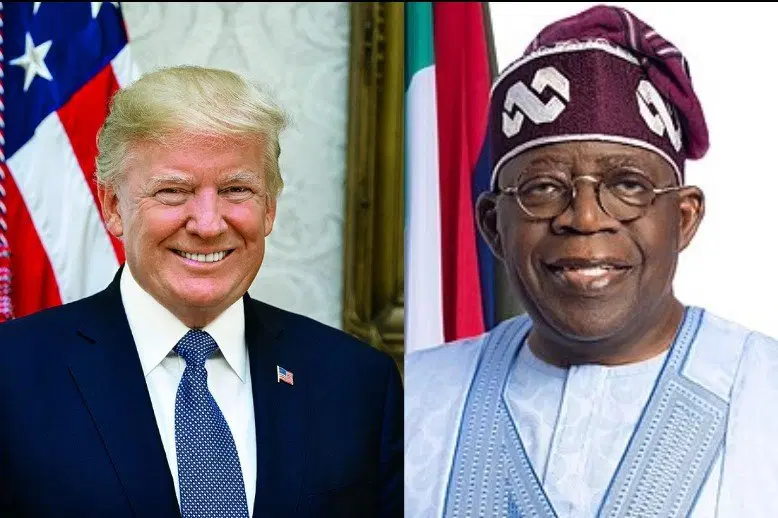
A United States District Court in Manhattan has nullified the Donald Trump administration’s policy suspending the processing and issuance of immigrant visas to applicants from 75 countries, including Nigeria.


In a ruling delivered on Friday, U.S District Judge, Jeannette Vargas, described the January directive by the State Department as patently unlawful and said it exceeded the statutory authority of Secretary of State, Marco Rubio.

The policy, which took effect on January 21, had barred immigrant visa issuance to nationals of 75 countries on the grounds that they posed “a high risk for becoming a public charge” and relying on U.S government cash assistance.

Affected countries are: Afghanistan, Albania, Algeria, Antigua and Barbuda, Armenia, Azerbaijan, Bahamas, Bangladesh, Barbados, Belarus, Belize, Bhutan, Bosnia-Herzegovina, Brazil, Cambodia, Cameroon, Cape Verde, Colombia, Cuba, Dominica, DR Congo, Egypt, Eritrea, Ethiopia, Fiji, Gambia, Georgia, Ghana, Grenada, Guatemala, Guinea, Haiti, Iran, Iraq, Ivory Coast, Jamaica, Jordan, Kazakhstan, Kosovo, Kuwait, Kyrgyzstan, Laos, Lebanon, Liberia, Libya, Moldova, Mongolia, Montenegro, Morocco, Myanmar, Nepal, Nicaragua, Nigeria, North Macedonia, Pakistan, Republic of Congo, Russia, Rwanda, Saint Kitts and Nevis, Saint Lucia, Senegal, Sierra Leone, Somalia, South Sudan, St. Vincent and the Grenadines, Sudan, Syria, Tanzania, Thailand, Togo, Tunisia, Uganda, Uruguay, Uzbekistan, Yemen.

President Donald Trump had early in the year, published a list of welfare dependent rates among immigrants, noting that about 33.3 per cent of Nigeria immigrants households received some form of public assistance.

According to the directive, older or overweight applicants can be denied, along with those who had any past use of government cash assistance or institutionalisation.

But delivering the judgement, Judge Vargas, an appointee of former President Joe Biden, held that the suspension ran afoul of federal immigration law, which expressly removed authority over consular processing of immigrant visas from the Secretary of State.

“The policy, which categorically prohibits the issuance of immigrant visas based upon the nationality of the applicant, represents a direct abrogation of this statutory scheme,” she wrote.

The suit was filed by immigrant rights groups, Catholic Legal Immigration Network and African Communities Together, alongside U.S citizens sponsoring family members and visa applicants from the affected countries.

The State Department had, in a cable sent to U.S missions in January directed consular officers to refuse applicants whose visas were “print-authorized” but not yet printed.

It said the suspension was part of a full review to ensure the highest level of screening and vetting and to prevent foreign nationals from exploiting U.S welfare systems.

“Applicants from these countries are at a high risk for becoming a public charge and recourse to local, state and federal government resources in the United States,” the cable stated.

Principal Deputy Spokesperson, Tommy Pigott, had defended the move, saying: “The State Department will use its long-standing authority to deem ineligible potential immigrants who would become a public charge on the United States and exploit the generousity of the American people.

“Immigration from these 75 countries will be paused while the State Department reassess immigration processing procedures to prevent the entry of foreign nationals who would take welfare and public benefits.”

President Trump has, since returning to office in January, pursued an aggressive immigration crackdown aimed at improving domestic security.

Continue Reading

Trending

Copyright © 2026 TheColumn NG