
News
Lagos-Calabar Highway: FG set up panel to pay compensation in 10 days


The Federal Government had inaugurated a compensation verification committee saddled with the responsibility of reviewing, evaluating and compensating landowners affected by the construction of the N15tn Lagos-Calabar Coastal Highway.
The Minister of Works, David Umahi, who inaugurated the panel, also directed the committee to complete all verification and begin remuneration in 10 days ending April 28.
The move was part of efforts to hasten construction of the project set to revolutionise infrastructure in the country.
Umahi said verified claims would be settled within 72 hours by the contractor, Hitech Construction Limited, but remained silent on the total amount approved for the exercise.
The 700km Lagos-Calabar coastal highway project has been a subject of public scrutiny, following concerns by affected stakeholders and former Vice President Atiku Abubakar over the cost, bidding and procurement processes.
The road designed to connect Lagos to Cross River, passing through the coastal states of Ogun, Ondo, Delta, Edo, Bayelsa, Rivers, and Akwa Ibom, before culminating in Cross River, estimated to gulp over N4bn per Kilometer.
The works minister, while inaugurating the committee at the ministry headquarters in Abuja, said the gesture was in line with the renewed hope agenda of the administration of President Bola Tinubu which is transparency.
He, however, warned that only property owners with proven titles would receive compensation, while shanties and those with property within the 250m shoreline setback without a federal government title would not be compensated, as it is a legal matter.
He said the committee was responsible for engaging with affected property owners, assessing compensation details, and potentially visiting the sites for proper evaluation.
He further added that the federal rate on compensation would be used to determine the amount and not a lower figure by the Lagos State government.
Umahi said, “We are committed to transparency and that is why we are inaugurating this committee today. We have had our alignment on both sections of phase one of the coastal road which is 47.7 km and the second section which is about 55km. Hence the need to set up a review committee to look at the work done by the environmental assessment team and the works to be reviewed by this committee is very simple. It is just to interact with property owners that are going to be affected and then in the process, look at the compensation as enumerated to be paid and when possible, you visit the site; and at the moment we are using the federal rate to do our remuneration.”
He further explained, “I know very well that no amount given will satisfy those affected but we are bound by the law so we are using the federal rate which is higher than Lagos State compensation rate in paying compensation. The moment the property owners sign, after filing necessary documents and bank accounts, within 72 hours, we will authorise payment.
“The contractor is going to be paying directly to all those who are affected. This, we are committed to doing, this verification exercise starts in Lagos on Wednesday.”
Umahi said that apart from verifying those to be paid, the committee would also verify the dimensions and make calculations based on the area and volume.
“So only those that have proven titles will be paid as they are brought to us in the ministry, although, it will still undergo some processes from us.
“We have to make it very clear that 250 metres of the road legally belongs to the federal government.
“So if you have a title within these 250 metres and it is not a title from the federal government, then it is incumbent, and only the President will give a waiver if he so feels for payment. So I will work within the confines of the law,” he said
Tasking the committee to be diligent in adhering to the dictates of the law, he said, “The committee is not in charge of ramp or anything but just to verify those who are going to be paid compensation, the authenticity of those filing for compensation, verify the dimensions, where possible, the amount and in their presence where the property owner signed, once these are authenticated, we direct the contractor to go ahead and pay.
“It is from the contractor’s money the compensation is routed.
“But where there is a title problem, it will need a Presidential waiver for such to be paid. It is only those with proven titles that will be paid as they are brought to us in the Ministry; because they will still undergo all the verification processes.
“So anyone with a title within the 250m and is not a federal government title, then it is incumbent that only the President can give a waiver if he feels so for the person to be paid. So, I will work within the confines of the law.”


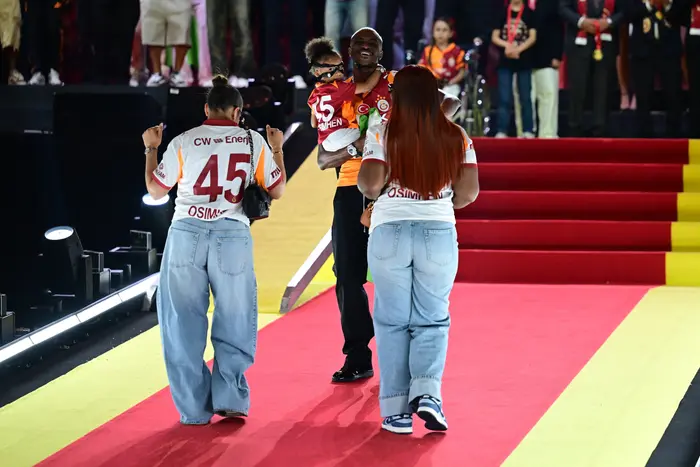
Victor Osimhen’s partner Stefanie Ladewig has reportedly been involved a motor accident.
According to report, that accident involved three vehicles, with Osimhen’s girlfriend driving one of the cars.
Report said the motor accident happened in Eyüpsultan,Turkey on Wednesday morning when Ladewig was on her way to the hospital.
Although there was no indication that she was at fault, Ladewig was reportedly driving an SUV on her way to the hospital before hitting two other vehicles in the accident.
However, the 26-year-old, who is eight months pregnant with her second child, was unhurt, along with the other people involved, according to the report.
Osimhen and Ladewig have known each other since they met in 2019, when the Super Eagles star was at Wolfsburg and she was a cheerleader.
The two started dating shortly afterwards and have never looked back, even though they are not officially married.
They also have a daughter, Hailey, who was born in October 2022, when Osimhen was still playing for Serie A giants Napoli.
The German-Cameroonian model also recently celebrated Hailey, who turned four, with a story post on her Instagram page.
Hailey herself also turned 26 last month, although she appeared to have had a low-key celebration this year.
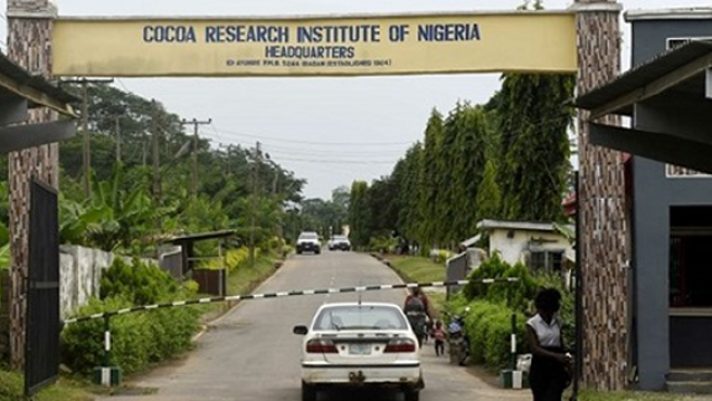
Three employees of the Cocoa Research Institute of Nigeria (CRIN), Ibadan, Oyo State, have regained their freedom six days after they were abducted by gunmen while working on a farm within the institute’s premises.
The victims were identified as Eunice Babalola, Kehinde Gbalajobi and another employee known as Nelson.
They were kidnapped last Thursday when armed men stormed the farm at about 1pm and whisked them away to an undisclosed location.
Sources familiar with the incident said the abductors initially demanded N40 million for each of the victims before the ransom demand was allegedly reduced to N50 million for all three workers following negotiations.
The workers regained their freedom in the early hours of Wednesday after security operatives traced them to a bush near Globus Farm, also known as Triton.
The Oyo State Police Command confirmed the rescue but did not disclose whether any ransom was paid to secure their release.
The Police Public Relations Officer, DSP Olayinka Ayanlade, said security agencies were continuing efforts to identify and arrest those responsible for the abduction.
The rescue came amid ongoing efforts by security operatives to track down the suspected kidnappers and bring them to justice.
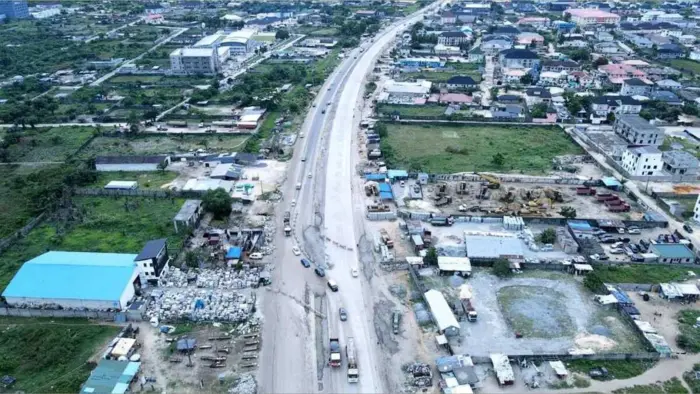
Motorists plying the deteriorating Eti-Osa-Lekki-Epe Expressway are expected to face temporary traffic disruptions as the Lagos State Government begins a 35-day rehabilitation of damaged sections from Bonny Camp to Admiralty Way Junction and around Victoria Garden City (VGC) tomorrow.
The government said traffic diversion arrangements would be introduced to minimise congestion and ensure the safety of road users during the exercise.
The Special Adviser to the Governor on Infrastructure, Olufemi Daramola, disclosed this yesterday at a stakeholders’ engagement organised by the Ministry of Works and Infrastructure to discuss the scope of work and traffic management plans for the project.
Daramola said the meeting was part of the government’s policy of consulting residents, businesses and other road users before embarking on major infrastructure projects, adding that feedback from stakeholders would inform the implementation process.
He appealed for the cooperation of residents and motorists, particularly as Lagos prepares for increased traffic during the festive season.
The rehabilitation is expected to improve road safety and ease movement along the strategic corridor, which connects residential communities, commercial centres and major industrial investments across the Lekki-Epe axis.
The expressway provides access to the Lekki Free Zone, Dangote Refinery, Dangote Fertiliser Factory, Lekki Deep Sea Port and Eleganza Industrial Estate. It also serves major housing developments and educational institutions, including Pan-Atlantic University and Lagos Business School.
However, rapid urbanisation, growing commercial activities and increasing traffic have accelerated the deterioration of some sections, leaving commuters struggling with difficult journeys along the busy route.
Daramola said the government was also addressing drainage concerns along the corridor, adding that the proposed Green Line rail project would form part of a broader plan to improve transportation infrastructure in the area.
-
 Health & Wellness1 year ago
President Tinubu Directs Cut in Dialysis Cost from ₦50,000 to ₦12,000
-
News2 years ago
CBN Debunks Fake Circular on New ₦5,000 and ₦10,000 Notes
-
 International News7 months ago
Indian Police Arrest Nigerian Over ₦290m Drug Haul
-
 Business7 months ago
Dangote Refinery Reduces Petrol Gantry Price To ₦1,200 Per Litre
-
 Business7 months ago
After Plea Bargain, Court Discharges Stella Oduah of ₦2.5bn Fraud
-
Business2 years ago
Dangote; We Did Not Fix ₦600/Litre Petrol Price
-
 Trending News1 year ago
NELFUND Disburses ₦86bn To 449,000 Beneficiaries
-
 Opinion2 years ago
Championing the People’s Voice: Obasa’s Dedication to Grassroots Representation By Dave Agboola⁰