Dozens of North Korean soldiers briefly crossed the heavily fortified border Tuesday but retreated after warning shots were fired, Seoul said, the second such incident in two weeks as Pyongyang reinforces its frontiers with the South.


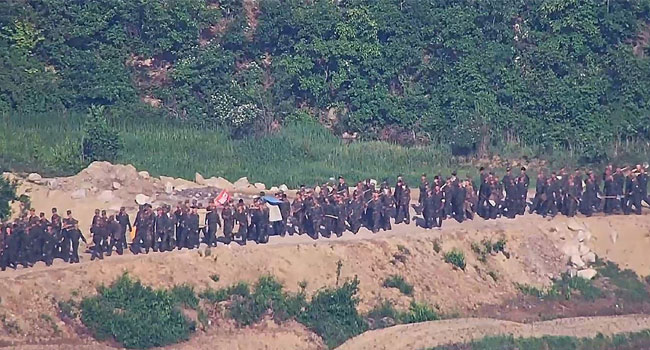
Dozens of North Korean soldiers briefly crossed the heavily fortified border Tuesday but retreated after warning shots were fired, Seoul said, the second such incident in two weeks as Pyongyang reinforces its frontiers with the South.
Landmine explosions near the border also injured multiple North Korean soldiers, the Joint Chiefs of Staff said, adding that Pyongyang had recently deployed troops in the area to clear scrub and lay mines, as relations between the two Koreas plummet.
The countries technically remain at war as the 1950-1953 conflict ended in an armistice, and the Demilitarized Zone dividing the peninsula is already one of the most heavily mined places on earth.
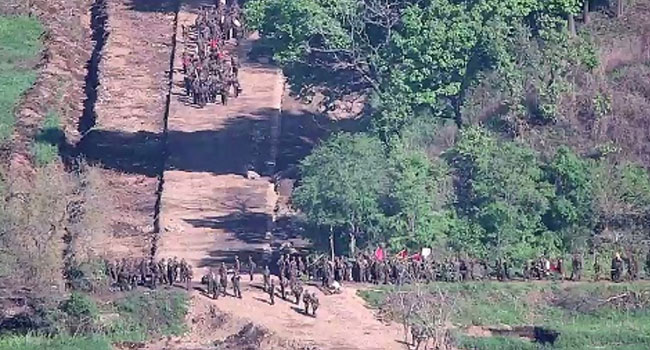
But North Korea is moving to reinforce that, laying more landmines, reinforcing tactical roads and adding what appear to be anti-tank barriers, Seoul’s military said.
“Dozens of North Korean troops crossed the Military Demarcation Line today… (and) retreated northwards after warning shots” were fired, a JCS official said.
North Korean soldiers tasked with reinforcing the border had suffered “multiple casualties from repeated landmine explosion incidents” but they “appear to be recklessly pressing ahead with the operations,” the official said.
“North Korea’s activities seem to be a measure to strengthen internal control, such as blocking North Korean troops and North Koreans from defecting to the South,” the JCS official said.
“This has rather symbolic significance,” Koh Yu-hwan, North Korean studies emeritus professor at Dongguk University told AFP, saying adding new mines was making it clear Pyongyang did not want dialogue with the South.
“By laying mines, North Korea is demonstrating once again that, as per the instructions of the supreme leader (Kim Jong Un), there will be no reconciliation with the South,” he added.
“North Korea is not laying mines across the entire frontline, but rather in areas that are easily observable by the South. They are also blocking roads and railways that were previously areas of inter-Korean cooperation.”
Earlier this month, around 20 North Korean soldiers crossed the military demarcation line between the two countries in a section of the border “overgrown with trees”, according to Seoul’s military, which assessed the incursion to be accidental.
That crossing came as North Korea was sending more than a thousand balloons laden with trash southward — a response, it said, to balloons carrying anti-Pyongyang propaganda sent north by activists.
The South Korean government in turn suspended a 2018 tension-reducing military deal and restarted loudspeaker propaganda broadcasts along the border, infuriating the North, which warned Seoul was creating “a new crisis”.
Ahn Chan-il, a defector-turned-researcher who runs the World Institute for North Korea Studies, told AFP that the North Korean military was trying to survey the border area to install more barriers.
“Engineering and observation units have increased their presence in the area. It is believed that the disorderly actions of those who are unfamiliar with the minefields have led to these mine-related accidents.”
AFP
Hundreds of British teenagers will trial social media bans and time limits on apps as part of consultations over new measures to keep children safe online, the government announced Wednesday.
The pilot comes as the government seeks views from parents on whether to follow Australia and issue a blanket ban on social media for children under 16.
Three hundred youngsters aged 13 to 17 will try out different restrictions on social media use over six weeks to gauge the impact on their schoolwork, sleep and family life.
Some will have their social media apps disabled entirely, while others will have no access to them overnight, said the Department for Science, Innovation and Technology.
[ A young student uses her mobile phone at a public school in Planaltina
A third group will have a one-hour-per-day cap on the most popular apps for teenagers, including Instagram, TikTok and Snapchat.
The results will be compared to a fourth set of children who will continue to receive unlimited access.
“We are determined to give young people the childhood they deserve and to prepare them for the future,” said technology minister Liz Kendall.
“These pilots will give us the evidence we need to take the next steps, informed by the experiences of families themselves.”
Australia in December became the first nation to prohibit people under the age of 16 from using immensely popular and profitable social media platforms.
Several other countries are considering similar bans, including France where lawmakers in January passed a bill that would prohibit use by under-15s, which still needs final approval.

The British government has launched a consultation on a potential Australia-style ban, which will also look at measures including age restrictions and banning addictive features like scrolling.
Earlier this month, British MPs struck down proposals by the upper House of Lords chamber to ban social media for under-16s while it awaits the outcome of the consultation, due to close on May 26.
British public figures including actor Hugh Grant have urged the government to back a prohibition, saying parents alone cannot counter social media harms.
But some experts warn restrictions could be easily circumvented and would rather that tech platforms focus on making their sites safer.
Labour Prime Minister Keir Starmer has not ruled out a ban.
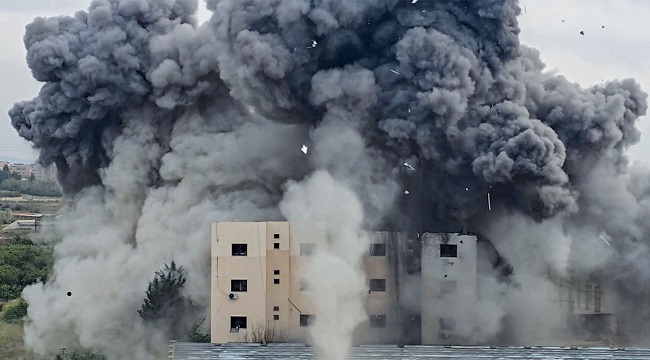
Defence Minister Israel Katz announced on Thursday that an Israeli airstrike had killed Alireza Tangsiri, commander of the Iranian Revolutionary Guards’ navy.
“Last night, in a precise and lethal operation, the IDF eliminated the commander of the Revolutionary Guards’ navy, Tangsiri, along with senior officers of the naval command,” Katz said in a video statement.
“The man who was directly responsible for the terrorist operation of mining and blocking the Strait of Hormuz to shipping was blown up and eliminated.”
Since the start of the joint US-Israeli attacks on Iran on February 28, Israel has announced the killing of several top Iranian officials, including supreme leader Ali Khamenei and the Islamic republic’s powerful security chief, Ali Larijani.
In recent days, Israeli forces have carried out several strikes targeting the naval assets of Iran.
Last week, Israeli airstrikes hit several Iranian naval ships in the Caspian Sea, including ones equipped with missile systems, support vessels and patrol craft.
AFP
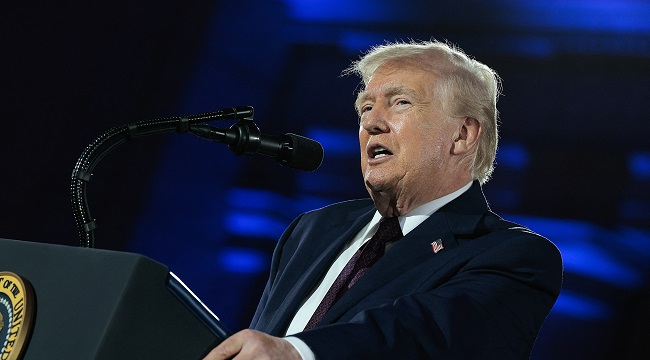
US President Donald Trump insisted Wednesday that Iran was taking part in peace talks, suggesting Tehran’s denials were because Iranian negotiators fear being killed by their own side.
“They are negotiating, by the way, and they want to make a deal so badly. But they’re afraid to say it, because they figure they’ll be killed by their own people,” Trump told a dinner for Republican members of Congress.
“They’re also afraid they’ll be killed by us.”
The US leader’s comments came after Iranian Foreign Minister Abbas Araghchi said that “we do not intend to negotiate”.
Trump repeated his assertion that Iran was being “decimated” in the conflict now in its fourth week, even though Tehran still maintains an effective stranglehold over the crucial Strait of Hormuz oil route.
Lashing out at his domestic opponents, Trump also claimed Democrats were trying to “deflect from all of the tremendous success that we’re having in this military operation.”
In a mocking reference to calls from Democrats for him to seek the approval of Congress for the conflict, Trump added: “They don’t like the word ‘war,’ because you’re supposed to get approval, so I’ll use the word military operation.”
The White House said earlier that Trump was ready to “unleash hell” if Iran did not admit defeat, while also insisting that Tehran is still taking part in talks.
Iranian state media had earlier cited an unidentified official as saying that the Islamic republic had responded “negatively” to a reported 15-point plan from Washington.
“If Iran fails to accept the reality of the current moment, if they fail to understand that they have been defeated militarily and will continue to be, President Trump will ensure they are hit harder than they have ever been hit before,” Press Secretary Karoline Leavitt told reporters.
“President Trump does not bluff and he is prepared to unleash hell. Iran should not miscalculate again.”
Asked if negotiations with Iran had stalled, Leavitt replied: “Talks continue. They are productive.”
Leavitt declined to say whom the US was dealing with in Tehran following the assassination of supreme leader Ali Khamenei, whose son and successor Mojtaba Khamenei has not been seen in public.
Reports have suggested the Trump administration’s interlocutor is Mohammad Bagher Ghalibaf, Iran’s speaker of parliament and one of its most prominent non-clerical figures.
The spokeswoman also declined to confirm reports that top US officials including Vice President JD Vance were set to hold talks with the Iranians in Pakistan, which has emerged as a key mediator.
Trump is moving thousands of airborne troops and extra marines to the Gulf amid speculation that he might order a ground invasion to either seize Iranian oil assets in the Gulf or secure the Strait of Hormuz.
The White House meanwhile appeared to stick to the four to six-week timeline it has previously given for the war.
Trump announced Wednesday that his visit to China to meet Xi Jinping had now been rescheduled for mid-May, having postponed it by six weeks to deal with the conflict.
“We’ve always estimated approximately four to six weeks (for the length of military operations against Iran), so you could do the math on that,” Leavitt added.
AFP
2023 Elections: Outgoing Rwandan High Commissioner say s Nigeria, ‘ handle their destiny’ in a peaceful way.

Just In: President Tinubu returns to Nigeria

Social media cloth Vendor Found Dead In Ibadan Hotel.

Ogun HoS Solicit Affordable Housing For Civil Servants

9mobile Ambassadors Begin “Meet And Greet” Session With Staffs, Customers.
CAF SALUTES RIVERS UNITED AFTER SEALING QUARTER-FINAL TICKET.

FG begins 40% pay rise for workers.

Breastfed babies have lower risks of diabetes – Nutritionist