Connect with us

International News

US Exempts Tech Imports In Tariff Step Back

Published

on

Spread the love
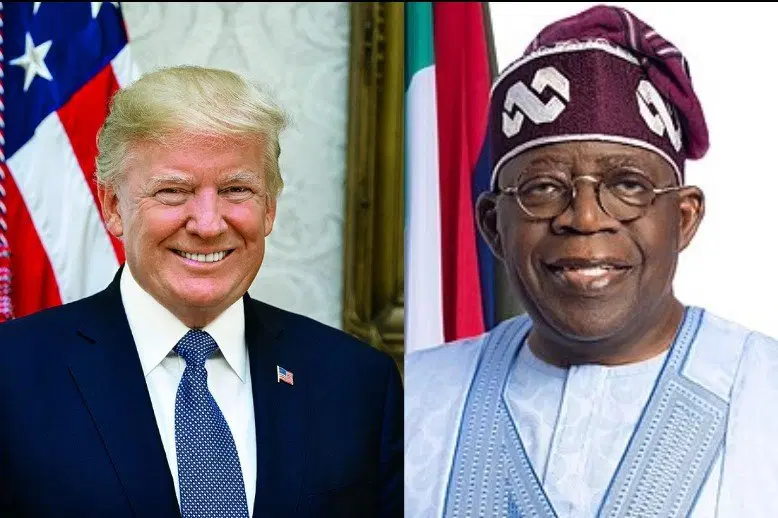
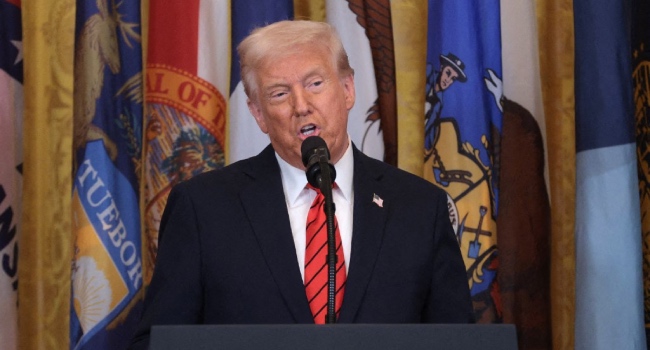
FILES: President Donald Trump (Photo by ALEX WONG / GETTY IMAGES NORTH AMERICA / Getty Images via AFP)

The Trump administration has exempted a raft of consumer electronics from its punishing import tariffs — offering relief to US tech firms and partially dialling down a trade war with China.

A notice late Friday by the US Customs and Border Protection office said smartphones, laptops, memory chips and other products would be excluded from the global levies President Donald Trump rolled out a week ago.

The move came as retaliatory Chinese import tariffs of 125 percent on US goods took effect Saturday, with Beijing standing defiant against its biggest trade partner.

The exemptions will benefit US tech companies like Nvidia and Dell, as well as Apple, which makes iPhones and other premium products in China.

And they will generally narrow the impact of the staggering 145 percent tariffs Trump has imposed this year on Chinese goods entering the United States.

US Customs data suggests the exempted items account for more than 20 percent of those Chinese imports, according to senior RAND researcher Gerard DiPippo.

Although listed among the exempted goods, semiconductors could still become a target of industry-specific tariffs Trump has suggested placing on imports from all countries.

Trump said Saturday that he would give a “very specific” answer to the question of any future semiconductor levies on Monday.

Washington and Beijing’s escalating tariff battle has raised fears of an enduring trade war between the world’s two largest economies and sent global markets into a tailspin.

The fallout has sent particular shockwaves through the US economy, with investors dumping government bonds, the dollar tumbling and consumer confidence plunging.

Adding to the pressure on Trump, Wall Street billionaires — including a number of his own supporters — have openly criticized the whole tariff strategy as damaging and counter-productive.

Tech relief

Daniel Ives, senior equity analyst at Wedbush Securities, called the US exemptions the “best news possible” for tech investors.

The exclusions remove “a huge black cloud” that had threatened to take the US tech sector “back a decade” and significantly slow AI development, Ives said in a note.

Many of the exempted products, including hard drives and computer processors, are not generally made in the United States, with Trump arguing tariffs are a way to bring domestic manufacturing back.

Commenting on the exemptions announcement, White House Press Secretary Karoline Leavitt insisted that the likes of Apple and Nvidia were still “hustling to onshore their manufacturing in the United States” as soon as possible.

Many analysts, however, say it will likely take years to ramp up domestic production.

With tariffs still in force on less complex products, Trump’s “exemptions will not reshore iPhones or tech goods and they will not reshore either cheap goods we can’t and won’t produce at home,” New York University economist Nouriel Roubini posted Saturday on X.

The president’s policy was “contradictory, dissonant, inconsistent and incoherent… taken by the seat of the pants,” he added.

China ‘not afraid’

Even with Washington and Beijing going toe to toe and financial markets in turmoil, Trump has remained adamant that his tariff policy is on the right track.

Beijing has vowed not to give in to what it sees as bullying tactics, and — in his first comments on the tensions — President Xi Jinping stressed Friday that China was “not afraid.”

Economists warn the disruption in trade between the tightly integrated US and Chinese economies will increase prices for consumers and could spark a global recession.

The US alone buys up 16.4 percent of Chinese exports, according to Beijing’s trade data, making for total exchanges between the two countries worth $500 billion — with the US sending significantly less the other way.

China’s Commerce Minister Wang Wentao told the head of the World Trade Organization (WTO) that US tariffs will “inflict serious harm” on poor nations.

“The United States has continuously introduced tariff measures, bringing enormous uncertainty and instability to the world, causing chaos both internationally and domestically within the US,” Wang told WTO chief Ngozi Okonjo-Iweala in a call.

The White House says Trump remains “optimistic” about securing a deal with China, although administration officials have made it clear they expect Beijing to reach out first.


AFP

International News

Appeal Court Cuts Simon Ekpa’s Jail Term From 6 To 4 Years

Published

on

Spread the love


A Finnish appeal court has reduced the prison sentence of Biafran separatist leader, Simon Ekpa, from six to four years.


Finnish newspaper Yle disclosed this in a report on Thursday.

However, the Court of Appeal upheld the decision of the Päijät-Häme District Court, which found Ekpa guilty of terrorism-related charges last year.

The charges were related to Ekpa’s alleged activities aimed at re-establishing an independent state of Biafra in southeastern Nigeria.

Ekpa subsequently appealed the ruling, seeking to have his conviction and sentence overturned.

In a ruling that offered some relief to Ekpa, the Court of Appeal found him guilty of the same offences but reduced his prison term after considering the circumstances surrounding his actions. The court noted that the situation in the Biafran region closely resembled, but did not meet the definition of, a civil war.

Ekpa had told the court that his involvement was not motivated by terrorist intent, citing the political turmoil in the Biafran region.

The prosecutor in the case had also appealed the district court’s decision, arguing that the prison sentence did not reflect the seriousness of Ekpa’s offences.

Continue Reading

International News

UNHCR: Nigeria Hosts Over 142,000 Refugees, Seeks More Foreign Support

Published

on

Spread the love


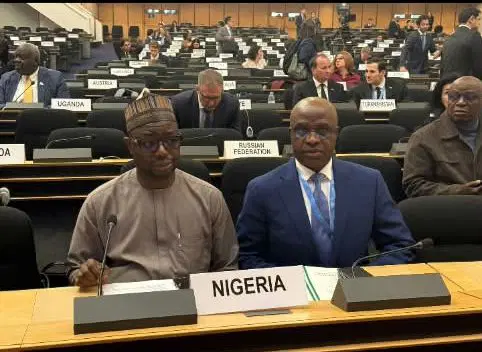
The Federal Government has called for stronger international responsibility sharing and innovative arrangement to address the growing humanitarian needs of over 142,000 refugees and asylum seekers from 42 countries.


The Minister of Humanitarian Affairs and Poverty Reduction, Dr. Bernard Doro, made the call while delivering Nigeria’s national statement at the 77th Session of the Executive Committee of the United Nations High Commissioner for Refugees (UNHCR), currently holding at the Palais des Nations in Geneva.

In a statement by his Senior Technical Adviser on Information Systems and Data Analysis, Dr. Abimbola Fasanu, the Minister disclosed that as of September 2026, Nigeria had received over 24,000 returnees and was managing a population of more than 6.7 million internally displaced persons (IDPs).

Doro reaffirmed Nigeria’s commitment to international refugee protection obligations, noting that the country continues to maintain an asylum system under the National Commission for Refugees, Migrants and Internally Displaced Persons (NCFRMI) Act of 2022.

He stated that no case of refoulement had been recorded in Nigeria in 2026, reaffirming the country’s commitment to protecting people fleeing persecution from being returned to situations where their lives or freedom could be threatened.

Highlighting progress on durable solutions, the Minister disclosed that over 7,000 Nigerian refugees had voluntarily returned from neighbouring countries this year under Tripartite Agreements, while another 14,000 in Cameroon had registered their intention to return. An agreement covering the return of 2,000 Nigerians from Niger is also being finalised.

He acknowledged the continued hospitality of Cameroon, Chad and Niger in providing refuge to displaced Nigerians.

According to the Minister, improved security conditions in parts of the country are creating opportunities for voluntary return, while Resettlement Cities established in seven locations are supporting the phased closure of displacement camps in conditions of safety and dignity.

Beyond return and resettlement, Dr. Doro outlined measures aimed at promoting self-reliance and reducing prolonged dependence on humanitarian assistance.

He explained that refugees in five states are benefiting from access to land, agricultural inputs and skills training, while the newly established Public-Private Partnership Department of the NCFRMI is supporting efforts to expand livelihood opportunities.

The Minister also cited the successful local integration of former Liberian and Sierra Leonean refugees, some of whom have established businesses and become economically active members of their host communities.

On access to essential services, he disclosed that displaced persons and host communities are being enrolled in Nigeria’s national identity system to facilitate access to banking, education and social services.

He added that refugees are being incorporated into state action plans and social registers, while ten mobile documentation buses are expected to extend identity services to underserved and remote communities.

Doro further highlighted the development of a Digital Gateway in collaboration with UNHCR to provide refugees with secure online access to information.

Addressing the growing pressure on humanitarian financing, the Minister urged the international community to strengthen support for refugee-hosting countries through expanded resettlement opportunities, complementary pathways and greater responsibility-sharing.

He specifically called on UNHCR to explore partnerships with regional and subregional financial institutions, including the African Development Bank and the ECOWAS Bank for Investment and Development, as a means of mobilising additional resources for refugee protection and durable solutions.

The Minister emphasised that the responsibility for addressing displacement could not rest on host countries alone, particularly at a time of increasing humanitarian needs and declining international resources.

Continue Reading

International News

Child Soldiers: US List Nigeria Among Erring Countries, Threaten Sanctions

Published

on

Spread the love


The United States has listed Nigeria among 14 countries identified for recruiting or using child soldiers, warning that the designation could trigger restrictions on certain forms of military assistance.

The listing is contained in the 2026 Trafficking in Persons (TIP) Report, which covers the period from April 1, 2025, to March 31, 2026.

According to the report, restrictions under the Child Soldiers Prevention Act (CSPA) could affect international military education and training, foreign military financing, excess defence articles, peacekeeping operations and licences for direct commercial sales of military equipment, unless a presidential waiver is granted.

Nigeria was listed alongside Afghanistan, Burma, the Central African Republic, the Democratic Republic of the Congo, Ethiopia, Iran, Russia, Rwanda, Somalia, South Sudan, Sudan, Venezuela and Yemen.

The report also retained Nigeria on Tier 2 for human trafficking, a category for countries whose governments do not fully meet the minimum standards for eliminating trafficking but are making significant efforts to comply.

However, the US raised concerns about corruption and alleged official complicity in human trafficking crimes.

“The government did not report any investigations, prosecutions, or convictions of government employees allegedly complicit in trafficking crimes or provide details or other actions taken against complicit officials from previous years,” the report stated.

The report also faulted Nigeria’s efforts to protect trafficking victims, stating that 675 victims received assistance in 2025, compared with 2,058 in the previous year.

It said support services, particularly for male victims, remained limited, with only one dedicated non-governmental organisation shelter for adult male victims operating during the reporting period.

The report further stated that shelters operated by the National Agency for the Prohibition of Trafficking in Persons (NAPTIP) restricted residents’ freedom of movement, while access to certain protection services depended on victims cooperating with law enforcement proceedings.

Despite these concerns, the report acknowledged increased government efforts in investigating, prosecuting and securing convictions in human trafficking cases compared with the previous reporting period.

Continue Reading

Trending

Copyright © 2026 TheColumn NG