Connect with us

Business

China Slaps 125% Tariffs On US Goods

Published

on

Spread the love
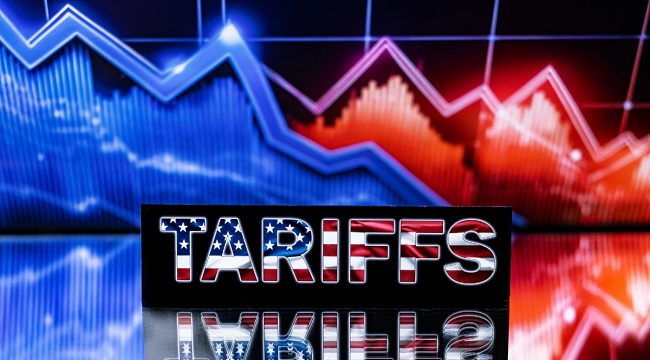
This illustration photograph shows a screen displaying a stock market index graphs and the word “Tariffs” written in the colours of the US flag, in Paris on April 4, 2025. Markets extended a global selloff on April 4, 2025 as countries around the world reeled from US President’s trade war, but the White House insisted the American economy will emerge victorious. (Photo by JOEL SAGET / AFP)

China said Friday it would raise tariffs on US goods to 125 percent but would ignore further levies by President Donald Trump because it no longer makes economic sense for importers to buy from America.

After a week of market mayhem as the world’s two largest economies took turns to put up trade barriers, Beijing dismissed Trump’s mounting brinkmanship as a “joke” and a “numbers game”.

China accused Trump of unleashing turbulence in the market with the sweeping tariffs that has hit the world, and said the United States “should bear full responsibility” for the chaos.

Trump has deployed sweeping tariffs, including painfully higher levies for dozens of major economies, as a stick to force manufacturers to base themselves in the United States and for countries to lower barriers to US goods.

But following market turmoil this week, he blinked first in his push to remodel the post-war system of global commerce and froze many tariffs for 90 days, although he raised them for China to a staggering total of 145 percent.

Beijing’s latest round of retaliation brings its levies to 125 percent, effective Saturday.

But the Chinese finance ministry said further action by the US will be ignored because “at the current tariff level, there is no possibility of market acceptance for US goods exported to China”.

“The United States’ imposition of round upon round of abnormally high tariffs on China has become a numbers game with no practical significance in economics,” Beijing’s commerce ministry said.

“If the US continues to play the tariff numbers game, China will ignore it,” a spokesperson said.

Beijing also said it would file a lawsuit with the World Trade Organization over the latest round of levies.

‘Beautiful Thing’
Trump has acknowledged “a transition cost and transition problems” arising from his tariff strategy, but he has dismissed global market turmoil.

“In the end it’s going to be a beautiful thing,” he said.

He described the European Union as “very smart” to refrain from retaliatory levies.

“(The EU) were ready to announce retaliation. And then they heard about what we did with respect to China’,” Trump said.

But the 27-nation bloc’s chief Ursula von der Leyen told the Financial Times that it remained armed with a “wide range of countermeasures” if negotiations with Trump hit the skids.

“An example is you could put a levy on the advertising revenues of digital services” applying across the bloc, she said.

French President Emmanuel Macron also urged the EU to keep preparing action to counter the tariffs, which are only paused but not scrapped.

“With the European Commission, we must show ourselves as strong: Europe must continue to work on all the necessary counter-measures,” he said on X.

At talks with Spain’s Prime Minister Pedro Sanchez on Friday, state media quoted Xi as saying that China and the EU should simply team up on the issue.

“China and Europe should fulfil their international responsibilities… and jointly resist unilateral bullying practices,” Xi said.

This, he stressed, would not only “safeguard their own legitimate rights and interests, but also… safeguard international fairness and justice.”

 ‘No winners’
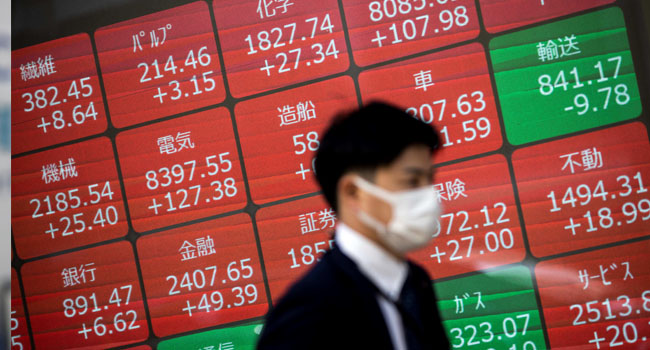
A pedestrian walks past an electronic board displaying share prices on the Tokyo Stock Exchange in Tokyo on November 4, 2020, as Asian markets react to early predictions following the US presidential election. Behrouz MEHRI / AFP

After new falls on Wall Street, Asian markets were under pressure again on Friday.

Tokyo sank more than four percent — a day after surging more than nine percent — while Sydney, Seoul, Singapore and others also sagged.

European markets also retreated on China’s latest salvo.

Oil and the dollar slid on fears of a global slowdown while gold hit a new record above $3,200, as investors spooked by Trump’s erratic policies dumped normally rock-solid US Treasuries.

“The sugar high from Trump’s tariff pause is fading fast,” said Stephen Innes at SPI Asset Management.

“Bottom line: the world’s two largest economies are in a full-blown trade war — and there are no winners.”


 ‘Golden Age’
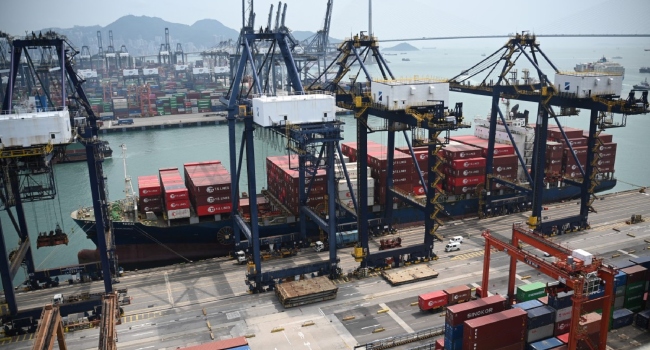
Critics of Trump’s policies say they are causing chaos for companies that rely on complex supply chains, alienating close allies and making goods more expensive for US consumers.

But Howard Lutnick, his commerce secretary, posted on social media Thursday that “the Golden Age is coming. We are committed to protecting our interests, engaging in global negotiations and exploding our economy.”

Trump has meanwhile warned that the tariffs could come back after the 90 days.

“If we can’t make the deal we want to make… then we’d go back to where we were,” he said.

Canadian Prime Minister Mark Carney called Trump’s reversal a “welcome reprieve” and said Ottawa would begin negotiations with Washington on a new economic deal after elections on April 28.

Vietnam said it had agreed with the United States to start trade talks, while Pakistan is sending a delegation to Washington.

As China battles to find allies against Trump’s trade war, Xi will travel next week to Vietnam, Malaysia and Cambodia, where the tariff drama is expected to feature high on the agenda.



AFP

Business

CBN Makes Fresh Move Against Banks Over Terrorism Financing

Published

on

Spread the love


The Central Bank of Nigeria (CBN) has rolled out a stronger supervisory framework that seeks to deter the use of Nigerian banks and financial institutions for terrorism financing and other abuses.


In a statement, the apex bank’s Acting Director, Corporate Communications/Investor Relations Department, Hakama Sidi-Ali, said the CBN has made terrorism financing supervision one of its current priorities.

According to her, the focus is part of the bank’s ongoing commitment to protecting the Nigerian financial system from abuse by illicit actors.

She explained that this new push covers four broad areas including how financial institutions manage terrorism financing risk, how they monitor transactions for signs of terrorism financing, how they carry out targeted financial sanctions, and how they report suspicious transactions linked to terrorism.

She said the apex bank would not be sitting back and waiting for problems to surface on their own, rather it plans to use a risk-based approach, which means banks and institutions seen as more exposed to this kind of risk will attract closer attention.

Sidi-Ali said: “This supervisory focus also supports Nigeria’s ongoing domestic and international cooperation on counter-terrorism financing, counter-proliferation financing, financial integrity, and the protection of the financial system. Further supervisory engagement will be undertaken as appropriate.”

According to her, the bank will continue to apply a risk-based supervisory approach, including on-site and off-site engagement, to support effective Anti-Money Laundering, Combating the Financing of Terrorism, and Countering Proliferation Financing (AML/CFT/CPF) controls across the financial sector in line with existing legal and regulatory obligations.
She added that further supervisory engagement will be undertaken as appropriate, suggesting that more steps could follow depending on what its checks turn up.

Continue Reading

Business

GDP Growth Data Covering Deep Industrial, Security Crises — MAN

Published

on

Spread the love


Nigeria’s 4.43 percent economic growth in the second quarter of 2026 (Q2’26) is masking a deepening industrial crisis, with manufacturing and the broader industrial sector losing ground as services increasingly dominate economic activity, the Manufacturers Association of Nigeria, MAN, has warned.


Reacting to the National Bureau of Statistics, NBS, Q2 2026 GDP, report, yesterday, MAN Director-General, Segun Ajayi-Kadir, said the 4.43 per cent year-on-year real GDP growth recorded in the quarter, up from 3.89 per cent in Q1 2026 and 4.23 percent in Q2 2025, masks deep-seated weaknesses in the real economy.

He noted that services accounted for 56.62 per cent of GDP in Q2, while the broader industrial sector contributed only 17.23 per cent and suffered a dramatic slowdown in growth.

“The growth trajectory remains disproportionately service-driven (56.62 per cent of GDP), while the broader industrial sector (17.23 per cent of GDP) is visibly suffocating under severe structural headwinds,” Ajayi-Kadir said.

He described the near-halving of industrial growth as particularly alarming, noting that it fell from 7.46 pe rcent in Q2 2025 to 3.96 per cent in Q2 2026.

According to him, the sharp deterioration was driven largely by the electricity, gas, steam and air-conditioning supply segment, which contracted by 10.63 per cent during the quarter.

MAN also noted that manufacturing’s share of real GDP plunged from 9.57 per cent in Q1 2026 to 7.72 per cent in Q2, while real manufacturing growth eased marginally from 3.29 per cent to 3.24 per cent.

Ajayi-Kadir attributed the weakening performance to the combination of high production costs, exchange-rate pressures, prohibitive interest rates and soaring electricity tariffs confronting manufacturers.

He warned that continued dependence on services and extraction would leave Nigeria vulnerable to external shocks while doing little to expand productive capacity.

“Ultimately, headline GDP growth driven by non-tradable service activities will fail to strengthen foreign exchange reserves, reduce structural inflation, or create sustainable mass industrial jobs. A nation that trades and consumes what it does not produce builds prosperity on quicksand.”

MAN said the trend portends employment fragility, an inflationary spiral, greater FX vulnerability, and erosion of industrial capacity and technological capability.

To reverse the slide, MAN called for urgent intervention in power, industrial finance, FX allocation and local procurement.

It recommended direct power purchase agreements for industrial clusters, matching grants for manufacturers investing in solar and battery systems, credit guarantees to force down lending rates, and a dedicated FX clearance window for raw materials and capital machinery, amongst others.

MAN also demanded stronger enforcement of local procurement, incentives for vehicle assembly, tax relief for domestic supply chains and legally binding implementation of the Nigeria Industrial Policy.

Ajayi-Kadir said Nigeria must urgently move from consumption-led growth to production-led growth, warning that without a stronger manufacturing base, impressive GDP numbers would remain largely disconnected from improvements in living standards and economic prosperity.

Continue Reading

Business

CBN Gov’, Cardoso Explains Scarcity Of N100, N200 Notes

Published

on

Spread the love


Governor of the Central Bank of Nigeria (CBN), Olayemi Cardoso, has attributed the apparent scarcity of N100 and N200 notes to the increasing adoption of digital payment channels and the declining purchasing power of the lower-denomination currency.


Speaking in Abuja on Tuesday, Cardoso dismissed concerns that the affected notes had been withdrawn from circulation, stressing that they remain legal tender and should continue to be accepted for transactions across the country.

He said the CBN had not announced the withdrawal of any naira denomination and urged Nigerians not to reject the lower-value notes.

“Yes, they remain legal tender. Unless the Central Bank states otherwise, Nigerians should assume that all existing denominations remain legal tender,” Cardoso said.

Explaining the reduced circulation of the N100 and N200 notes, the CBN governor said the situation reflects changing demand patterns within the financial system rather than any deliberate policy to phase them out.

According to him, the expansion of financial inclusion and the widespread use of electronic payment platforms have significantly reduced reliance on physical cash, particularly lower denominations.

Cardoso also noted that the depreciation of the naira has eroded the purchasing power of the smaller notes, making them less useful in day-to-day transactions.

“As to why there appear to be fewer of these notes in circulation, it is largely a matter of demand and supply. The financial ecosystem is evolving in the direction we want it to, with greater financial inclusion and increased digitisation,” he said.

“Of course, we must also acknowledge that currency devaluation has affected the purchasing power of lower-value notes. That is a reality.

“More importantly, however, as financial inclusion expands and digital payments become part of everyday life, fewer people will rely on these denominations.”

On inflation, Cardoso reaffirmed the apex bank’s commitment to restoring price stability and achieving single-digit inflation, despite recent global economic shocks that have slowed progress.

He recalled that Nigeria had recorded 11 consecutive months of declining inflation before external factors disrupted the disinflation trend.

“It is important to remember where we are coming from. We recorded 11 consecutive months of disinflation and, from every indication, we expected that by early 2027 we would be where we wanted to be in terms of inflation, with a path towards single-digit inflation,” he said.

“Unfortunately, we have experienced external shocks that were not anticipated and have lasted much longer than anyone expected.

“As for our single-digit inflation target, we remain committed to it.”

Reacting to the International Monetary Fund’s (IMF) recent assessment that the naira is undervalued, with an estimated fair value of about N1,150 to the US dollar, Cardoso maintained that the exchange rate should be determined by market forces rather than administrative targets.

He said the CBN would continue to support a transparent and market-driven foreign exchange regime anchored on a willing-buyer, willing-seller framework.

Continue Reading

Trending

Copyright © 2026 TheColumn NG