Connect with us

International News

Iran Voices ‘Serious Doubts’ Over Israel Commitment To Ceasefire

Published

on

Spread the love
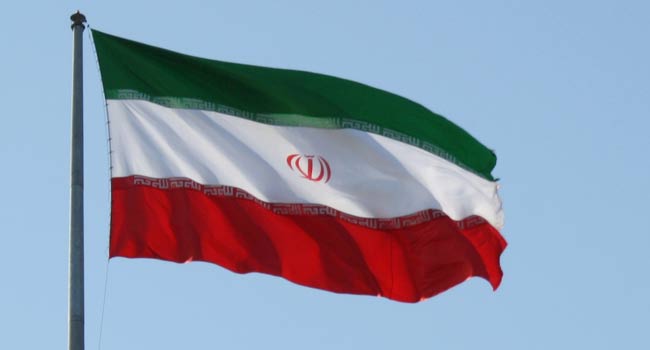
File photo of the Iranian flag

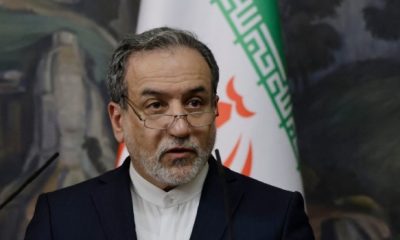
Iran on Sunday said it was not convinced Israel would abide by a ceasefire that ended their 12-day war this week.

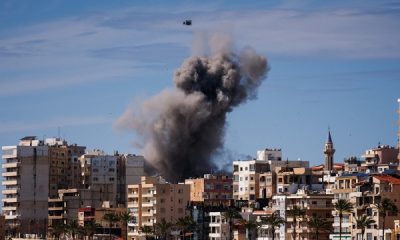
The most serious escalation to date between the arch-foes erupted on June 13, when Israel launched a bombing campaign in Iran that killed top military commanders and scientists linked to its disputed nuclear programme.

Israel said its aim was to keep the Islamic republic from developing a nuclear weapon — an ambition Tehran has consistently denied, insisting it has the right to develop nuclear power for civilian purposes like energy

The fighting derailed nuclear talks between Iran and the United States, a staunch ally of Israel’s.

“We did not start the war, but we have responded to the aggressor with all our power,” Iran’s armed forces chief of staff, Abdolrahim Mousavi, was quoted as saying by state television, referring to Israel.

“We have serious doubts over the enemy’s compliance with its commitments including the ceasefire, we are ready to respond with force” if attacked again, he added, six days into the ceasefire announced by US President Donald Trump.

Deadly war

In a letter to UN Secretary-General Antonio Guterres published on Sunday, Iran demanded that the United Nations recognise Israel and the United States as being to blame for this month’s war.

“We officially request hereby that the Security Council recognise the Israeli regime and the United States as the initiators of the act of aggression and acknowledge their subsequent responsibility, including the payment of compensation and reparations,” Iranian Foreign Minister Abbas Araghchi wrote in the letter.

The United States joined Israel in its campaign during the war, carrying out strikes on three key facilities used for Iran’s atomic programme.

Trump has threatened further strikes should Iran enrich uranium to levels capable of manufacturing nuclear weapons.

According to the International Atomic Energy Agency, Iran had enriched uranium to 60 percent in 2021, well above the 3.67 percent limit set by a 2015 agreement from which the United States unilaterally withdrew in 2018.

To make a weapon, Iran would need to enrich uranium up to 90 percent.

Israel has maintained ambiguity about its own atomic arsenal, neither officially confirming nor denying it exists, but the Stockholm International Peace Research Institute has estimated it has 90 nuclear warheads.

According to Iran’s health ministry, at least 627 civilians were killed and 4,900 injured during the 12-day war with Israel.

Retaliatory missile attacks by Iran on Israel killed 28 people, according to Israeli authorities.

During the war, Iran arrested dozens of people it accused of spying for Israel, also saying it seized equipment including drones and weapons.

Iran’s parliament on Sunday voted to ban the unauthorised use of communications equipment, including tech billionaire Elon Musk’s Starlink satellite internet service, according to the official news agency IRNA.

‘Unacceptable’

An Israeli strike on Tehran’s Evin prison during the war killed at least 71 people, Iran’s judiciary said Sunday.

The strike on Monday destroyed part of the administrative building at Evin, a large, heavily fortified complex in the north of Tehran, which rights groups say holds political prisoners and foreign nationals.

According to judiciary spokesman Asghar Jahangir, the victims at Evin included administrative staff, guards, prisoners and visiting relatives as well as people living nearby.

French Foreign Minister Jean-Noel Barrot said on Monday that detained French nationals Cecile Kohler and Jacques Paris, held at Evin for three years, were not believed to have been harmed by the Israeli strike, which he described as “unacceptable”.

On Tuesday, a day after the strike, the judiciary said that the Iranian prison authority had transferred inmates out of Evin prison, without specifying their number or identifying them.

The inmates at Evin have included Nobel Peace Prize laureate Narges Mohammadi as well as several French nationals and other foreigners.


AFP

International News

Germany Deports 137 Nigerians In Five Chartered Flights

Published

on

Spread the love


German authorities deported at least 137 Nigerian citizens across five chartered flights between February and June 2026, according to migration monitoring reports.


Data from the DERS Team and Refugees4refugees.org shows the deportations occurred in phases, with 27 Nigerians returned in February, 37 in March through a joint European Union operation, 24 in April, 23 in May, and 26 in June.

The February operation departed from Stuttgart and landed at Lagos Cargo Airport, with Baden-Württemberg listed as a primary participant. The March operation represented the largest single return of Nigerians recorded over three years and was executed in collaboration with Spain, Austria, and Belgium.

The reports indicate a growing reliance on multi-national chartered flights by European states to repatriate undocumented or non-resident individuals to Nigeria.

Continue Reading

International News

US Wants Justice In The killing Of Pastor Dachomo’s 9 Family Members 

Published

on

Spread the love


The United States has condemned the killing of members of the family of Plateau-based cleric, Rev. Ezekiel Dachomo, describing the attack as horrific and urging Nigerian authorities to ensure those responsible are brought to justice.


In a statement shared on X on Thursday, the US Department of State’s Bureau of African Affairs expressed condolences to the victims’ families and called for stronger measures to prevent further attacks on vulnerable communities across Nigeria’s Middle Belt.

“The United States strongly condemns the horrific killing of members of Rev. Ezekiel Dachomo’s family in Plateau State, Nigeria. The continued violence targeting Christian communities and other vulnerable populations in Nigeria’s Middle Belt is deeply alarming,” the bureau said

The US said it had already engaged Nigerian officials on the worsening security situation, stressing that urgent action was needed to curb recurring attacks and hold perpetrators accountable.

“As I discussed last week with Nigerian officials, we must do more to prevent violent acts. The perpetrators must be held accountable, and urgent action is needed to strengthen security and protect Christians and other vulnerable communities,” the statement added.

The bureau reaffirmed Washington’s commitment to working with the Nigerian government to combat terrorism and violent extremism, stressing that Christians and other Nigerians should be able to practise their faith without fear of violence.

The statement followed the July 12 attack on Kum community in Riyom Local Government Area of Plateau State, where nine members of Rev. Dachomo’s extended family, including a two-month-old baby, were killed.

According to the cleric, the attackers, believed to be armed Fulani militias, asked for him by name before opening fire on his relatives.

Dachomo, who serves as Regional Chairman of the Church of Christ in Nations (COCIN) in Barkin Ladi Local Government Area, said his family had repeatedly been targeted because of his outspoken criticism of the violence in Plateau State.

He recalled that his grandmother and an uncle were also killed in previous attacks, adding that days after burying his relatives, he received a written death threat from the same group, warning that he would be their next target.

Continue Reading

International News

Nigeria Missing As Saudi Arabia Names African Countries Eligible For eVisa

Published

on

Spread the love


Saudi Arabia has updated its tourist eVisa programme for 2026, limiting eligibility in Africa to only three countries as part of its list of 66 nations whose citizens can apply through the Kingdom’s online visa platform.


The move leaves most African countries, including Nigeria, outside the simplified entry scheme.

The electronic visa allows eligible travellers to visit Saudi Arabia for tourism, leisure activities, family visits and Umrah, excluding the annual Hajj pilgrimage. Applications are completed online, eliminating the need for embassy visits and lengthy visa processing.

Saudi authorities said the eVisa forms part of ongoing efforts to expand tourism, attract international visitors and simplify travel procedures through a fully digital application system. The visa is available only to citizens of approved countries and territories listed on the Kingdom’s official tourism portal.

Below is the list of African countries eligible for Saudi Arabia’s eVisa.

1. Mauritius

2. Seychelles

3. South Africa

Continue Reading

Trending

Copyright © 2026 TheColumn NG