
International News
Feeling Flush: Japan’s High-Tech Toilets Go Global

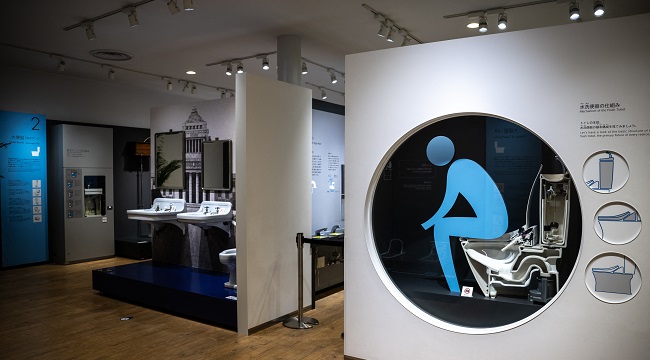
As Japan plays host to a record influx of tourists, one of the country’s more private attractions — the high-tech toilet — is becoming a must-have in luxury bathrooms worldwide.
With their warm seats and precision spray technology, bidet toilets are the norm in Japan, where more than 80 percent of homes have one, according to a government survey.
Now sales are surging abroad and especially in the United States, led by A-list bidet fans such as Drake, the Kardashians and Alexandria Ocasio-Cortez.
Japanese company TOTO, which pioneered the electric bidets it claims have sparked “a global revolution from wiping to washing”, says overseas revenue for toilets has roughly doubled from 100 billion yen ($673 million) in 2012.
The pandemic was a key driver, bringing a home-renovation boom but also germ-conscious consumers desperate for an alternative to toilet paper after shelves were cleared by panic-buyers.
Senior TOTO executive Shinya Tamura, who oversees international business, said the brand’s growth has been a word-of-mouth success.
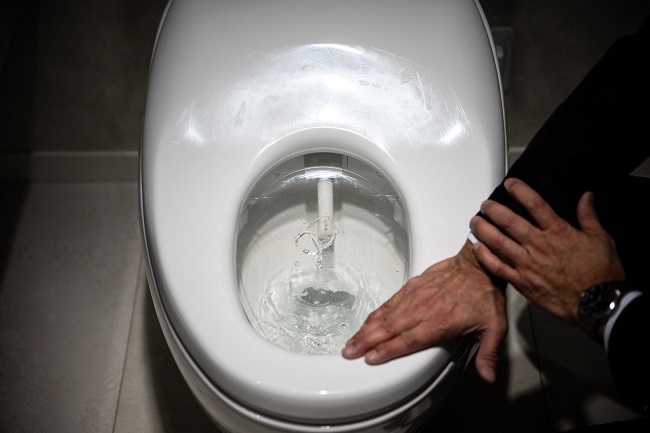
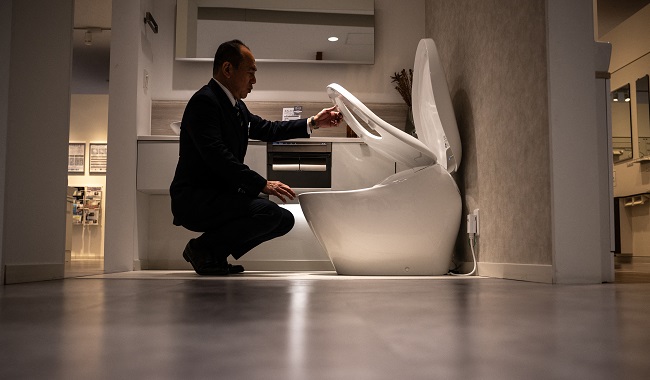
When people first learn how the toilets’ water jets work, with pressure and temperature controls, “there’s an image that it’s not pleasant”.
But “we can’t explain how good it is with words. You need to experience it”, Tamura said.
“After a while, most users can’t live without it.”
The company’s international net sales for housing equipment are currently less than a third of those in Japan.
It wants to boost sales in the Americas by 19 percent over two years to “establish a solid position” there and offset less urgent demand in China.
But with more people in the market for a squeaky clean bum, US competitors are challenging TOTO and its Japanese rivals such as Panasonic and LIXIL for their throne.
‘Smartest toilet’
At a major tech fair in Las Vegas this year, the marketing manager of US brand Kohler called its Numi 2.0 — which takes spoken instructions via an in-built Amazon Alexa — “the smartest toilet that exists”.
Just like top-end Japanese models, the Numi 2.0 has an automatic deodoriser and a motion-activated lid that opens when you enter the bathroom and closes when you leave.
Its spray wand has pulsating and oscillating functions, and users can adjust the warm-air dryer in minute detail.
But such pampering comes at a price: around $8,500 to $10,000, compared to around $500 for more basic bidet seats.
Americans who travel to Japan are often inspired to upgrade their toilet, a salesman at Ardy’s Bath Collection in Beverly Hills told AFP.
“They see it in the airport, and they see it in public restrooms, and they use it, and they’re like, ‘wow, this is great,’” he said.
Bidets are “popular everywhere” but it’s still a “private experience” and “weird to talk about” for some customers.
Although fancy Japanese-style toilets are fast becoming a status symbol, TOTO’s executives have long fought prudishness when trying to expand abroad.
After the US launch of its Washlet bidet in 1986, the firm struggled to place advertisements, and its pop-up event was kicked out of a high-end mall because other stores complained.
‘Does it hurt?’
How things have changed in the share-all internet era.
“Why am I nervous? Does it hurt? Is it cold?” 21-year-old Canadian Spencer Barbosa, who has 10 million TikTok followers, said in a clip of her trying a Japanese toilet.
Superstar rapper Drake made a grand public gesture of gifting his friend DJ Khaled luxury TOTO loos in 2022.
And US congresswoman Ocasio-Cortez joked in an Instagram video last year that she was shopping for a bidet after going to Japan because “life will never be the same”.
Funnily enough, when TOTO first began selling bidets — to hospitals in Japan — it imported them from the United States, but users complained that the stream was unstable.
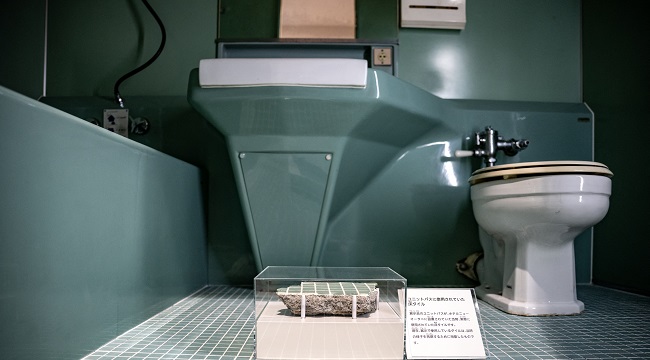
The company was founded in 1917 as a father and son from a wealthy business family tried to bring Western-style ceramic toilets to Japan.
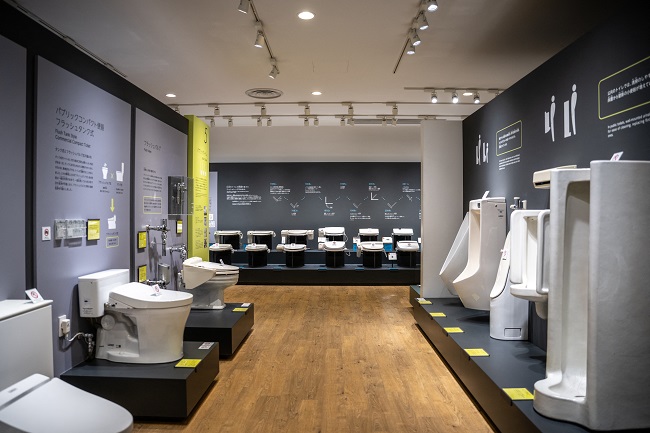
With sewer systems still undeveloped and squat-style toilets common, the business struggled, so they relied on tableware sales until habits began to change after the 1970 World Expo in Osaka, said Junichi Koga, head of TOTO’s history museum.
More than 300 employees helped develop and test the Washlet by specifying their preferred location for the water jet.
Now, worldwide, TOTO has sold 60 million Washlets — featured in episodes of “The Kardashians” and “South Park”, which parodied the company as “TOOTTOOT”.
As the bidet craze grows, even the trepidatious might be converted in time, the Ardy’s salesman said.
He recommends customers put in the necessary electrics when they remodel their bathroom, telling them: “You could always buy it down the line”.
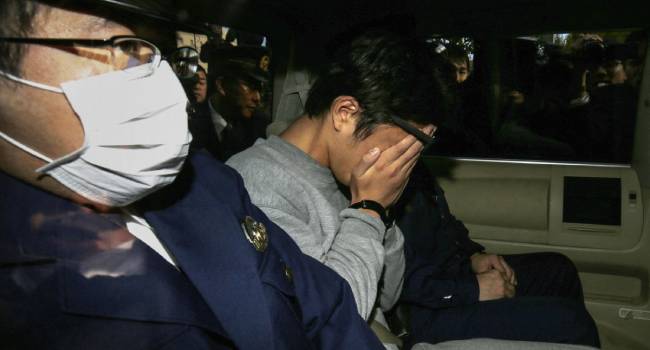

A Finnish appeal court has reduced the prison sentence of Biafran separatist leader, Simon Ekpa, from six to four years.
Finnish newspaper Yle disclosed this in a report on Thursday.
However, the Court of Appeal upheld the decision of the Päijät-Häme District Court, which found Ekpa guilty of terrorism-related charges last year.
The charges were related to Ekpa’s alleged activities aimed at re-establishing an independent state of Biafra in southeastern Nigeria.
Ekpa subsequently appealed the ruling, seeking to have his conviction and sentence overturned.
In a ruling that offered some relief to Ekpa, the Court of Appeal found him guilty of the same offences but reduced his prison term after considering the circumstances surrounding his actions. The court noted that the situation in the Biafran region closely resembled, but did not meet the definition of, a civil war.
Ekpa had told the court that his involvement was not motivated by terrorist intent, citing the political turmoil in the Biafran region.
The prosecutor in the case had also appealed the district court’s decision, arguing that the prison sentence did not reflect the seriousness of Ekpa’s offences.
The Federal Government has called for stronger international responsibility sharing and innovative arrangement to address the growing humanitarian needs of over 142,000 refugees and asylum seekers from 42 countries.
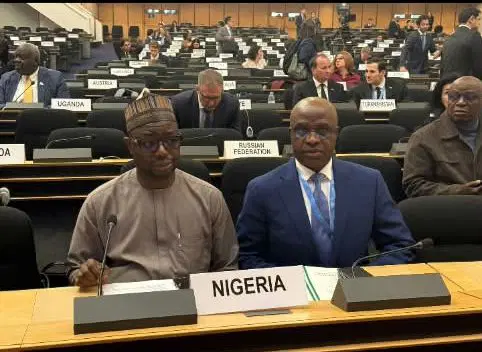
The Minister of Humanitarian Affairs and Poverty Reduction, Dr. Bernard Doro, made the call while delivering Nigeria’s national statement at the 77th Session of the Executive Committee of the United Nations High Commissioner for Refugees (UNHCR), currently holding at the Palais des Nations in Geneva.
In a statement by his Senior Technical Adviser on Information Systems and Data Analysis, Dr. Abimbola Fasanu, the Minister disclosed that as of September 2026, Nigeria had received over 24,000 returnees and was managing a population of more than 6.7 million internally displaced persons (IDPs).
Doro reaffirmed Nigeria’s commitment to international refugee protection obligations, noting that the country continues to maintain an asylum system under the National Commission for Refugees, Migrants and Internally Displaced Persons (NCFRMI) Act of 2022.
He stated that no case of refoulement had been recorded in Nigeria in 2026, reaffirming the country’s commitment to protecting people fleeing persecution from being returned to situations where their lives or freedom could be threatened.
Highlighting progress on durable solutions, the Minister disclosed that over 7,000 Nigerian refugees had voluntarily returned from neighbouring countries this year under Tripartite Agreements, while another 14,000 in Cameroon had registered their intention to return. An agreement covering the return of 2,000 Nigerians from Niger is also being finalised.
He acknowledged the continued hospitality of Cameroon, Chad and Niger in providing refuge to displaced Nigerians.
According to the Minister, improved security conditions in parts of the country are creating opportunities for voluntary return, while Resettlement Cities established in seven locations are supporting the phased closure of displacement camps in conditions of safety and dignity.
Beyond return and resettlement, Dr. Doro outlined measures aimed at promoting self-reliance and reducing prolonged dependence on humanitarian assistance.
He explained that refugees in five states are benefiting from access to land, agricultural inputs and skills training, while the newly established Public-Private Partnership Department of the NCFRMI is supporting efforts to expand livelihood opportunities.
The Minister also cited the successful local integration of former Liberian and Sierra Leonean refugees, some of whom have established businesses and become economically active members of their host communities.
On access to essential services, he disclosed that displaced persons and host communities are being enrolled in Nigeria’s national identity system to facilitate access to banking, education and social services.
He added that refugees are being incorporated into state action plans and social registers, while ten mobile documentation buses are expected to extend identity services to underserved and remote communities.
Doro further highlighted the development of a Digital Gateway in collaboration with UNHCR to provide refugees with secure online access to information.
Addressing the growing pressure on humanitarian financing, the Minister urged the international community to strengthen support for refugee-hosting countries through expanded resettlement opportunities, complementary pathways and greater responsibility-sharing.
He specifically called on UNHCR to explore partnerships with regional and subregional financial institutions, including the African Development Bank and the ECOWAS Bank for Investment and Development, as a means of mobilising additional resources for refugee protection and durable solutions.
The Minister emphasised that the responsibility for addressing displacement could not rest on host countries alone, particularly at a time of increasing humanitarian needs and declining international resources.
The United States has listed Nigeria among 14 countries identified for recruiting or using child soldiers, warning that the designation could trigger restrictions on certain forms of military assistance.
The listing is contained in the 2026 Trafficking in Persons (TIP) Report, which covers the period from April 1, 2025, to March 31, 2026.
According to the report, restrictions under the Child Soldiers Prevention Act (CSPA) could affect international military education and training, foreign military financing, excess defence articles, peacekeeping operations and licences for direct commercial sales of military equipment, unless a presidential waiver is granted.
Nigeria was listed alongside Afghanistan, Burma, the Central African Republic, the Democratic Republic of the Congo, Ethiopia, Iran, Russia, Rwanda, Somalia, South Sudan, Sudan, Venezuela and Yemen.
The report also retained Nigeria on Tier 2 for human trafficking, a category for countries whose governments do not fully meet the minimum standards for eliminating trafficking but are making significant efforts to comply.
However, the US raised concerns about corruption and alleged official complicity in human trafficking crimes.
“The government did not report any investigations, prosecutions, or convictions of government employees allegedly complicit in trafficking crimes or provide details or other actions taken against complicit officials from previous years,” the report stated.
The report also faulted Nigeria’s efforts to protect trafficking victims, stating that 675 victims received assistance in 2025, compared with 2,058 in the previous year.
It said support services, particularly for male victims, remained limited, with only one dedicated non-governmental organisation shelter for adult male victims operating during the reporting period.
The report further stated that shelters operated by the National Agency for the Prohibition of Trafficking in Persons (NAPTIP) restricted residents’ freedom of movement, while access to certain protection services depended on victims cooperating with law enforcement proceedings.
Despite these concerns, the report acknowledged increased government efforts in investigating, prosecuting and securing convictions in human trafficking cases compared with the previous reporting period.
-
 Health & Wellness1 year ago
President Tinubu Directs Cut in Dialysis Cost from ₦50,000 to ₦12,000
-
News2 years ago
CBN Debunks Fake Circular on New ₦5,000 and ₦10,000 Notes
-

 Business7 months ago
Dangote Refinery Reduces Petrol Gantry Price To ₦1,200 Per Litre
-

 International News7 months ago
Indian Police Arrest Nigerian Over ₦290m Drug Haul
-

 Business7 months ago
After Plea Bargain, Court Discharges Stella Oduah of ₦2.5bn Fraud
-
Business2 years ago
Dangote; We Did Not Fix ₦600/Litre Petrol Price
-
 Trending News1 year ago
NELFUND Disburses ₦86bn To 449,000 Beneficiaries
-
 Opinion2 years ago
Championing the People’s Voice: Obasa’s Dedication to Grassroots Representation By Dave Agboola⁰